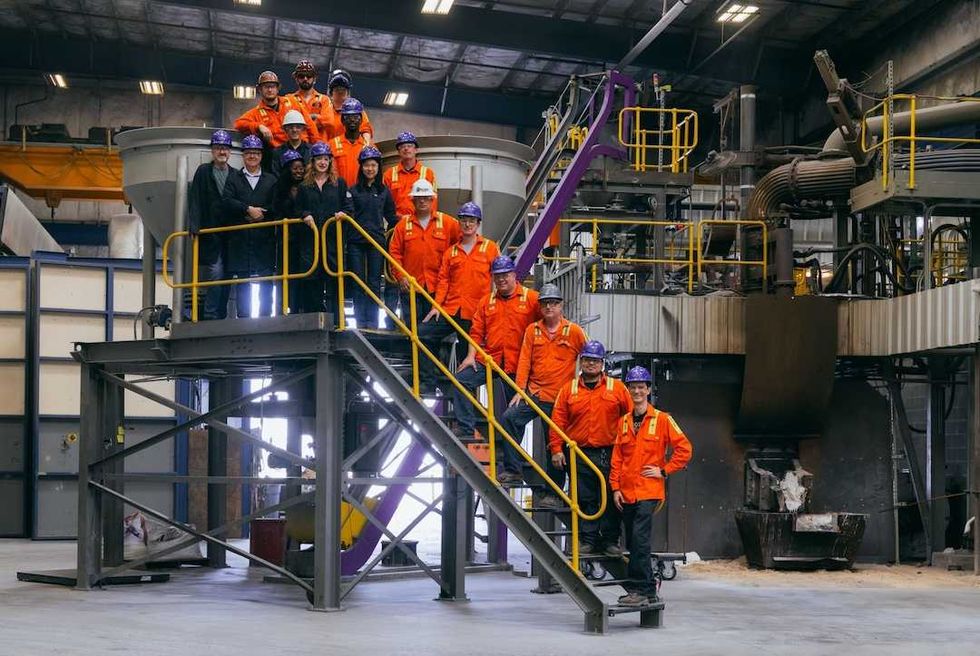
Base Power, founded by Justin Lopas and Zach Dell, has closed one of the largest venture capital deals of the year. Photo courtesy Base Power.

Austin-based startup Base Power, which offers battery-supported energy in the Houston area and other regions, has raised $1 billion in series C funding—making it one of the largest venture capital deals this year in the U.S.

VC firm Addition led the $1 billion round. All of Base Power’s existing major investors also participated, including Trust Ventures, Valor Equity Partners, Thrive Capital, Lightspeed Venture Partners, Andreessen Horowitz (a16z), Altimeter, StepStone Group, 137 Ventures, Terrain, Waybury Capital, and entrepreneur Elad Gil. New investors include Ribbit Capital, Google-backed CapitalG, Spark Capital, Bond, Lowercarbon Capital, Avenir Growth Capital, Glade Brook Capital Partners, Positive Sum and 1789 Capital Management.

Coupled with the new $1 billion round, Base Power has hauled in more than $1.27 billion in funding since it was founded in 2023.

Base Power supplies power to homeowners and the electric grid through a distributed storage network.

“The chance to reinvent our power system comes once in a generation,” Zach Dell, co-founder and CEO of Base Power, said in a news release. “The challenge ahead requires the best engineers and operators to solve it, and we’re scaling the team to make our abundant energy future a reality.”

Zach Dell is the son of Austin billionaire and Houston native Michael Dell, chairman and CEO of Round Rock-based Dell Technologies.

In less than two years, Base Power has developed more than 100 megawatt-hours of battery-enabled storage capacity. One megawatt-hour represents one hour of energy use at a rate of one million watts.

Base Power recently expanded its service to the city of Houston. It already was delivering energy to several other communities in the Houston area. To serve the Houston region, the startup has opened an office in Katy.

The startup also serves the Dallas-Fort Worth and Austin markets. At some point, Base Power plans to launch a nationwide expansion.

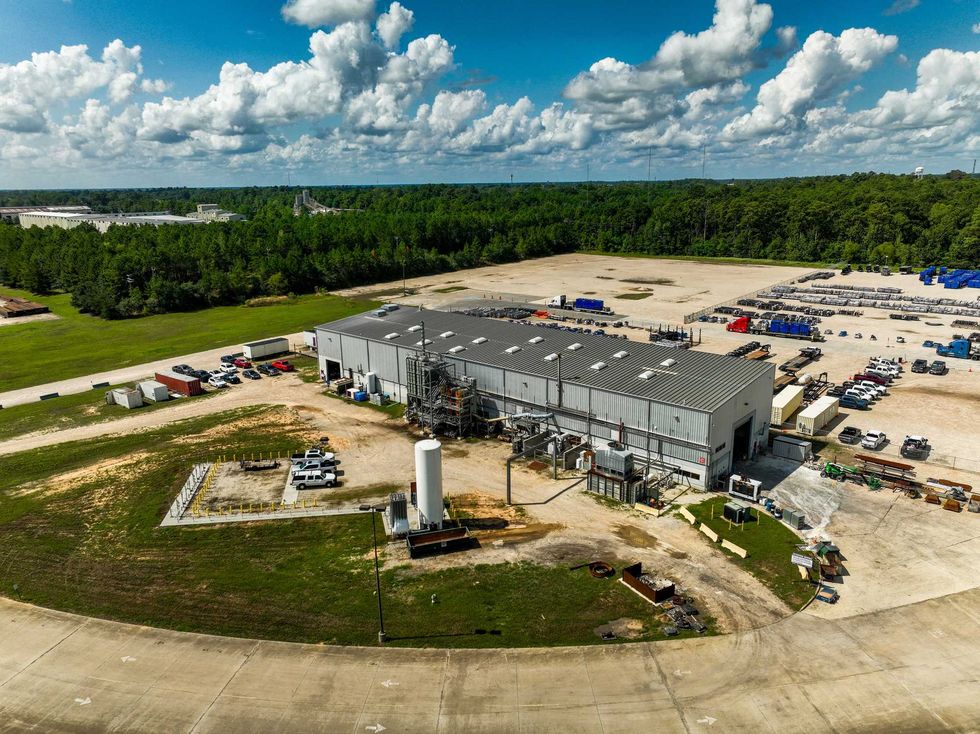
To meet current and future demand, Base Power is building its first energy storage and power electronics factory at the former downtown Austin site of the Austin American-Statesman’s printing presses.

“We’re building domestic manufacturing capacity for fixing the grid,” Justin Lopas, co-founder and chief operating officer of Base Power, added in the release. “The only way to add capacity to the grid is [by] physically deploying hardware, and we need to make that here in the U.S. ... This factory in Austin is our first, and we’re already planning for our second.”

Austin-based Base Power has opened an office and warehouse in Katy. Photo via basepowercompany.com.

Austin energy startup Base Power opens Katy office & expands Houston service

power move

An Austin startup that pairs electricity with backup power has started doing business in Houston.

Base Power announced this spring that it was entering the Houston market, with an initial focus on Cy-Fair, Spring, Cinco Ranch and Mission Bend. Now, Base Power is offering its service to households within the city of Houston.

To support its growth in the Houston area, Base Power has opened an office and warehouse in Katy. More than 30 people now work there. Plans to expand the Katy location are underway.

Base Power provides electricity that’s complemented by home backup power. Homes don’t need to be using solar power to sign up for Base Power’s service.

The startup said its service automatically supplies power to a home when the electric grid fails.

“Unlike traditional backup systems with high upfront costs, Base earns revenue by providing services to the grid — enabling Houstonians to get reliable backup and real savings,” Base Power said.

In addition to its standard service, Base Power has begun offering technology known as the Generator Recharge Port. This component allows a portable generator to plug into the Base battery system to recharge batteries during extended power outages.

“Houston has long been the energy capital of Texas, yet it has also endured some of the nation’s most painful lessons about unreliable power,” said Zach Dell, co-founder and CEO of Base Power. “We see Houston not just as a place to expand, but as a proving ground for how the future of energy should work — resilient, dependable, and built to serve homeowners when it matters most.”

Dell is the only son of Austin tech billionaire Michael Dell, a Houston native.

Base Power’s expansion in Houston adds to its Texas presence. The company now serves homeowners in the Houston, Dallas-Fort Worth and Austin areas. A partnership with homebuilder Lennar and collaborations with two utilities, GVEC and the Bandera Electric Cooperative, are helping drive Base Power’s business.

Base Power has raised more than $270 million in funding since its founding in 2023. This includes a $200 million series B round that will help finance construction of the company’s first factory in Texas and help fuel Base Power’s national expansion.

The startup’s investors include Andreessen Horowitz, Lightspeed Venture Partners, Valor Equity Partners, Thrive Capital, Altimeter, Terrain and Trust.

Base Power, founded by Justin Lopas and Zach Dell, closed a $200 million series B and plans to expand in Texas and around the country. Photo courtesy Base Power.

Texas energy startup closes $200M round to fund first factory in the state

fresh funding

Base Power, an Austin-based startup that provides battery-powered home energy services and just entered the Houston market, has raised $200 million in series B funding.

The money will help finance the construction of Base Power’s first factory in Texas. A site for the factory hasn’t been announced. The cash will also go toward the national expansion of Base Power’s services.

Andreessen Horowitz, Lightspeed Venture Partners and Valor Equity Partners co-led the round, with participation from existing investors such as Thrive Capital, Altimeter, Terrain, and Trust.

As part of the fundraising, Lee Fixel of Addition and Antonio Gracias of Valor Equity Partners are joining Base Power’s board of directors.

Last year, the startup landed $68 million in a series A funding round.

Base Power, founded in 2023, specializes in developing battery storage for energy that it provides to residential customers. Its partners include homebuilder Lennar and the Bandera Electric Cooperative, which supplies power to customers in seven Hill Country counties. Earlier this year it began serving the Houston-area territory serviced by CenterPoint Energy.

“Our rapid expansion has allowed us to power up thousands of Texans in just a few months, while driving their energy costs down and power reliability up,” Zach Dell, co-founder and CEO of Base Power, says in a news release. “With this investment, we will continue to innovate on new grid solutions, establish our domestic manufacturing capabilities, and accelerate adoption nationally.”

Dell’s father is Austin tech billionaire Michael Dell. He founded the company with Justin Lopas.

Ad Placement 300x100
Ad Placement 300x600

CultureMap Emails are Awesome

Houston energy tech company breaks ground on low-cost green hydrogen pilot plant

coming soon

Houston’s Lummus Technology and Advanced Ionics have broken ground on their hydrogen pilot plant at Lummus’ R&D facility in Pasadena.

The plant will support Advanced Ionics’ cutting-edge electrolyzer technology, which aims to deliver high-efficiency hydrogen production with reduced energy requirements.

“By demonstrating Advanced Ionics’ technology at our state-of-the-art R&D facility, we are leveraging the expertise of our scientists and R&D team, plus our proven track record of developing breakthrough technologies,” Leon de Bruyn, president and CEO of Lummus, said in a news release. “This will help us accelerate commercialization of the technology and deliver scalable, cost-effective and sustainable green hydrogen solutions to our customers.”

Advanced Ionics is a Milwaukee-based low-cost green hydrogen technology provider. Its electrolyzer converts process and waste heat into green hydrogen for less than a dollar per kilogram, according to the company. The platform's users include industrial hydrogen producers looking to optimize sustainability at an affordable cost.

Lummus, a global energy technology company, will operate the Advanced Ionics electrolyzer and manage the balance of plant systems.

In 2024, Lummus and Advanced Ionics established their partnership to help advance the production of cost-effective and sustainable hydrogen technology. Lummus Venture Capital also invested an undisclosed amount into Advanced Ionics at the time.

“Our collaboration with Lummus demonstrates the power of partnerships in driving the energy transition forward,” Ignacio Bincaz, CEO of Advanced Ionics, added in the news release. “Lummus serves as a launchpad for technologies like ours, enabling us to validate performance and integration under real-world conditions. This milestone proves that green hydrogen can be practical and economically viable, and it marks another key step toward commercial deployment.”

Houston Energy Transition Initiative releases 2025 year in review

The View From HETI

The Houston Energy Transition Initiative (HETI) concludes another impactful year by reaffirming our commitment to positioning Houston as the global leader in the energy transition – delivering more energy with fewer emissions. HETI continues to be focused on advancing key regional priorities, driving economic development and talent recruitment.

It was a year of changes across the energy landscape, yet HETI continued to collaborate, convene, and deliver measurable progress. Below are some of the year’s key highlights:

Sharing Members’ Impact on Decarbonization and Emissions Reductions

HETI released a report detailing members’ low-carbon initiatives and commitments, showcasing industry momentum and long-term pathways to achieving the dual challenge of meeting growing global energy demand while reducing emissions. Major findings include more than $95 billion in low-carbon investments and 20% reduction in Scope 1 emissions since 2017 by HETI-affiliated companies. The report also recommends strategic pathways for continued emissions reductions.

Advancing CCUS at Commercial Scale

HETI publicly supported efforts to accelerate carbon capture, utilization, and storage (CCUS) efforts to commercial scale. Early in the year, HETI and the Houston CCS Alliance commissioned Texas A&M University’s Energy Institute and Mary Kay O’Connor Process Safety Center to research the operational history and safety record of CCUS in the United States. In November, the U.S. Environmental Protection Agency granted Texas authority to permit CCUS—a significant win that increases the region’s competitiveness in the global energy ecosystem.

Leadership in Resilient Power for Houston’s Growth

In June, HETI hosted its first Resilient Power: Fueling Houston’s Growing Economy summit, bringing together more than 100 business and civic leaders to discuss the role of resilient, reliable power in Houston’s economic development. Cross-sector leaders explored the impacts of rising power demand driven by industrial decarbonization and digitalization, and discussed the essential collaboration between the energy and tech sectors to strengthen long-term resilience through an “all of the above” approach. HETI also published a fact sheet on Houston’s resilient power access, affordability, and reliability as a resource for partners.

Showcasing Houston’s Leadership at CERAWeek 2025

HETI participated in CERAWeek 2025, elevating Houston’s energy leadership on the world stage. The HETI House activation in the Innovation Agora attracted more than 1,000 visitors and generated over 80 economic development leads. In addition, HETI partnered with Rice Alliance and TEX-E for the fourth annual Energy Ventures Pitch Competition at CERAWeek, bringing together students, startups and energy leaders to advance innovation and investment.

Scaling Houston’s Innovation Ecosystem

As Houston’s energy innovation ecosystem continues to grow, HETI plays an important role in shaping its future. During its second year, Houston Energy and Climate Startup Week attracted more than 3,900 attendees from local and global startups, industry leaders, and investors—further solidifying Houston’s status as the world’s leading energy innovation hub.

Strengthening Regional Competitiveness

To advance technology commercialization and support the Gulf Coast’s continued energy competitiveness, HETI hosted its second annual Gulf Coast National Labs Workshop. This year’s event convened more than 120 leaders representing six national laboratories, industry partners, academia, and government stakeholders to accelerate collaboration around the region’s greatest energy and chemical challenges.

HETI’s progress this year is significant, but the work ahead is even more critical. As we move into the new year, HETI remains steadfast in its commitment to convening industry leaders, informing policy, supporting innovation, and driving economic growth across the region. This work strengthens Houston’s core energy economy and accelerates the emerging sectors that will ensure Houston continues to lead the world in energy.

———

This article originally appeared on the Greater Houston Partnership's Houston Energy Transition Initiative blog. HETI exists to support Houston's future as an energy leader. For more information about the Houston Energy Transition Initiative, EnergyCapitalHTX's presenting sponsor, visit htxenergytransition.org.

Chevron CEO touts biofuels as part of its renewable energy efforts

Betting on biofuels

As Chevron Chairman and CEO Mike Wirth surveys the renewable energy landscape, he sees the most potential in biofuels.

At a recent WSJ CEO Council event, Wirth put a particular emphasis on biofuels—the most established form of renewable energy—among the mix of low-carbon energy sources. According to Biofuels International, Chevron operates nine biorefineries around the world.

Biofuels are made from fats and oils, such as canola oil, soybean oil and used cooking oil.

At Chevron’s renewable diesel plant in Geismar, Louisiana, a recent expansion boosted annual production by 278 percent — from 90 million gallons to 340 million gallons. To drive innovation in the low-carbon-fuels sector, Chevron opened a technology center this summer at its renewable energy campus in Ames, Iowa.

Across the board, Chevron has earmarked $8 billion to advance its low-carbon business by 2028.

In addition to biofuels, Chevron’s low-carbon strategy includes hydrogen, although Wirth said hydrogen “is proving to be very difficult” because “you’re fighting the laws of thermodynamics.”

Nonetheless, Chevron is heavily invested in the hydrogen market:

As for geothermal energy, Wirth said it shows “some real promise.” Chevron’s plans for this segment of the renewable energy industry include a 20-megawatt geothermal pilot project in Northern California, according to the California Community Choice Association. The project is part of an initiative that aims to eventually produce 600 megawatts of geothermal energy.

What about solar and wind power?

“We start with things where we have some reason to believe we can create shareholder value, where we’ve got skills and competency, so we didn’t go into wind or solar because we’re not a turbine manufacturer installing wind and solar,” he said in remarks reported by The Wall Street Journal.

In a September interview with The New York Times, Wirth touched on Chevron’s green energy capabilities.

“We are investing in new technologies, like hydrogen, carbon capture and storage, lithium and renewable fuels,” Wirth said. “They are growing fast but off a very small base. We need to do things that meet demand as it exists and then evolve as demand evolves.”