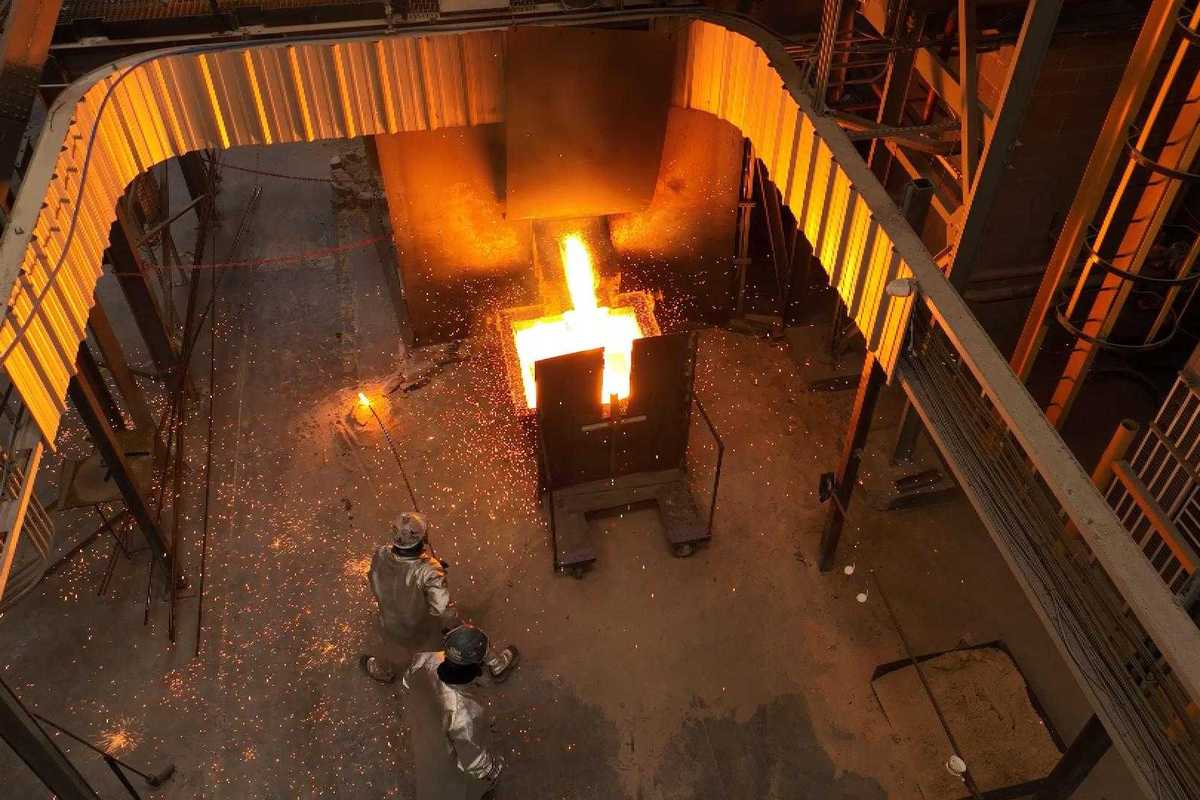
A new report shows that Texas data centers used 25 billion gallons of water in 2025. Photo via HARC report.

As data centers continue to boom throughout Texas, a new report from the Houston Advanced Research Center (HARC) warns that the trend could strain the state’s water supply.

HARC estimates Texas data centers used 25 billion gallons of water in 2025—and that the demand for water will continue to rise to meet the needs of the 464 data centers currently in Texas, as well as 70 additional sites currently under development.

In the report, titled “Thirsty Data and the Lone Star State: The Impact of Data Center Growth on Texas’ Water Supply,” The Woodlands-based nonprofit says that water use for cooling data centers is expected to double or triple by 2028 on the national level. If projections hold, the total annual water use for data centers in Texas will increase by 0.5 percent to 2.7 percent by 2030, or to between 29 billion and 161 billion gallons of water consumed.

Data centers often use water for cooling, though water demand is dependent on the type of cooling used, the size and type of the data center. Although used water can be reused, some new water withdrawals are always needed to replace evaporated water and other systems’ water losses. Water is also used to cool the power plants that generate electricity used by the data centers.

The HARC report offers guidance to address the overall concerns of water demands by data centers, including:

  • Dry cooling methods
  • Increased reliance on wind and solar energy sources
  • Alternative water supplies, like treated wastewater or brackish water for cooling
  • Adjusted operating schedules to accommodate water usage
  • Partnering with local companies to develop projects that reduce water leaks
  • Companies creating their own water infrastructure investments

The report goes on to explain that the Texas State Water Plan, produced by the Texas Water Development Board, projects shortages of 1.6 trillion gallons by 2030 and 2.3 trillion gallons by 2070. HARC posits that the recent surge in water demand from AI data centers is not fully reflected in those projections.

"Texas water plans always look backward, not forward," the report reads. "That means the 2027 water plan, which is in development now, will be based on 2026 regional water plans that do not include forecasted data center water use. Data centers that began operation in 2025 will not be added to the State Water Plan until 2032."

Currently, there are no state regulations that require data centers to report how much water they use. However, the Public Utility Commission of Texas (PUC) plans to survey operators of data centers and cryptocurrency mining facilities on their water consumption, cooling methods and electricity sources this spring. It is expected to release the results by the end of the year. The companies will have six weeks to respond. The Texas Water Development Board will assist the PUCT on the questions.

“I think we all recognize the importance of data centers and the technology they support and what they give to our modern-day life,” PUC Commissioner Courtney Hjaltman said during the last commission meeting. “Texans, regulators and the legislature really need that understanding of data centers, really need to understand the water they’re using so that we can plan and create the Texas we want.”

See the full HARC report here.

Ad Placement 300x100
Ad Placement 300x600

CultureMap Emails are Awesome

Japanese company plans $357M solar manufacturing plant in Houston area

coming soon

Japanese solar manufacturing company TOYO Co. Ltd. plans to invest $357 million to bring a 1.5-gigwatt solar cell manufacturing facility to the Houston area.

TOYO’s latest state-of-the-art facility will be co-located at its existing solar module site in Humble, according to a news release from the company. It will produce heterojunction (HJT) solar cells, which are known to be more durable and efficient with a higher heat threshold.

TOYO reports that the new facility will create 400 full-time manufacturing jobs. The project is expected to be completed in 20 months, which includes an initial pilot production.

"Expanding into domestic cell manufacturing is the natural next step in our commitment to creating an integrated onshore solar supply chain from polysilicon to panels," Takahiko Onozuka, chairman and CEO of TOYO, said in the news release. "Co-locating 1.5 GW of HJT cell capacity at our Houston module site significantly optimizes our capital allocation and infrastructure spend.”

TOYO entered the Houston market in 2024 through its acquisition of a majority stake in Solar Plus Technology Texas LLC.

Earlier this year, it began producing solar modules at its 567,140-square-foot plant in Lovett Industrial’s Nexus North Logistics Park. At the time, the company said it planned to expand manufacturing capacity to 6.5 gigawatts.

"The new cell plant reflects TOYO's long-term strategy to build a fully FEOC-compliant domestic manufacturing platform focused on serving the needs of the U.S. utility-scale solar market," Rhone Resch, TOYO's chief strategy officer, added in the release. "By producing premium solar products in the United States, we will be well positioned to meet the market's evolving domestic content requirements while strengthening supply chain security and reliability. Looking ahead, we believe HJT is the optimal technology platform for integrating next-generation perovskite solar cells, which we expect will drive the next major advancement in solar conversion efficiency and support TOYO's long-term technology roadmap.”

New survey reveals concerns over AI data center growth in Houston

data findings

A new report out of the University of Houston shows that area residents remain wary of the long-term effects of operating data centers.

The recent survey from the University of Houston’s latest SPACE City Panel, conducted by the Center for Public Policy at the Hobby School of Public Affairs, shows that while 85 percent of Houston-area residents use AI, nearly 63 percent oppose the construction of AI data centers within 1 mile of their homes.

Respondents’ concerns centered around data centers’ high energy demand and the area’s power grid reliability. According to the survey, 32 percent of residents who oppose local data center projects would be more likely to support the centers if they relied on renewable energy over fossil fuels.

“Respondents understand that AI can bring economic and educational benefits, but they are also concerned about the physical infrastructure needed to fuel AI, especially data centers,” Soran Mohtadi, post-doctoral fellow at the Hobby School and a researcher on the report, said in a news release. “This physical infrastructure demands more electricity and water, leading to environmental impacts.”

Experts estimate that 6.5 gigawatts of data center capacity will be added to the Texas grid by 2030. And Houston’s data center capacity is predicted to more than double by 2028.

The Electric Reliability Council of Texas also projects electricity demand could reach 218 gigawatts by 2031, which would be more than double the record peak set in August 2023. Data centers are expected to account for 86 gigawatts of that new demand.

Survey respondents also said they are concerned about the state's future water supply, given the large amounts of water that data centers need to stay cool.

In terms of who’s responsible for that issue, 57.6 percent of respondents said they put the onus on Texas lawmakers, while 31.5 percent say tech companies should be responsible.

Additionally, more than 75 percent of respondents believed that data center developers and technology companies—not residents—should bear the cost of infrastructure upgrades to support data centers.

“Every decision legislators make has implications on residents’ everyday lives and local infrastructure now and in the future,” Maria P. Perez Arguelles, lead researcher on the report and research assistant professor at the Hobby School, added in the news release. “This issue is going to become more important in years to come, so this is just the beginning.”

Read the full report here.

---

This article originally appeared on our sister site, EnergyCapitalHTX.com.