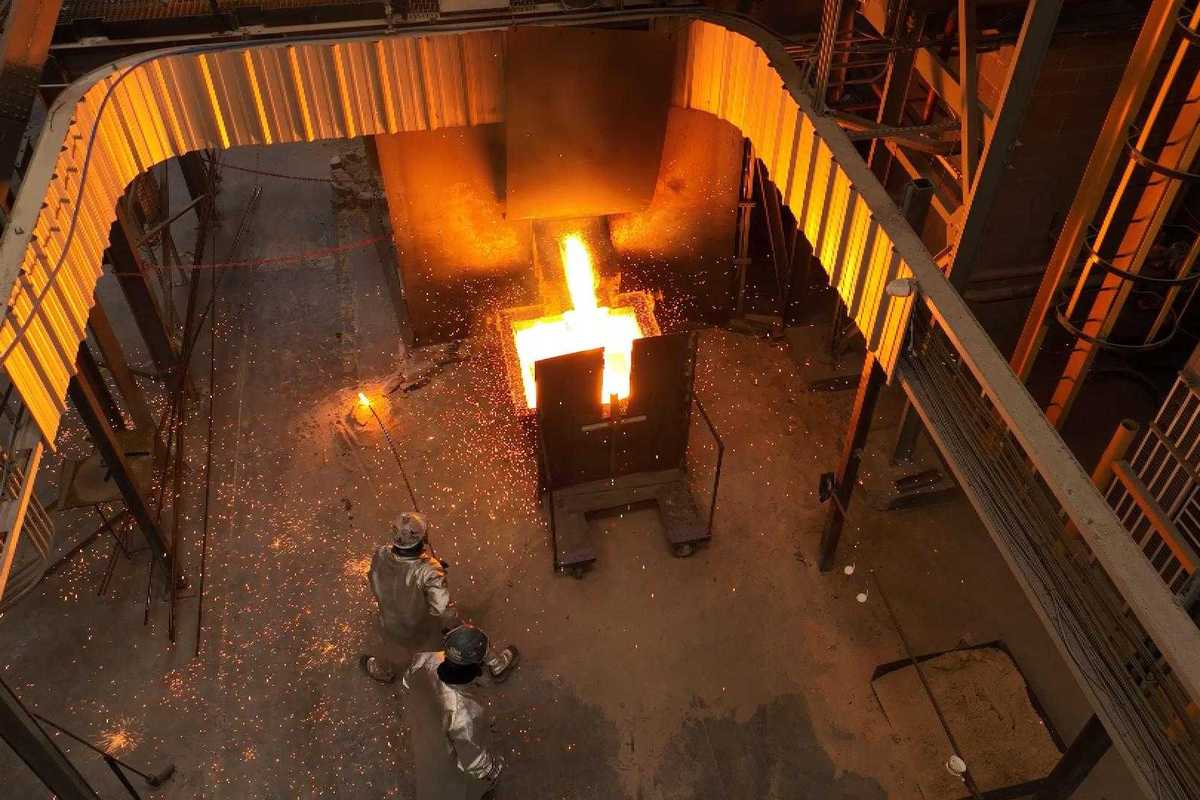
A new report shows that Texas data centers used 25 billion gallons of water in 2025. Photo via HARC report.

As data centers continue to boom throughout Texas, a new report from the Houston Advanced Research Center (HARC) warns that the trend could strain the state’s water supply.

HARC estimates Texas data centers used 25 billion gallons of water in 2025—and that the demand for water will continue to rise to meet the needs of the 464 data centers currently in Texas, as well as 70 additional sites currently under development.

In the report, titled “Thirsty Data and the Lone Star State: The Impact of Data Center Growth on Texas’ Water Supply,” The Woodlands-based nonprofit says that water use for cooling data centers is expected to double or triple by 2028 on the national level. If projections hold, the total annual water use for data centers in Texas will increase by 0.5 percent to 2.7 percent by 2030, or to between 29 billion and 161 billion gallons of water consumed.

Data centers often use water for cooling, though water demand is dependent on the type of cooling used, the size and type of the data center. Although used water can be reused, some new water withdrawals are always needed to replace evaporated water and other systems’ water losses. Water is also used to cool the power plants that generate electricity used by the data centers.

The HARC report offers guidance to address the overall concerns of water demands by data centers, including:

  • Dry cooling methods
  • Increased reliance on wind and solar energy sources
  • Alternative water supplies, like treated wastewater or brackish water for cooling
  • Adjusted operating schedules to accommodate water usage
  • Partnering with local companies to develop projects that reduce water leaks
  • Companies creating their own water infrastructure investments

The report goes on to explain that the Texas State Water Plan, produced by the Texas Water Development Board, projects shortages of 1.6 trillion gallons by 2030 and 2.3 trillion gallons by 2070. HARC posits that the recent surge in water demand from AI data centers is not fully reflected in those projections.

"Texas water plans always look backward, not forward," the report reads. "That means the 2027 water plan, which is in development now, will be based on 2026 regional water plans that do not include forecasted data center water use. Data centers that began operation in 2025 will not be added to the State Water Plan until 2032."

Currently, there are no state regulations that require data centers to report how much water they use. However, the Public Utility Commission of Texas (PUC) plans to survey operators of data centers and cryptocurrency mining facilities on their water consumption, cooling methods and electricity sources this spring. It is expected to release the results by the end of the year. The companies will have six weeks to respond. The Texas Water Development Board will assist the PUCT on the questions.

“I think we all recognize the importance of data centers and the technology they support and what they give to our modern-day life,” PUC Commissioner Courtney Hjaltman said during the last commission meeting. “Texans, regulators and the legislature really need that understanding of data centers, really need to understand the water they’re using so that we can plan and create the Texas we want.”

See the full HARC report here.

Ad Placement 300x100
Ad Placement 300x600

CultureMap Emails are Awesome

Rice, UH launch joint effort to accelerate plastics recycling solutions

plastics partnership

Institutes at two Houston universities are joining forces to help position the city as a global leader in plastics recycling innovation.

The Center for Energy Studies (CES) at Rice University’s Baker Institute for Public Policy and the University of Houston’s Energy Transition Institute (UH-ETI) have announced a strategic partnership that aims to develop real-world solutions for plastic recycling.

The universities will kick off the new initiative with the Annual Sustainability Summit: Innovations and Collaborations in Circularity & Supply Chain Resilience event April 22 at the Baker Institute.

“Houston sits at the center of the global plastics and petrochemical value chain, which makes it uniquely positioned to lead in circular solutions,” Rachel Meidl, deputy director of CES, said in a news release. “This partnership is about moving beyond theory and bringing together data, policy and industry insight to accelerate technologies and frameworks that can scale.”

The partnership—which was made official during CERAWeek—will integrate policy, economics, science and engineering. The universities will work to “share data, insights, networks and connections to advance global work in protecting the environment, economy and society,” according to a news release from Rice.

Initially, the universities will focus on evaluating scalable advanced recycling pathways, developing policy frameworks to improve plastics circularity, analyzing emerging technology and using industry stakeholders for deployment.

Plastics circularity aligns with Rice and UH’s energy transition efforts to advance a circular economy. UH's ETI recently published a white paper that analyzes how the U.S. currently handles plastics recycling and advocates for a new approach. Ramanan Krishnamoorti, author of the paper and vice president of energy and innovation at UH, said the partnership with Rice’s Baker Institute could help bring some of the ideas outlined in the paper to reality.

“Our research has shown that a uniform approach may be the best way for the U.S. to tackle plastic waste,” Krishnamoort said in a news release. “By partnering with Rice’s Baker Institute for Public Policy, we will be better positioned to deliver real-world solutions that advance a circular plastics economy.”

Fervo Energy adds former eBay CEO Meg Whitman, other leaders to board

power players

As it prepares for a highly anticipated IPO, Houston-based geothermal power provider Fervo Energy has added four heavyweights to its board of directors.

The most notable new board member is Meg Whitman, former CEO of eBay, Hewlett-Packard, and Spring-based HPE, and former U.S. ambassador to Kenya. She joined the Fervo board as lead independent director.

One of the other high-profile new board members at Fervo is Jessica Uhl. She was chief financial officer of Shell from 2017 to 2022 and spent a little over a year as president of GE Vernova, a GE energy spinoff. She is a former board member of GE, Goldman Sachs and Shell. Today, Uhl advises investment firms on energy matters.

Another energy industry veteran, Trey Lowe, also joined the Fervo board. Lowe is senior vice president and chief technology officer at oil and gas producer Devon Energy, a Fervo investor that’s moving its headquarters from Oklahoma City to Houston. Before Devon, Lowe worked in the U.S. and Norway for Houston-based energy technology company SLB.

The fourth new director at Fervo is Robert Keehan, who spent 37 years at professional services firm PwC. He most recently was PwC’s chief global auditor and earlier was a partner in the firm’s energy practice.

Keehan and Uhl will serve as independent directors, which are non-executive governance and oversight roles, while Lowe is a non-independent director, which is a more hands-on role.

With the four new directors, Fervo has seven board members.

The arrival of the four new board members comes at a monumental time for Fervo, a provider of utility-scale geothermal energy:

“Energy markets are demanding dependable, carbon-free power at an unprecedented scale, and Fervo is uniquely positioned to supply it,” Tim Latimer, co-founder and CEO of Fervo, said in December.