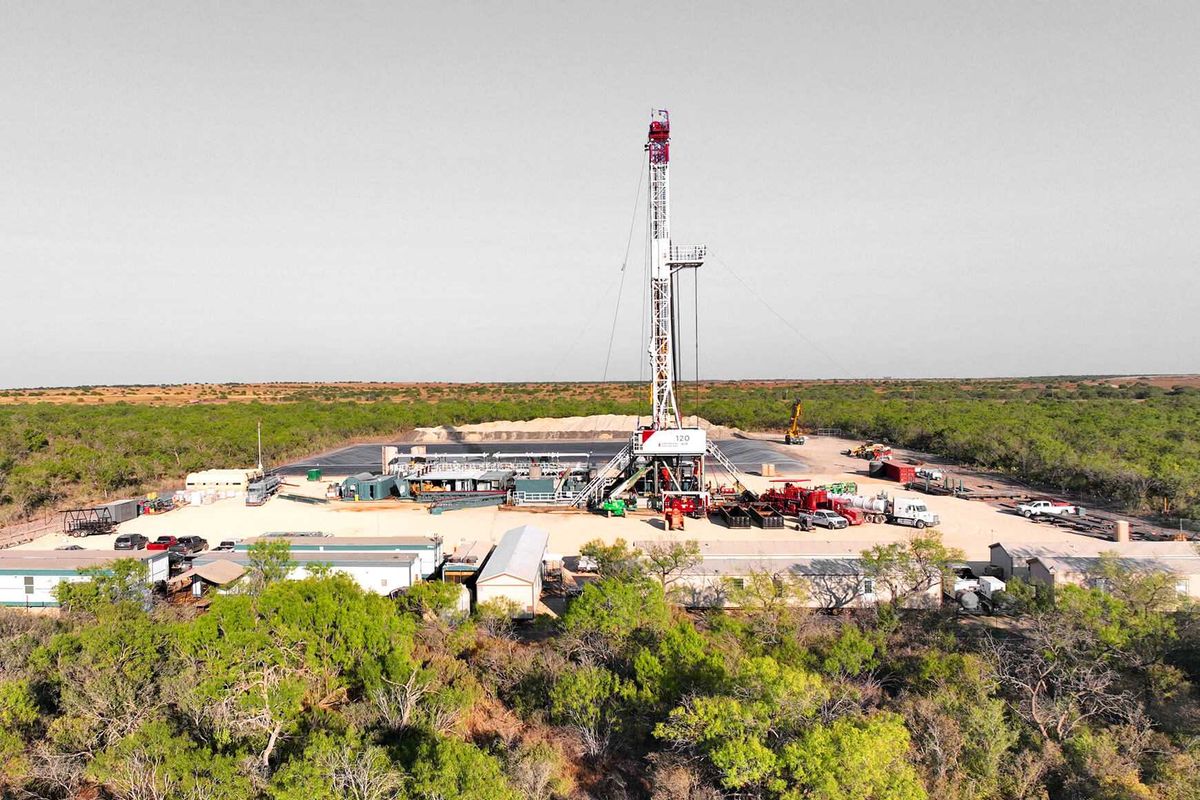
Houston-based Anew Climate will provide renewable natural gas to Canada-based Seaspan. Photo via seaspan.com

Houston-headquartered environmental services firm Anew Climate and Vancouver-based ship-to-ship marine bunkering of liquified natural gas company Seaspan Energy have entered into a first-of-its-kind strategic agreement to offer the delivery of renewable liquefied natural gas (R-LNG) to customers on the North American West Coast.

“We’re proud to collaborate with Anew Climate to forge a new path for lower-carbon marine fuel,” Harly Penner, president of Seaspan Energy, said in a news release. “This partnership supports our goal to provide cleaner energy solutions to the maritime industry and demonstrates our dedication to innovation and environmental leadership.”

Anew will supply renewable natural gas (RNG) certified by the International Sustainability and Carbon Certification (ISCC). The RNG will comply with the International Maritime Organization's (IMO) Net-Zero Framework, which recently approved measures to encourage emissions reductions, and the FuelEU Maritime Regulation in the European Union.

Together, the companies aim to identify and develop commercial opportunities to promote the adoption of lower-carbon fuels and deliver ISCC-certified renewable liquified natural gas (R-LNG) to ships throughout the North American West Coast.

The partnership builds upon Anew Climate’s bio-LNG bunkering, which was developed in 2021 when the company was known as Element Markets. It was the first bio-LNG bunkering, or refueling with bio-LNG, in the U.S.

“At a time when global shipping is under pressure to decarbonize, this partnership brings together two innovators committed to advancing sustainable solutions,” Andy Brosnan, president of Anew Climate Low Carbon Fuels, said in a news release. “By combining Anew’s expertise in RNG with Seaspan’s marine logistic capabilities, we’re offering a market-leading approach to help shipowners meet evolving emissions requirements and reduce their environmental impact without compromising performance.”

In July, Anew also extended its agreement with CNX Resources to market remediated mine gas, which is an ultra-low carbon intensity energy source from captured waste methane. It also announced a 10-year agreement earlier this summer with Aurora Sustainable Lands and Microsoft to deliver 4.8 million nature-based carbon removal credits. Anew Climate, founded in 2001, states that its mission is to reduce emissions, environmental restoration and impact the climate in a positive way.

Ad Placement 300x100
Ad Placement 300x600

CultureMap Emails are Awesome

Fervo Energy officially files for initial public offering

going public

Fervo Energy has officially filed for IPO.

The Houston-based geothermal unicorn filed a registration statement on Form S-1 with the U.S. Securities and Exchange Commission on April 17 to list its Class A common stock on the Nasdaq exchange. Fervo intends to be listed under the ticker symbol "FRVO."

The number and price of the shares have not yet been determined, according to a news release from Fervo. J.P. Morgan, BofA Securities, RBC Capital Markets and Barclays are leading the offering.

The highly anticipated filing comes as Fervo readies its flagship Cape Station geothermal project to deliver its first power later this year

"Today, miles-long lines for gasoline have been replaced by lines for electricity. Tech companies compete for megawatts to claim AI market share. Manufacturers jockey for power to strengthen American industry. Utilities demand clean, firm electricity to stabilize the grid," Fervo CEO Tim Latimer shared in the filing. "Fervo is prepared to serve all of these customers. Not with complex, idiosyncratic projects but with a simplified, standardized product capable of delivering around-the-clock, carbon-free power using proven oil and gas technology."

Fervo has been preparing to file for IPO for months. Axios Pro first reported that the company "quietly" filed for an IPO in January and estimated it would be valued between $2 billion and $3 billion.

Fervo also closed $421 million in non-recourse debt financing for the first phase of Cape Station last month and raised a $462 million Series E in December. The company also announced the addition of four heavyweights to its board of directors last week, including Meg Whitman, former CEO of eBay, Hewlett-Packard, and Spring-based HPE.

Fervo reported a net loss of $70.5 million for the 2025 fiscal year in the S-1 filing and a loss of $41.1 million in 2024.

Tracxn.com estimates that Fervo has raised $1.12 billion over 12 funding rounds. The company was founded in 2017 by Latimer and CTO Jack Norbeck.

Houston lawmaker may kill data center tax breaks due to $8B revenue loss

looking at the data

An influential Houston-area state senator is raising concerns about potentially billions of dollars in lost state revenue from tax breaks for Texas data centers—and is pondering legislation that would abolish the tax incentives.

Citing data from the state comptroller’s office, The Texas Tribune reports the state stands to lose nearly $8 billion in revenue from 2026 to 2030 due to sales tax and use tax exemptions for data centers. During the state’s 2025 fiscal year, which ended on Aug. 31, these tax exemptions caused Texas to lose a little over $1 billion, up from an earlier estimate of $130 million.

“These new numbers are extremely concerning, and I will say they’re unsustainable,” Republican state Sen. Joan Huffman, chairwoman of the state Senate Finance Committee, tells The Texas Tribune. “I plan to look at filing legislation to either repeal the exemption or take a very close look at it and see.”

Texas on track to be No. 1 data center market in U.S.

Scrutiny of the tax breaks comes amid an explosion of data center development in Texas, where data provider Aterio identifies nearly 1,000 centers that are operating, under construction or planned.

A report issued in January by Bloom Energy says the state is poised to become the No. 1 U.S. market for data centers within three years. By 2028, according to the report, Texas is projected to exceed 40 gigawatts of data center capacity—representing nearly 30 percent of total U.S. demand.

Among companies benefiting from the data center boom are:

  • Tech titans like Apple, Google, Meta Platforms, and Microsoft, which are spending billions of dollars to build data centers in Texas.
  • Spring-based ExxonMobil and Houston-based Chevron, two oil and energy giants that are developing natural gas plants to supply power for data centers.
  • Houston-based energy technology company Baker Hughes, which is collaborating with Google Cloud to develop AI-enabled power optimization and sustainability software for data centers.
  • DataBank, Data Foundry, Equinix, Digital Realty, Lumen Technologies, and IBM, all of which operate data centers in the Houston area.

The Texas Legislature will begin debating tax breaks for data centers in July, when Huffman’s Senate Finance Committee meets for an interim hearing before the 2027 legislative session, according to the Tribune.

Data center industry defends tax breaks

Leaders in the data center industry warn that watering down or halting the tax breaks could slow down or even end Texas’ ascent in the data center sector.

A 2025 report commissioned by the Data Center Coalition found that in 2024, data centers provided more than $1.6 billion in state tax revenue and almost $1.6 billion in local tax revenue in Texas. Over the next several years, according to the report, planned development of data centers in the Lone Star State could generate almost $3.8 billion in state tax revenue and more than $4.9 billion in local tax revenue.

In 2024, the Houston area had 8.1 million gross square feet of data centers, with the properties’ real estate investments sitting at $10 billion, according to the report. That year, data centers in the region produced a little over $700 million in state and local tax revenue. About 60 data centers operate in the Houston area.

Watchdog group warns of tax breaks’ danger to state budgets

On the other side of the debate over tax breaks for data centers, a report released last year by Good Jobs First, a nonprofit, nonpartisan watchdog group that tracks economic development incentives, decries the tax breaks as dangerous to state budgets.

“We know of no other form of state spending that is so out of control. Therefore, we recommend that states cancel their data center tax exemptions,” says Good Jobs research analyst Kasia Tarczynska, co-author of the report. “Shy of that, states should amend … legislation to cap how much any facility and company can avoid paying in taxes each year.”