







Promotions, corporate ladder climbing, and other top mover and shaker stories on EnergyCapital this year. Photos courtesy

Editor's note: As the year comes to a close, EnergyCapital is looking back at the year's top stories in Houston energy transition. From new board seats to internal promotions, this year marked a big one for some of Houston's energy leaders. Here were the top five most-read articles covering the mover and shaker news of 2024 — be sure to click through to read the full story.

Growing Houston biotech company expands leadership as it commercializes sustainable products

Nádia Skorupa Parachin joined Cemvita as vice president of industrial biotechnology. Photo courtesy of Cemvita

Houston-based biotech company Cemvita recently tapped two executives to help commercialize its sustainable fuel made from carbon waste.

Nádia Skorupa Parachin came aboard as vice president of industrial biotechnology, and Phil Garcia was promoted to vice president of commercialization.

Parachin most recently oversaw several projects at Boston-based biotech company Ginkjo Bioworks. She previously co-founded Brazilian biotech startup Integra Bioprocessos. Continue reading.

California geothermal co. grows C-suite, grows presence in Houston

XGS has leased 10,000 square feet of office space in Houston. Photo via Getty Images

A geothermal company with its headquarters in Palo Alto, California, has named new members of its C-suite and, at the same time, has expanded its operational footprint in Houston.

XGS Energy promoted Axel-Pierre Bois to CTO and Lucy Darago to chief commercial officer. Darago is based in Austin, and Bois, from France, lists his role as based in Houston on LinkedIn. Both have worked at XGS since February of last year.

“Axel and Lucy’s proven operational excellence and technical knowledge has helped propel XGS forward as we enter our next phase of growth,” Josh Prueher, CEO of XGS Energy, says in a news release. “I’m thrilled to have them both join XGS’ C-suite and have their support as we continue to grow our team, further advance our next-generation geothermal technology, and invest in our multi-gigawatt project pipeline.” Continue reading.

CenterPoint names 40-year industry veteran as exec for emergency response
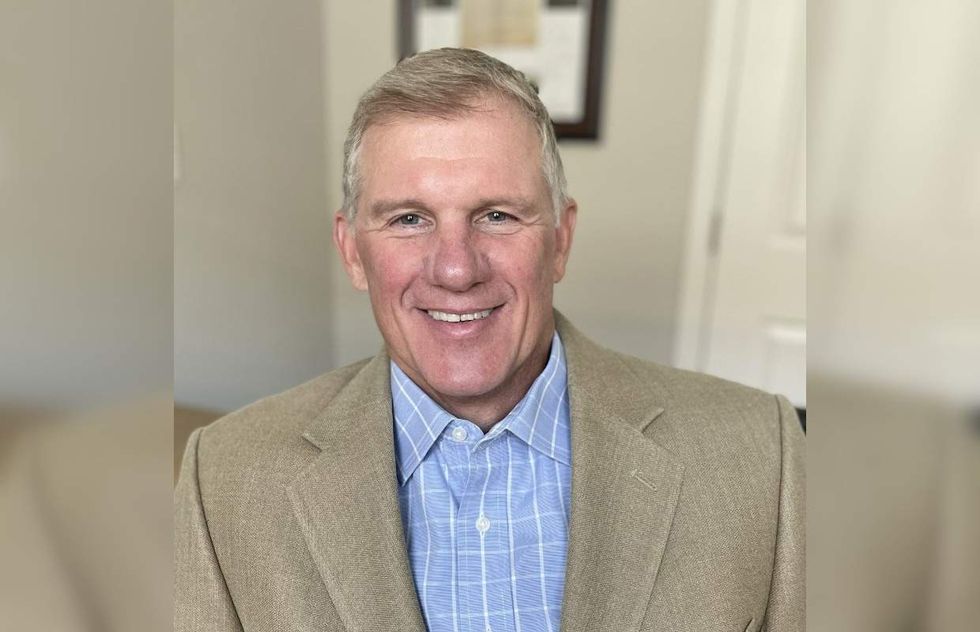
Don Daigler will be tasked to lead CenterPoint Energy's yearly work in preparation for, response to and recovery from all emergencies, which includes both natural disasters and man-made events. Photo via CenterPoint Energy/LinkedIn

CenterPoint Energy announced the hiring of industry veteran Don Daigler as the new senior vice president of CenterPoint’s Emergency Preparedness and Response.

Daigler will be tasked to lead the company’s yearly work in preparation for, response to and recovery from all emergencies, which includes both natural disasters and man-made events. Daigler and his team will coordinate with all public safety partners.

“I’m pleased to join CenterPoint Energy and lead its Emergency Preparedness and Response team to transform how we prepare, mitigate and respond to the impacts of hurricanes, extreme weather and other emergencies,” Daigler says in a news release. ”The year-round work of our team will help position CenterPoint to deliver the service our customers expect and deserve before, during and after emergencies when the need is greatest.” Continue reading.

Houston private equity professional tapped to lead growth development at firm focused on decarbonization
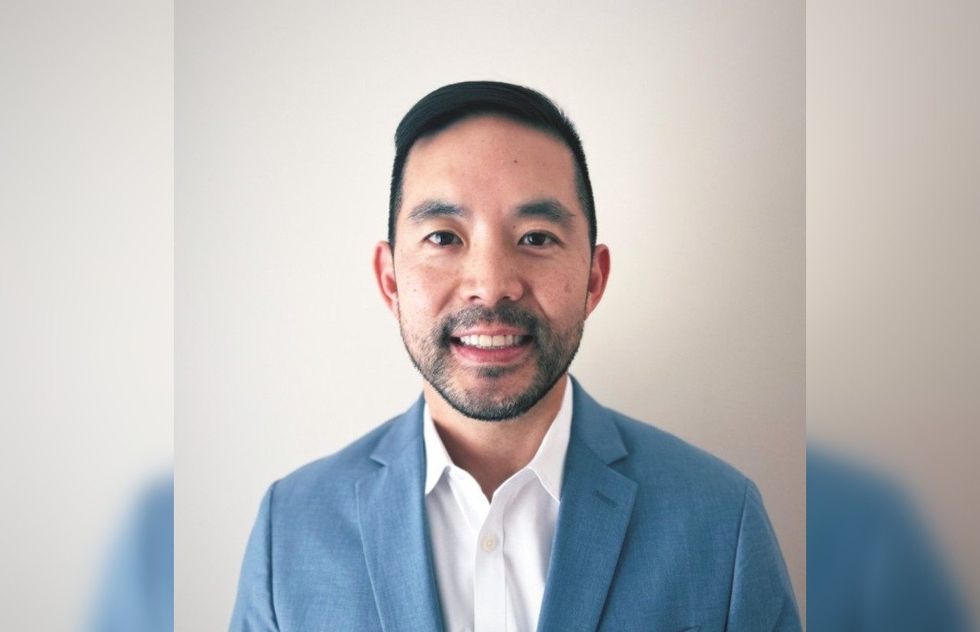
Climate Investment announced Patrick Yip will lead the firm's growth investment strategy as managing director, head of growth. Photo via LinkedIn

A London-based energy transition investment firm has named a new Houston-based leader.

Climate Investment announced Patrick Yip will lead the firm's growth investment strategy as managing director, head of growth. In his new role, he will oversee the development of CI’s growth-stage portfolio, including deal sourcing, operational function of strategy, and working with the team that manages the firm's early-stage Catalyst program. He reports to the CEO, Pratima Rangarajan.

“We are excited to welcome Patrick to Climate Investment,” Rangarajan says in a news release. “The decarbonization investment opportunity continues to grow rapidly, and Patrick’s extensive experience will help us capitalize on that. He will also provide leadership and develop the market partnerships that will drive our growth investment strategy forward, playing a key role in supporting portfolio market adoption and accelerating the next stage of development for CI.” Continue reading.

Firm hires top Houston-based energy banker to grow energy transition team

Top Houston banker Stephen Trauber has joined publicly traded investment bank Moelis & Co. Image via Shutterstock

Houston energy dealmaker Stephen Trauber has been tapped as chairman and global head of the energy and clean technology business at publicly traded investment bank Moelis & Co.

In 2010, The Wall Street Journal called Trauber “one of the best-connected energy bankers in Houston.”

Trauber comes to New York City-based Moelis from Citi, where he recently retired as vice chairman and global co-head of natural resources and clean energy transition. Before that, he was vice chairman and global head of energy at UBS Investment Bank, where he worked with Ken Moelis, who’s now chairman and CEO of Moelis. Continue reading.

Top Houston banker Stephen Trauber has joined publicly traded investment bank Moelis & Co. Image via Shutterstock

Firm hires top Houston-based energy banker to grow energy transition team

new hire

Houston energy dealmaker Stephen Trauber has been tapped as chairman and global head of the energy and clean technology business at publicly traded investment bank Moelis & Co.

In 2010, The Wall Street Journal called Trauber “one of the best-connected energy bankers in Houston.”

Trauber comes to New York City-based Moelis from Citi, where he recently retired as vice chairman and global co-head of natural resources and clean energy transition. Before that, he was vice chairman and global head of energy at UBS Investment Bank, where he worked with Ken Moelis, who’s now chairman and CEO of Moelis.

“The global energy ecosystem is undergoing major consolidation and change,” Trauber says in a Moelis news release. “I look forward to actively participating in its strategic evolution and working with so many of our clients that are evaluating how best to create value during this period of transformation.”

In conjunction with Trauber’s hiring, Guggenheim Securities executives Muhammad Laghari and Alexander Burpee are joining Moelis as managing directors in Houston. They’ll work with upstream and midstream oil and gas clients. Laghari and Burpee previously were colleagues of Trauber at Citi.

During his career, Trauber has advised on more than $700 billion in energy deals, including mergers, acquisitions, and IPOs. Among the industry heavyweights involved in those deals were BP, Halliburton, Kinder Morgan, Nabors, Occidental Petroleum, Schlumberger, Shell, and Weatherford International.

“Steve is a recognized leader in the industry who has played a key role in many of the energy sector’s landmark transactions,” says Navid Mahmoodzadegan, co-founder and co-president of Moelis.

Three years ago, Trauber made waves when Spring-based ExxonMobil

rejected his pitch “to commit to a target for net-zero emissions even after shareholders staged a revolt over the company’s climate policy,” Bloomberg reported at the time.

Last year, Trauber joined the board of directors of Houston-based NEXT Renewable Fuels, the board of directors of Houston-based ASEAN Energy, and the M&A and transactions advisory board of London-based professional services giant Aon.

The three new hires at Moelis follow the September 2023 launch of its Clean Technology Group. Arash Nazhad of Houston is co-leader of the group.

Ad Placement 300x100
Ad Placement 300x600

CultureMap Emails are Awesome

Solar surpasses coal to become ERCOT’s third-largest power source in 2025

by the numbers

Solar barely eclipsed coal to become the third biggest source of energy generated for the Electric Reliability Council of Texas (ERCOT) in 2025, according to new data.

In 2024, solar represented 10 percent of energy supplied to the ERCOT electric grid. Last year, that number climbed to 14 percent. During the same period, coal’s share remained at 13 percent.

From the largest to smallest share, here’s the breakdown of other ERCOT energy sources in 2025 compared with 2024:

  • Combined-cycle gas: 33 percent, down from 35 percent in 2024
  • Wind: 23 percent, down from 24 percent in 2024
  • Natural gas: 8 percent, down from 9 percent in 2024
  • Nuclear: 8 percent, unchanged from 2024
  • Other sources: 1 percent, unchanged from 2024

Combined, solar and wind accounted for 37 percent of ERCOT energy sources.

Looking ahead, solar promises to reign as the star of the ERCOT show:

  • An ERCOT report released in December 2024 said solar is on track to continue outpacing other energy sources in terms of growth of installed generating capacity, followed by battery energy storage.
  • In December, ERCOT reported that more than 11,100 megawatts of new generating capacity had been added to its grid since the previous winter. One megawatt of electricity serves about 250 homes in peak-demand periods. Battery energy storage made up 47 percent of the new capacity, with solar in second place at 40 percent.

The mix of ERCOT’s energy is critical to Texas’ growing need for electricity, as ERCOT manages about 90 percent of the electric load for the state, including the Houston metro area. Data centers, AI and population growth are driving heightened demand for electricity.

In the first nine months of 2025, Texas added a nation-leading 7.4 gigawatts of solar capacity, according to a report from data and analytics firm Wood Mackenzie and the Solar Energy Industries Association.

“Remarkable growth in Texas, Indiana, Utah and other states ... shows just how decisively the market is moving toward solar,” says Abigail Ross Hopper, president and CEO of the solar association.

New UH white paper pushes for national plastics recycling policy

plastics paper

The latest white paper from the University of Houston’s Energy Transition Institute analyzes how the U.S. currently handles plastics recycling and advocates for a national, policy-driven approach.

Ramanan Krishnamoorti, vice president for energy and innovation at UH; Debalina Sengupta, assistant vice president and chief operating officer at the Energy Transition Institute; and UH researcher Aparajita Datta authored the paper titled “Extended Producer Responsibility (EPR) for Plastics Packaging: Gaps, Challenges and Opportunities for Policies in the United States.” In the paper, the scientists argue that the current mix of state laws and limited recycling infrastructure are holding back progress at the national level.

EPR policies assign responsibility for the end-of-life management of plastic packaging to producers or companies, instead of taxpayers, to incentivize better product design and reduce waste.

“My hope is this research will inform government agencies on what policies could be implemented that would improve how we approach repurposing plastics in the U.S.,” Krishnamoorti said in a news release. “Not only will this information identify policies that help reduce waste, but they could also prove to be a boon to the circular economy as they can identify economically beneficial pathways to recycle materials.”

The paper notes outdated recycling infrastructure and older technology as roadblocks.

Currently, only seven states have passed EPR laws for plastic packaging. Ten others are looking to pass similar measures, but each looks different, according to UH. Additionally, each state also has its own reporting system, which leads to incompatible datasets. Developing national EPR policies or consistent nationwide standards could lead to cleaner and more efficient processes, the report says.

The researchers also believe that investing in sorting, processing facilities, workforce training and artificial intelligence could alleviate issues for businesses—and particularly small businesses, which often lack the resources to manage complex reporting systems. Digital infrastructure techniques and moving away from manual data collection could also help.

Public education on recycling would also be “imperative” to the success of new policies, the report adds.

“Experts repeatedly underscored that public education and awareness about EPR, including among policymakers, are dismal,” the report reads. “Infrastructural limitations, barriers to access and the prevailing belief that curbside recycling is ineffective in the U.S. contribute to public dissatisfaction, misinformation and, in some cases, opposition toward the use of taxpayers’ and ratepayers’ contributions for EPR.”

For more information, read the full paper here.

Investment bank opens energy-focused office in Houston

new to hou

Investment bank Cohen & Co. Capital Markets has opened a Houston office to serve as the hub of its energy advisory business and has tapped investment banking veteran Rahul Jasuja as the office’s leader.

Jasuja joined Cohen & Co. Capital Markets, a subsidiary of financial services company Cohen & Co., as managing director, and head of energy and energy transition investment banking. Cohen’s capital markets arm closed $44 billion worth of deals last year.

Jasuja previously worked at energy-focused Houston investment bank Mast Capital Advisors, where he was managing director of investment banking. Before Mast Capital, Jasuja was director of energy investment banking in the Houston office of Wells Fargo Securities.

“Meeting rising [energy] demand will require disciplined capital allocation across traditional energy, sustainable fuels, and firm, dispatchable solutions such as nuclear and geothermal,” Jasuja said in a news release. “Houston remains the center of gravity where capital, operating expertise, and execution come together to make that transition investable.”

The Houston office will focus on four energy verticals:

  • Energy systems such as nuclear and geothermal
  • Energy supply chains
  • Energy-transition fuel and technology
  • Traditional energy
“We are making a committed investment in Houston because we believe the infrastructure powering AI, defense, and energy transition — from nuclear to rare-earth technology — represents the next secular cycle of value creation,” Jerry Serowik, head of Cohen & Co. Capital Markets, added in the release.