







Freyr Battery acquired Trina Solar’s 5 GW solar module manufacturing facility in Wilmer, Texas. Photo courtesy of Freyr Battery

A clean energy company is abandoning a plan to build a giant electric battery factory in Atlanta's suburbs after it shifted to buy a solar panel plant in Texas.

Freyr Battery told officials on Thursday that it wouldn't build a $2.6 billion plant that was supposed to hire more than 700 people, after sending a Jan. 21 letter to the Coweta County Development Authority announcing its plans to end the project.

The factory would have built batteries to store electricity produced by renewable sources and release it later, company officials said. It would have been the second-largest battery factory worldwide when it was announced in 2023. But Freyr, a startup founded in 2018, never began construction on the 368-acre site.

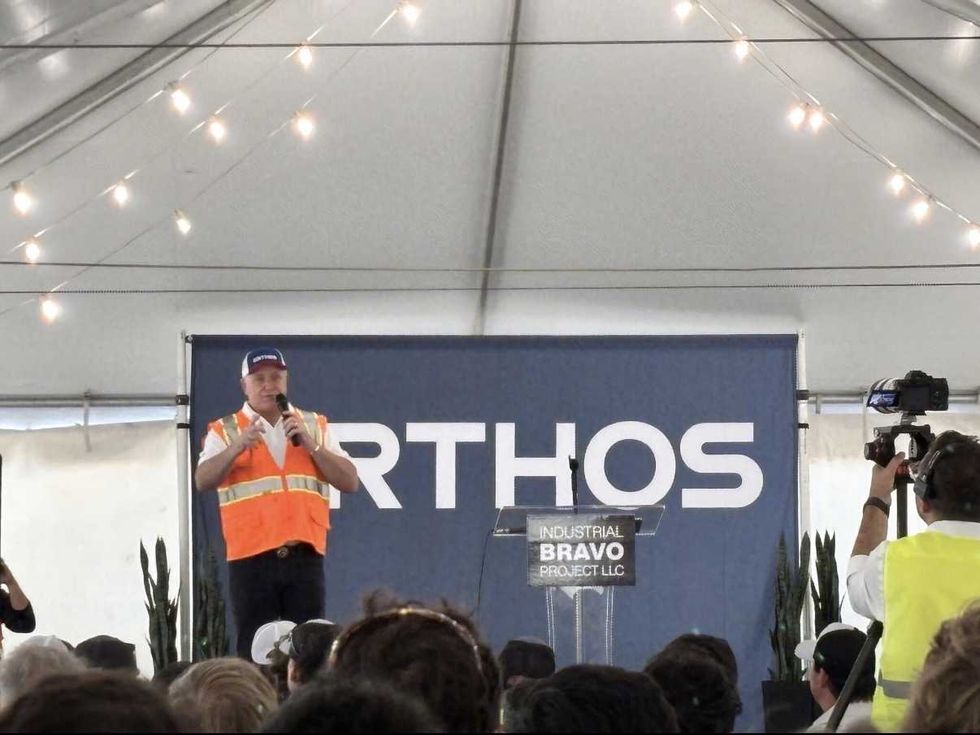
Freyr, which moved its corporate headquarters from Norway to Newnan in part to maximize its eligibility for the U.S. tax benefits of President Joe Biden's climate law, said it was shifting its focus to a newly opened solar panel factory that it bought last year for $340 million from top Chinese solar panel maker Trina Solar. The facility is located in Wilmer, Texas (Dallas County).

“We are so grateful for the support and partnership we found in Coweta County and throughout Georgia," Freyr spokesperson Amy Jaick wrote in a statement, "However, as noted in our December release, we are focusing at the moment on the solar module manufacturing facility in Texas.”

The Newnan Times-Herald first reported the story, saying Freyr senior vice president of business development Jason Peace met Thursday with local officials. Peace told Coweta County Development Authority board members that the decision was driven by rising interest rates, falling battery prices, a change in company leadership and a shift in its goals, authority President Sarah Jacobs wrote in an email Friday.

The Georgia Department of Economic Development said the state conveyed a $7 million grant to buy a site for Freyr in Newnan, about 35 miles southwest of Atlanta. Department spokesperson Jessica Atwell said the state and company are “working together” to ensure the money is “repaid expeditiously.” Freyr may also owe money to Coweta County.

“Georgia’s incentives process protects the Georgia taxpayer, and when a company’s plans change, that process ensures discretionary incentives are repaid," Atwell said in a statement.

Jacobs said planning for the project made Coweta County a stronger candidate for future projects.

The company had said it planned to build battery factories in Norway and Finland but said in November that it will try to sell its European business. The company also said it was terminating its license for technology to make batteries, paying $3 million to the company it was licensed from.

Tom Einar Jensen, then the company's CEO, told investors in August that it had grown difficult to raise money to make batteries because of a surplus of Chinese batteries being produced at lower costs. The company said it was switching its strategy into businesses that would allow it to raise cash, including solar panel manufacturing. The company saw its cash on hand fall from $253 million at the end of 2023 to $182 million on Sept. 30.

Georgia Gov. Brian Kemp has targeted recruitment of the electric vehicle industry.

Korean firm SK Innovation built a $2.6 billion battery plant in Commerce, northeast of Atlanta and hired 3,000 workers, but later laid off or furloughed some workers.

Hyundai Motor Group has started production at a $7.6 billion electric vehicle and battery plant near Savannah, with plans to hire 8,500 workers. Electric truck maker Rivian revived its plans to build a plant east of Atlanta after a $6.6 billion loan from the Biden administration.
Ad Placement 300x100
Ad Placement 300x600

CultureMap Emails are Awesome

13 Houston energy sector companies make U.S. News' best places to work

where to work

A new U.S. News & World Report ranking of the best employers has named two dozen Houston-based companies among the best companies to work in the South, and more than half are part of the region's booming energy sector.

U.S. News' prestigious "2026-2027 Best Companies to Work For" ratings examine 3,900 public and privately owned companies across 14 industries to help employees and job seekers make decisions about workplaces that may be a good fit.

Each company is rated on a scale of 1-5 across six metrics: quality of pay and benefits; work-life balance and flexibility; job and company stability; physical and psychological comfort; belongingness and esteem; and career opportunities and professional development.

"Job seekers' definitions of 'best' evolve with their needs," said Carly Chase, vice president of Careers at U.S. News. "From new grads in the AI era and seasoned pros seeking a career change, to HR leaders researching organizational trends, the ratings are a central hub that highlights businesses that U.S. News found effectively support their staff."

The number of employers headquartered in the Houston area that made the cut for 2026-2027 has skyrocketed over previous years. A total of 24 local public and private companies made the list this year, up from 16 companies in 2024 and 11 in 2025.

The highest concentration of top employers is located in Houston proper (20), followed by two companies in The Woodlands and one each in Kingwood and Spring.

Several leading Houston energy powerhouses on the list include petroleum corporation Occidental (Oxy) and oil and gas giants Chevron and Phillips 66.

Other energy sector companies on the list are:

  • EOG Resources, Houston
  • Targa Resources, Houston
  • TechnipFMC, Houston
  • Cheniere, Houston
  • Baker Hughes, Houston
  • KBR, Houston
  • CenterPoint Energy, Houston
  • Powell Industries
  • S&B, Houston
  • DXP, Houston
Here are the remaining best Houston-based companies to work for:
  • David Weekley Homes
  • Comfort Systems USA, Houston
  • Corebridge, Houston
  • Cornerstone Home Lending, Houston
  • Farouk, Houston
  • Hines, Houston
  • Insperity, Kingwood
  • HPE, Spring
  • Sterling Infrastructure, The Woodlands
  • LGI Homes, The Woodlands
  • PROS, Houston
---
A version of this article originally appeared on CultureMap.com.

Texas City ammonia plant acquired by Yara in $1.3 billion deal

Ammonia Acquisition

Yara North America, a subsidiary of Norwegian fertilizer and ammonia producer Yara International, has agreed to buy an ammonia production plant in Texas City for $1.3 billion.

The seller is GCA Holdings, an affiliate of Texas City-based chemical manufacturer Gulf Coast Ammonia, which is owned by private equity firms Lotus Infrastructure Partners and MB Energy.

The Texas City plant, with an eventual annual capacity of 1.3 million metric tons, is expected to start full production by the end of this year. Yara says the ammonia produced by the plant will serve its own fertilizer production system and its key customers.

During a recent call with analysts and investors, Magnus Ankarstrand, executive vice president and CFO of Yara International, said the plant holds the potential to become one of the company’s most profitable plants. The $1.3 billion purchase price, he added, “is a very attractive entry ticket to ammonia production in the U.S. at a very attractive cost.”

The Texas City plant will add to Yara’s holdings in the Lone Star State, as Yara is the majority owner of an ammonia, hydrogen and nitrogen production plant in Freeport.

Construction of the ammonia plant began in 2020, but technical and infrastructure issues delayed the project. On its website, Gulf Coast Ammonia says the plant represented a $600 million investment.

“Gulf Coast Ammonia is a world-class asset that required disciplined execution across development, financing, construction, and commercial structuring,” Philipp Pletka, managing director of Lotus Infrastructure Partners, says in a news release.

Trexlertown, Pennsylvania-based Air Products, which owns and operates the country’s largest hydrogen pipeline network, will continue to supply hydrogen and nitrogen for the plant under a long-term deal with Yara, according to the release.

However, the news comes two days after Yara International announced that it would no longer be purchasing ammonia assets in the Louisiana Clean Energy Complex (LCEC) from Air Products. In a separate release, Yara said it planned to reallocate funds toward "alternative mature U.S. ammonia investment opportunities with more competitive returns."

Houston hypersonic engine company lands $91M to accelerate production

Clean Speed

Houston-based Venus Aerospace has closed a $91 million Series B round and plans to scale the production of its hypersonic engine.

The round was led by Houston-based Mercury Fund with participation from Lockheed Martin Ventures, MESH, PEAK6, Draper Associates, Starboard Star Venture Capital, Green Sands Equity and other investors, according to a news release.

The investment comes about a year after Venus completed the first U.S. flight test of its high-thrust rotating detonation rocket engine (RDRE). The engine is expected to enable vehicles to travel four to six times the speed of sound from a conventional runway and is about 15 percent more efficient than traditional alternatives, according to the company.

Venus Aerospace says the latest round of funding will allow it to move the RDRE from demonstration to deployment and meet customer requirements for the near-term defense and space industries. The company says that the reusable RDRE is designed with a "common propulsion architecture" that can work for multiple industries and mission types.

“This financing marks an important step in moving Venus from breakthrough demonstration to scaled capability,” Sassie Duggleby, co-founder and CEO, said in the news release. “Our customers need propulsion systems that go farther, can be produced reliably and are built on supply chains they can trust. We are advancing that capability with American engineering and manufacturing talent to strengthen U.S. defense, expand space access and support the future of high-speed flight.”

Venus Aerospace raised a $20 million Series A in 2022, led by Wyoming-based Prime Movers Lab. At the time, the company said it would put the funding toward three main technologies: a next-generation rocket engine, aircraft shape and leading-edge cooling system.

The company also picked up an investment from Lockheed Martin Ventures, the investment arm of aerospace and defense contractor Lockheed Martin, in November 2025—in addition to funding from other investors over the years.

“Since our initial investment, Venus has progressed very quickly in its technology development," Chris Moran, vice president and general manager of Lockheed Martin Ventures, added in the release. "Our reinvestment in Venus recognizes Venus’ accomplishments to date and focus on speed to manufacture, cost management and reduction of supply chain constraints. Venus is working effectively to position its propulsion system for the production scale required by defense programs.”

"Venus is exactly the kind of company Houston capital should be backing," Blair Garrou, co-founder and managing partner at Mercury Fund, added in the release. "It combines multiple frontier technologies, domestic manufacturing and clear commercial and national security relevance. We believe this team is positioned to lead an important new chapter in defense and space, and we are proud to support a company building breakthrough technology here in Texas."

Venus Aerospace and Houston clean tech startup Vaulted Deep were also named to the World Economic Forum's Technology Pioneers community earlier this summer.

---

This article first appeared on InnovationMap.com.