Don't miss the premier energy events of the month. Photo courtesy of Reuters Energy LIVE

Editor's note: The year is coming to a close, but there are still exciting energy events to attend in Houston this month. Mark your calendar now for pitch days, seminars, networking, and Reuters Energy LIVE 2025.

Dec. 4 — Resiliency & Adaptation Sector Pitch Day

Join innovators, industry leaders, investors, and policymakers as they explore breakthrough climate and energy technologies at Greentown Labs' latest installment of its Sector Pitch Day series, focused on resiliency and adaptation. Hear from Adrian Trömel, Chief Innovation Officer at Rice University; Eric Willman, Executive Director of the Rice WaTER Institute; pitches from 10 Greentown startups; and more.

This event is Thursday, Dec. 4, from 1-3:30 p.m. at the Ion. The Ion Holiday Block Party follows. Register here.

Dec. 8 — Pumps & Pipes Annual Event 2025

The annual gathering brings together cross-industry leaders in aerospace, energy and medicine for engaging discussions and networking opportunities. Connor Grennan, Chief AI Architect at the NYU Stern School of Business, will present this year's keynote address, "Practical Strategies to Increase Productivity." Other sessions will feature leaders from Cena Research Institute, NASA Ames Research Center, ExxonMobil, Southwest Airlines, and more.

This event is Monday, Dec. 8, from 8 a.m.-5 p.m., at TMC Helix Park. Register here.

Dec. 9 — Energy in Action Seminar

The Energy Transition Institute hosts a monthly Energy in Action Seminar focused on the digitization of the global energy transition. This month's topic is "Exploring AI’s Impact on the Fuels & Petrochemicals Industry," featuring speaker Leo Chiang, Senior Director of Corporate Technology at The Lubrizol Corporation. The event includes a one-hour talk followed by an hour of networking.

This event is Dec. 9 from 4-6 pm at the University of Houston.

Dec. 9-10 — Energy LIVE 2025

Energy LIVE is Reuters Events' flagship conference and expo that brings the full energy ecosystem together under one roof in Houston to solve the industry's most urgent commercial and operational challenges. The event will feature 3,000-plus senior executives across three strategic stages, a showcase of 75-plus exhibitors, and six strategic content pillars.

This event is Dec. 9-10 at NRG Park. Register here.

Dec. 11-12 — Fundamentals of The Texas ERCOT Electric Power Market

This two-day seminar provides a comprehensive overview of the structure, function, and current status of the Texas ERCOT ISO. Attendees will gain an understanding of the dynamic Texas wholesale and retail competitive markets, and learn how these markets interface with ERCOT ISO energy auctions and ISO operations. This two-day event will also address the rapidly expanding new market opportunities in Texas renewables, distributed generation, demand response, and demand side management, and more.

This event is Dec. 11-12 at the Courtyard Marriott Houston near the Galleria. Register here.

Dec. 9-11 — AST Conference & Trade Show

The 18th Annual National Aboveground Storage Tank (AST) Conference & Trade Show is the premier event for professionals in storage tank and terminal operations. Join industry leaders and experts for a three-day conference providing regulatory updates, technical insights, hands-on learning, and networking opportunities.

This event is Dec. 9-12 at The Woodlands Waterway Marriott. Register here.

ExxonMobil Chairman and CEO Darren Woods said the company was weighing whether it would move forward with a proposed $7 billion low-hydrogen plant in Baytown this summer. Photo via exxonmobil.com

ExxonMobil pauses plans for $7B hydrogen plant in Baytown

project on pause

As anticipated, Spring-based oil and gas giant ExxonMobil has paused plans to build a low-hydrogen plant in Baytown, Chairman and CEO Darren Woods told Reuters.

“The suspension of the project, which had already experienced delays, reflects a wider slowdown in efforts by traditional oil and gas firms to transition to cleaner energy sources as many of the initiatives struggle to turn a profit,” Reuters reported.

Woods signaled during ExxonMobil’s second-quarter earnings call that the company was weighing whether it would move forward with the proposed $7 billion plant.

The Biden-era Inflation Reduction Act established a 10-year incentive, the 45V tax credit, for production of clean hydrogen. But under President Trump’s One Big Beautiful Bill Act, the period for beginning construction of low-carbon hydrogen projects that qualify for the tax credit has been compressed. The Inflation Reduction Act called for construction to begin by 2033. The Big Beautiful Bill changed the construction start time to early 2028.

“While our project can meet this timeline, we’re concerned about the development of a broader market, which is critical to transition from government incentives,” Woods said during the earnings call.

Woods had said ExxonMobil was figuring out whether a combination of the 45Q tax credit for carbon capture projects and the revised 45V tax credit would enable a broader market for low-carbon hydrogen.

“If we can’t see an eventual path to a market-driven business, we won’t move forward with the [Baytown] project,” Woods told Wall Street analysts.

“We knew that helping to establish a brand-new product and a brand-new market initially driven by government policy would not be easy or advance in a straight line,” he added.

ExxonMobil announced in 2022 that it would build the low-carbon hydrogen plant at its refining and petrochemical complex in Baytown. The company had indicated the plant would start initial production in 2027.

ExxonMobil had said the Baytown plant would produce up to 1 billion cubic feet of hydrogen per day made from natural gas, and capture and store more than 98 percent of the associated carbon dioxide. The plant would have been capable of storing as much as 10 million metric tons of CO2 per year.

Ad Placement 300x100
Ad Placement 300x600

CultureMap Emails are Awesome

ERCOT approves $9.4B project to improve grid, meet data center demand

power project

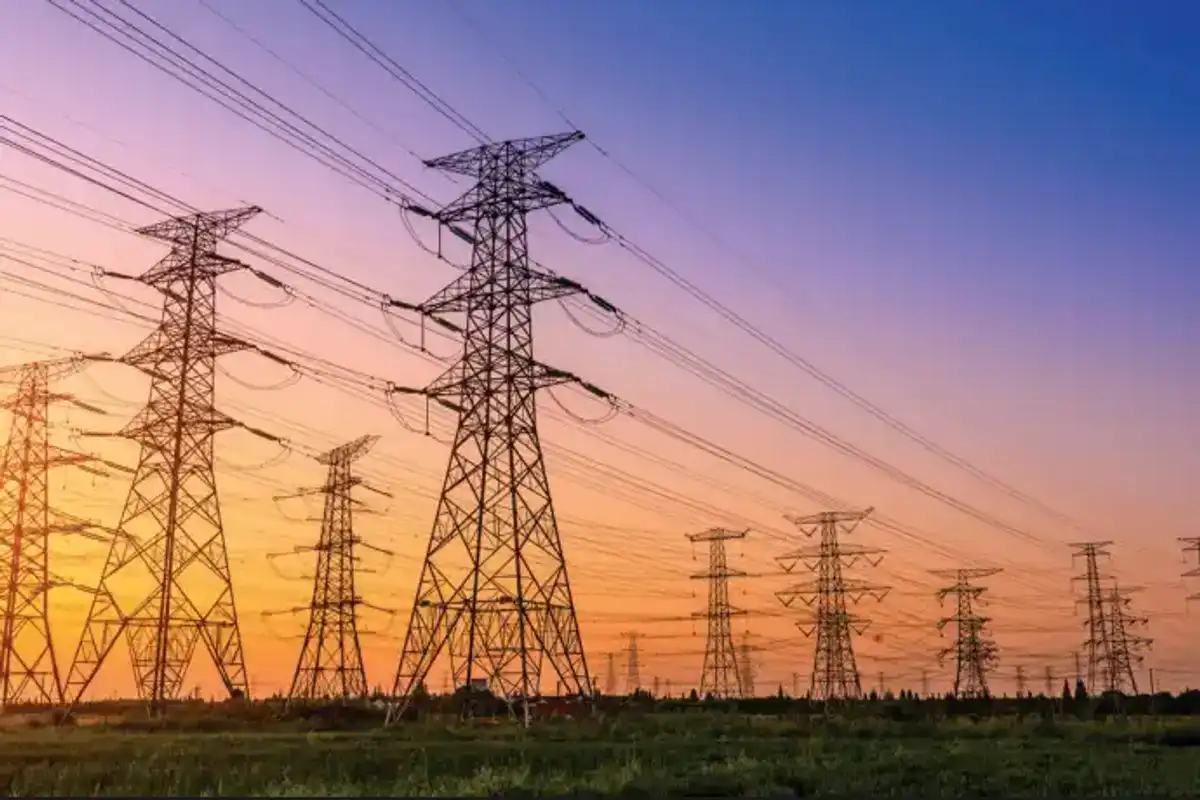
The Electric Reliability Council of Texas, which manages the electric grid for 90 percent of Texans, is undertaking a $9.4 billion project to improve the reliability and efficiency of statewide power distribution. The initiative comes as ERCOT copes with escalating demand for electricity from data centers and cryptocurrency-mining facilities.

The project, approved Dec. 9 by ERCOT’s board, will involve building a 1,109-mile “super highway” of new 765-kilovolt transmission lines. One kilovolt equals 1,000 volts of electricity.

According to the Hoodline Dallas news site, the $9.4 billion project represents the five- to six-year first phase of ERCOT’s Strategic Transmission Expansion Plan (STEP). Hoodline says the plan, whose price tag is nearly $33 billion, calls for 2,468 miles of new 765-kilovolt power lines.

STEP will enable ERCOT to “move power longer distances with fewer losses,” Hoodline reports.

Upgrading the ERCOT grid is a key priority amid continued population growth in Texas, along with the state’s explosion of new data centers and cryptocurrency-mining facilities.

ERCOT says about 11,000 megawatts of new power generation capacity have been added to the ERCOT grid since last winter.

But in a report released ahead of the December board meeting, ERCOT says it received 225 requests this year from large power users to connect to its grid — a 270 percent uptick in the number of megawatts being sought by mega-users since last December. Nearly three-fourths (73 percent) of the requests came from data centers.

Allan Schurr, chief commercial officer of Houston-based Enchanted Rock, a provider of products and services for microgrids and onsite power generation, tells Energy Capital that the quickly expanding data center industry is putting “unprecedented pressure” on ERCOT’s grid.

“While the state has added new generation and transmission capacity, lengthy interconnection timelines and grid-planning limitations mean that supply and transmission are not keeping pace with this rapid expansion,” Schurr says. “This impacts both reliability and affordability.”

For families in Texas, this could result in higher energy bills, he says. Meanwhile, critical facilities like hospitals and grocery stores face a heightened challenge of preventing power outages during extreme weather or at other times when the ERCOT grid is taxed.

“I expect this trend to continue as AI and high-density computing grow, driving higher peak demand and greater grid variability — made even more complex by more renewables, extreme weather and other large energy users, like manufacturers,” Schurr says.

According to the Pew Research Center, data centers accounted for 4 percent of U.S. electricity use in 2024, and power demand from data centers is expected to more than double by 2030. Data centers that support the AI boom make up much of the rising demand.

In September, RBN Energy reported more than 10 massive data-center campuses had been announced in Texas, with dozens more planned. The Lone Star State is already home to roughly 400 data centers.

“Texas easily ranks among the nation’s top states for existing data centers, with only Virginia edging it out in both data-center count and associated power demand,” says RBN Energy.

Federal judge strikes Trump order blocking wind energy development

wind win

In a win for clean energy and wind projects in Texas and throughout the U.S., a federal judge struck down President Donald Trump’s “Day One” executive order that blocked wind energy development on federal lands and waters, the Associated Press reports.

Judge Patti Saris of the U.S. District Court for the District of Massachusetts vacated Trump’s executive order from Jan. 20, declaring it unlawful and calling it “arbitrary and capricious.”

The challenge was led by a group of state attorneys general from 17 states and Washington, D.C., which was led by New York Attorney General Letitia James. The coalition pushed back against Trump's order , arguing that the administration didn’t have the authority to halt project permitting, and that efforts would critically impact state economies, the energy industry, public health and climate relief efforts.

White House spokesperson Taylor Rogers told the Associated Press that wind projects were given unfair treatment during the Biden Administration and cited that the rest of the energy industry suffered from regulations.

According to the American Clean Power Association, wind is the largest source of renewable energy in the U.S. It provides 10 percent of the electricity generated—and growing. Texas leads the nation in wind electricity generation, accounting for 28 percent of the U.S. total in 2024, according to the U.S. Energy Information Administration.

Several clean-energy initiatives have been disrupted by recent policy changes, impacting Houston projects.

The Biden era Inflation Reduction Act’s 10-year hydrogen incentive was shortened under Trump’s One Big Beautiful Bill Act, prompting ExxonMobil to pause its Baytown low-carbon hydrogen project. That project — and two others in the Houston region — also lost federal support as part of a broader $700 million cancellation tied to DOE cuts.

Meanwhile, Texas House Democrats have urged the administration to restore a $250 million Solar for All grant that would have helped low-income households install solar panels.

Texas launches cryptocurrency reserve with $5 million Bitcoin purchase

Digital Deals

Texas has launched its new cryptocurrency reserve with a $5 million purchase of Bitcoin as the state continues to embrace the volatile and controversial digital currency.

The Texas Comptroller’s Office confirmed the purchase was made last month as a “placeholder investment” while the office works to contract with a cryptocurrency bank to manage its portfolio.

The purchase is one of the first of its kind by a state government, made during a year where the price of Bitcoin has exploded amid the embrace of the digital currency by President Donald Trump’s administration and the rapid expansion of crypto mines in Texas.

“The Texas Legislature passed a bold mandate to create the nation’s first Strategic Bitcoin Reserve,” acting Comptroller Kelly Hancock wrote in a statement. “Our goal for implementation is simple: build a secure reserve that strengthens the state’s balance sheet. Texas is leading the way once again, and we’re proud to do it.”

The purchase represents half of the $10 million the Legislature appropriated for the strategic reserve during this year’s legislative session, but just a sliver of the state’s $338 billion budget.

However, the purchase is still significant, making Texas the first state to fund a strategic cryptocurrency reserve. Arizona and New Hampshire have also passed laws to create similar strategic funds but have not yet purchased cryptocurrency.

Wisconsin and Michigan made pension fund investments in cryptocurrency last year.

The Comptroller’s office purchased the Bitcoin the morning of Nov. 20 when the price of a single bitcoin was $91,336, according to the Comptroller’s office. As of Friday afternoon, Bitcoin was worth slightly less than the price Texas paid, trading for $89,406.

University of Houston energy economist Ed Hirs questioned the state’s investment, pointing to Bitcoin’s volatility. That makes it a bad investment of taxpayer dollars when compared to more common investments in the stock and bond markets, he said.

“The ordinary mix [in investing] is one that goes away from volatility,” Hirs said. “The goal is to not lose to the market. Once the public decides this really has no intrinsic value, then it will be over, and taxpayers will be left holding the bag.”

The price of Bitcoin is down significantly from an all-time high of $126,080 in early October.

Lee Bratcher, president of the Texas Blockchain Council, argued the state is making a good investment because the price of Bitcoin has trended upward ever since it first launched in early 2009.

“It’s only a 16-year-old asset, so the volatility, both in the up and down direction, will smooth out over time,” Bratcher said. “We still want it to retain some of those volatility characteristics because that’s how we could see those upward moves that will benefit the state’s finances in the future.”

Bratcher said the timing of the state’s investment was shrewd because he believes it is unlikely to be valued this low again.

The investment comes at a time that the crypto industry has found a home in Texas.

Rural counties have become magnets for crypto mines ever since China banned crypto mining in 2021 and Gov. Greg Abbott declared “Texas is open for crypto business” in a post on social media.

The state is home to at least 27 Bitcoin facilities, according to the Texas Blockchain Council, making it the world’s top crypto mining spot. The two largest crypto mining facilities in the world call Texas home.

The industry has also come under criticism as it expands.

Critics point to the industry’s significant energy usage, with crypto mines in the state consuming 2,717 megawatts of power in 2023, according to the comptroller’s office. That is enough electricity to power roughly 680,000 homes.

Crypto mines use large amounts of electricity to run computers that run constantly to produce cryptocurrencies, which are decentralized digital currencies used as alternatives to government-backed traditional currencies.

A 2023 study by energy research and consulting firm Wood Mackenzie commissioned by The New York Times found that Texans’ electric bills had risen nearly 5%, or $1.8 billion per year, due to the increase in demand on the state power grid created by crypto mines.

Residents living near crypto mines have also complained that the amount of job creation promised by the facilities has not materialized and the noise of their operation is a nuisance.

“Texas should be reinvesting Texan’s tax money in things that truly bolster the economy long term, living wage, access to quality healthcare, world class public schools,” said state Sen. Molly Cook, D-Houston, who voted against the creation of the strategic fund. “Instead it feels like they’re almost gambling our money on something that is known to be really volatile and has not shown to be a tide that raises all boats.”

State Sen. Charles Schwertner, R-Georgetown, who authored the bill that created the fund, said at the time it passed that it will allow Texas to “lead and compete in the digital economy.”

___

This story was originally published by The Texas Tribune and distributed through a partnership with The Associated Press.