Promotions, corporate ladder climbing, and other top mover and shaker stories on EnergyCapital this year. Photos courtesy

Editor's note: As the year comes to a close, EnergyCapital is looking back at the year's top stories in Houston energy transition. From new board seats to internal promotions, this year marked a big one for some of Houston's energy leaders. Here were the top five most-read articles covering the mover and shaker news of 2023 — be sure to click through to read the full story.

Global consulting firm names new Houston energy practice leader​

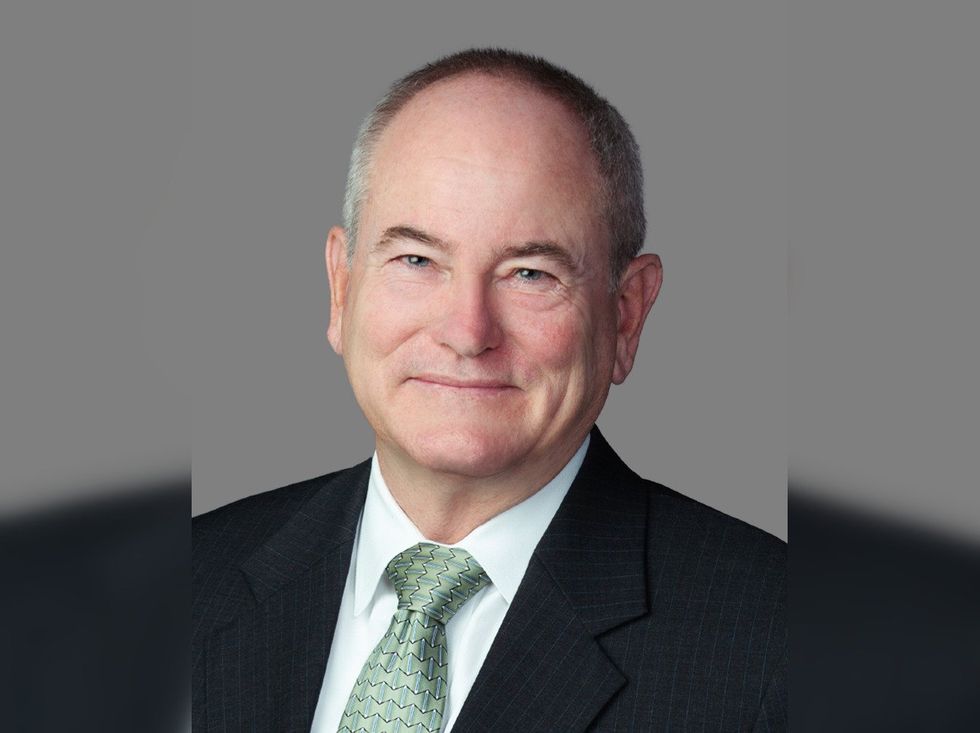
Alvarez & Marsal announced the appointment of Jay Johnson as senior adviser to its energy practice. Photo via alvarezandmarsal.com

A top global professional services firm named a Houston-based energy leader amid industry evolution and regulatory changes.

Alvarez & Marsal, or A&M, announced the appointment of Jay Johnson as senior adviser to its energy practice.

“I enjoy bringing together teams of people to solve the complex challenges facing companies today,” Johnson says in a news release. “I’m looking forward to working with A&M’s energy team to build leadership and capabilities to address industry challenges.”

Click here to read the article from November.

Houston carbon storage solutions company names new energy transition leader at pivotal time of growth
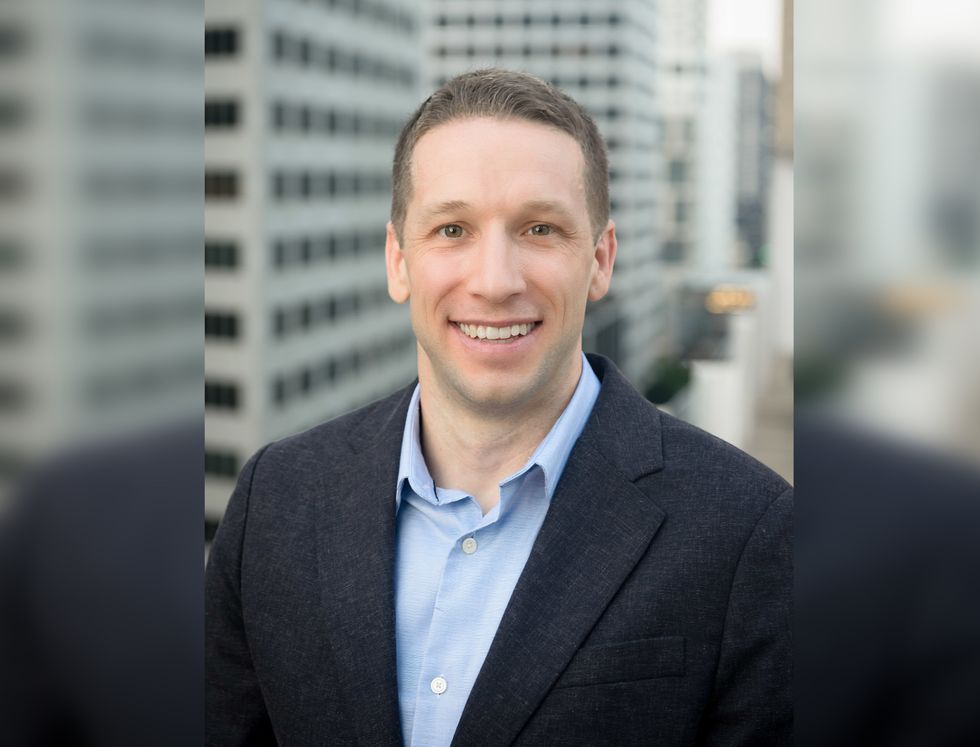
Graham Payne, the new director of energy transition at Caliche Development Partners II, is bullish on Houston. Photo courtesy

Graham Payne sees a bright future for the multibillion-dollar energy transition economy in Houston.

“It’s been said that Houston is poised, like no other city, to lead the energy transition. And I’d have to agree, because we have all the requisite natural resources, industry, and talent,” says Payne, the new director of energy transition at Houston-based carbon capture, utilization, and storage (CCUS) company Caliche Development Partners II.

Caliche and other Houston-based energy transition companies secured $6.1 billion in private funding last year, up 62 percent from 2022, according to the Greater Houston Partnership.

Click here to read the article from October.

Investment banking firm launches cleantech group, names Houston-based co-leader
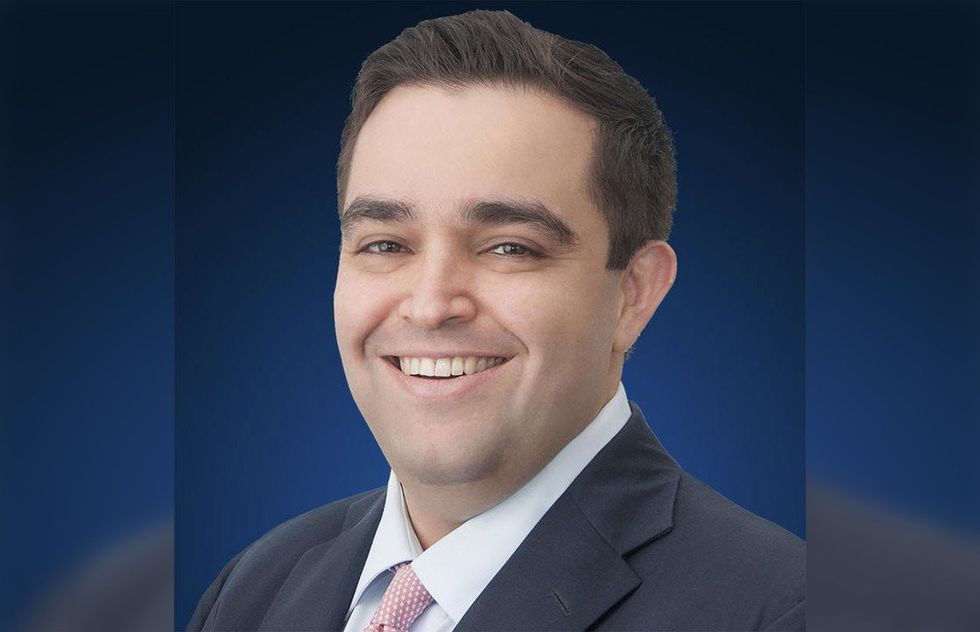
Moelis hired Arash Nazhad as Houston-based managing director and co-head of its newly formed clean energy technology group. Photo via rice.edu

A Houston investment banker has been tapped as co-leader of a new team at investment bank Moelis & Co. that will mine the energy sector for cleantech deals.

Publicly traded Moelis said September 7 that it hired Arash Nazhad as Houston-based managing director and co-head of its newly formed clean energy technology group. Nazhad joins Moelis from financial services giant Citigroup, where he was managing director of its clean energy investment team. He worked at Citigroup for nine years.

During his tenure at Citigroup and, before that, Norwegian energy company Equinor (which operates a Houston office), Nazhad helped carry out more than $50 billion in M&A advisory activities and helped raise over $40 billion in capital for clients. He’s been involved in the rollout of more than 20 IPOs.

Click here to read the article from September.

Houston energy transition leader joins California company's board with investment
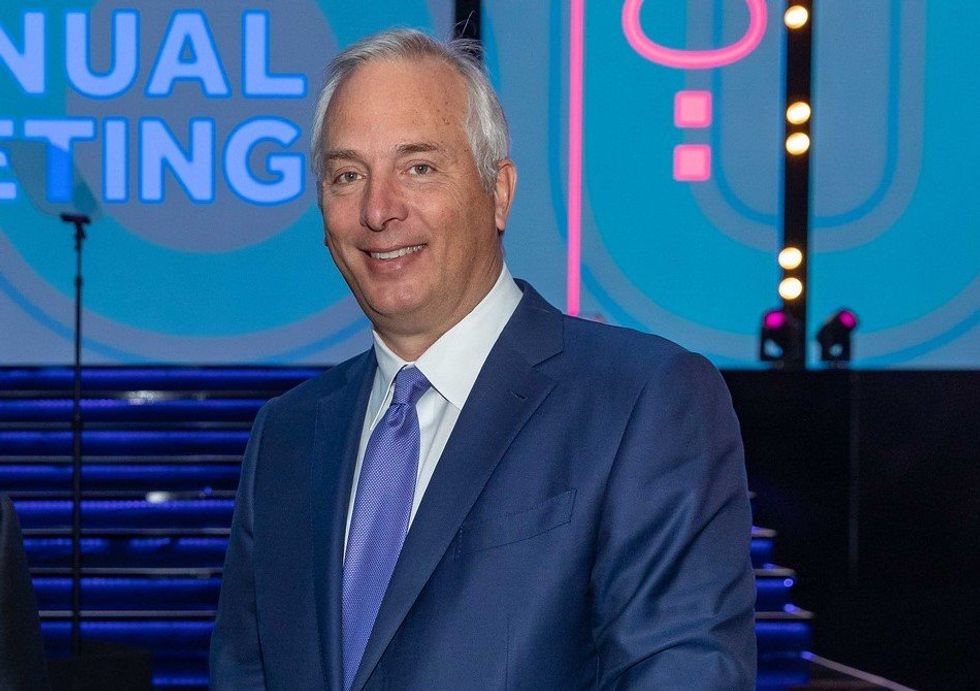
Bobby Tudor has joined the board of an energy tech company. Photo via Houston.org

A Houston business leader has taken a seat at the table of a San Francisco-based tech company.

Puloli, an IoT solutions-as-a-service company has announced an investment from, Artemis Energy Partners, a Houston group founded by Bobby Tudor. The terms of the deal were not disclosed.

With the transaction, Tudor joins Puloli's board of directors, bringing expertise from a storied career in energy transition from his roles at Tudor Pickering Holt & Co. and the Greater Houston Partnership.

"Bobby brings a tremendous amount of credibility and energy industry insight to Puloli and complements what Jodi Jahic and Aligned Partners bring to Puloli," Kethees Ketheesan, CEO of Puloli, says in a news release. "Bobby's endorsement of Puloli solution will be a big boost in accelerating our growth."

Click here to read the article from July.

Energy exec to take the reins of the Greater Houston Partnership

Steve Kean will transition from leading Kinder Morgan to assuming the role of president and CEO of the Greater Houston Partnership later this year. Photo courtesy of the GHP

A longtime energy executive has been named the next president and CEO of the Greater Houston Partnership. He'll take on the new role this fall.

The GHP named Steve Kean, who currently serves as the CEO of Kinder Morgan Inc., to the position. He's expected to transition from CEO to board of directors member at Kinder Morgan on August 1. Kean will then assume his new position at GHP no later than Dec. 1.

Dr. Marc L. Boom, GHP board chair and president and CEO of Houston Methodist, made the announcement at a press conference June 21.

“Steve brings incredible business acumen and leadership skills to the organization," Boom says in a statement. "Coupled with an extraordinary passion for Houston, he will build on the Partnership’s momentum to continue to advance greater Houston as a region of extraordinary growth and opportunity.”

Click here to read the article from June.

Bobby Tudor has joined the board of an energy tech company. Photo via Houston.org

Houston energy transition leader joins California company's board with investment

seat at the table

A Houston business leader has taken a seat at the table of a San Francisco-based tech company.

Puloli, an IoT solutions-as-a-service company has announced an investment from, Artemis Energy Partners, a Houston group founded by Bobby Tudor. The terms of the deal were not disclosed.

With the transaction, Tudor joins Puloli's board of directors, bringing expertise from a storied career in energy transition from his roles at Tudor Pickering Holt & Co. and the Greater Houston Partnership.

"Bobby brings a tremendous amount of credibility and energy industry insight to Puloli and complements what Jodi Jahic and Aligned Partners bring to Puloli," Kethees Ketheesan, CEO of Puloli, says in a news release. "Bobby's endorsement of Puloli solution will be a big boost in accelerating our growth."

The investment from Artemis Energy Partners will be used to support research and development, operations, and more at Puloli, which recently launched a continuous methane monitoring service for energy producers. The funding will also support this new technology, called the Paradigm M-Series, as it rolls out across North America.

"I'm very pleased and excited to be a part of the Puloli team," Tudor says in the release. "The energy industry is hungry for solutions I'm confident Puloli can provide. Kethees and his team are poised to become a leader in the methane detection and measurement space, and I look forward to supporting that growth opportunity."

Tudor was the 2020 chair of the GHP and currently serves as the chairman of the Houston Energy Transition Initiative, or HETI. He founded Artemis Energy Partners in 2017 after his firm TPH merged with Perella Weinberg Partners in 2016.

Ad Placement 300x100
Ad Placement 300x600

CultureMap Emails are Awesome

Federal judge strikes Trump order blocking wind energy development

wind win

In a win for clean energy and wind projects in Texas and throughout the U.S., a federal judge struck down President Donald Trump’s “Day One” executive order that blocked wind energy development on federal lands and waters, the Associated Press reports.

Judge Patti Saris of the U.S. District Court for the District of Massachusetts vacated Trump’s executive order from Jan. 20, declaring it unlawful and calling it “arbitrary and capricious.”

The challenge was led by a group of state attorneys general from 17 states and Washington, D.C., which was led by New York Attorney General Letitia James. The coalition pushed back against Trump's order , arguing that the administration didn’t have the authority to halt project permitting, and that efforts would critically impact state economies, the energy industry, public health and climate relief efforts.

White House spokesperson Taylor Rogers told the Associated Press that wind projects were given unfair treatment during the Biden Administration and cited that the rest of the energy industry suffered from regulations.

According to the American Clean Power Association, wind is the largest source of renewable energy in the U.S. It provides 10 percent of the electricity generated—and growing. Texas leads the nation in wind electricity generation, accounting for 28 percent of the U.S. total in 2024, according to the U.S. Energy Information Administration.

Several clean-energy initiatives have been disrupted by recent policy changes, impacting Houston projects.

The Biden era Inflation Reduction Act’s 10-year hydrogen incentive was shortened under Trump’s One Big Beautiful Bill Act, prompting ExxonMobil to pause its Baytown low-carbon hydrogen project. That project — and two others in the Houston region — also lost federal support as part of a broader $700 million cancellation tied to DOE cuts.

Meanwhile, Texas House Democrats have urged the administration to restore a $250 million Solar for All grant that would have helped low-income households install solar panels.

Texas launches cryptocurrency reserve with $5 million Bitcoin purchase

Digital Deals

Texas has launched its new cryptocurrency reserve with a $5 million purchase of Bitcoin as the state continues to embrace the volatile and controversial digital currency.

The Texas Comptroller’s Office confirmed the purchase was made last month as a “placeholder investment” while the office works to contract with a cryptocurrency bank to manage its portfolio.

The purchase is one of the first of its kind by a state government, made during a year where the price of Bitcoin has exploded amid the embrace of the digital currency by President Donald Trump’s administration and the rapid expansion of crypto mines in Texas.

“The Texas Legislature passed a bold mandate to create the nation’s first Strategic Bitcoin Reserve,” acting Comptroller Kelly Hancock wrote in a statement. “Our goal for implementation is simple: build a secure reserve that strengthens the state’s balance sheet. Texas is leading the way once again, and we’re proud to do it.”

The purchase represents half of the $10 million the Legislature appropriated for the strategic reserve during this year’s legislative session, but just a sliver of the state’s $338 billion budget.

However, the purchase is still significant, making Texas the first state to fund a strategic cryptocurrency reserve. Arizona and New Hampshire have also passed laws to create similar strategic funds but have not yet purchased cryptocurrency.

Wisconsin and Michigan made pension fund investments in cryptocurrency last year.

The Comptroller’s office purchased the Bitcoin the morning of Nov. 20 when the price of a single bitcoin was $91,336, according to the Comptroller’s office. As of Friday afternoon, Bitcoin was worth slightly less than the price Texas paid, trading for $89,406.

University of Houston energy economist Ed Hirs questioned the state’s investment, pointing to Bitcoin’s volatility. That makes it a bad investment of taxpayer dollars when compared to more common investments in the stock and bond markets, he said.

“The ordinary mix [in investing] is one that goes away from volatility,” Hirs said. “The goal is to not lose to the market. Once the public decides this really has no intrinsic value, then it will be over, and taxpayers will be left holding the bag.”

The price of Bitcoin is down significantly from an all-time high of $126,080 in early October.

Lee Bratcher, president of the Texas Blockchain Council, argued the state is making a good investment because the price of Bitcoin has trended upward ever since it first launched in early 2009.

“It’s only a 16-year-old asset, so the volatility, both in the up and down direction, will smooth out over time,” Bratcher said. “We still want it to retain some of those volatility characteristics because that’s how we could see those upward moves that will benefit the state’s finances in the future.”

Bratcher said the timing of the state’s investment was shrewd because he believes it is unlikely to be valued this low again.

The investment comes at a time that the crypto industry has found a home in Texas.

Rural counties have become magnets for crypto mines ever since China banned crypto mining in 2021 and Gov. Greg Abbott declared “Texas is open for crypto business” in a post on social media.

The state is home to at least 27 Bitcoin facilities, according to the Texas Blockchain Council, making it the world’s top crypto mining spot. The two largest crypto mining facilities in the world call Texas home.

The industry has also come under criticism as it expands.

Critics point to the industry’s significant energy usage, with crypto mines in the state consuming 2,717 megawatts of power in 2023, according to the comptroller’s office. That is enough electricity to power roughly 680,000 homes.

Crypto mines use large amounts of electricity to run computers that run constantly to produce cryptocurrencies, which are decentralized digital currencies used as alternatives to government-backed traditional currencies.

A 2023 study by energy research and consulting firm Wood Mackenzie commissioned by The New York Times found that Texans’ electric bills had risen nearly 5%, or $1.8 billion per year, due to the increase in demand on the state power grid created by crypto mines.

Residents living near crypto mines have also complained that the amount of job creation promised by the facilities has not materialized and the noise of their operation is a nuisance.

“Texas should be reinvesting Texan’s tax money in things that truly bolster the economy long term, living wage, access to quality healthcare, world class public schools,” said state Sen. Molly Cook, D-Houston, who voted against the creation of the strategic fund. “Instead it feels like they’re almost gambling our money on something that is known to be really volatile and has not shown to be a tide that raises all boats.”

State Sen. Charles Schwertner, R-Georgetown, who authored the bill that created the fund, said at the time it passed that it will allow Texas to “lead and compete in the digital economy.”

___

This story was originally published by The Texas Tribune and distributed through a partnership with The Associated Press.

Houston-based Fervo Energy closes $462M series E

fresh funding

Houston-based geothermal energy company Fervo Energy has closed an oversubscribed $462 million series E funding round, led by new investor B Capital.

“Fervo is setting the pace for the next era of clean, affordable, and reliable power in the U.S.,” Jeff Johnson, general partner at B Capital, said in a news release. “With surging demand from AI and electrification, the grid urgently needs scalable, always-on solutions, and we believe enhanced geothermal energy is uniquely positioned to deliver. We’re proud to support a team with the technical leadership, commercial traction, and leading execution capabilities to bring the world’s largest next-generation geothermal project online and make 24/7 carbon-free power a reality.”

The financing reflects “strong market confidence in Fervo’s opportunity to make geothermal energy a cornerstone of the 24/7 carbon-free power future,” according to the company. The round also included participation from Google, a longtime Fervo Partner, and other new and returning investors like Devon Energy, Mitsui & Co., Ltd., Mitsubishi Heavy Industries and Centaurus Capital. Centaurus Capital also recently committed $75 million in preferred equity to support the construction of Cape Station Phase I, Fervo noted in the release.

The latest funding will support the continued buildout of Fervo’s Utah-based Cape Station development, which is slated to start delivering 100 MW of clean power to the grid beginning in 2026. Cape Station is expected to be the world's largest next-generation geothermal development, according to Fervo. The development of several other projects will also be included in the new round of funding.

“This funding sharpens our path from breakthrough technology to large-scale deployment at Cape Station and beyond,” Tim Latimer, CEO and co-founder of Fervo, added in the news release. “We’re building the clean, firm power fleet the next decade requires, and we’re doing it now.”

Fervo recently won Scaleup of the Year at the 2025 Houston Innovation Awards, and previously raised $205.6 million in capital to help finance the Cape Station earlier this year. The company fully contracted the project's capacity with the addition of a major power purchase agreement from Shell this spring. Fervo’s valuation has been estimated at $1.4 billion and includes investments and support from Bill Gates.

“This new investment makes one thing clear: the time for geothermal is now,” Latimer added in a LinkedIn post. “The world desperately needs new power sources, and with geothermal, that power is clean and reliable. We are ready to meet the moment, and thrilled to have so many great partners on board.”