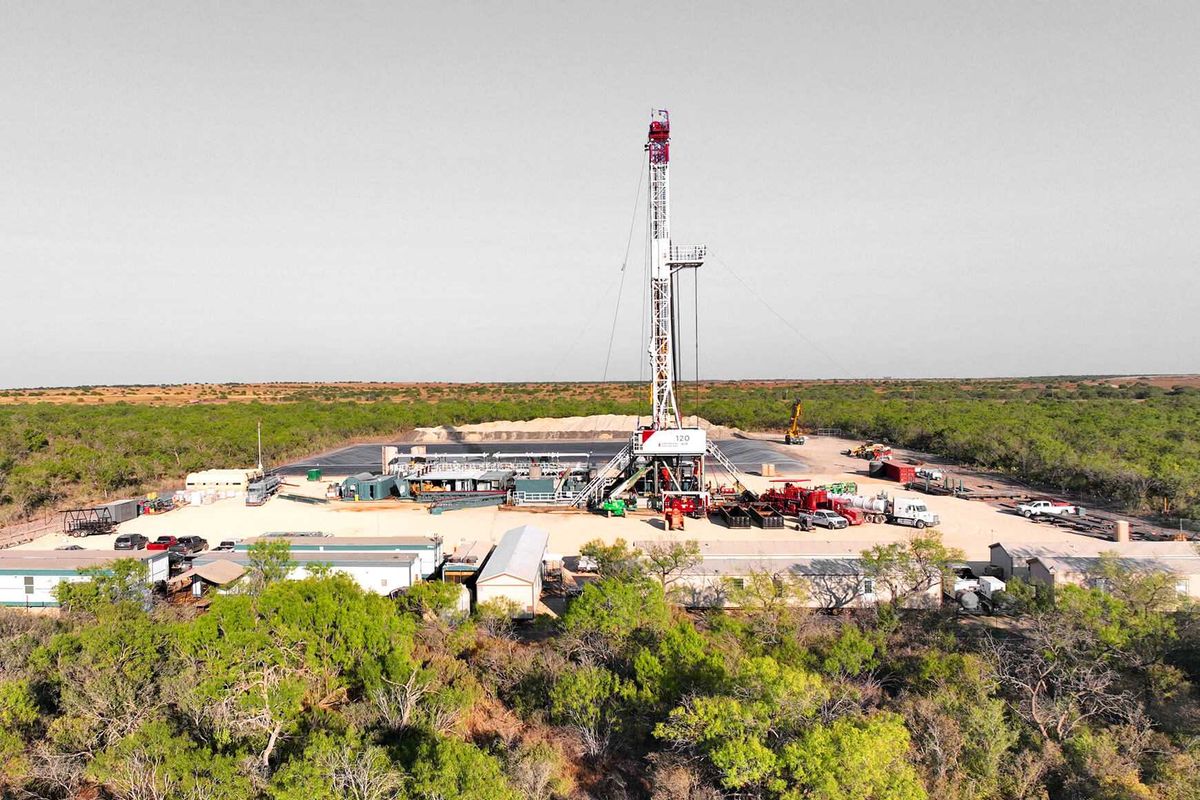
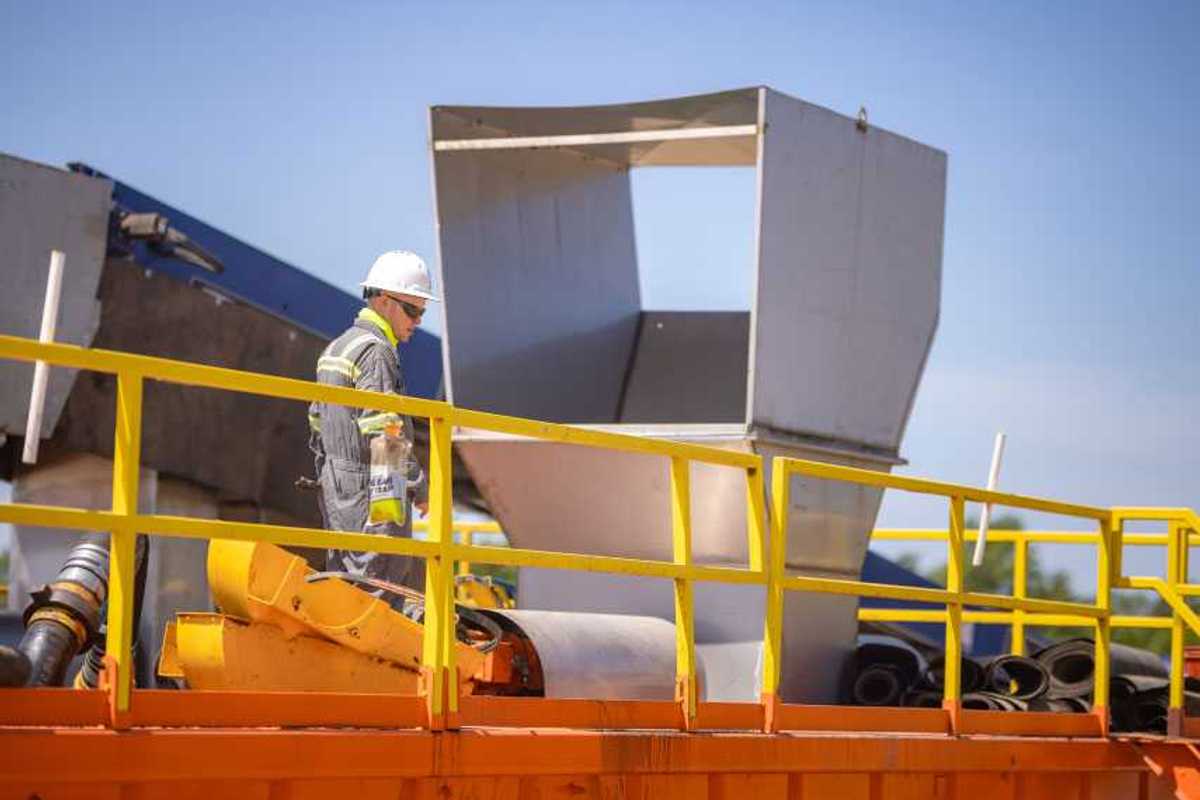
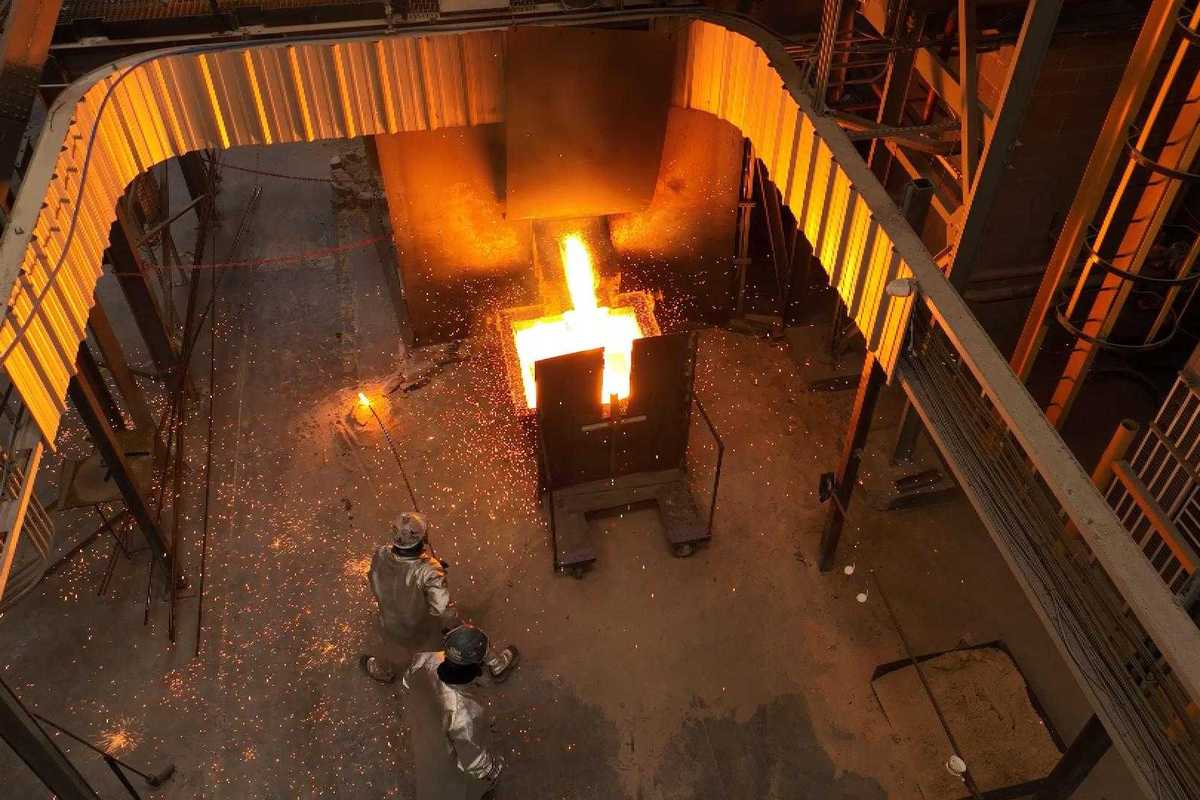
Oxy Low Carbon Ventures says fusion technology holds the potential to supply emissions-free, continuous, on-demand energy to bolster power and heating requirements for Occidental’s large-scale DAC facilities. Photo via 1pointfive.com

Oxy Low Carbon Ventures, an investment arm of Houston-based energy giant Occidental, is teaming up with TAE Technologies to explore the use of TAE’s fusion technology at Occidental’s direct air capture (DAC) facilities.

Financial terms of the deal weren’t disclosed.

Oxy Low Carbon Ventures says fusion technology holds the potential to supply emissions-free, continuous, on-demand energy to bolster power and heating requirements for Occidental’s large-scale DAC facilities.

“Collaborating with TAE Technologies is an opportunity to build on Occidental’s portfolio of clean power sources that can provide our [DAC] facilities with reliable, emissions-free energy,” Frank Koller, vice president for power development at Oxy Low Carbon Ventures, says in a news release.

Occidental is diving headfirst into the DAC sector. The primary example of its DAC commitment is construction in West Texas of the world’s largest DAC plant through a joint venture between Occidental subsidiary 1PointFive and investment giant BlackRock. BlackRock is investing $550 million in the facility.

The project is expected to be completed in mid-2025. The facility is eventually supposed to capture up to 500,000 metric tons of carbon dioxide each year.

DAC technology pulls carbon dioxide from the atmosphere so it can be stored permanently or converted into products. While the carbon removal process sounds simple, it requires a tremendous amount of energy. That’s where fusion technology like TAE’s comes into play.

TAE’s fusion technology works by combining (or fusing) the light nuclei of elements such as hydrogen to produce energy. The energy release is managed by producing steam, which spins a turbine that drives an electric generator producing clean energy or clean heat.

Founded in 1998, Foothill Ranch, California-based TAE develops commercial fusion power for generation of clean energy.

“Oxy Low Carbon Venture’s desire for emissions-free energy makes this the perfect moment to explore the deployment of our commercial-ready power management products, while the growing demand for large-scale power generation can be served by our future fusion offerings,” says Michl Binderbauer, CEO of TAE.

Ad Placement 300x100
Ad Placement 300x600

CultureMap Emails are Awesome

Investment bank opens energy-focused office in Houston

new to hou

Investment bank Cohen & Co. Capital Markets has opened a Houston office to serve as the hub of its energy advisory business and has tapped investment banking veteran Rahul Jasuja as the office’s leader.

Jasuja joined Cohen & Co. Capital Markets, a subsidiary of financial services company Cohen & Co., as managing director, and head of energy and energy transition investment banking. Cohen’s capital markets arm closed $44 billion worth of deals last year.

Jasuja previously worked at energy-focused Houston investment bank Mast Capital Advisors, where he was managing director of investment banking. Before Mast Capital, Jasuja was director of energy investment banking in the Houston office of Wells Fargo Securities.

“Meeting rising [energy] demand will require disciplined capital allocation across traditional energy, sustainable fuels, and firm, dispatchable solutions such as nuclear and geothermal,” Jasuja said in a news release. “Houston remains the center of gravity where capital, operating expertise, and execution come together to make that transition investable.”

The Houston office will focus on four energy verticals:

  • Energy systems such as nuclear and geothermal
  • Energy supply chains
  • Energy-transition fuel and technology
  • Traditional energy
“We are making a committed investment in Houston because we believe the infrastructure powering AI, defense, and energy transition — from nuclear to rare-earth technology — represents the next secular cycle of value creation,” Jerry Serowik, head of Cohen & Co. Capital Markets, added in the release.

Houston cleantech startup Helix Earth lands $1.2M NSF grant

federal funding

Renewable equipment manufacturer Helix Earth Technologies is one of three Houston-based companies to secure federal funding through the Small Business Innovation Research (SBIR) Phase II grant program in recent months.

The company—which was founded based on NASA technology, spun out of Rice University and has been incubated at Greentown Labs—has received approximately $1.2 million from the National Science Foundation to develop its high-efficiency retrofit dehumidification systems that aim to reduce the energy consumption of commercial AC units. The company reports that its technology has the potential to cut AC energy use by up to 50 percent.

"This award validates our vision and propels our impact forward with valuable research funding and the prestige of the NSF stamp of approval," Rawand Rasheed, Helix CEO and founder, shared in a LinkedIn post. "This award is a reflection our exceptional team's grit, expertise, and collaborative spirit ... This is just the beginning as we continue pushing for a sustainable future."

Two other Houston-area companies also landed $1.2 million in NSF SBIR Phase II funding during the same period:

  • Resilitix Intelligence, a disaster AI startup that was founded shortly after Hurricane Harvey, that works to "reduce the human and economic toll of disasters" by providing local and state organizations and emergency response teams with near-real-time, AI-driven insights to improve response speed, save lives and accelerate recovery
  • Conroe-based Fluxworks Inc., founded in 2021 at Texas A&M, which provides magnetic gear technology for the space industry that has the potential to significantly enhance in-space manufacturing and unlock new capabilities for industries by allowing advanced research and manufacturing in microgravity

The three grants officially rolled out in early September 2025 and are expected to run through August 2027, according to the NSF. The SBIR Phase II grants support in-depth research and development of ideas that showed potential for commercialization after receiving Phase I grants from government agencies.

However, congressional authority for the program, often called "America's seed fund," expired on September 30, 2025, and has stalled since the recent government shutdown. Government agencies cannot issue new grants until Congress agrees on a path forward. According to SBIR.gov, "if no further action is taken by Congress, federal agencies may not be able to award funding under SBIR/STTR programs and SBIR/STTR solicitations may be delayed, cancelled, or rescinded."

Mars Materials makes breakthrough in clean carbon fiber production

Future of Fiber

Houston-based Mars Materials has made a breakthrough in turning stored carbon dioxide into everyday products.

In partnership with the Textile Innovation Engine of North Carolina and North Carolina State University, Mars Materials turned its CO2-derived product into a high-quality raw material for producing carbon fiber, according to a news release. According to the company, the product works "exactly like" the traditional chemical used to create carbon fiber that is derived from oil and coal.

Testing showed the end product met the high standards required for high-performance carbon fiber. Carbon fiber finds its way into aircraft, missile components, drones, racecars, golf clubs, snowboards, bridges, X-ray equipment, prosthetics, wind turbine blades and more.

The successful test “keeps a promise we made to our investors and the industry,” Aaron Fitzgerald, co-founder and CEO of Mars Materials, said in the release. “We proved we can make carbon fiber from the air without losing any quality.”

“Just as we did with our water-soluble polymers, getting it right on the first try allows us to move faster,” Fitzgerald adds. “We can now focus on scaling up production to accelerate bringing manufacturing of this critical material back to the U.S.”

Mars Materials, founded in 2019, converts captured carbon into resources, such as carbon fiber and wastewater treatment chemicals. Investors include Untapped Capital, Prithvi Ventures, Climate Capital Collective, Overlap Holdings, BlackTech Capital, Jonathan Azoff, Nate Salpeter and Brian Andrés Helmick.