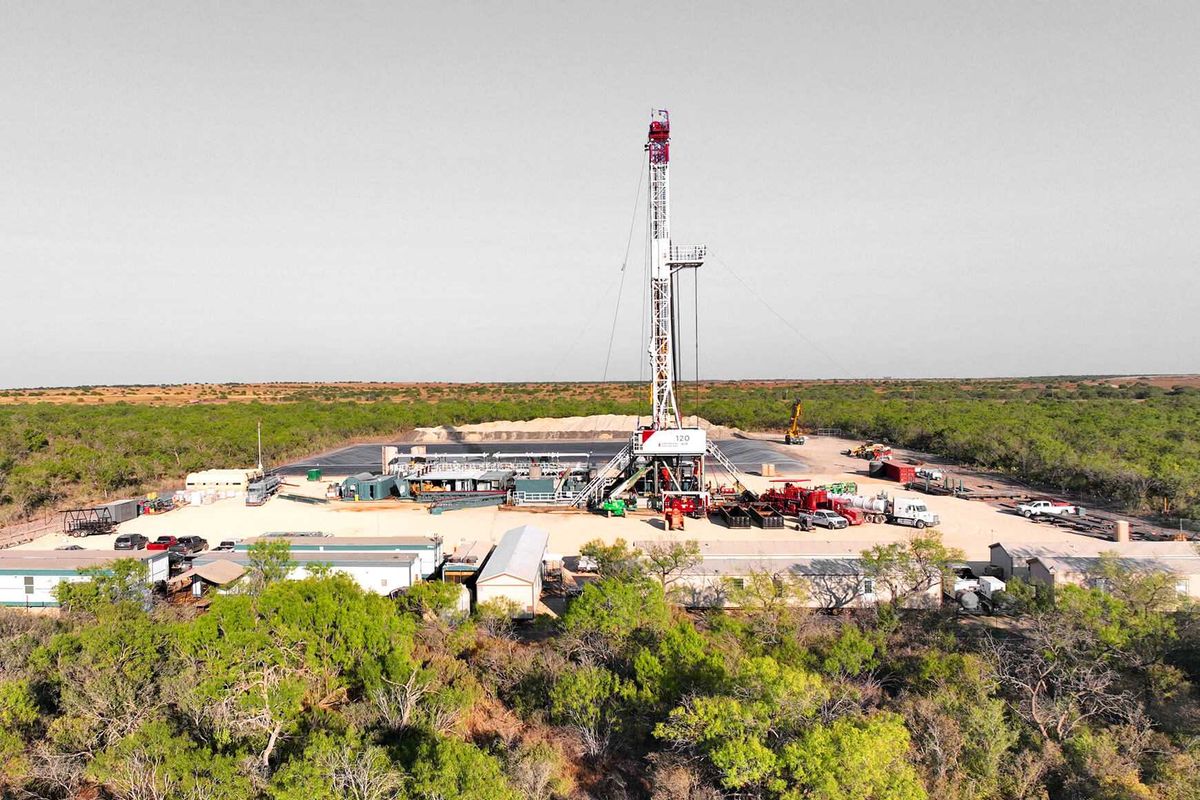
The report concludes that natural gas would need to remain a “foundational component of the region’s energy system” to meet the demands of AI data centers. Photo courtesy UH

A new study from the University of Houston estimates that the U.S. will need more than $1 trillion in new midstream energy infrastructure investment by 2052 to meet the rising energy demands from data centers in the age of artificial intelligence.

According to the report, this would average $40 billion to $48 billion per year across investments in natural gas, oil, natural gas liquids, hydrogen and CO2 infrastructure.

UH, in collaboration with the INGAA Foundation and Wood and ESMIA Consultants, released the 2025 North American Midstream Infrastructure Report, which details the needs, pipelines and associated infrastructure necessary to meet global market needs and increased energy demands. UH led the consortium that conducted the analysis. Paul Doucette, hydrogen program officer at UH, served as the principal investigator of the report.

According to the U.S. Department of Energy, data center energy consumption could reach 800 terawatt-hours annually by 2050, a roughly 167 percent increase from 300 terawatt-hours in 2025. Meanwhile, electricity generation from all energy sources is projected to reach 5,858 terawatt-hours in 2052, a 27 percent increase over current levels.

The report proposes two routes to meeting this level of demand.

The first scenario is a reference case based on current federal, state and provincial policies as of April 1, 2025. The second option presents a low-carbon scenario. The report concludes that natural gas would need to remain a “foundational component of the region’s energy system” in both scenarios.

“Meeting energy demand is a critical challenge right now, and this report quantifies the necessary midstream infrastructure and corresponding development dollars needed to meet that demand,” Hebe Shaw, executive director of the INGAA Foundation, said in a news release. “Meeting the energy needs of North America will require sustained investment and development, which must begin now to ensure a safe, reliable and affordable energy system.”

The report also identified several key midstream infrastructure requirements, including:

  • 103,000 miles of new natural gas gathering pipelines
  • 37,000 miles of additional natural gas transmission pipelines, which includes approximately 33,800 miles in the United States
  • 24 million jobs over 25 years

The report adds that hydrogen, carbon capture, utilization, and storage (CCUS), and other decarbonization strategies can help meet infrastructure needs.

UH released a condensed version of the report here.
Ad Placement 300x100
Ad Placement 300x600

CultureMap Emails are Awesome

Houston PE firm makes latest nuclear industry acquisition

nuclear deal

Houston-based private equity firm Pelican Energy Partners has acquired California-based Veridiam for an undisclosed amount in an effort to further increase the firm’s focus on the nuclear energy sector.

Veridiam is a strategic manufacturer that specializes in the precision fabrication of components and assemblies made from exotic metals or advanced alloys for the nuclear, aerospace, defense, space and medical fields.

Following the acquisition, Veridiam will continue to operate under its existing name and will led by its current management team, including CEO Brian Joyal.

“Joining the Pelican platform accelerates our strategic trajectory," Joyal said in a news release. "With Pelican's support, we will accelerate the modernization and expansion of our manufacturing capabilities to meet unprecedented demand across the nuclear, aerospace, defense, and medical sectors. This partnership also enables us to expand our portfolio of mission-critical products and engineered solutions while maintaining the uncompromising quality, precision, and reliability standards that have defined Veridiam for more than 60 years."

Since 2011, Pelican has raised over $1 billion in committed capital and has realized over 15 investments. Currently, Pelican is investing from its fourth fund, which aims to support and advance companies that provide critical services and products to the nuclear power industry.

In 2024, Pelican raised a $450 million fund to invest in nuclear energy services and equipment companies.

The Veridiam deal comes after Pelican has completed several nuclear acquisitions. The PE firm acquired New Hampshire-based Environmental Alternatives Inc., which provides nuclear decontamination services, in April; it acquired Georgia-based WSI Welding Solution in December, which services the nuclear sector.

"Veridiam sits at the center of our investment thesis and reflects the kind of deal Pelican does best," Mike Scott, managing partner and founder of Pelican Energy Partners, added in the news release. "With the right capital and operating support, we see a clear opportunity to strengthen the business, invest in its capabilities, and create long-term value for customers and shareholders."

How Mitsubishi Heavy Industries America is advancing the hydrogen economy

The View from HETI

Mitsubishi Heavy Industries America (MHIA), a steering-level member company of the Houston Energy Transition Initiative, is leveraging engineering expertise and global capabilities to develop and deploy technologies that will decarbonize existing infrastructure and build the hydrogen economy of the future. The company’s recent investment in Koloma, a Colorado-based geologic hydrogen exploration startup, demonstrates its commitment to breakthrough innovations that can transform how the world produces and uses clean energy.

Traditional hydrogen production methods, whether from natural gas with carbon capture or from electrolysis using renewable electricity, require significant energy inputs and infrastructure investments. Geologic hydrogen represents a potentially transformative alternative: naturally occurring hydrogen deposits that can be extracted from underground reservoirs.

Koloma is pioneering the exploration and commercialization of geologic hydrogen using proprietary technology, unique data sets, and specialized expertise to identify and develop these resources globally. If successful at scale, geologic hydrogen could provide clean, affordable hydrogen without the energy penalty of production.

MHIA’s investment in Koloma joins a syndicate of strategic partners committed to accelerating hydrogen development:

  • Breakthrough Energy Ventures: Bill Gates’ climate investment fund focused on breakthrough technologies
  • Amazon’s Climate Pledge Fund: Supporting technologies that enable Amazon’s path to net zero
  • United Airlines’ Sustainable Flight Fund: Investing in solutions for aviation decarbonization

This partnership brings together technology innovation, capital, and potential customers to create the ecosystem needed to move from exploration to commercial deployment.

MHIA’s investment in geologic hydrogen is part of the company’s broader strategy to develop the complete hydrogen value chain:

Production: Beyond geologic hydrogen, MHIA is advancing technologies for hydrogen production from diverse sources, including natural gas with carbon capture and renewable-powered electrolysis.

Infrastructure: The company is developing the compression, storage, and transportation systems needed to move hydrogen from production sites to end users.

End-Use Applications: MHIA’s expertise spans power generation, industrial processes, and transportation applications that can utilize hydrogen as a clean fuel.

Integration: The company is working to integrate hydrogen systems with existing infrastructure, enabling decarbonization without requiring complete infrastructure replacement.

While new technologies like geologic hydrogen offer exciting possibilities, MHIA recognizes that much of the world’s energy infrastructure will continue operating for decades. The company is also investing in technologies that decarbonize existing systems:

  • MHIA is developing and deploying carbon capture systems that can be retrofitted to existing power plants and industrial facilities, allowing them to continue operating while dramatically reducing emissions.
  • The company’s gas turbine technologies can operate on blends of natural gas and hydrogen, enabling progressive decarbonization as hydrogen availability increases.
  • Through advanced controls, materials, and designs, MHIA is improving the efficiency of existing infrastructure—reducing fuel consumption and emissions without requiring replacement.

MHIA’s approach to the energy transition is guided by a clear mission: develop innovative technologies that help achieve a decarbonized society while maintaining energy security and affordability. This mission recognizes several important realities:

Energy Access Matters: Billions of people still lack access to reliable, affordable energy. Solutions must scale globally and work across diverse economic contexts.

Existing Infrastructure Represents Enormous Investment: The world has trillions of dollars invested in energy infrastructure. Solutions that work with this infrastructure can deploy faster than those requiring complete replacement.

Multiple Pathways Are Needed: No single technology will solve the climate challenge. Success requires parallel development of multiple solutions—hydrogen, carbon capture, renewables, nuclear, efficiency, and others.

Speed Matters: Climate change is a time-sensitive challenge. Technologies that can deploy at scale in the 2020s and 2030s matter more than perfect solutions that might be available in the 2040s or 2050s.

From Technology to Impact

MHIA’s investment in Koloma reflects the company’s belief that breakthrough technologies require patient capital, technical expertise, and strategic partnerships to move from concept to commercial reality. Geologic hydrogen has the potential to provide clean, affordable hydrogen at scale—but only if exploration techniques are validated, production methods are proven, and commercial models are demonstrated.

By investing early and providing both capital and technical support, MHIA is helping to accelerate this timeline. If Koloma succeeds, the impact could extend far beyond a single project and could unlock a vast new resource for the global energy transition.

The energy transition requires engineering excellence, patient capital, and willingness to back breakthrough innovations before they’re fully proven. Through HETI member companies like Mitsubishi Heavy Industries America, Houston is demonstrating the leadership, technical capabilities, and strategic vision needed to build a hydrogen economy that can help decarbonize the world’s energy system.

———

This article originally appeared on the Greater Houston Partnership's Houston Energy Transition Initiative blog. Learn more about MHIA’s energy transition initiatives at MHI Group Sustainability and read the full analysis here.

Energy expert: Houston welcomed the world — can Texas power what's next?

guest column

For a few weeks this summer, Houston welcomed the world.

The FIFA World Cup 2026 showcased our city's ability to host one of the largest international events on the planet. Millions watched from around the globe while hundreds of thousands of visitors experienced firsthand what Houston has become: a world-class destination for business, culture and global events.

But once the final match is played and the visitors return home, a more important question remains: Can Texas build the energy infrastructure needed to power what comes next?

The World Cup wasn't the finish line. It was a glimpse into the future.

That future is being shaped not only by population growth, but also by artificial intelligence, hyperscale data centers, advanced manufacturing, electrification, LNG expansion and continued industrial investment. Together, these forces are creating an unprecedented demand for electricity and placing new expectations on the infrastructure that supports it.

Energy Has Become Economic Infrastructure

For decades, economic development centered around highways, ports, airports and workforce.

Today, another asset has moved to the top of that list: energy infrastructure.

Reliable electricity is no longer simply a utility service. It has become a competitive advantage.

Companies evaluating where to build the next AI campus, manufacturing facility or industrial complex are increasingly asking different questions. How quickly can power be delivered? Is there enough transmission capacity? Can substations support future expansion? Is water infrastructure available? What is the long-term reliability of the local grid?

These questions are becoming just as important as tax incentives and available real estate.

Recent comments from Governor Greg Abbott that future AI developments should provide their own power generation and water illustrate just how dramatically the conversation has evolved. The challenge is no longer limited to meeting today's demand. It is preparing for a future where entirely new industries require unprecedented amounts of electricity while ensuring existing homes and businesses continue to receive reliable, affordable service.

The Next Energy Race Has Already Begun

Texas remains the nation's energy leader, producing more electricity than any other state while continuing to expand natural gas, wind, solar and emerging technologies.

But leadership in the next decade will be measured differently.

Success will depend on how quickly we can expand transmission infrastructure, modernize distribution systems, accelerate interconnection, strengthen grid resilience and support new generation where economic growth is occurring.

The conversation has shifted from producing more electricity to delivering it smarter.

That requires planning years before demand arrives.

Houston Is the Proving Ground

Houston sits at the center of this transformation.

Already recognized as the Energy Capital of the World, the region continues attracting major employers, global headquarters, industrial expansion and technology investment. The Port of Houston continues to grow. Advanced manufacturing is expanding. AI companies are evaluating Texas alongside other national markets.

Every one of these investments depends on reliable infrastructure.

While the World Cup demonstrated Houston's ability to manage a temporary surge of visitors, the more significant challenge lies ahead. Permanent economic growth creates sustained electricity demand that cannot be addressed with temporary solutions.

Meeting that demand will require coordinated investment across generation, transmission, distribution, storage and increasingly, digital technologies capable of forecasting and managing electricity in real time.

Smarter Infrastructure for a Smarter Grid

The future electric grid will look very different from the one that built modern Texas.

Artificial intelligence, predictive analytics, advanced sensors and distributed energy resources will allow operators to anticipate demand, identify equipment failures before they occur and optimize energy delivery across increasingly complex networks.

Infrastructure is no longer simply about building more. It is about building smarter.

At the same time, resilience must remain central to every investment. Texans understand better than most that hurricanes, flooding, winter storms and prolonged heat waves are no longer rare events. Modern infrastructure must not only support growth but also withstand increasingly volatile weather.

Building Beyond the Headlines

The World Cup generated headlines because of what happened on the field.

Its lasting legacy may be what it revealed about the city beyond the stadium.

Houston demonstrated that it can host the world. The next challenge is ensuring it can continue to power one of the fastest-growing economies in North America.

That will require continued investment, thoughtful policy and long-term planning that recognizes energy infrastructure as essential economic infrastructure.

Texas has spent decades leading the world in energy production.

The next opportunity is even greater.

To become the global leader in how energy systems are planned, built and operated for a future defined by artificial intelligence, industrial growth and rapidly evolving consumer demand.

Because the cities that lead tomorrow won't simply generate the most energy.

They'll be the ones best prepared to deliver it where opportunity is growing.

———

Sam Luna is director at BKV Energy, where he oversees brand and go-to-market strategy, customer experience, marketing execution, and more.