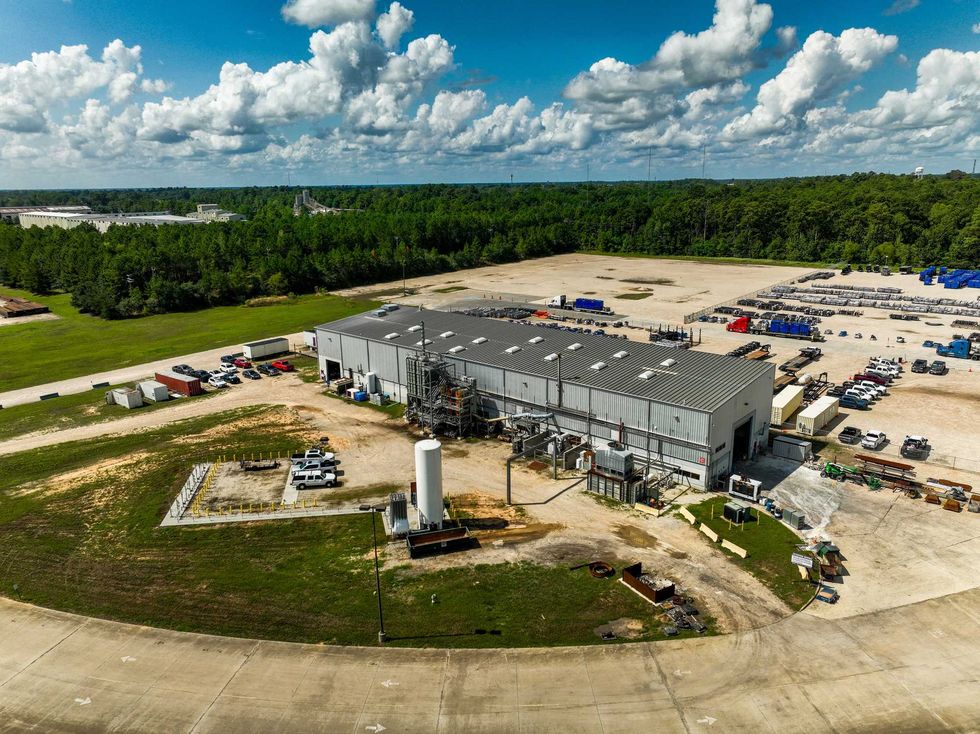
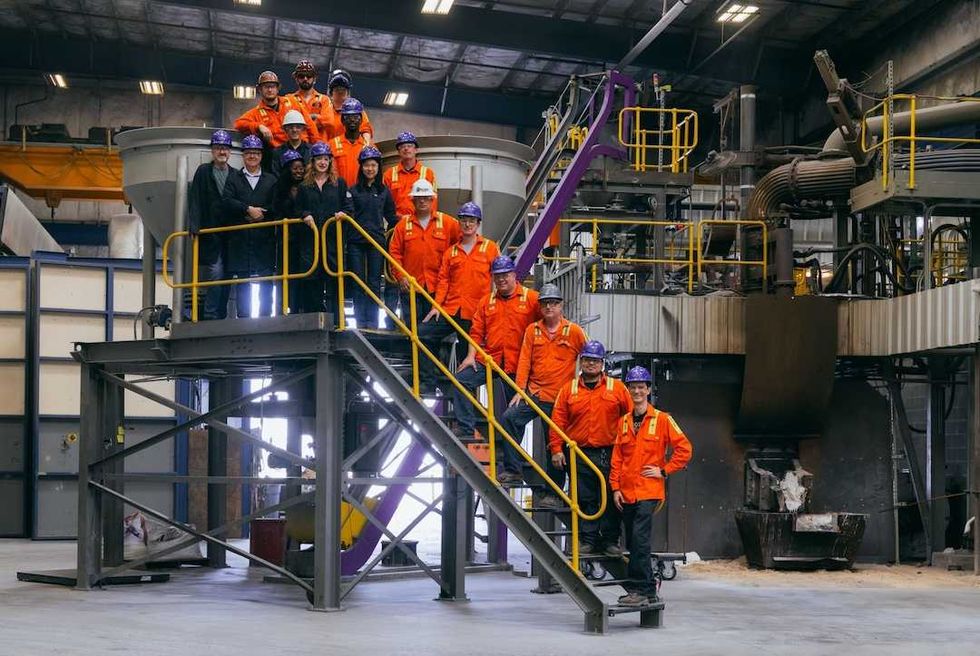
The geothermal projects are among 21 selected to receive a total of $99 million in DOE funding. Photo courtesy Fervo Energy

Three Houston-based companies—Fervo Energy, Quaise Energy and XGS Energy—have been selected by the U.S. Department of Energy to advance geothermal technologies and field tests.

Combined, the companies will receive more than $45 million in funding from the DOE's Next-Generation Geothermal Field Tests and Geothermal Resource Characterization and Confirmation initiative. The projects were among 21 selected from around the country to receive a total of $99 million.

Fervo was selected to conduct two projects under the initiative for approximately $20 million in funding. For the first project, the geothermal unicorn, which achieved first power at its flagship geothermal plant last week, will drill and complete enhanced geothermal systems (EGS) wells in Elmore County, Idaho, and will deploy high-temperature seismic monitoring technology at record-high temperatures at or above 200°C.

For the second project, the company will conduct an appraisal drilling campaign at a "high-priority" site in Humboldt County, Nevada, to confirm if the reservoir is suitable for EGS development.

“We are grateful to the Department of Energy for funding these grants. We believe this is a clear indication from the federal government that expanding geothermal energy to new states is a national priority,” Jack Norbeck, CTO and co-founder of Fervo Energy, said in a news release. “We expect this funding to accelerate Fervo’s pipeline and advance the cutting edge of geothermal technologies.”

Fresh off a $180 million Series B, Quaise Energy also received $25 million in DOE funding through the initiative to support its Project Obsidian super hot geothermal plant in Central Oregon. The funding will go toward the analysis of the drilling, stimulation and flow results of the first two wells at the Project Obsidian site, which will help the company optimize its third well on site.

“This DOE support is a recognition of what we are building at Quaise and the progress we are making in the field, including the confirmation well currently being drilled at Project Obsidian,” Carlos Araque, CEO and president of Quaise, said in a release. “Our ambition has always been to make superhot geothermal a commercial reality, and Project Obsidian is where we first deliver on that promise.”

XGS Energy, which recently relocated its headquarters from Palo Alto, California, to Houston, was also selected for an exploration drilling project. The company will drill a deep vertical appraisal well in Socorro County, New Mexico, to determine if the site is a viable source of geothermal energy. XGS had not disclosed a funding estimate at press time.

The full value of the proposed DOE funding is subject to completion of award negotiations, according to Quaise.

Data from these projects will be shared through DOE’s Geothermal Data Repository (GDR), providing valuable information to researchers and stakeholders in the geothermal sector.

“This is an excellent example of how public and private entities can partner together to scale critical energy technologies,” Tim Latimer, CEO and co-founder of Fervo, added in a release. “With this funding, the Department of Energy is making important investments to help Americans across the country gain access to clean, affordable geothermal energy.”

Other geothermal companies and institutions from around the country will complete the 17 remaining projects. They include:

  • Denver-based 400C Energy Inc.
  • Salt Lake City-based AlterG Resources
  • Denver-based DAVINCI EP LLC
  • Anchorage-based GeoAlaska LLC
  • Oklahoma City-based GreenFire Energy Inc.
  • Virginia-based Hexagon Energy LLC
  • Virginia-based INTEK Inc.
  • Chicago-based Invenergy Geothermal Development LLC
  • Massachusetts-based LiPower Geothermal LLC
  • Fort Worth-based Oriah Geothermal LLC
  • Reno-based Raser Power Systems LLC
  • Santa Fe-based San Ildefonso Services LLC
  • Salt Lake City-based The University of Utah
  • Reno-based TLS Geothermics Corp.
  • Salt Lake City-based Zanskar Geothermal and Minerals

Read more about the full list of projects here.

Ad Placement 300x100
Ad Placement 300x600

CultureMap Emails are Awesome

CenterPoint gets $50M DOE grant to improve Houston power grid

grid grant

A $50 million federal grant will help Houston-based CenterPoint Energy strengthen Houston’s power grid.

The U.S. Department of Energy (DOE) grant will support power substation upgrades in the Houston area.

“Our mission is to build the most resilient coastal grid in the nation for the 2.9 million customers we proudly serve in the greater Houston area … [The grant] will directly fund industry-leading technology improvements that are expected to strengthen resiliency, reliability, and meet the growing energy needs of our region,” Jason Ryan, CenterPoint Energy’s executive vice president for regulatory services and government affairs, said in a release.

CenterPoint says the project will make it one of the first U.S. utilities to install Siemens Energy’s grid-stabilizing technology.

The project will create more than 500 construction and installation jobs, CenterPoint says.

“Generations of CenterPoint customers and families in the region will benefit from the advanced technology this grant is funding,” said Kathleen Jackson, a member of the Public Utility Commission of Texas. “And any time companies make improvements like this to their systems, the long-term impact is making the entire grid stronger for Texans.”

The $176.7 million substation project is part of CenterPoint’s Greater Houston Resiliency Initiative, which launched in 2024.

So far, the initiative has:

  • Installed nearly 82,400 storm-resilient poles and equipment
  • Trimmed and cleared more than 13,700 miles of trees and vegetation near power lines
  • Added nearly 820 grid automation and intelligence devices
  • Put more than 880 miles of power lines underground

The initiative kicked off three years after Winter Storm Uri. CenterPoint received harsh criticism for what customers complained was the utility’s slow response to the 2021 storm. Uri caused a massive power outage and at least 246 deaths across Texas.

CenterPoint blamed the Electric Reliability Council of Texas (ERCOT), which operates the power grid for most Texans, for not supplying the utility with enough electricity during and after the storm.

EnergyTech Cypher names 7 startup winners from Pilotathon pitch event

startup spotlight

Houston Energy and Climate Week was full of fast-paced pitches and inspiring technology, showcased during some of the week's signature events.

EnergyTech Cypher's annual Piloathon and Startup Showcase was one of the places to be, bringing together 16 pilot-ready startups to present their best seven-minute pitches before investors, plus 52 companies that demonstrated their technologies on the showcase floor.

"This year's cohort raised the bar," Nada Ahmed, co-founder of EnergyTech Cypher, shared in a news release. "Working with these founders through the pitch preparation process, we saw firsthand the depth of technology and commercial readiness they brought to the stage. Three ties in four categories says it all."

Seven startups took home top honors in various categories, all under this year's theme of "The NEW Energy Industrial Revolution," with three categories ending in a tie. Judges included leaders from Baker Tilly, NRG Energy, Shell, Aramco Ventures, Baker Hughes, Avatar Innovations, Kanin Energy, NoviDigiTech, aiCTO Services, and the FIFA World Cup Houston Committee.

Here's who won in their respective categories:

Future of Industrial Work: Houston-based BigMachine AI, an AI engineer for industrial projects, and Oslo, Norway-based OTee, an automation machinery manufacturer. Otee was also named one of the 10 most-promising startups at the Rice Alliance Energy Tech Venture Forum during HECW.

Industrial Decarbonization: Berkeley-based Oleo, which is developing a biomanufacturing platform to transform biomass waste into carbon-negative, cost-competitive oil feedstocks for advanced fuels

Grid Infrastructure and Distributed Energy: Edinburgh-based Mocean Energy, which works to deliver renewable ocean energy to power offshore industry, and Tulsa-based RyuGen Energy Solutions Inc., which works to turn underused commercial power into distributed AI infrastructure

Critical Minerals and Resource Security: Houston-based Resollant, which is working to produce battery-grade graphite and ultra-low-cost hydrogen, and Berkeley-based Sunchem, which provides precision separation of critical metals from sources including e-waste, evaporator scrap, solar panels, and mining ores and concentrates.

Last year, the Pilotathon named eight winners from the competition, which focused on the theme of "Energy Access and Resilience." See the winners here.

EnergyTech Cypher rebranded from EnergyTech Nexus earlier this year. The energy transition hub also launched Cephyron, EnergyTech Cypher's new investor relationship management platform, built specifically for energy and climatech founders.

ENGIE inks deal to supply wind energy for Oracle’s Texas operations

wind deal

Houston-based renewable energy company ENGIE North America has made a deal to supply up to 568 megawatts of renewable electricity for tech giant Oracle's projects in Texas.

The power will come from ENGIE’s wind resources serving the Electric Reliability Council of Texas (ERCOT) grid. Oracle is developing data centers in Abilene and Shackelford, Texas, according to its website.

The Oracle deal is part of ENGIE’s efforts to bring substantial new electricity supply to the grid. In the past six years, ENGIE has developed 12 gigawatts of new renewable generation and battery storage capacity in North Americas, equaling $11 billion in capital, according to the company.

"Our customers are looking for reliable, scalable energy solutions that can support long-term growth," Anne-Laure Chassanite, interim CEO of ENGIE North America, said in a news release. "ENGIE has invested heavily in developing new generation resources across North America, and we're pleased to support Oracle as it continues to expand its operations in Texas. These agreements reflect the strength of our portfolio and our ability to deliver customized energy solutions that help customers meet their business objectives.”

Computer technology and cloud computing company Oracle is working towards its goal to match 100 percent of AI data center electricity use with carbon-free electricity by 2035.

"Oracle is taking a responsible approach to meeting the energy needs of our growing AI and cloud operations in Texas — investing in carbon-free electricity without shifting costs to consumers," Julia Robin, head of infrastructure planning and sourcing for Oracle Cloud Infrastructure, added in the release. "Our agreements with ENGIE advance Oracle's goal to match 100 percent of our AI data center electricity use with carbon-free electricity by 2035, while supporting long-term economic growth with no cost impact to the state of Texas.”

ENGIE also recently won the 2026 Green Power Leadership Award in the Market Innovation category for its work advancing 24/7 renewable energy solutions. The awards honor individuals and companies advancing sustainability and renewables in the energy industry through innovation and leadership.

The company has inked major deals to supply renewable energy to other major companies like Meta, Daikin and others.