


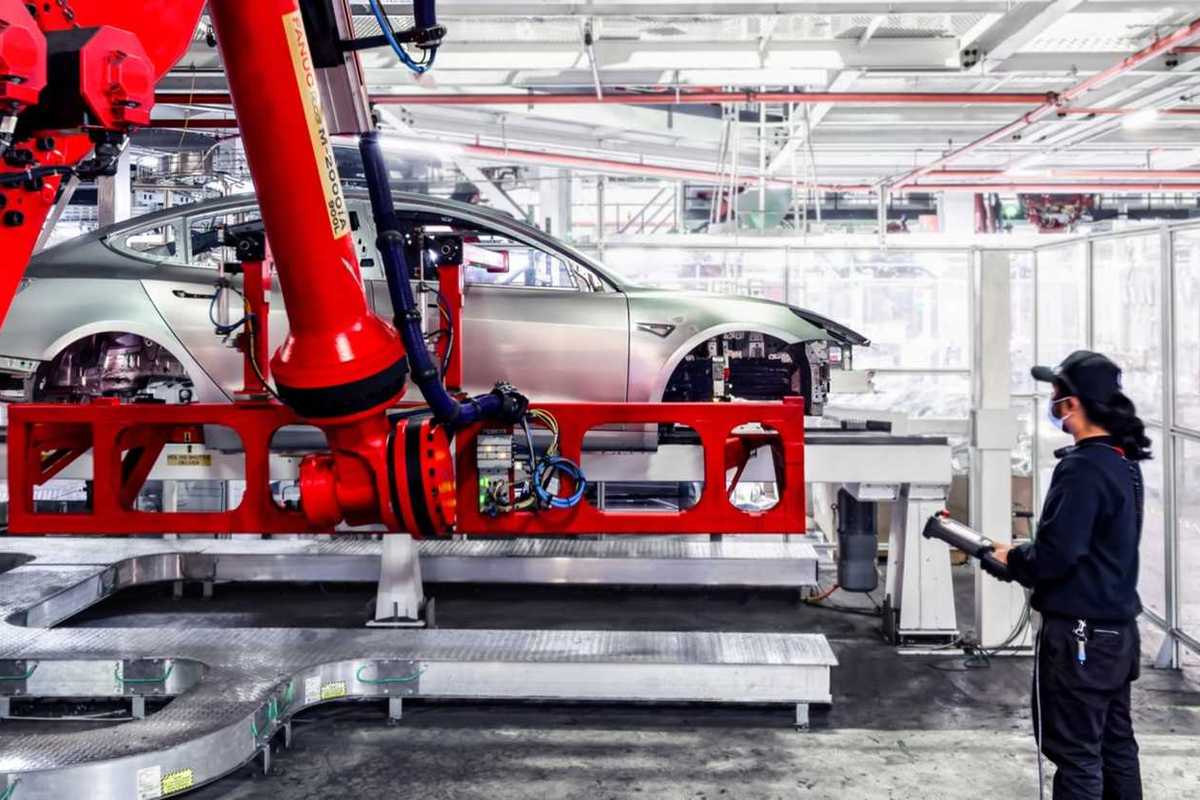
Merichem's technology removed 99 percent of hydrogen sulfide gas from natural gas streams without generating solid waste. Photo via Getty Images

Houston-based Merichem Technologies has announced successful results from the field trial of its new hydrogen sulfide (H2S) removal technology in the Permian Basin.

The technology, known as ECOTREAT, removed more than 99 percent of hydrogen sulfide gas from natural gas streams, or “sour gas,” without producing solid waste during the month-long trial. It also showed sustained performance even when operating above the unit’s design capacity, according to a news release.

“The industry is continually seeking to reduce both the price and complexity of removing hydrogen sulfide from gas production, especially since oil production has shifted to increasingly sour sources, higher gas ratios, and higher water ratios,” Jeff Gomach, SVP, Merichem Technologies, said in a news release. “ECOTREAT met all its field trial objectives and provides a highly effective method for removing hydrogen sulfide to prevent equipment corrosion, ensure worker safety, meet environmental regulations, and maintain product quality for transport.

H2S found in natural gas can turn the gas toxic or hazardous and lead to corrosion in pipelines and processing equipment. However, standard H2S removal technologies create high levels of solid waste. ECOTREAT resolves many of those issues by using an aqueous-phase proprietary catalytic process that converts H2S into dissolved thiosulfate.

Next, Merichem says it plans to move the technology out of the pilot stage to full-scale commercialization.

Merichem, an 80-plus-year-old company, initially launched as a soap and industrial cleaning company. It eventually transitioned to focus on energy technology.

In 2024, Black Bay Energy acquired a portion of Merichem Process Technologies and Merichem Catalyst Products, which would become Merichem Technologies.

Ad Placement 300x100
Ad Placement 300x600

CultureMap Emails are Awesome

Houston alliance launches effort to establish Gulf Coast national energy lab

energy innovation

Houston energy stakeholders are setting plans in motion to advance a new national laboratory on the Gulf Coast focused on energy and industrial technologies.

The proposed U.S. Department of Energy national lab, known as the Gulf Coast National Laboratory (GCNL), would build on work launched by the Greater Houston Partnership's Houston Energy Transition Initiative (HETI), according to a news release. Founding academic members include Rice University and the University of Houston. Plans for the lab and the new Gulf Coast National Laboratory Alliance were announced at an event at the GHP's Partnership Tower on Nov. 12.

The GCNL's main goal would be bridging the gap between the research and development of promising energy technology and commercialization. It would aim to provide shared pilot facilities, integrated process-scale testing and public-private partnerships.

Focus areas would include:

  • Subsurface technologies
  • Produced water management
  • Process engineering and scale-up
  • Industrial process engineering and supply chains

"The United States has extraordinary research capabilities, but too many promising technologies struggle to cross the gap between proof-of-concept and commercial success," Jane Stricker, executive director of the GCNLA and former executive director of HETI, said in the release. "Our mission is to bring together the organizations and leaders needed to create a scale-up platform that enables technologies to move from innovation to industry faster, more cost-effectively, and at a scale that strengthens U.S. energy security, industrial productivity, and supply-chain resilience."

The new lab will also complement existing DOE labs, which "execute long-term government missions and develop unique scientific capabilities that often extend beyond the scope of academic and industrial institutions," according to the organization's website. There are currently 10 DOE national labs, including the likes of the Ames National Laboratory, the Argonne National Laboratory, the Pacific Northwest National Laboratory and others.

Organizers say the proposed GCNL would serve as "the nation's premier scale-up and deployment platform for energy and industrial technologies." They add that the Gulf Coast is primed for a lab due to the high concentration of energy and industrial infrastructure in the area.

According to the release, Texas produces approximately 43 percent of the nation’s crude oil and the Gulf Coast is home to nearly half of the country's refining capacity.

"By bringing together industry, academia, and government partners, we can reinforce the Gulf Coast's position as the nation's leading energy and industrial hub while advancing U.S. competitiveness and energy security," Steve Kean, president and CEO of the GHP, added in the release.

Organizers are calling on energy companies, academic institutions, investors and other groups to partner on the initiative. There are currently about 20 members of the alliance supporting the lab, ranging from energy giants to venture capital groups and Houston startups.

Current members include:

  • Artemis Energy Partners
  • Baker Hughes
  • Cemvita
  • Dow
  • Energy Transition Ventures
  • ExxonMobil
  • Flour
  • Greater Houston Partnership
  • Greentown Labs
  • HETI
  • LyondellBasell
  • Mitsubishi Heavy Industries
  • New Climate Ventures
  • Rice University
  • San Jacinto College
  • SCF Partners
  • SLB
  • Solidec
  • Syzygy Plasmonics
  • Texas Southern University
  • The University of Houston
  • Via Separations

Houston’s Fervo Energy amasses $12B backlog of orders

q3 results

Houston-based geothermal power company Fervo Energy saw a 65 percent spike in purchase orders during the third quarter.

During Fervo’s third-quarter earnings call, Tim Latimer, co-founder, chair, president and CEO, said the company had a $11.9 billion backlog of orders, up from $7.2 billion in the previous quarter.

Those numbers didn’t translate to robust financial results in the third quarter, though. It closed the quarter with an operating loss of $43 million on revenue of just $116,000.

Beyond the billions of dollars in signed purchase agreements, Fervo is in talks with prospective customers in the utility, industrial data-center sectors, Latimer said. About half the potential customers are in the data-center sector, 35 percent in the utility sector and 15 percent in the industrial sector.

Latimer said the broad-based demand reflected by the backlog and the discussions with potential customers reinforces the critical need for reliable, readily available power.

“Our approach to power delivery will continue to blend front-of-the-meter and behind-the-meter development,” he said. “Grid-connected assets remain the foundation, though behind-the-meter gives customers a faster path to power when transmission time lines lag their need.”

Front-of-the-meter refers to power plants, utility-scale solar and wind farms, large grid batteries, and transmission and distribution infrastructure. Behind-the-meter assets sit on the customer side of the meter, such as backup generators and EV chargers at homes, businesses, factories and other everyday places.

The order backlog isn’t Fervo’s only recent milestone. In late September, the company’s Cape Station geothermal plant in Utah started delivering its first utility-scale geothermal power to the grid. The plant is producing about 33 megawatts of power.

Earlier in September, Fervo signed a 15-year deal to supply about 396 megawatts of power for Google data centers. The power will be delivered in four 99-megawatt batches. The company filed its $1.89 billion IPO this spring.