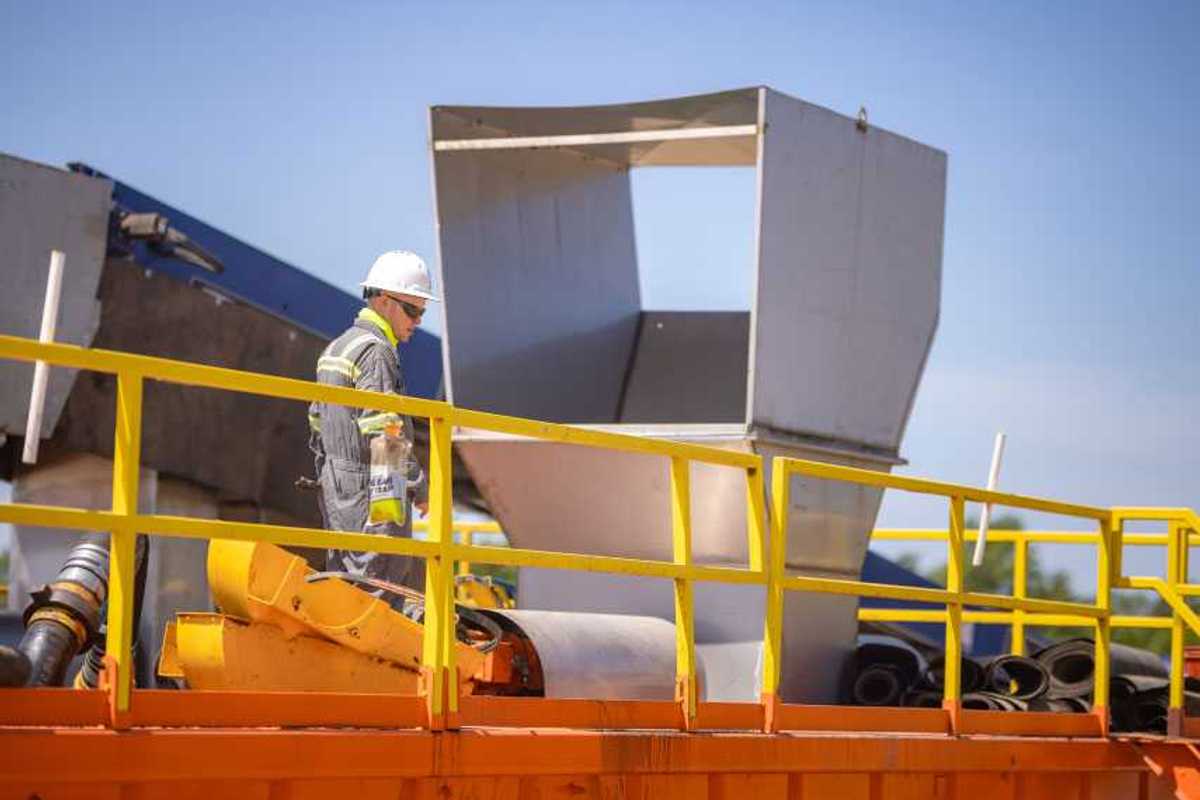
The Lone Star State is losing a nearly $250 million grant awarded last year to the Harris County-led Texas Solar for All Coalition. Photo via Getty Images.

The U.S. Environmental Protection Agency is ending a $7 billion Biden-era program that was supposed to enable low-income Americans to access affordable solar power. The program, which EPA Administrator Lee Zeldin called a “boondoggle,” would have benefited more than 900,000 U.S. households.

In line with the EPA’s action, the Lone Star State is losing a $249.7 million grant awarded last year to the Harris County-led Texas Solar for All Coalition. The grant money would have equipped more than 46,000 low-income and disadvantaged communities and households in Texas with residential solar power. The nonprofit Solar United Neighbors organization said Texas had already begun to roll out this initiative.

Also slipping out of Texas’ hands are:

  • A more than $156 million 19-state grant awarded to the Clean Energy Fund of Texas in partnership with the Bullard Center for Environmental and Climate Justice at Houston’s Texas Southern University. The Clean Energy Fund is a Houston-based “green bank” that backs investments in solar and wind power.
  • Part of a $249.3 million multistate grant awarded to the Community Power Coalition’s Powering America Together Program. The nonprofit Inclusive Prosperity Capital organization leads the coalition.
  • Part of a $249.8 million multistate grant awarded to the Solar Access for Nationwide Affordable Housing Program, led by the nonprofit GRID Alternatives organization.

In a post on the X social media platform, Zeldin said the recently passed “One Big Beautiful Bill” killed the Greenhouse Gas Reduction Fund, which would have financed the $7 billion Solar for All program.

“The bottom line is this: EPA no longer has the statutory authority to administer the program or the appropriated funds to keep this boondoggle alive,” Zeldin said.

Anya Schoolman, executive director of Washington, D.C.-based Solar United Neighbors, accused the EPA of illegally terminating the Solar for All program. She said ending the program “harms families struggling with rising energy costs and will cost us good local jobs.”

U.S. Sen. Bernie Sanders, a Vermont independent, joined Schoolman in alleging the EPA’s “outrageous” action is illegal. Sanders introduced the legislation that established the Solar for All program.

The senator lashed out at President Trump for axing the program in order “to protect the obscene profits of his friends in the oil and gas industry.”

Ad Placement 300x100
Ad Placement 300x600

CultureMap Emails are Awesome

5+ must-attend Houston energy events in March: CERAWeek and more

Mark Your Calendar

Editor's note: March is a major month for energy industry events in Houston, including CERAWeek and more must-attend summits and forums. Mark your calendars for the top events of the month, and register now.

March 2-4 — The Future Energy Summit

The Future Energy Summit is a premier global event bringing together visionaries, industry leaders, and energy experts to shape the future of energy. The second edition of the conference will provide a platform for groundbreaking discussions, cutting-edge technologies, and transformative strategies that will accelerate the energy transition.

This event begins March 2. Register here.

March 5 — 2026 Houston CISO Forum

The Energy Conference Network hosts an exclusive, executive-level cybersecurity leadership event for those in the energy industry. The 50-person, half-day forum will bring together chief information security officers, senior cybersecurity leaders, and industry experts for candid conversations, actionable insights, and peer collaboration.

This event takes place March 5 at Hyatt Regency Houston West. Limited registration available here.

March 10-12 — World Hydrogen & Carbon Americas

S&P Global Energy brings together two leading events — Carbon Management Americas and World Hydrogen North America — to form a new must-attend event for those in the hydrogen and carbon industries. More than 800 senior leaders from across the energy value chain will attend this event featuring immersive roundtable discussions, hands-on training, real-world case studies, and unparalleled networking opportunities.

This event begins March 10 at Marriott Marquis Houston. Register here.

March 23-27 — CERAWeek 2026

CERAWeek 2026 will focus on "Convergence and Competition: Energy, Technology and Geopolitics." The industry's foremost thought leaders will convene in Houston to cultivate relationships and exchange transformative ideas during the annual event. CERAWeek 2026 will explore breakthroughs, cross-industry connections, and powerful partnerships that are accelerating the transformation of the global energy system. 2026 highlights include an appearance by tech magnate Bill Gates.

This event begins March 23. Register here.

March 24-25 — 2026 Energy Venture Day and Pitch Competition

The Energy Venture Day and Pitch Competition, co-hosted by the Rice Alliance, Ion, HETI, and TEX-E, offers two days of exciting pitches from more than 40 global energy ventures that are transforming the industry. On Tuesday, March 24, you can attend a fast-paced pitch preview event at the Ion, followed by the official Pitch Competition at 1 pm on Wednesday, March 25, at George R. Brown Convention Center.

More details available here.

How this Houston expert helps startups turn AI hype into real impact

now streaming

Artificial intelligence is now everywhere. It is mentioned in every startup pitch deck, and every corporate roadmap claims to use it. However, many early-stage businesses struggle with the simple question, “What does AI actually mean for my business?”

In a recent podcast episode of EnergyTech Startups, Merab Momen, founder of AI CTO Services and a long time AI practitioner, explains why most founders misunderstand AI, how startups can practically apply it and why Houston is quietly becoming a serious hub for AI-driven innovation.

Filling the AI Leadership Gap

Merab’s career has spanned decades of technology transitions. He worked on neutral networks in the 1990s, constructed computer vision systems long before they were common, and helped install AI solutions inside huge industrial companies. However, he noticed a huge problem when generative AI started to explode into the mainstream-The requirement of a real partner by the founders for AI integration but inability to rely on a full-time CTO and project-based consultants.

“I really needed something which is much more engaging where I can give that partner-level advice to the founders,” he said. By giving firms on-demand access to high-level AI knowledge and expertise, his methodology enables them to analyse tools, steer clear of cost blunders and eventually transition to a permanent technology leader when the time is right.

AI is Older than Most People Think

Despite its recent rise in popularity, AI is nothing new. AI actually began in the 1950s. Merab in his conversation explained how he worked on his first AI project back in the year 1996 that worked perfectly, but the processing power wasn’t just there to make it practical. He continued how he utilized the swarm intelligence models to optimize supply chains, now referred to as MLPOs and data engineering.

From Language Models to Physical World

Much of the public conversation about AI revolves around chatbots and text generation. But Merab sees far greater potential in AI’s interaction with the physical world, especially in industrial settings. He emphasized edge computing and vision language models (VLMs) as significant advances in manufacturing and energy. This physical shift is opening doors for new opportunities for robotics, automated inspections, and industrial safety applications. Merab added that Houston is uniquely positioned for this transition.

Why Houston has an AI Advantage

Silicon Valley may dominate the AI headlines, but Merab believes Houston’s advantage lies beneath the surface. The city doesn’t lag in AI utilization; it just operates in industries where results show differently.

Machine learning isn’t new to Houston’s core industries. Energy companies, manufacturers, logistics providers, and healthcare systems have been using advanced analytics for decades. The difference lies in them innovating in industrial sectors rather than consumer technology.

What’s Next

With the AI CTO Services growing, Merab is working with startups across industries to deploy AI in practical, business-first ways.

He is more interested in assisting founders in finding answers to critical issues than following new trends.

For Houston’s energy and climate tech community, it needs to transform AI enthusiasm into real-world impact.

Listen to the full conversation with Mehrab Momin on the Energy Tech Startups Podcast to learn more.

---

Energy Tech Startups Podcast is hosted by Jason Ethier and Nada Ahmed. It delves into Houston's pivotal role in the energy transition, spotlighting entrepreneurs and industry leaders shaping a low-carbon future.