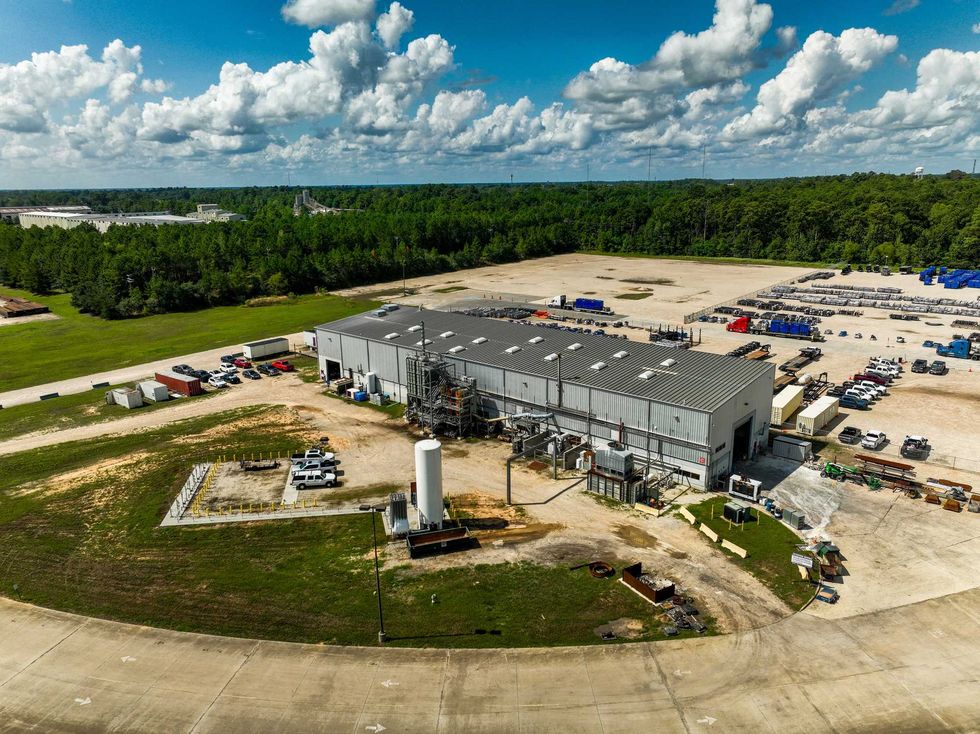
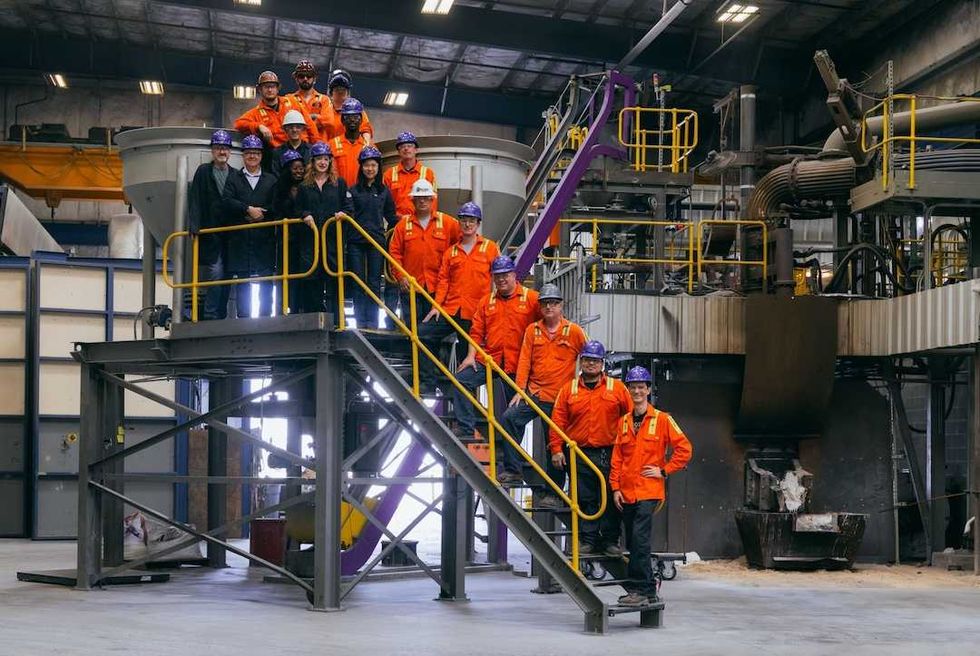
Locksley Resources will provide antimony-rich feedstocks from a project in the Mojave Desert as part of a new partnership with Rice University that aims to develop scalable methods for extracting and utilizing antimony. Photo via locksleyresources.com.au.

Rice University and Australian mineral exploration company Locksley Resources have joined together in a research partnership to accelerate the development of antimony processing in the U.S. Antimony is a critical mineral used for defense systems, electronics and battery storage.

Rice and Locksley will work together to develop scalable methods for extracting and utilizing antimony. Currently, the U.S. relies on imports for nearly all refined antimony, according to Rice.

Locksley will fund the research and provide antimony-rich feedstocks and rare earth elements from a project in the Mojave Desert. The research will explore less invasive hydrometallurgical techniques for antimony extraction and explore antimony-based materials for use in batteries and other energy storage applications.

“This strategic collaboration with Rice marks a pivotal step in executing Locksley’s U.S. strategy,” Nathan Lude, chairman of Locksley Resources, said in a news release. “By fast-tracking our research program, we are helping rebuild downstream capacity through materials innovation that the country urgently requires.”

Pulickel Ajayan, the Benjamin M. and Mary Greenwood Anderson Professor of Materials Science and Nanoengineering at Rice, is the principal investigator of the project.

“Developing scalable, domestic pathways for antimony processing is not only a scientific and engineering challenge but also a national strategic priority,” Ajayan said in the news release. “By combining Rice’s expertise in advanced materials with Locksley’s resources, we can address a critical supply chain gap and build collaborations that strengthen U.S. energy resilience.”

The Rice Advanced Materials Institute (RAMI) will play a major role in supporting the advancement of technology and energy-storage applications.

“This partnership aligns with our mission to lead in materials innovations that address national priorities,” Lane Martin, director of RAMI, said in a news release. “By working with Locksley, we are helping to build a robust domestic supply chain for critical materials and support the advancement of next-generation energy technologies.”

Ad Placement 300x100
Ad Placement 300x600

CultureMap Emails are Awesome

6+ must-attend Houston energy transition events for May 2026

Mark Your Calendars

Editor's note: May is starting off strong with two of the month's largest events beginning on Monday, May 4: Enverus Evolve Conference and OTC. Mark your calendars and begin registering now.

May 4-6, 2026 — Enverus Evolve Conference

Staying ahead of the curve in the energy sector is critical. This conference is designed to equip energy leaders with foresight in the energy market, providing cutting-edge technological know-how, sessions and networking opportunities industry leaders, and offering practical guidance on how to apply technology to solve big problems.

This event begins May 4 at Marriott Marquis, Downtown Houston. Register here.

May 4-7, 2026 — OTC 2026

The world’s largest offshore energy technology event returns to Houston beginning May 4. Dr. Mohamed Irfaan Ali, president of the Co-operative Republic of Guyana, will officially open the 2026 Offshore Technology Conference, delivering the Opening Address on May 4. This year's event will be cover the theme of "Steering Offshore Energy Innovation into the Future," emphasizes the pivotal role oil and gas, along with other emerging offshore energy sources, will play in shaping a sustainable and energy-secure future.

This event begins May 4 NRG Park. Register here.

May 14, 2026 — Gulf Coast ASSP Energy Corridor Section Meeting

At this lunchtime session, Chris Garza will speak on “Demystifying Regulatory Frameworks.” This session provides a comprehensive overview of key regulatory requirements concerning air quality, water discharge, and land management. Attendees will gain actionable insights into permits, reporting obligations, pollution prevention planning, and hazardous waste management. This session demystifies regulatory frameworks and empowers businesses to meet their legal responsibilities while promoting a culture of environmental stewardship. Attendees are welcome to stay for lunch and networking after the session.

This event takes place May 14 at 960 Memorial City Way. Register here.

May 16, 2026 — Energy Valuation Conference

ASA Houston's 16th annual EVC brings together energy valuation professionals and industry thought leaders to present timely educational valuation topics, with a focus on valuation impacts in the transition of power generation from fossil fuel to non-carbon, renewables, sustainable energy

This event takes place May 16 at The Briar Club, and there will be a live webcast. Register here.

May 18-19, 2026 — Geothermal Transition Summit North America

This two-day summit serves as the meeting point for the geothermal and oil and gas industries and will focus on geothermal energy, including scaling plants and navigating state regulations. The event promises 40 expert speakers, 15 exhibition spaces, and networking opportunities with 250 industry decision makers.

This event begins May 18 at Norris Conference Center. Register here.

May 20-21, 2026 — ESF North America

ESF North America returns for its 5th edition, under the theme of “innovation and adaptation.” Attendees will explore how technology, innovation, and collaboration can drive a resilient, competitive refining and chemicals industry.

This event begins May 20 at The Westin Oaks Houston at the Galleria. Register here.

Houston scientists unveil faster, low-energy method to recycle lithium-ion batteries

Battery breakthrough

Rice University researchers have uncovered a more energy-efficient and faster way to recycle critical minerals from used lithium-ion batteries.

Traditional methods rely on high heat, long processing times and harsh chemicals to recover a small fraction of critical materials from batteries used in everything from smartphones to electric vehicles. However, the team from Rice's Department of Materials Science and Nanoengineering developed a process that uses a water-based solution containing amino chlorides to extract more metals in less time

The team published the findings in a recent edition of the scientific journal Small.

Simon King, a sophomore studying chemical and biomolecular engineering who completed this work as a summer research fellow at the Rice Advanced Materials Institute, served as first author of the study. He worked with corresponding authors Pulickel Ajayan, the Benjamin M. and Mary Greenwood Anderson Professor of Engineering, and Sohini Bhattacharyya, a research scientist in Ajayan’s lab.

By using a hydroxylammonium chloride (HACI) solution, the team achieved roughly 65 percent extraction of key battery metals in just one minute at room temperature, according to the study. The efficiencies grew to roughly 75 percent for several metals under longer processing times.

“We were surprised by just how fast the reaction occurs, especially without the involvement of high temperatures,” King said in a news release. “Within the first minute, we’re already seeing the majority of the metal extraction take place.”

By not requiring high temperatures or long reaction times, Rice predicts the process could have a major impact on cost and the environmental impact of lithium battery recycling. Additionally, the water-based HACI solution makes waste handling easier and lowers certain environmental risks.

In addition to extracting the materials, the team went on to demonstrate that the recovered metals could be recycled and reprocessed into new battery materials.

“A big advantage of this system is that it works under relatively mild conditions,” Ajayan added in the release. “That opens the door to more sustainable and scalable recycling technologies.”