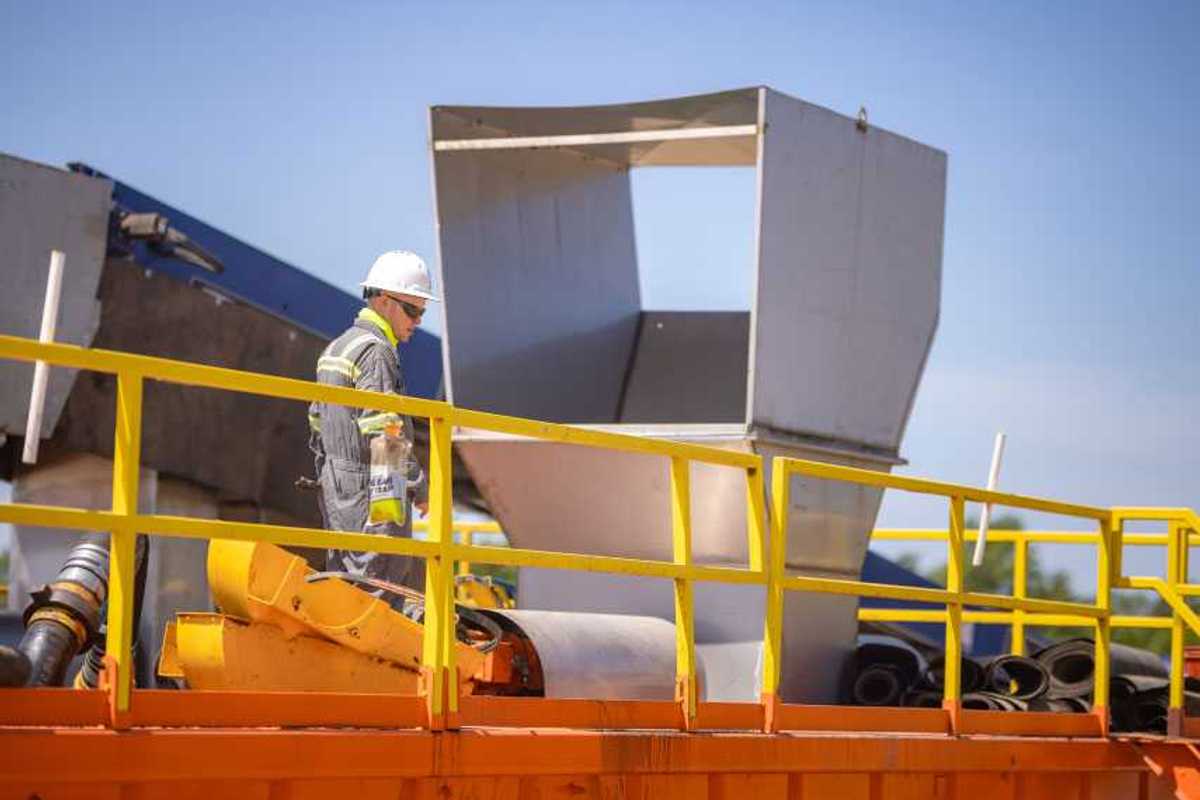
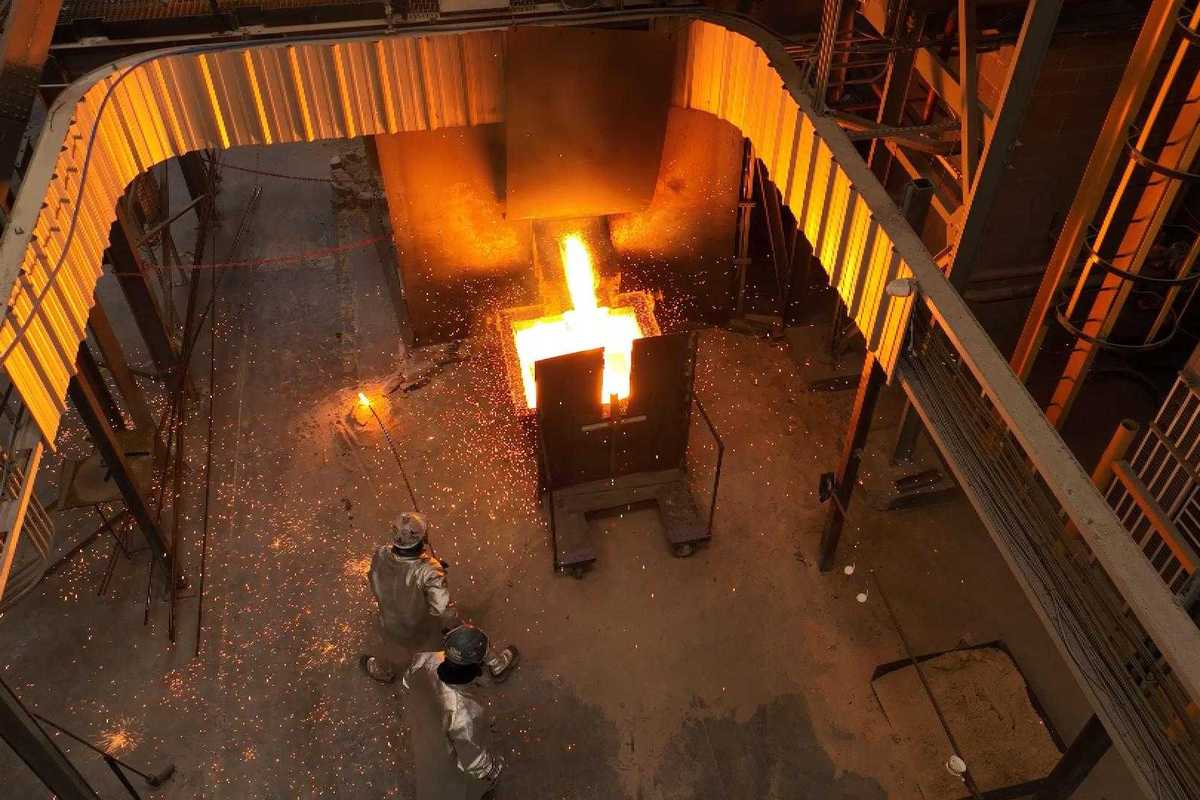
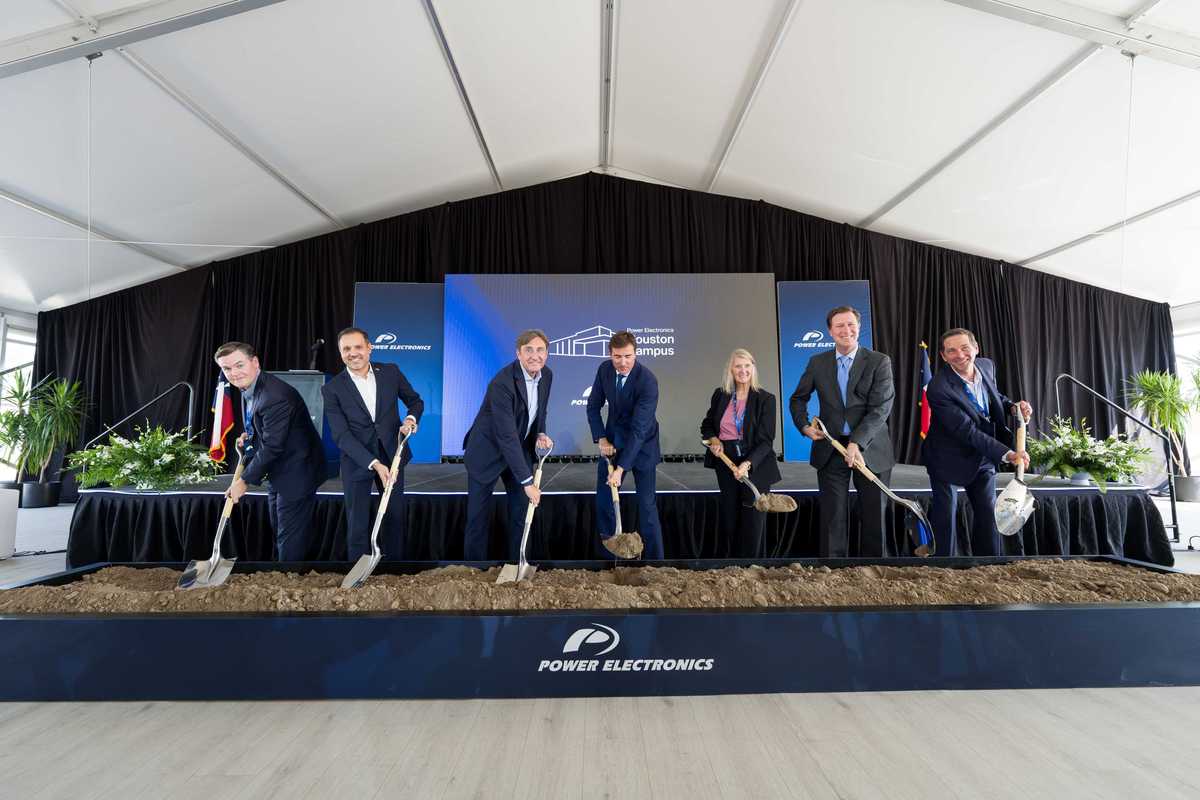
Fleetzero has raised $43 million to expand the manufacturing of its hybrid and electric marine propulsion system. Photo courtesy Fleetzero.

A Houston-based maritime technology company that is working to reduce emissions in the cargo and shipping industry has raised VC funding and opened a new Houston headquarters.

Fleetzero announced that it closed a $43 million Series A financing round this month led by Obvious Ventures with participation from Maersk Growth, Breakthrough Energy Ventures, 8090 Industries, Y Combinator, Shorewind, Benson Capital and others. The funding will go toward expanding manufacturing of its Leviathan hybrid and electric marine propulsion system, according to a news release.

The technology is optimized for high-energy and zero-emission operation of large vessels. It uses EV technology but is built for maritime environments and can be used on new or existing ships with hybrid or all-electric functions, according to Fleetzero's website. The propulsion system was retrofitted and tested on Fleetzero’s test ship, the Pacific Joule, and has been deployed globally on commercial vessels.

Fleetzero is also developing unmanned cargo vessel technology.

"Fleetzero is making robotic ships a reality today. The team is moving us from dirty, dangerous, and expensive to clean, safe, and cost-effective. It's like watching the future today," Andrew Beebe, managing director at Obvious Ventures, said in the news release. "We backed the team because they are mariners and engineers, know the industry deeply, and are scaling with real ships and customers, not just renderings."

Fleetzero also announced that it has opened a new manufacturing and research and development facility, which will serve as the company's new headquarters. The facility features a marine robotics and autonomy lab, a marine propulsion R&D center and a production line with a capacity of 300 megawatt-hours per year. The company reports that it plans to increase production to three gigawatt-hours per year over the next five years.

"Houston has the people who know how to build and operate big hardware–ships, rigs, refineries and power systems," Mike Carter, co-founder and COO of Fleetzero, added in the release. "We're pairing that industrial DNA with modern batteries, autonomy, and software to bring back shipbuilding to the U.S."

Ad Placement 300x100
Ad Placement 300x600

CultureMap Emails are Awesome

ENGIE strikes clean energy deal with Houston biomanufacturer

energy match

ENGIE North America has signed an agreement with Aker BioMarine to supply around-the-clock, Texas-sourced clean energy to the Norwegian company's Houston manufacturing facility.

The deal is through ENGIE's 24/7 offering, which allows users to "match electricity consumption with local renewable generation on an hourly basis," rather than annual renewable energy matching, according to a news release.

Houston-based ENGIE NA will match 90% of Aker BioMarine's hourly electricity consumption at its Houston facility through renewable energy certificates that link electricity consumed to clean power generated. The renewable energy will be sourced largely from ENGIE's Impact Solar Project in Lamar County, Texas.

“Working with companies that have made sustainability a core part of their strategy is essential to delivering meaningful progress,” Taymur Bunkheila, regional VP and retail supply lead for ENGIE’s U.S. 24/7 product, said in the release. “By aligning energy solutions with operational needs, we can help organizations improve transparency, strengthen accountability, and deliver measurable outcomes. This agreement demonstrates how companies can take practical steps today while building toward long-term sustainability objectives.”

Aker BioMarine, which develops sustainable marine-based ingredients, processes the majority of its krill and algae products at its Houston facility. The company says the deal with ENGIE marks an important step in reducing the environmental footprint of its operations.

“Through this agreement, we expect to reduce our Scope 2 emissions, marking an important milestone in our broader sustainability journey,” Matts Johansen, CEO at Aker BioMarine, added in the release. “ENGIE has delivered an affordable, innovative and transparent solution that allows us to match our electricity consumption for our Houston manufacturing facility with renewable power generation. The transparent data ENGIE provides strengthens our climate reporting while helping us continue delivering high-quality products with a lower environmental footprint."

ENGIE has more than 11 gigawatts of renewable energy projects in operation or under construction in the U.S. and Canada. The company is targeting 95 gigawatts by 2030

ExxonMobil announces date to move legal headquarters to Texas

save the date

Energy giant Exxon Mobil Corp. has set a date to move its legal headquarters to Texas.

The Spring-based company announced this week that the redomiciliation from New Jersey to Texas is expected to be effective July 1. Exxon's board of directors unanimously recommended redomiciling in the Lone Star State in March, and shareholders approved the move to Texas at the company’s annual meeting in May.

As part of the move, ExxonMobil Holdings Corp. will replace Exxon Mobil Corp. of New Jersey and become the publicly traded parent company. Exxon reports that its shares will continue to trade on the New York Stock Exchange under the ticker symbol “XOM,” and that shareholders do not need to take action.

At the time of the recommendation, Exxon said the move would not affect business operations, management, strategy, assets or employee locations.

Exxon Chairman and CEO Darren Woods added that the redomiciliation was in part due to Texas' business-friendly environment and policies.

"Over the past several years, Texas has made a noticeable effort to embrace the business community. In doing so, it has created a policy and regulatory environment that can allow the company to maximize shareholder value,” Woods said in a news release. "Aligning our legal home with our operating home, in a state that understands our business and has a stake in the company’s success, is important.”

The Associated Press reports that about 30 percent of Exxon's employees work in Texas. Exxon's legal headquarters has been based in New Jersey since 1882, when it was Standard Oil Company.

Exxon moved its operational headquarters from Irving, Texas, to the Houston area in 2023.

Exxon was the highest-ranking Houston-area company on this year's Fortune 500 list, coming in at No. 9. Houston tied with Chicago for the second-most Fortune 500 headquarters on this year's list, with Texas leading the nation for the most Fortune 500 headquarters (57).

“Texas is the undisputed headquarters of headquarters,” Gov. Greg Abbott said in a news release. “The world’s leading businesses invest with confidence in Texas because of our welcoming business climate, predictable regulatory environment, and skilled and growing workforce. People and businesses are choosing Texas because Texas works.”

Houston startups named to World Economic Forum cohort for carbon removal, clean technologies

top honor

Two Houston-based startups have been selected to join the World Economic Forum's Technology Pioneers community.

The two-year program aims to help mission-driven, early-stage start-ups scale their innovations through multi-stakeholder initiatives, co-creating partnerships and other gatherings for community members. One-hundred startups are selected each year from around the globe, this year hailing from 23 countries and working in AI, energy, space, biotech markets and more.

Cleantech startup Vaulted Deep was one of 11 energy and climate companies to be named to the cohort. Julia Reichelstein and Omar Abou-Sayed founded the company in 2023. Its technology injects excess organic waste underground to remove carbon dioxide from the atmosphere.

Last year, Vaulted Deep inked a 12-year deal with Microsoft to remove up to 4.9 million metric tons of carbon dioxide from the environment.

The startup has earned several accolades in recent years, including a No. 3 spot on Fast Company’s list of the World’s Most Innovative Companies of 2026. It was also recently named to market intelligence and advisory firm Cleantech Group's annual Global Cleantech 100 list for a second year in a row.

"Waste management is one of the world's great invisible infrastructure systems ... The need for new infrastructure is growing as disposal challenges become more complex and regulations evolve. Vaulted is building the first new disposal pathway for organic waste in decades by putting it deep underground, permanently," the company shared in a LinkedIn post. "This year, we're joining the World Economic Forum's 2026 Tech Pioneers alongside innovators working on the many interconnected challenges shaping our future."

Houston-based Venus Aerospace was also selected to join the cohort, along with six other spacetech companies. The company was founded in 2020 by Sassie and Andrew Duggleby.

The startup specializes in next-generation rocket engine propulsion as a cleaner alternative to traditional combustion engines. The company's rotating detonation rocket engine (RDRE) burns fuel more efficiently and completed a successful high-thrust test flight last year. Venus says it’s the only company in the world that makes a flight-proven, high-thrust RDRE with a “clear path to scaled production.”

"Frontier technologies matter most when they expand what people, industries, and nations can do," Sassie Duggleby, co-founder and CEO of Venus, said in a news release. "For Venus, RDRE does not just represent a more efficient engine. It is a foundation for faster movement, more capable space systems, and new forms of connectivity across the planet. Being named a Technology Pioneer validates the potential of this technology to help shape a future where distance is less limiting."