







take note

New battery CEO, events not to miss, and more Houston energy transition things to know this week

A carbon capture company is looking at biofuels — and more things to know this week. Photo via Getty Images

Editor's note: Dive headfirst into the new week with three quick things to catch up on in Houston's energy transition.

Events not to miss

Put these Houston-area energy-related events on your calendar.

  • Join the over 150 senior energy and utilities leaders from June 17 to 18 in Houston for AI in Energy to unlock the potential of AI within your enterprise and delve into key areas for its development.Register now.
  • Energy Underground (June) is a group of professionals in the Greater Houston area that are accelerating the Energy Transition that connect monthly at The Cannon - West Houston. Register now.
  • CCS/Decarbonization Project Development, Finance and Investment, taking place July 23 to 25, is the deepest dive into the economic and regulatory factors driving the success of the CCS/CCUS project development landscape. Register now.

Carbon Clean has eyes for biofuels solutions
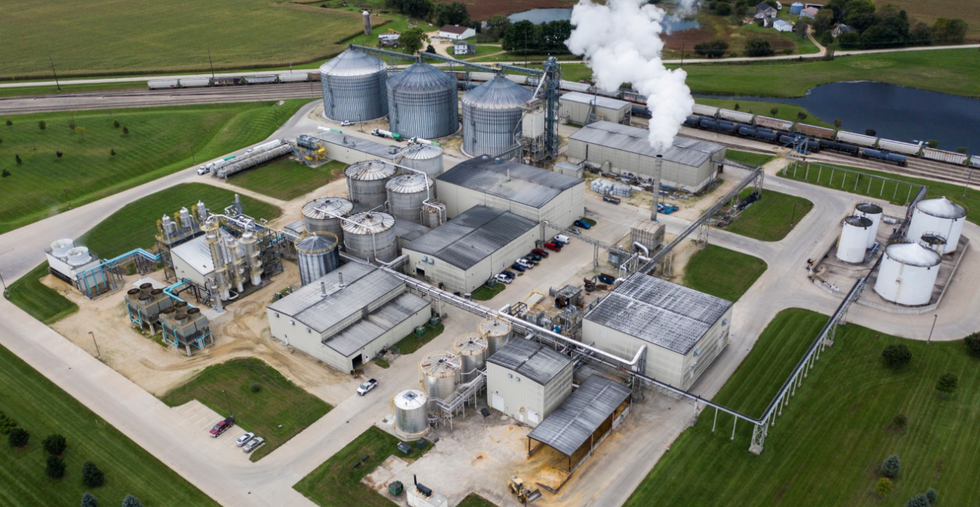
Carbon Clean says its tentative partnership with Merrill, Wisconsin-based AGRA Industries should speed up adoption of Carbon Clean’s CaptureX technology in the biofuel industry. Photo via CarbonClean.com

Carbon Clean, a carbon capture company whose North American headquarters is in Houston, has forged a deal with a contractor to build modular carbon capture containers for the agricultural sector.

The company, based in the United Kingdom, says its tentative partnership with Merrill, Wisconsin-based AGRA Industries should speed up adoption of Carbon Clean’s CaptureX technology in the biofuel industry.

“Carbon Clean’s collaboration with AGRA Industries is a win-win for biofuel producers. Customers will benefit from the expertise of a leading agricultural engineering specialist and our modularized, innovative carbon capture technology that is cost-effective and simple to install,” Aniruddha Sharma, chair and CEO of Carbon Clean, says.

Read the full story.

Iris Jancik appointed as CEO of International Battery Metals

International Battery Metals announced the appointment of Iris Jancik as CEO. Photo via IBAT

A Houston- and Vancouver-based battery materials company has named a new CEO, effective later this summer.

International Battery Metals (IBAT) announced the appointment of Iris Jancik as CEO. She will focus on expanding commercial deployment of IBAT's patented modular direct lithium extraction (DLE) plants, and begin in the role in mid-August.

Read the full story.

Trending News

A View From HETI

Rice University scientists' “recharge-to-recycle” reactor has major implications for the electric vehicle sector. Photo courtesy Jorge Vidal/Rice University.

Engineers at Rice University have developed a cleaner, innovative process to turn end-of-life lithium-ion battery waste into new lithium feedstock.

The findings, recently published in the journal Joule, demonstrate how the team’s new “recharge-to-recycle” reactor recharges the battery’s waste cathode materials to coax out lithium ions into water. The team was then able to form high-purity lithium hydroxide, which was clean enough to feed directly back into battery manufacturing.

The study has major implications for the electric vehicle sector, which significantly contributes to the waste stream from end-of-life battery packs. Additionally, lithium tends to be expensive to mine and refine, and current recycling methods are energy- and chemical-intensive.

“Directly producing high-purity lithium hydroxide shortens the path back into new batteries,” Haotian Wang, associate professor of chemical and biomolecular engineering, co-corresponding author of the study and co-founder of Solidec, said in a news release. “That means fewer processing steps, lower waste and a more resilient supply chain.”

Sibani Lisa Biswal, chair of Rice’s Department of Chemical and Biomolecular Engineering and the William M. McCardell Professor in Chemical Engineering, also served as co-corresponding author on the study.

“We asked a basic question: If charging a battery pulls lithium out of a cathode, why not use that same reaction to recycle?” Biswal added in the release. “By pairing that chemistry with a compact electrochemical reactor, we can separate lithium cleanly and produce the exact salt manufacturers want.”

The new process also showed scalability, according to Rice. The engineers scaled the device to 20 square centimeters, then ran a 1,000-hour stability test and processed 57 grams of industrial black mass supplied by industry partner Houston-based TotalEnergies. The results produced lithium hydroxide that was more than 99 percent pure. It also maintained an average lithium recovery rate of nearly 90 percent over the 1,000-hour test, showing its durability. The process also worked across multiple battery chemistries, including lithium iron phosphate, lithium manganese oxide and nickel-manganese-cobalt variants.

Looking ahead, the team plans to scale the process and consider ways it can sustain high efficiency for greater lithium hydroxide concentrations.

“We’ve made lithium extraction cleaner and simpler,” Biswal added in the release. “Now we see the next bottleneck clearly. Tackle concentration, and you unlock even better sustainability.

Trending News