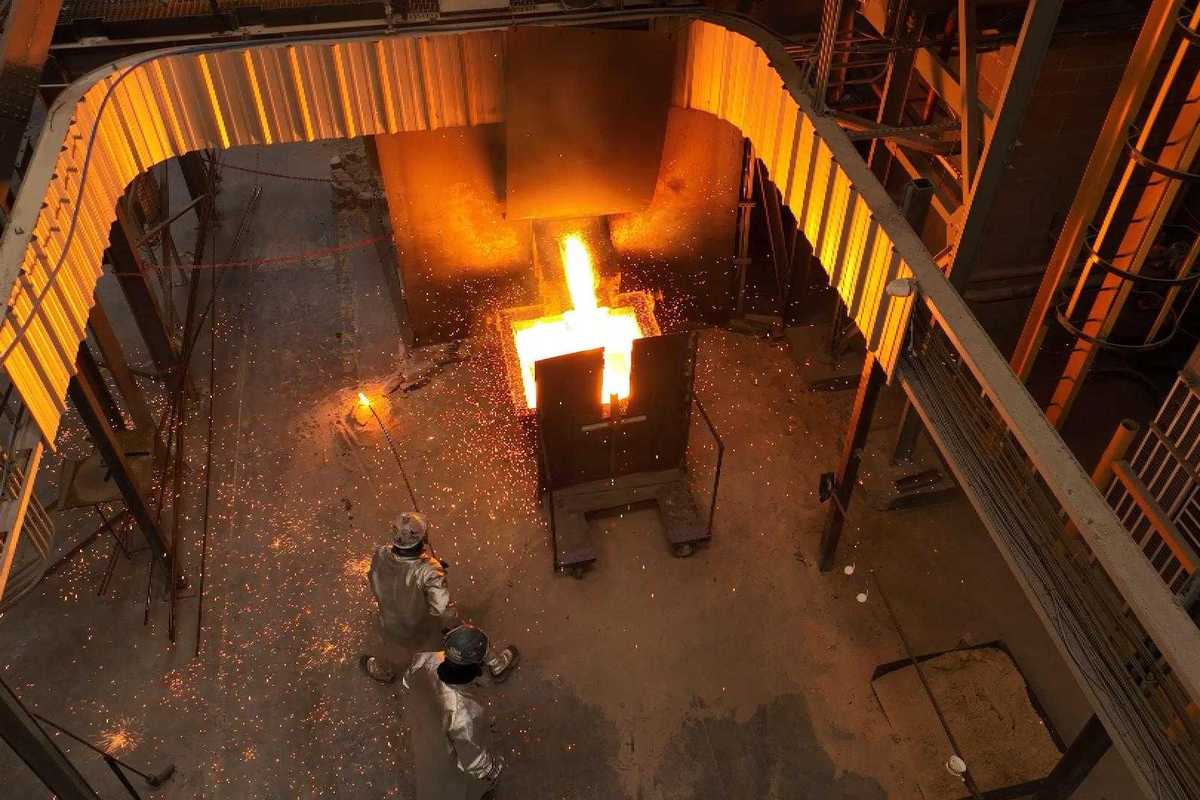
Texas is poised to become the world’s largest data center market. Photo courtesy Google

Just seven months ago, Gov. Greg Abbott trumpeted Google’s $40 billion plan to add three data center campuses in Texas. Now, amid growing public outcry over such projects, Abbott is pushing for a regulatory crackdown on data centers in the Lone Star State.

Abbott recently sent a letter to leaders of the Public Utility Commission of Texas (PUC) and the Electric Reliability Council of Texas (ERCOT) proposing stricter oversight of the state’s data centers. Texas is home to more than 400 data centers, with many more on the way, and is poised to become the world’s largest data center market.

Among other things, Abbott wants to:

  • Ensure residential electric bills go down — not up — as data centers connect to ERCOT’s grid, which supplies power for about 90 percent of Texans.
  • Require data centers to cover the costs of upgrades to deliver electricity to the power-hungry facilities.
  • Repeal sales tax exemptions and other “outdated or unnecessary” financial incentives for data centers.
  • Institute “best practices,” such as property setbacks and noise-reduction technology, to ease the impact of data centers on nearby residents.
  • Demand that all new data centers, which use a tremendous amount of water, be built with water-efficient technology.
  • Require large data centers to generate annual reports on their use of electricity and water.

Abbott has set a July 17 deadline for the PUC and ERCOT to address his recommendations.

“As Texas continues to welcome innovation and investment, we must ensure that growth strengthens our people and their quality of life without placing undue burdens on Texans and local communities,” Abbott wrote.

Abbott’s call for tighter control of data centers has elicited both praise and skepticism.

In a social media post on X, Texas House Speaker Dustin Burrows, a Lubbock Republican, thanked Abbott for seeking “accountability and reform” in the state’s data center industry. Burrows has made data centers one of his priority issues for the 2027 state legislative session.

State oil and gas regulator Wayne Christian, a member of the Texas Railroad Commission, weighed in with similarly positive comments about Abbott’s directive. He says an outright ban on data centers isn’t the answer to residents’ complaints about new facilities.

“The Texas way is not to answer innovation with government overreach or fear-driven bans,” Christian, whose agency wasn’t cited in Abbott’s letter, said in a statement posted on X. “Our job is to protect prosperity, safeguard taxpayers and ensure the infrastructure that powers our economy remains strong and reliable.”

Gina Hinojosa, an Austin Democrat who’s challenging Abbott in this November’s gubernatorial race, took issue with the governor’s edict on data centers.

“Greg Abbott is changing his tune on data centers because he knows his policies are unpopular,” Hinojosa, a state representative, wrote on X. “Nobody believes the arsonist is gonna be the one to put out the fire.”

Abbott’s call for stepped-up regulation of data centers echoes many of the concerns expressed by the state chapter of the Sierra Club, an environmental nonprofit.

“The growth of data centers reflects a broader transformation taking place across Texas,” the Sierra Club says on its website. “The state is becoming a hub for the technologies that will shape the future economy, from artificial intelligence to advanced computing and cloud services. At the same time, Texans deserve transparency about how these projects affect the communities where they are built.”

Ad Placement 300x100
Ad Placement 300x600

CultureMap Emails are Awesome

Rice University spinouts named among 50 top cleantech companies to watch

green team

Two Rice University spinouts, Coflux Purification and DexMat, appear on a new list of the world’s 50 cleantech companies to watch.

Cleantech Group’s 2026 Cleantech 50 to Watch list recognizes early-stage companies “creating groundbreaking solutions to address some of the world’s most pressing environmental and sustainability challenges.”

Cleantech Group, a market research, consulting, and events company, selects the 50 honorees based on insights from analysts and early-stage innovators, along with public nominations.

Destroying “forever chemicals”

Coflux, founded in 2024, offers an onsite treatment system that captures and destroys manufactured “forever chemicals”—per- and polyfluoroalkyl substances—in water and wastewater. It’s a member of Greentown Houston.

Alec Ajnsztajn, CEO; Jeremy Daum, chief technology officer; and Dana Vazquez, chief commercial officer, co-founded Coflux. Ajnsztajn and Daum earned doctoral degrees from Rice, and Vazquez earned an MBA from the university.

Coflux spun out of Rice labs directed by professors Rafael Verduzco and Pulickel Ajayan.

Last year, Coflux received a $175,000 grant from the U.S. Food and Drug Administration’s National Institute of Food and Agriculture. The startup has also raised more than $500,000 in non-dilutive funding, including $80,000 awarded in 2024 by Rice’s One Small Step Grant program.

Promoting an alternative to copper

DexMat, founded in 2015, produces carbon nanotube products such as fibers, yarns, cables, and fabric. The company’s products address demand for materials that can reduce carbon emissions, according to CB Insights.

Its main product, Galvorn, is a copper alternative made of carbon nanotube fibers. CB Insights says Galvorn is engineered to be lighter and stronger than traditional conductive materials like carbon and steel. It’s used in industries such as energy, aerospace, defense, automotive, consumer electronics, and health care.

DexMat emerged from Matteo Pasquali’s Carbon Lab at Rice. Pasquali, co-founder of DexMat, co-invented the company’s technology with the late Nobel Prize-winning chemist Rick Smalley. Smalley was a professor of chemistry, physics, and astronomy at Rice.

Pasquali is a professor of chemical and biomolecular engineering, chemistry, materials science, and nanoengineering at Rice. He co-founded DexMat with Rice graduate Dmitri Tsentalovich, the company’s director of product innovation.

Earlier this year, DexMat raised $5 million in seed funding from Non Sibi Ventures, Governance Partners, Tailwind Futures, BetterWay, Capital Factory, and other investors. The company also secured $3 million in non-dilutive funding.

In 2023, DexMat raised $3 million in a pre-seed round led by Shell Ventures.

TotalEnergies expands solar joint venture with $1.2B portfolio in Texas, Ohio

solar expansion

TotalEnergies, a French company whose U.S. headquarters is in Houston, announced this month that it is expanding its renewable energy joint venture with New York-based investment firm KKR by adding 700 megawatts of utility-scale solar projects.

The deal will add three utility-scale solar assets in Texas and Ohio, which are expected to reach commercial operation by Q1 2027, according to a news release from the company. The portfolio is valued at $1.2 billion.

The 50/50 joint venture between TotalEnergies and KKR currently holds 1.4 gigawatts of renewable energy and will grow to 2.1 gigawatts.

The new deal is expected to close this year. Once completed, TotalEnergies will operate the assets. The electricity generated from the solar projects will be sold to third parties, the company reports.

The companies originally formed the joint venture about a year ago when TotalEnergies sold KKR a 50 percent stake in a North American solar portfolio valued at $1.25 billion. The deal originally included six utility-scale solar assets, primarily located in the U.S.

“TotalEnergies is a renewable energy industry leader globally, and we are thrilled to establish this joint venture with the TotalEnergies team to support their renewables business," Cecilio Velasco, managing director KKR, said in a release last year. “We have long been investors in renewables through our infrastructure platform, having committed more than $23 billion to date in energy transition investments. TotalEnergies’ North American solar portfolio is a great fit for us, representing high-quality renewable energy assets with long term contracts.”

TotalEnergies reports that by June 2026 it held more than 37 gigawatts of gross renewable power generation capacity. It aims to achieve over 100 terawatt-hours of net electricity production by 2030.

The company signed a major power purchase agreement with Google earlier this year. Through the deal, TotalEnergies will supply the tech giant with 1 gigawatt of solar power for its data centers in Texas over a 15-year span.

However, the company also recently redirected nearly $1 billion in capital away from wind energy projects and "decided to renounce offshore wind development in the United States." Read more here.