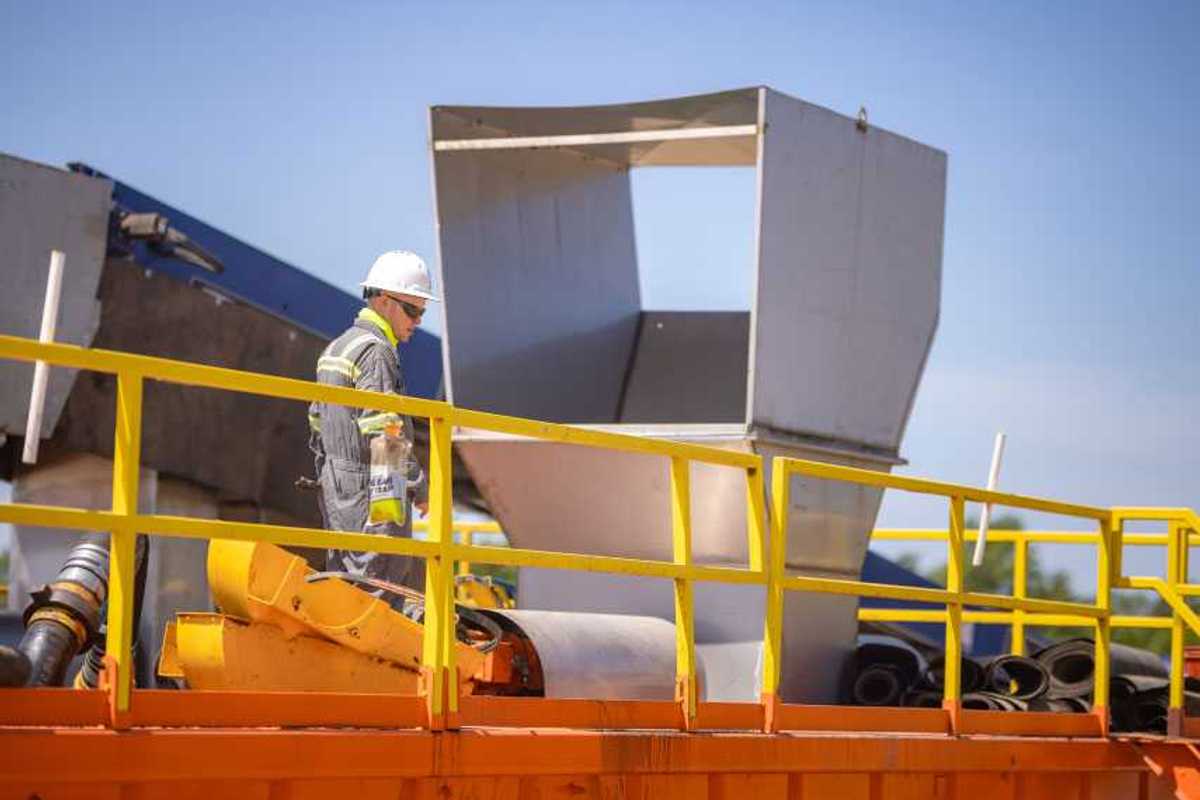
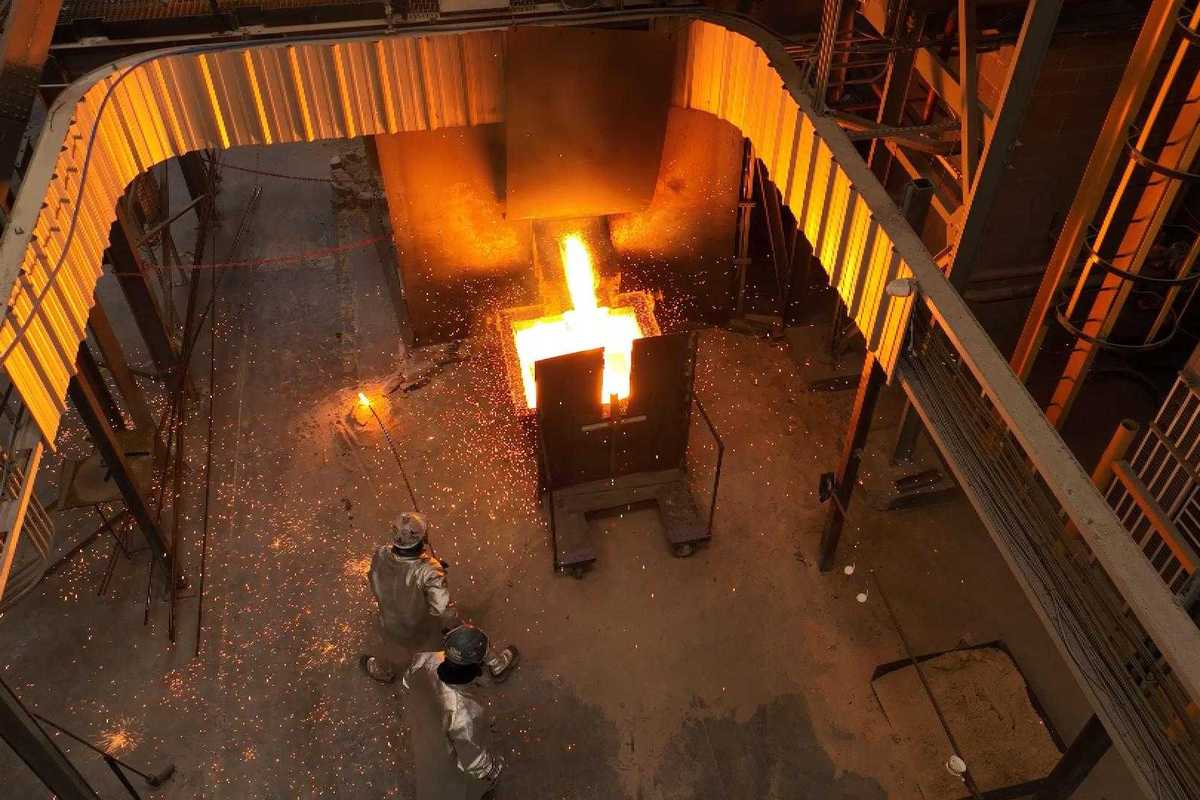
Cemvita has partnered with Brazilian sustainable research institution REMA. Photo courtesy of Cemvita

Houston biotech company Cemvita has announced a strategic collaboration with Brazilian sustainable research institution REMA.

The move aims to promote Cemvita’s platform for evaluating and testing carbon waste streams as feedstocks for producing sustainable oil, according to the company.

Cemvita utilizes synthetic biology to transform carbon emissions into valuable bio-based chemicals. REMA professors Marcio Schneider and Admir Giachini have previously worked with Cemvita’s CTO, Marcio Busi da Silva, for approximately 20 years.

“This long-standing partnership reflects not only our strong professional ties, but also our shared commitment to advancing science and technology for a more sustainable future," Busi da Silva said in a news release.

REMA’s center is based in Florianópolis and is affiliated with the Federal University of Santa Catarina, which develops cost-effective environmental and technological solutions in automation, chemical engineering, biotech, environmental engineering and agronomy.

“Partnering with REMA in Florianópolis represents a significant step forward in our mission to transform carbon waste into valuable resources,” Tara Karimi, chief science and sustainability officer of Cemvita, said in a news release. “Together, we will enhance our platform’s capabilities, leveraging REMA’s expertise to evaluate and utilize diverse waste streams for sustainable oil production, further advancing the circular bioeconomy in Brazil and beyond.”

Cemvita recently expanded to Brazil to capitalize on the country’s progressive regulatory framework, which includes Brazil’s Fuel of the Future Law. The expansion also aimed to coincide with the 2025 COP30, the UN’s climate change conference, which will be hosted in Brazil in November.

Cemvita became capable of generating 500 barrels per day of sustainable oil from carbon waste at its first commercial plant in 2024, and as a result, Cemvita quadrupled output at its Houston plant. The company originally planned to reach this milestone in 2029.

Also in 2025, Cemvita announced a partnership with Brazil-based Be8 that focused on converting biodiesel byproduct glycerin into low-carbon feedstock to help support the decarbonization of the aviation sector. Cemvita agreed to a 20-year contract that specified it would supply up to 50 million gallons of SAF annually to United Airlines in 2023.

Ad Placement 300x100
Ad Placement 300x600

CultureMap Emails are Awesome

Houston startup wins funding through new Bezos Earth Fund initiative

global winner

A Houston-based climatech startup is one of the first 16 companies in the world to receive funding through a new partnership between The Bezos Earth Fund and The Earthshot Prize.

Mati Carbon will receive $100,000 through the Bezos Earth Fund’s Acceleration Initiative. The initiative will provide $4.8 million over three years to support climate and nature solutions startups. It's backed by The Bezos Earth Fund, which was founded through a $10 billion gift from Amazon founder Jeff Bezos and aims to "transform the fight against climate change."

The Acceleration Initiative will choose 16 startups each year from The Earthshot Prize’s global pool of nominations that were not selected as finalists. The Earthshot Prize, founded by Prince William, awards £1 million to five energy startups each year over a decade.

"The Earthshot Prize selects 15 finalists each year, but our wider pool of nominations represents a global pipeline of innovators and investable solutions that benefit both people and planet. Collaborating with the Bezos Earth Fund to support additional high-potential solutions is at the heart of commitment to working with partners who share our vision," Jason Knauf, CEO of The Earthshot Prize, said in a news release. "By combining our strengths to support 48 carefully selected grantees from The Earthshot Prize’s pool of nominations, our partnership with the Bezos Earth Fund means we will continue to drive systemic change beyond our annual Prize cycle, delivering real-world impact at scale and speed.”

Mati Carbon was founded in 2022 by co-directors Shantanu Agarwal and Rwitwika Bhattacharya. It removes carbon through its Enhanced Rock Weathering (ERW) program and works with agricultural farms in Africa and India. Mati Carbon says the farmers it partners with are some of the most vulnerable to the impacts of climate change.

"As one of the first 16 organizations selected, this support enables us to expand our operations, move faster and think bigger about the impact we can create," the company shared in a LinkedIn post.

The other grantees from around the world include:

  • Air Protein Inc.
  • Climatenza Solar
  • Instituto Floresta Viva
  • Forum Konservasi Leuser
  • Fundación Rewilding Argentina
  • Hyperion Robotics
  • InPlanet
  • Lasso
  • Mandai Nature
  • MERMAID
  • Asociación Conservacionista Misión Tiburón
  • Simple Planet
  • Snowchange Cooperative
  • tHEMEat Company
  • UP Catalyst

Mati Carbon also won the $50 million grand prize in the XPRIZE Carbon Removal competition, backed by Elon Musk’s charitable organization, The Musk Foundation, last year.

Texas' oil and gas foundation could boost its geothermal future, UH says

future of geothermal

Equipped with the proper policies and investments, Texas could capitalize on its oil and gas infrastructure and expertise to lead the U.S. in development of advanced geothermal power, a new University of Houston white paper says.

Drilling, reservoir development and subsurface engineering are among the Texas oil and gas industry’s capabilities that could translate to geothermal energy, according to a news release. Furthermore, oil and gas skills, data, technology and supply chains could help make geothermal power more cost-effective.

Up to 80 percent of the investment required for a geothermal project involves capacity and skills that are common in the oil and gas industry, the white paper points out.

Building on its existing oil-and-gas foundation, Texas could help accelerate production of geothermal energy, lower geothermal energy costs and create more jobs in the energy workforce, according to the news release.

The paper also highlights geothermal progress made by Houston-based companies Fervo Energy, Quaise Energy and Sage Geosystems, as well as Canada-based Eavor Technologies Inc.

UH’s Division of Energy published the white paper, Advanced Geothermal: Opportunities and Challenges, in partnership with the C.T. Bauer College of Business’ Gutierrez Energy Management Institute.

“Energy demand, especially electricity demand, is continuing to grow, and we need to develop new low-carbon energy sources to meet those needs,” Greg Bean, executive director of the institute and author of the white paper, said of geothermal’s potential.

HETI leader reflects on four years focused on the energy transition

The View From HETI

It’s hard to believe only four years have passed since I joined the Greater Houston Partnership to lead the Houston Energy Transition Initiative. We talk about COVID years feeling simultaneously like just yesterday and a lifetime ago, and my time at HETI feels quite similar. The energy and climate landscape has evolved dramatically over the last few years, but one constant has endured…Houston remains at the heart of the energy industry.

When I joined HETI at the start of 2022, I could not have imagined the impact we would have over the next four years. Our vision, laid out in 2020 by then Partnership Chair Bobby Tudor, was bold – leverage Houston’s energy leadership to accelerate global solutions for an energy abundant, low-carbon future. Our mission was clear – ensure the long-term economic competitiveness of the Houston region in a changing energy landscape. Our strategy, developed with strong support from McKinsey, was sound – build a coalition of industry, academic and community partners to position Houston as a leading hub for energy and climate innovation, commercialization and economic growth.

And Houston’s energy leaders, across business, academia and community, came together to deliver that strategy. Bobby Tudor’s timely vision created an anchor for Houston’s energy community that allowed us to broaden the energy and climate discussion to one focused on meeting growing energy demand and reducing emissions. That vision was a catalyst for changing the perception of Houston from oil & gas capital to an “all of the above” energy capital with a thriving energy and climate tech innovation ecosystem. Houston is where you can work collaboratively to build new energy value chains and ensure an affordable, secure, and lower emissions energy mix for our region, our country, and the world.

In this fast-moving energy environment, it can be easy to focus on what to do next without taking time to reflect on the work and celebrate the wins. We took the opportunity at the end of 2025 to reflect on five years of impact. As we developed that report, I thought about how fortunate I have been to lead this work for the last four years. HETI’s impact has been incredibly meaningful for our region, our members, and the new companies and founders building the next generation of energy technology and talent. As my time as executive director comes to an end, HETI’s work continues. The need remains clear: more energy, less emissions, and continued collaboration that brings together innovation and infrastructure, policies and markets, and hard tech together with human ingenuity.

As I prepare to hand the reigns to HETI’s new SVP and executive cirector, Sophia Cunningham, at the end of March, I have been reflecting on the impact this role has had on me. Four years ago, I could never have imagined the opportunities, experiences and relationships this role has enabled. I am truly grateful for the support and engagement of Houston’s business and community leaders, the visionary leadership of Bobby Tudor, Scott Nyquist, HETI Members, and the Greater Houston Partnership in creating this initiative at exactly the right moment in time. I am incredibly proud of the HETI and partnership team members who have delivered with purpose and passion, and I greatly appreciate Houston’s energy and climate leaders and champions who have supported my agenda, challenged my thinking, broadened my perspectives, and worked with HETI to demonstrate the power of partnership in developing, innovating and advancing the ideas and technologies needed to meet this challenge for our region and the world.

As excited as I am to see where this next chapter takes me, I am even more excited to see where the work of HETI goes from here. I am still optimistic that the challenge of providing the world with affordable, reliable, and resilient energy while simultaneously reducing emissions is one Houston is uniquely positioned to meet.

———

This article originally appeared on the Greater Houston Partnership's Houston Energy Transition Initiative blog. HETI exists to support Houston's future as an energy leader. For more information about the Houston Energy Transition Initiative, EnergyCapitalHTX's presenting sponsor, visit htxenergytransition.org.