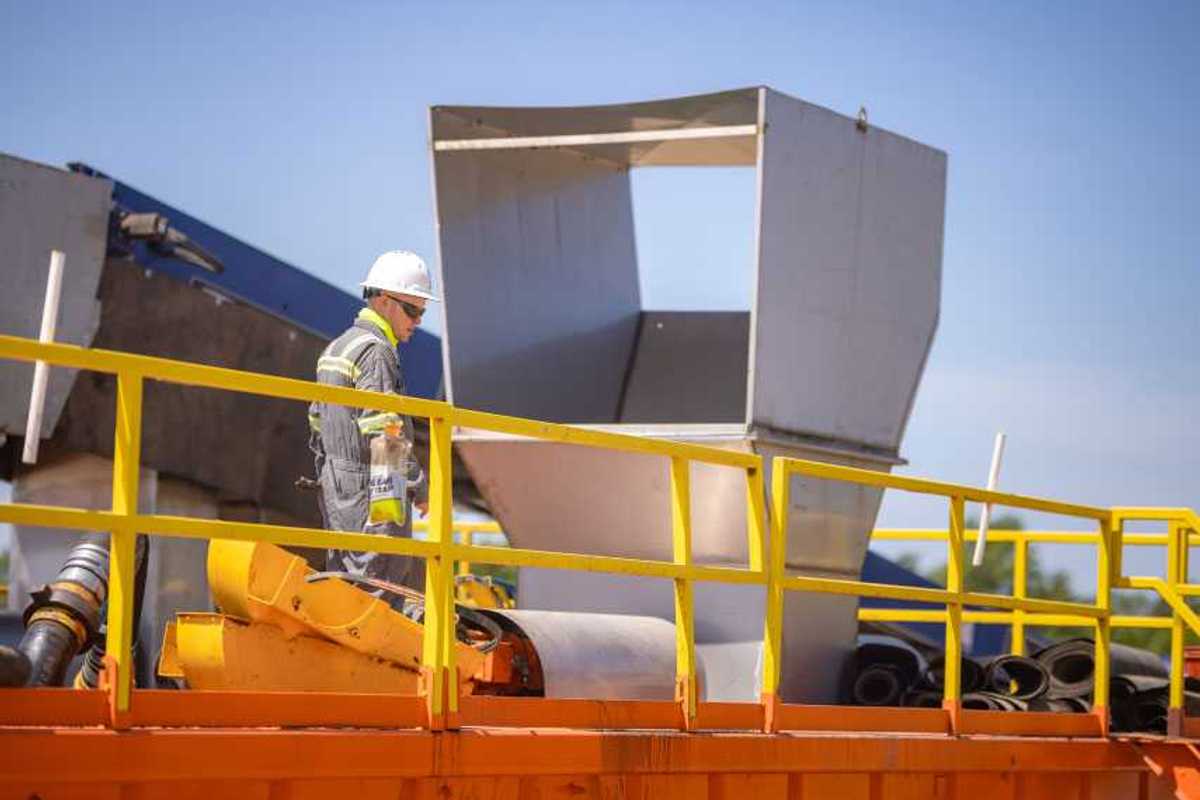
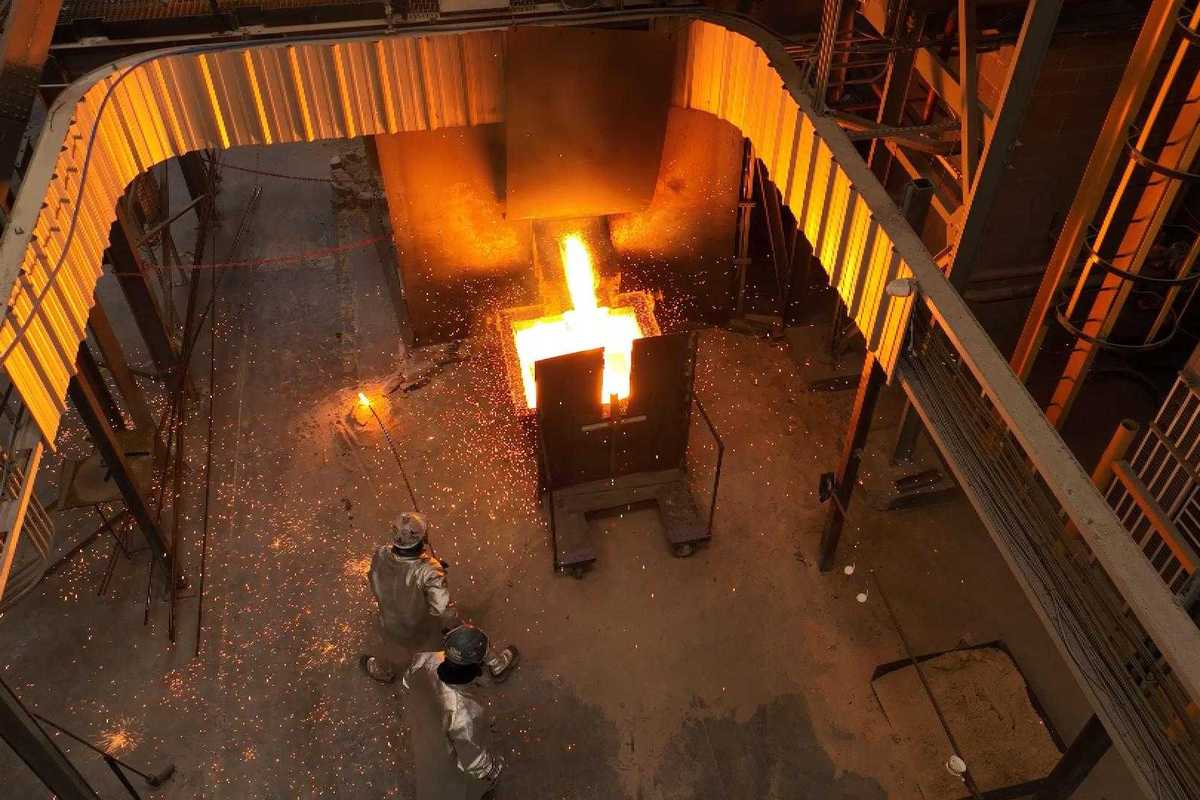
Mars Materials has successfully turned its CO2-derived product into a high-quality raw material for producing carbon fiber. Photo via LinkedIn.

Houston-based Mars Materials has made a breakthrough in turning stored carbon dioxide into everyday products.

In partnership with the Textile Innovation Engine of North Carolina and North Carolina State University, Mars Materials turned its CO2-derived product into a high-quality raw material for producing carbon fiber, according to a news release. According to the company, the product works "exactly like" the traditional chemical used to create carbon fiber that is derived from oil and coal.

Testing showed the end product met the high standards required for high-performance carbon fiber. Carbon fiber finds its way into aircraft, missile components, drones, racecars, golf clubs, snowboards, bridges, X-ray equipment, prosthetics, wind turbine blades and more.

The successful test “keeps a promise we made to our investors and the industry,” Aaron Fitzgerald, co-founder and CEO of Mars Materials, said in the release. “We proved we can make carbon fiber from the air without losing any quality.”

“Just as we did with our water-soluble polymers, getting it right on the first try allows us to move faster,” Fitzgerald adds. “We can now focus on scaling up production to accelerate bringing manufacturing of this critical material back to the U.S.”

Mars Materials, founded in 2019, converts captured carbon into resources, such as carbon fiber and wastewater treatment chemicals. Investors include Untapped Capital, Prithvi Ventures, Climate Capital Collective, Overlap Holdings, BlackTech Capital, Jonathan Azoff, Nate Salpeter and Brian Andrés Helmick.


Ad Placement 300x100
Ad Placement 300x600

CultureMap Emails are Awesome

Houston startup debuts sustainable, bio-based 'leather' fashions

sustainable fashion

Last month, Houston-based Rheom Materials and India’s conscious design studio Econock unveiled a collaborative capsule collection that signaled more than just a product launch.

Hosted at Lineapelle—long considered the global epicenter of the world's premier leather supply chain—in the vaulted exhibition halls of Rho-Fiera Milano, the collection centered around Rheom’s 91 percent bio-based leather alternative, Shorai.

It was a bold move, one that shifted sustainability from a concept discussed in panel sessions to garments that buyers could touch and wear.

The collection featured a bomber-style jacket, an asymmetrical skirt and a suite of accessories—all fabricated from Shorai.

The standout piece, a sculptural jacket featuring a funnel neck and dual-zip closure, was designed for movement, challenging assumptions about performance limitations in bio-based materials. The design of the asymmetrical skirt was drawn from Indian armored warrior traditions, according to Rheom, with biodegradable corozo fasteners.

Built as a modular wardrobe rather than isolated pieces, the collection reflects a shared belief between Rheom and Econock in designing objects that adapt to daily life, according to the companies.

The collection was born out of a new partnership between Rheom and Econock, focused on bringing biobased materials to the market. According to Rheom, the partnership solves a problem that has stalled the adoption of many next-gen textiles: supply chain friction.

While Rheom focuses on engineering scalable bio-based materials, New Delhi-based Econock brings the complementary design and manufacturing ecosystem that integrates artisans, circular materials and production expertise to translate the innovative material into finished goods.

"This partnership removes one of the biggest barriers brands face when adopting next-generation materials,” Megan Beck, Rheom’s director of product, shared in a news release. “By reducing friction across the supply chain, Rheom can connect brands directly with manufacturers who already know how to work with Shorai, making the transition to more sustainable materials far more accessible.”

Sanyam Kapur, advisor of growth and impact at Econock, added: “Our partnership with Rheom Materials represents the benchmark of responsible design where next-gen materials meet craft, creativity, and real-world scalability.”

Rheom, formerly known as Bucha Bio, has developed Shorai, a sustainable leather alternative that can be used for apparel, accessories, car interiors and more; and Benree, an alternative to plastic without the carbon footprint. In 2025, Rheom was a finalist for Startup of the Year in the Houston Innovation Awards.

Shorai is already used by fashion lines like Wuxly and LuckyNelly, according to Rheom. The company scaled production of the sugar-based material last year and says it is now produced in rolls that brands can take to market with the right manufacturer.

---

This article originally appeared on our sister site, InnovationMap.

Houston energy co. names new COO to scale offshore decommissioning

new hire

Houston-based Promethean Energy has named a new COO as it looks to scale.

Martyn Fear, former CEO of Altamesa Energy Canada Inc., will assume the role, the company announced last week. He brings decades of experience at energy companies such as BP and Maersk Oil and has held board positions at several private equity and venture-backed firms.

“Promethean has built a differentiated platform for managing and retiring late-life assets safely, efficiently, and responsibly,” Fear said in a news release. “The industry is facing a structural shift as decommissioning moves to the forefront, and the opportunity to combine operational excellence, disciplined project delivery, and innovative commercial models is incredibly compelling."

Promethean has developed an environmentally sustainable, integrated model for late-life asset management and offshore well decommissioning. Fear will oversee day-to-day operations at Promethean and the execution of this integrated operator-service model as the company looks to scale and expand to new markets.

“Martyn is a proven leader with a deep operational track record and a passion for building high-performance, safety-first organizations,” Aditya Singh, Promethean's CEO, added in the release. “As Promethean enters its next phase—scaling our integrated operator-service model and delivering first-time-right decommissioning at pace—his experience in transforming complex asset portfolios and leading global teams makes him the ideal COO to drive operational execution while we continue to advance our strategic vision.”

Last May, the company successfully decommissioned offshore orphaned wells in the Matagorda Island lease area. In November, it also announced that it had completed a multi-client project to safely plug and abandon an orphaned well on a storm-damaged platform in the South Timbalier lease area.

Both projects were based in the Gulf of Mexico, where Promethean is looking to grow.