Helix Earth is developing a retrofit technology that has the potential to cut HVAC energy use by up to 50 percent. Photo via Getty Images

Houston-based Helix Earth Technologies has closed a $12 million Seed 2 funding round to scale manufacturing of its energy-efficient commercial HVAC add-on technology.

Veriten, a Houston-based energy investment firm, led the round. Rua Ventures, Carnrite Ventures, Skywriter LLC and Textbook Ventures also participated.

Helix Earth—which was founded based on NASA technology, spun out of Rice University and has been incubated at Greentown Labs—is developing high-efficiency retrofit dehumidification systems that aim to reduce the energy consumption of commercial HVAC units. The company reports that its technology can lead to "healthier indoor air, lower energy bills, reduced building maintenance, and more comfortable spaces for building owners and occupants."

"Building owners are dealing with rising energy costs, uncontrolled humidity, and aging infrastructure with no viable, cost-effective path forward. We are in the field today solving these problems for commercial customers, and this capital puts us on an aggressive path to scale,” Rawand Rasheed, Helix Earth co-founder and CEO, said in a news release.

“The strength of this round reinforces our team's conviction that we can transform innovation-starved sectors with transformational solutions that deliver order-of-magnitude improvements to owners and operators, for both their bottom line and the environment,” Rasheed added.

Maynard Holt, Veriten’s founder and CEO, said that the investment firm is tripling its investment in Helix Earth.

"The team has built breakthrough technology with real applicability across multiple industries,” Holt said in the release. “Their first product will have an immediate and measurable impact on our energy system, and they are already pursuing adjacent innovations to help heavy industries operate more efficiently and with less waste. This is a well-rounded team with a proven track record of strong execution and disciplined capital management.”

Helix Earth also closed a $5.6 million seed funding round in 2024, led by Veriten.

Last year, the company secured a $1.2 million Small Business Innovation Research (SBIR) Phase II grant and won in the Smart Cities, Transportation & Sustainability contest at the 2025 SXSW Pitch Showcase. Rasheed was also named to the Forbes 30 Under 30 Energy and Green Tech list for 2025.

Ad Placement 300x100
Ad Placement 300x600

CultureMap Emails are Awesome

Chevron inks 20-year deal to power massive Microsoft data center in West Texas

power deal

Chevron and Microsoft have signed a 20-year deal in which Chevron will provide natural-gas-fired power for a future West Texas data center, known as Project Kilby.

The proposed Microsoft data center could be one of the biggest in the U.S. and is expected to deliver 2.67 gigawatts of capacity. It will be built through a “phased, modular approach that enables incremental expansion over time,” according to Chevron.

Chevron expects the facility to be up and running by 2028, though the company won’t make a final investment decision on the project until later this year. The company is collaborating on Project Kilby with investment fund Engine No.1.

Project Kilby is projected to bring in $10 billion in state and local tax revenue and support 2,000 jobs, according to Chevron. The plant will use non-potable, brackish groundwater for power plant operations and aims to find new ways to reuse water produced by oil and gas operations.

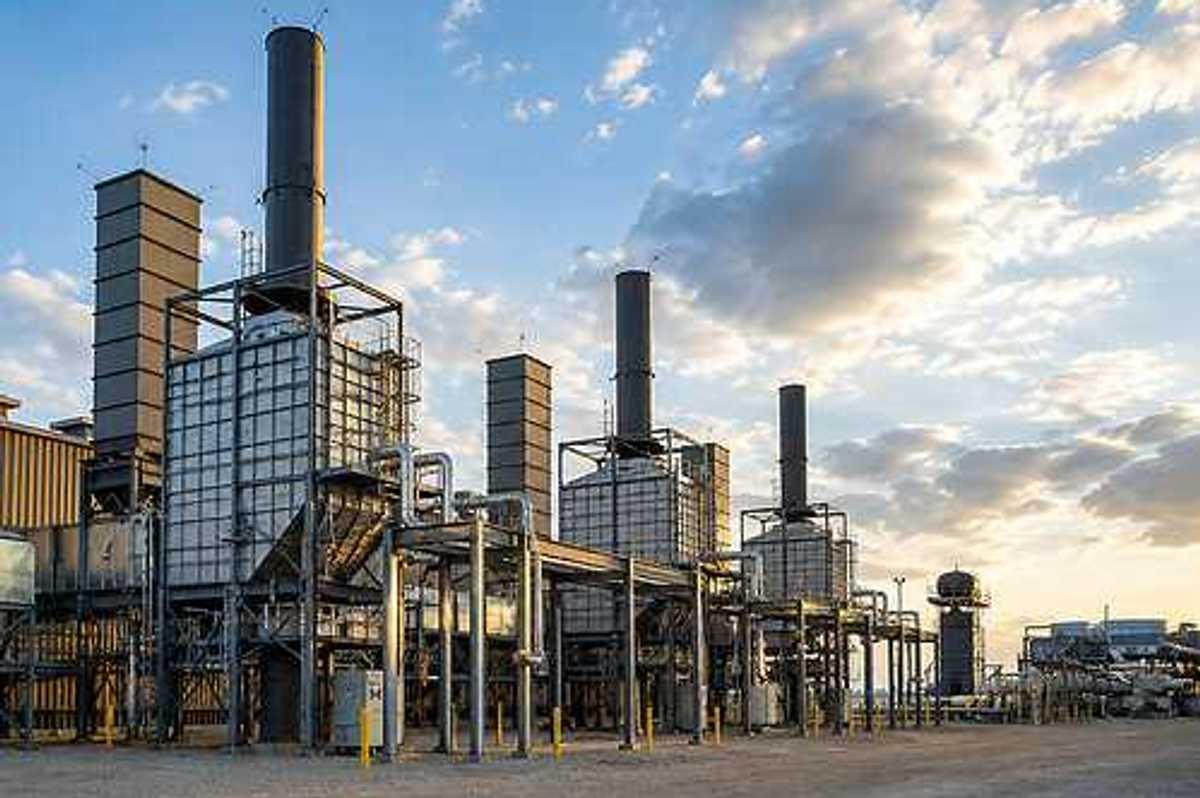
The site will use selective catalytic reduction systems to reduce nitrogen oxide emissions and minimize noise and light impacts and will utilize other advanced air emissions control technologies. A majority of the generation will come from large turbines developed by Chevron partner GE Verona with additional capacity from Caterpillar’s solar turbines. The plant will be fed by natural gas from the Permian Basin.

“Chevron is uniquely positioned to deliver power to customers with certainty, speed and at a competitive cost, leveraging Permian natural gas and our proven execution capabilities,” Jeff Gustavson, Chevron president of new energies, said in a news release. “This project links Chevron’s traditional strengths to emerging demand, creating differentiated value for our shareholders and the communities where we operate.”

According to BloombergNEF, the U.S. is expected to increase its data center capacity to 77 gigawatts by 2030. Another report from Bloom Energy predicts Texas will see a 142 percent increase in its market share for data centers from 2025 to 2028.

“The rapid growth we’re experiencing in AI and cloud, driven by customer demand, requires energy infrastructure that can scale quickly and reliably,” Noelle Walsh, Microsoft president of cloud operations and innovation, added in the news release. “Our agreement with Chevron helps ensure we’ll have dedicated, large-scale power to support the evolution and reliability of advanced computers. Through this partnership, we’re delighted to grow with and become a deeper part of the West Texas community.”

Chevron was named No. 21 on the 2026 Fortune 500 list earlier this month.

17 Houston energy sector cos. among most future-ready businesses, says WSJ


More than 20 Houston-area companies reign among the most future-ready in the U.S., based on a first-time ranking of the best S&P 500 companies for the future. The majority of them are part of Houston's booming energy sector.

Published by The Wall Street Journal, the ranking was created by Bendable Labs for the WSJ Leadership Institute. It evaluates how S&P 500 companies stack up in six areas: AI readiness, innovation, talent readiness, financial fitness, resilience and agility. To be ranked, a company had to be part of the S&P 500 as of Dec. 31.

Here are the Houston-area companies in the energy sector included in the ranking of the best companies for the future:

  • No. 105 SLB
  • No. 120 Baker Hughes
  • No. 125 ConocoPhillips
  • No. 158 NRG Energy
  • No. 176 Targa Resources
  • No. 185 Chevron
  • No. 195 Halliburton
  • No. 223 Coterra Energy
  • No. 235 Exxon Mobil
  • No. 250 Kinder Morgan
  • No. 257 Quanta Services
  • No. 276 CenterPoint Energy
  • No. 313 Occidental Petroleum
  • No. 333 EOG Resources
  • No. 365 LyondellBasell Industries
  • No. 408 Phillips 66
  • No. 500 APA
Here are the remaining Houston-headquartered businesses that made the list:
  • No. 72 Hewlett Packard Enterprise
  • No. 229 Waste Management
  • No. 285 Sysco
  • No. 318 Camden Property Trust
  • No. 373 Comfort Systems USA
  • No. 401 Crown Castle

---

A version of this story first appeared on InnovationMap.com.

Rice, DOE launch new Eastern Mediterranean Energy Center

Energy Diplomacy

Representatives from three countries visited the Rice University Baker Institute for Public Policy this month to establish the Eastern Mediterranean Energy Center, a new partnership promoting energy advancement in the region.

On June 11, Baker played host to delegations from Cyprus, Greece and Israel that included Michael Damianos, Minister of Energy, Commerce and Industry of the Republic of Cyprus; Stavros Papastavrou, Minister of Environment and Energy for Greece; and Yechiel Leiter, Israeli Ambassador to the United States. U.S. Secretary of Energy Chris Wright and Rice University President Reginald DesRoches were also present to sign a declaration of intent (DOI) that officially formed the partnership first envisioned in the Eastern Mediterranean Security and Energy Partnership Act of 2019.

“This is a dynamic field,” David Satterfield, director of the Baker Institute and former U.S. ambassador to Turkey and Lebanon, said in a news release from Rice. “The East Med has enormous further potential, not just for development, for coordination of development. It is a positive thing for energy, it's a positive thing for industry, for all of the three states represented here today. It's good for the region in a geopolitical sense as well. It provides a stabilization based upon the pragmatic and integrated development and distribution of energy resources, and that is a very good thing indeed.”

The new pact will focus on improving grid stability in the region, as well as on developing U.S. liquefied natural gas (LNG) infrastructure and new technologies.

Another goal of the Eastern Mediterranean Energy Center is suppressing conflict in the region. When the Eastern Mediterranean Security and Energy Partnership Act was signed by President Joe Biden in 2019, it lifted the prohibition on arms sales to the Republic of Cyprus, authorized foreign military financing for Greece and increased intelligence gathering on Russian interests in the Mediterranean.

“We need to use commerce to suppress and surpass conflict – that is the way to bring nations together in geopolitical tensions between countries,” Wright said in the release. “You think of it as zero-sum, there's a winner and a loser, and both sides want to be the winner. Ultimately, one side will be the winner, one side will be the loser. Maybe more objectively, both sides lose, but one loses more than the other. In commerce, it's entirely different, and commerce is voluntary exchange. It only happens when there's winners on both sides. So, when you build, you develop energy and you build energy distribution infrastructure, you bring countries, you bring people together. The three founding nations here and their leadership are all friends of mine and passionate in this mission. They not only want to develop energy to bring better opportunities to their people, but they wanted to bring those three nations together, and all of their neighbors as well, and use commerce to suppress and surpass conflict. These are generational investments.”