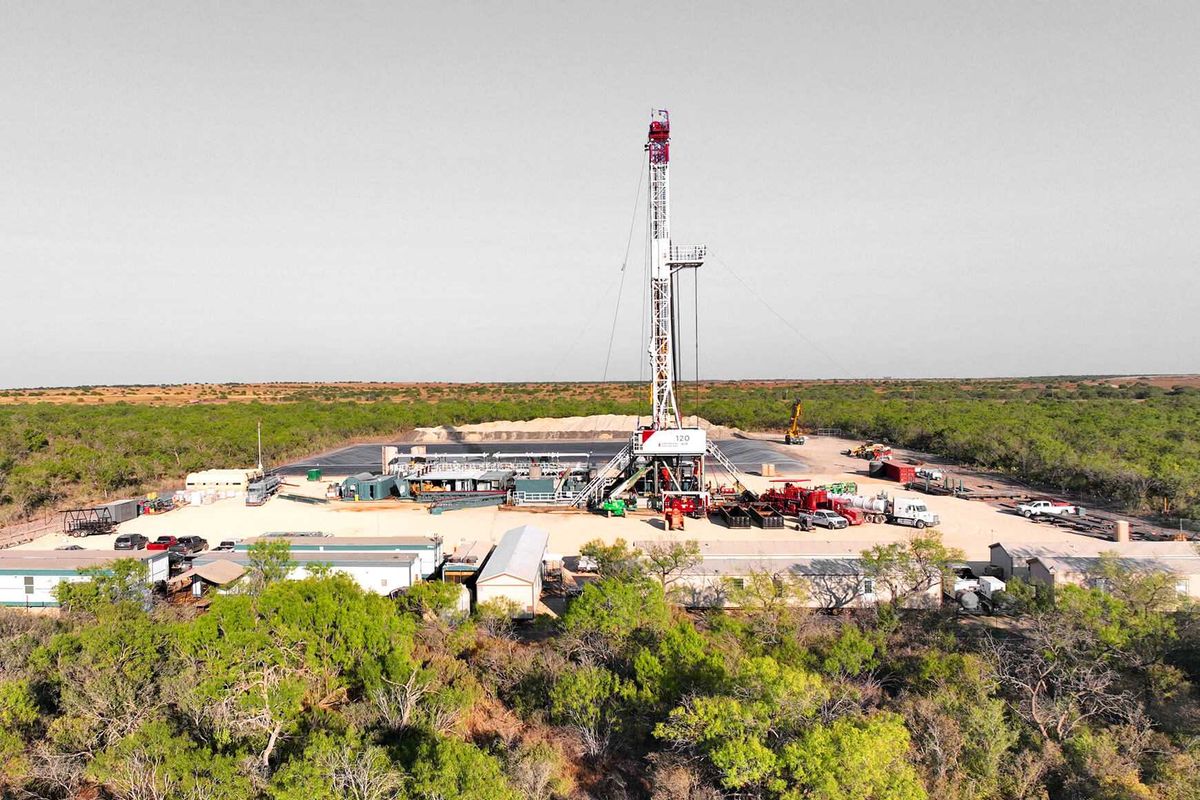
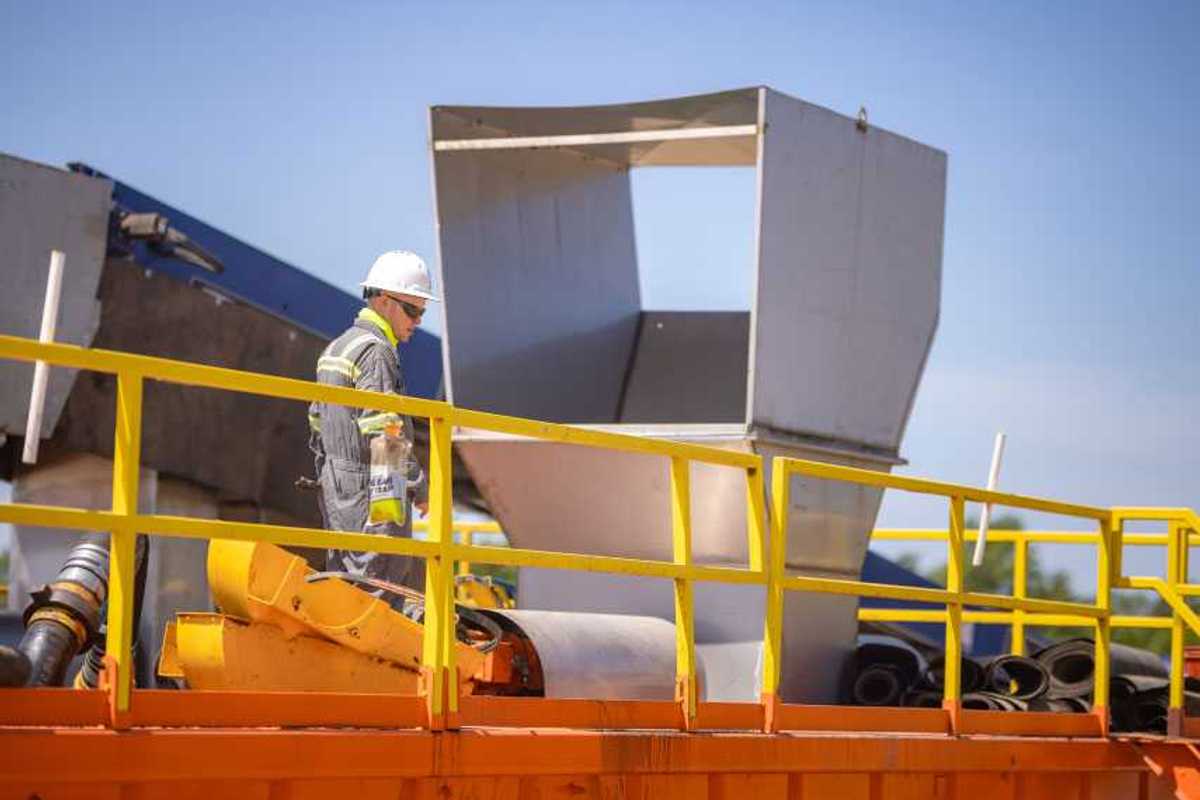
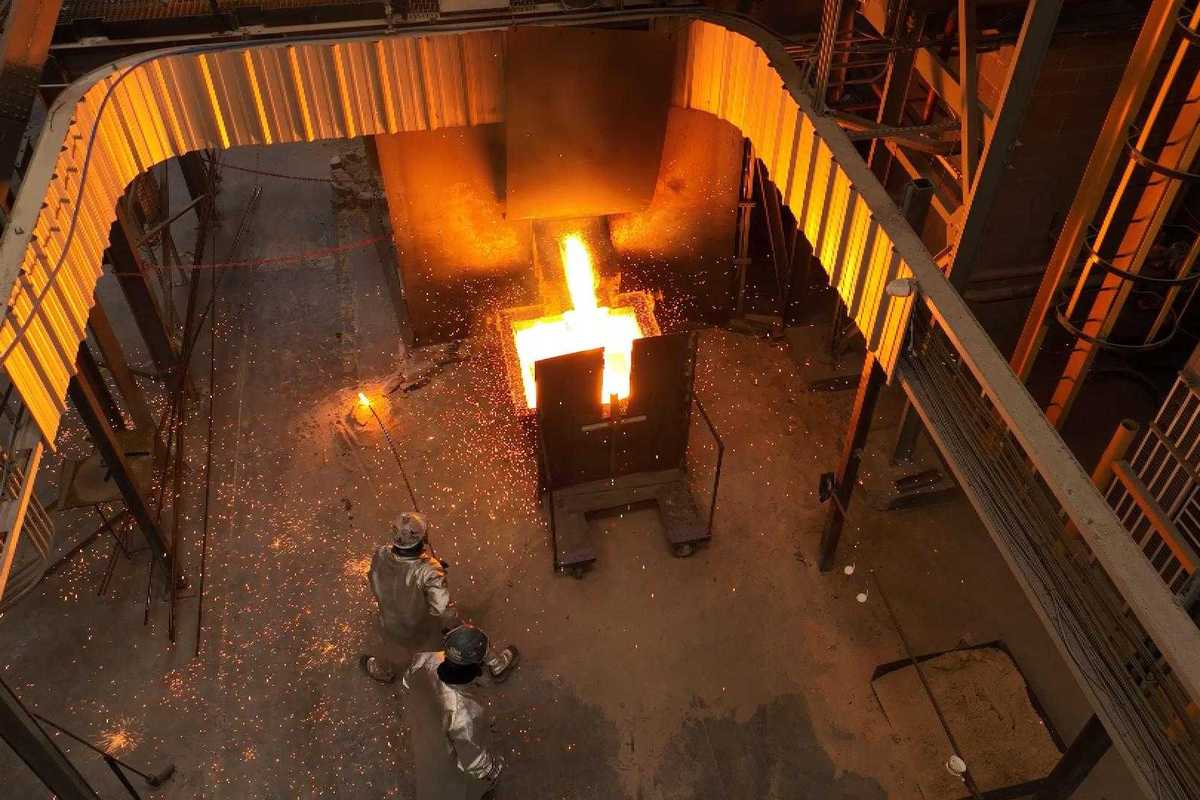
Fervo Energy has unlocked multigigawatt potential from a new geothermal energy site. Photo courtesy Fervo Energy.

Things are heating up at Houston-based geothermal power company Fervo Energy.

Fervo recently drilled its hottest well so far at a new geothermal site in western Utah. Fewer than 11 days of drilling more than 11,000 feet deep at Project Blanford showed temperatures above 555 degrees Fahrenheit, which exceeds requirements for commercial viability. Fervo used proprietary AI-driven analytics for the test.

Hotter geothermal reservoirs produce more energy and improve what’s known as energy conversion efficiency, which is the ratio of useful energy output to total energy input.

“Fervo’s exploration strategy has always been underpinned by the seamless integration of cutting-edge data acquisition and advanced analytics,” Jack Norbeck, Fervo’s co-founder and chief technology officer, said in a news release. “This latest ultra-high temperature discovery highlights our team’s ability to detect and develop EGS sweet spots using AI-enhanced geophysical techniques.”

Fervo says an independent review confirms the site’s multigigawatt potential.

The company has increasingly tapped into hotter and hotter geothermal reservoirs, going from 365 degrees at Project Red to 400 degrees at Cape Station and now more than 555 degrees at Blanford.

The new site expands Fervo’s geologic footprint. The Blanford reservoir consists of sedimentary formations such as sandstones, claystones and carbonates, which can be drilled more easily and cost-effectively than more commonly targeted granite formations.

Fervo ranks among the top-funded startups in the Houston area. Since its founding in 2017, the company has raised about $1.5 billion. In January, Fervo filed for an IPO that would value the company at $2 billion to $3 billion, according to Axios Pro.
Ad Placement 300x100
Ad Placement 300x600

CultureMap Emails are Awesome

Oil giant BP ousts new chairman over serious conduct concerns

Sudden Exit

BP has ousted its chairman over what it called serious concerns related to “important governance standards, oversight and conduct.”

The departure was abrupt and unexpected, with Albert Manifold having been appointed to the position late last year.

“Albert has helped bring a welcome focus and pace to BP’s transformation," Amanda Blanc, senior independent director, said in a statement Tuesday, May 26. "However, the board has been surprised and disappointed to learn of governance oversight and conduct issues it deems unacceptable and has taken decisive action.”

BP's board named Ian Tyler as interim chair, effective immediately.

BP, based in London and with North American headquarters in Houston, is a “supermajor,” one of the five largest oil production and exploration companies in the world when measured by revenue and profit.

Manifold, who had been the top executive at Dublin-based global building materials company CRH for 10 years, became the chair at BP in October. BP was looking for someone to revamp the oil giant and went with an industry outsider in Manifold, who had made major strategic changes at CRH.

After a new focus on renewable energy at BP in 2020, by 2025 the company was seeking a return to its roots. BP's hard reset was criticized by environmentalists, as well as some shareholders.

CEO Murray Auchincloss said last year that optimism over opportunities in renewable energy was misplaced, with the company moving “too far and too fast.”

Changes in leadership at BP in recent years has been tumultuous.

CEO Bernard Looney resigned in late 2023 after BP determined that he had misled the company over his past relationships with colleagues.

Auchincloss stepped down in December, and the company named Meg O'Neill as his successor.

Manifold’s was challenged almost immediately when shareholders defeated company resolutions this spring that would have allowed BP to reduce climate reporting requirements and move its annual meetings fully online. Some 18% of shareholders voted against Manifold’s election as chairman, a high level of opposition for an appointment that is generally rubber stamped by investors.

Legal & General, one of Britain’s largest insurers and investment companies, said at the time that Manifold was responsible for resolutions that would have had “a negative impact on shareholders’ insight into how the company is addressing financially material long-term risks, and seizing long-term value creation opportunities, associated with the energy transition,” the Times of London reported on April 23.

Glass Lewis, an influential shareholder advisor, urged investors to vote against Manifold’s election. It held that BP took “unprecedented action” by refusing to consider a resolution from a group of climate activists and pension funds hoping to force the board to create an alternative strategy should demand for fossil fuels decline, the Times reported.

Like other big oil companies, BP has struggled with falling demand in recent years.

BP’s 2025 earnings fell 16% from a year earlier to $7.49 billion as the price of Brent crude, a benchmark for international oil prices, dropped 16.9%. The company’s preferred measure of earnings is underlying replacement cost profit, which adjusts for one-time items and fluctuations in the market value of inventories. Net income plunged 86% to $55 million.

Last year there were media reports that British oil giant Shell was in talks to buy rival BP. Shell denied the reports at the time.

The search for a new chair is underway, BP said Tuesday. Shares of BP Plc slid nearly 5% in midday trading on the NYSE.

Houston startup nets new funding to accelerate methane leak detection

fresh funding

Houston climatech startup Aquanta Vision has secured pre-seed funding to accelerate the commercialization of its methane leak detection software.

EIC Rose Rock participated in the round, joining investors like Marathon Petroleum Corporation, Chevron Technology Ventures, Ecosphere Ventures, and Odyssey Energy Advisors. The investment follows successful field trials for Aquanta Vision’s optical gas imaging (OGI) detection software, according to the company.

“This investment highlights our shared excitement as our patented novel technology improves detection levels for OGI camera operators,” Babur Ozden, Aquanta Vision’s CEO and founder, said in a news release. “The funding from EIC Rose Rock enables us to strategically accelerate this impact.”

Aquanta Vision’s OGI technology features an automated detection layer through an add-on app that improves methane detectability without requiring new hardware. It installs in minutes, runs locally and provides real-time, in-flight plume visualization for inspections with drone-mounted and handheld cameras.

“We are excited to partner with Aquanta Vision to scale and deploy this world-class technology that enables the energy industry to continue to deliver the secure, reliable and affordable energy that drives the American economy,” David Clouse, managing director of the EIC Rose Rock fund, added in the news release.

The company has partnered with Teledyne Flir and Sierra Olympia, makers of one of the world’s largest deployed fleet of handheld and drone-mounted optical gas imaging cameras used in industrial inspections. AquantaVision is now working with Teledyne Flir’s product team, as well as Sierra Olympia and its OEM partners.

Aquanta Vision has estimated that methane leaks cost the U.S. energy industry billions of dollars each year, with 60 percent of leaks going undetected, and methane leaks accounting for around 10 percent of natural gas's contribution to climate change, according to MIT’s climate portal.

Houston trio lands on Time’s list of 10 most influential energy companies

making an impact

Three companies with headquarters in Houston made Time magazine’s new list of the 10 most influential energy companies.

The unranked list includes:

  • Houston-based oil and gas giant Chevron
  • Houston-based Fervo Energy, a geothermal power provider that just went public in a $1.9 billion IPO
  • Saudi Aramco, the world’s largest oil company, whose U.S. headquarters is in Houston

In naming Chevron to the list, Time cites the company’s standing as the only major American oil company operating in Venezuela. Time says Chevron wields “extraordinary power” over Venezuela’s massive oil reserves.

Despite pressure from the White House on U.S. oil and gas producers to ramp up investments in Venezuela, “Chevron has pumped the brakes, pledging to boost output gradually and not chase price fluctuations,” Time says.

“Chevron has been in Venezuela for over a century,” CEO Mike Wirth told shareholders in January. “We remain committed to leveraging our deep expertise and long-standing partnerships for the benefit of our shareholders and the people of Venezuela.”

Time points out that Fervo sits “at the front of the pack” in generation of geothermal energy. The Houston-based company uses fracking techniques borrowed from the oil and gas industry to create underground hot-rock reservoirs that heat water to generate electricity.

Fervo’s Cape Station in Utah is scheduled to start delivering power to the grid this year. At full capacity of 500 megawatts, it will be the first large-scale commercial geothermal plant in the U.S. Time says another site in Utah, Project Blanford, is Fervo’s hottest well yet, highlighting the potential for harnessing geothermal heat for at-scale clean energy.

“It’s hard to find something that can [deliver] reliable 24/7 energy, that’s carbon-free, and can be constructed in a timely manner,” Fervo CEO Tim Latimer said. “It’s energy without a lot of the compromises.”

Government-owned Saudi Aramco, which last year earned $104.7 billion in profit, not only is a dominant player in the Mideast oil and gas sector, but Time says it holds “global clout in politics and business” that reaches far beyond oilfields. For example, the company finances big projects spearheaded by Crown Prince Mohammad Bin Salman, who chairs Saudi Arabia’s sovereign wealth fund. These include initiatives in global sports, tourism, and AI.