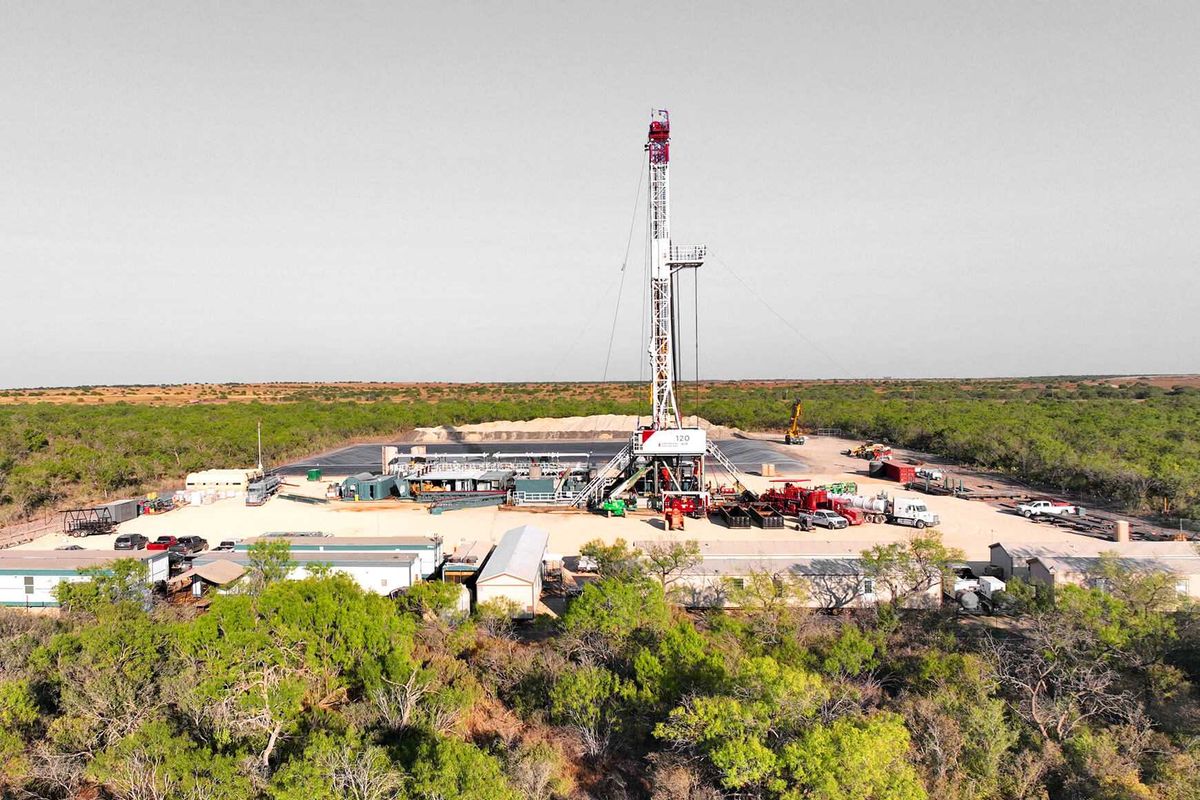
The report concludes that natural gas would need to remain a “foundational component of the region’s energy system” to meet the demands of AI data centers. Photo courtesy UH

A new study from the University of Houston estimates that the U.S. will need more than $1 trillion in new midstream energy infrastructure investment by 2052 to meet the rising energy demands from data centers in the age of artificial intelligence.

According to the report, this would average $40 billion to $48 billion per year across investments in natural gas, oil, natural gas liquids, hydrogen and CO2 infrastructure.

UH, in collaboration with the INGAA Foundation and Wood and ESMIA Consultants, released the 2025 North American Midstream Infrastructure Report, which details the needs, pipelines and associated infrastructure necessary to meet global market needs and increased energy demands. UH led the consortium that conducted the analysis. Paul Doucette, hydrogen program officer at UH, served as the principal investigator of the report.

According to the U.S. Department of Energy, data center energy consumption could reach 800 terawatt-hours annually by 2050, a roughly 167 percent increase from 300 terawatt-hours in 2025. Meanwhile, electricity generation from all energy sources is projected to reach 5,858 terawatt-hours in 2052, a 27 percent increase over current levels.

The report proposes two routes to meeting this level of demand.

The first scenario is a reference case based on current federal, state and provincial policies as of April 1, 2025. The second option presents a low-carbon scenario. The report concludes that natural gas would need to remain a “foundational component of the region’s energy system” in both scenarios.

“Meeting energy demand is a critical challenge right now, and this report quantifies the necessary midstream infrastructure and corresponding development dollars needed to meet that demand,” Hebe Shaw, executive director of the INGAA Foundation, said in a news release. “Meeting the energy needs of North America will require sustained investment and development, which must begin now to ensure a safe, reliable and affordable energy system.”

The report also identified several key midstream infrastructure requirements, including:

  • 103,000 miles of new natural gas gathering pipelines
  • 37,000 miles of additional natural gas transmission pipelines, which includes approximately 33,800 miles in the United States
  • 24 million jobs over 25 years

The report adds that hydrogen, carbon capture, utilization, and storage (CCUS), and other decarbonization strategies can help meet infrastructure needs.

UH released a condensed version of the report here.
Ad Placement 300x100
Ad Placement 300x600

CultureMap Emails are Awesome

Houston cleantech startup closes $17M round to tap into hot geothermal sector

fresh funding

Houston-area startup Hephae Energy Technology Corp. has closed a $17.8 million Series A financing round to commercialize its geothermal technology.

The round was co-led by Pennsylvania-based Susquehanna Sustainable Investments, which invests in early-stage climatech companies, and Copenhagen-based Underground Ventures, which focuses on geothermal energy startups. Alfa8, Baruch Future Ventures, Centaurus Capital LP, Elemental Impact, Exa Ventures, Future Ventures, Grantham Foundation for the Protection of the Environment, New System Ventures and True North Institute joined the round, along with existing Houston-based investor Nabors Industries. Hyphae reports in a news release that the Series A round brings the company's total capital raised to $24.7 million.

Hephae develops ultra-high-temperature downhole sensing, measurement, communications and control systems that can withstand the heat of geothermal sites, which are hotter and deeper than traditional oil and gas reservoirs. The company's Pandora210 system can operate at up to 400 degrees Fahrenheit.

Hephae reports that it plans to use the new funding to commercialize its Pandora210 tool and to launch research and development into systems that can withstand temperatures of up to 570 degrees Fahrenheit. Houston-based Fervo Energy, for instance, recently tapped its hottest geothermal well to date in western Utah, showing temperatures above 555 degrees Fahrenheit.

"Commercial deployment represents a major milestone in our mission to scalable, always-on, emission-free power globally, with a world-class team to tackle this problem," Steve Krase, CEO of Hephae Energy Technology, said in the release." This investment enables Hephae to transition from development to scale, delivering the ultra-high temperature drilling technologies needed to support the rapid growth of the geothermal industry in the US and international markets."

Hephae has been collaborating with Fervo Energy in the field. The company told the Houston Business JournalHouston Business Journal this spring that it expected its Pandora210 technology to be deployed at its Utah sites.

“Fervo is encouraged by the early progress of our collaboration with Hephae, whose novel high-temperature innovations have the potential to contribute positively to EGS economics, unlock higher-energy geothermal resources, and further cement the competitiveness of next-generation geothermal power," Elliot Howard, director of drilling and completions at Fervo, added in the release.

As the geothermal industry continues to scale, Hephae says it aims for its technology to help companies "unlock hotter, deeper resources that result in lower produced energy costs."

The Spring-based startup was founded in 2020 by CEO Steve Krase and CTO John Clegg. Krase previously launched Navigate Energy Services, which was acquired by Nabors in 2013. Clegg is also an industry veteran and has held numerous leadership positions at energy companies, including Weatherford, NOV, Schlumberger and others.

Houston clean energy events announce keynote speakers from Fervo, Phillips 66

where to be

Two Houston energy institutions will host their signature events this September and have named industry leaders as their keynote speakers.

The Rice Alliance Energy Tech Venture Forum and Greentown Lab's Climatetech Summit kick off Sept. 16. The events are part of Houston Energy and Climate Startup Week and Houston Energy and Climate Week.

The two-day Energy Tech Venture Forum will bring together climatech startups and professionals from around the world to hear pitches, participate in one-on-one office hours and connect with energy innovators.

Sean Maher, chief economist at Phillips 66, will open the forum with a keynote address on the macroeconomic forces shaping the energy industry. Maher also serves as vice president of investor relations at Phillips 66. He previously launched Third Gear Investments, a Houston-based energy investment firm.

Ira Ehrenpreis, founder and managing partner of DBL Partner, which manages more than $1 billion of capital and invests in companies driving social change, will present the keynote on the second day of the forum, Sept. 17. Ehrenpreis is a board member of Tesla and an investor of SpaceX. He will share insights on commercializing breakthrough technologies and what investors are looking for in today's energy innovations.

Applications for the Energy Tech Venture Forum close July 17. Register for the event here.

Fresh off a landmark IPO, Tim Latimer, co-founder and CEO of Houston-based Fervo Energy, will present the keynote at Greentown's Climatetech Summit. Latimer was recently named one of Fast Company's 2026 Visionaries of the Year.

He will be joined by Houston-based SCF Partners' David Baldwin, who will moderate the discussion. The conversation will focus on the timing of Fervo's IPO, what Latimer would have done differently at the early stages of the business, and why the company chose Houston as its headquarters.

The Climatetech Summit will bring together philanthropists, executives and innovators in the energy transition space. Greentown member startups will also present their pitches at the event. Learn more and secure tickets here.