KULR Technology Group is developing a battery system for a zero-emission helicopter. Photo courtesy KULR

Webster-based KULR Technology Group has announced a strategic co-development collaboration with Robinson Helicopter Company (RHC) to develop a next-generation, high-performance battery system for the eR66 battery-electric helicopter demonstrator.

KULR, an electronics manufacturing company, will serve as the developer of the advanced battery system for the eR66 platform. KULR will design and integrate a high-performance battery structure that uses its proprietary battery safety technologies and thermal management solutions, previously developed for aerospace and spaceflight applications.

California-based Robinson Helicopter Company is the world's leading manufacturer of civil helicopters. Its eR66 is expected to deliver zero-emission, affordable and quiet performance for “high-demand applications.”

“Robinson Helicopter has built more civil helicopters than any manufacturer on Earth, and their commitment to reliability is exactly the standard KULR’s battery architecture is designed to meet,” Michael Mo, CEO of KULR, said in a news release. “KULR’s battery systems have been qualified for NASA spaceflight. They were designed from day one for dual use: a primary flight cycle and a certified second life. The eR66 is where that architecture proves itself in rotorcraft.”

David Smith, president and CEO of Robinson Helicopter Company, cited the partnership as a shift in service for commercial and civil operations and touted the potential environmental benefits.

“By integrating electric propulsion, we aren't just reducing our environmental impact; we are unlocking critical new capabilities for life-saving missions,” Smith added in the release. “For use cases like rapid organ and tissue transport, the reduced acoustic signature and zero-emission profile ensure that time-sensitive, low-emission deliveries are faster, quieter, and more sustainable than ever before."

The companies say, through the partnership, they aim to:

  • Advance eR66 performance
  • Enhance aviation safety
  • Increase cost efficiency
  • Uphold American aerospace leadership
  • Support decarbonization
  • Promote circular economy principles

Ad Placement 300x100
Ad Placement 300x600

CultureMap Emails are Awesome

ERCOT braces for record-breaking power demand this summer

hot temps, high demand

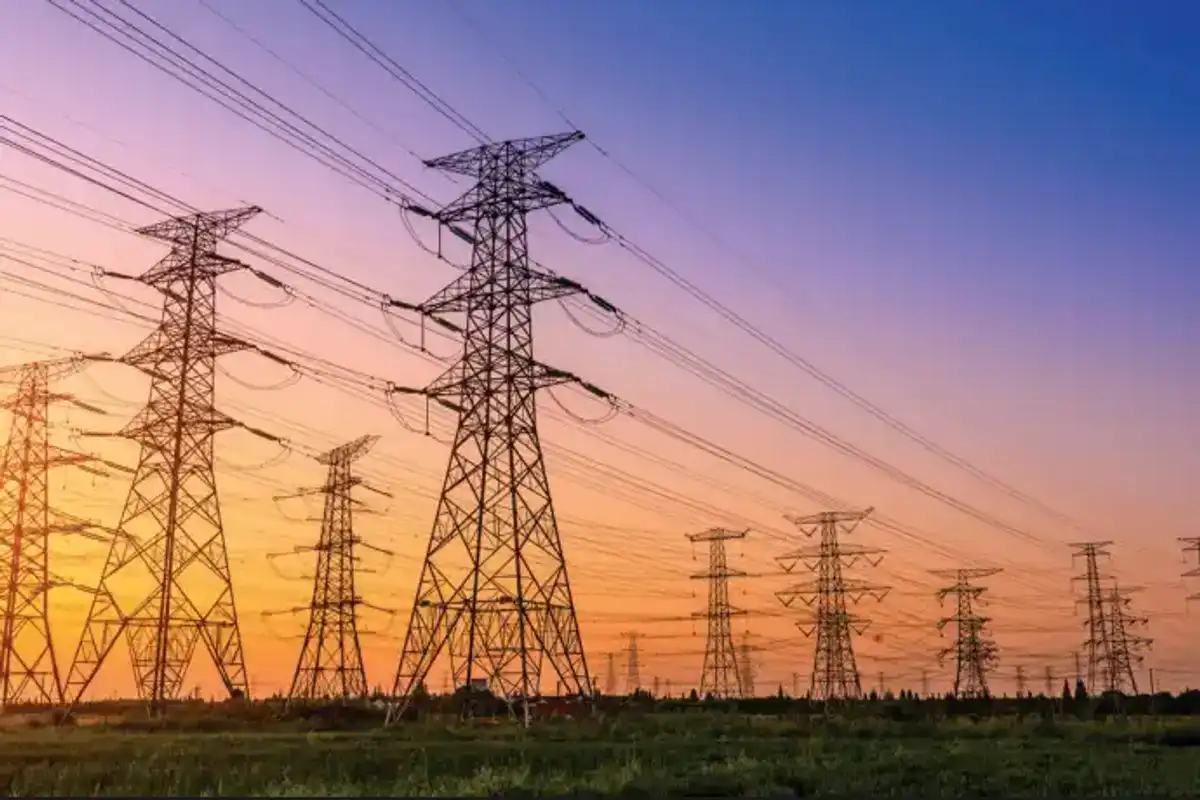
The Electric Reliability Council of Texas, which manages about 90 percent of the state’s power, is waving a warning flag: The ERCOT grid may set a new record for peak demand this summer.

Based on expectations for a hotter summer this year than last year, ERCOT predicts power demand will hit a peak of more than 92.2 gigawatts this summer — enough power for roughly 18.4 million homes.

“Given the potential for extreme heat combined with significant load growth, ERCOT may surpass its current all-time summer peak,” the organization says in its 2026 summertime forecast.

Further taxing the ERCOT grid are power-hungry data centers and cryptocurrency-mining facilities.

Last year’s peak summer demand for ERCOT reached 83.7 megawatts on Aug. 18, and all-time peak demand of 85.5 gigawatts was recorded on Aug. 10, 2023.

Fortunately, ERCOT believes the grid is in good shape to withstand this summer’s heat: It found a 0.09 percent chance of a grid emergency in June and a 0.21 percent chance in July.

More generation of electricity from solar and wind is helping ERCOT meet stepped-up demand prompted by population growth, and the significant power needs of data centers and cryptocurrency-mining facilities.

About 27 million Texas customers depend on power from ERCOT’s grid.

Texas awards $73M for Houston-area grid resilience project

grid funding

Texas Gov. Gregg Abbott announced millions in funding for energy resilience projects around this state this week, with one major project set to impact the greater Houston area.

As part of the Texas Energy Fund's Outside of ERCOT Grant Program, the state announced a roughly $73 million agreement with the Sam Houston Electric Cooperative to replace and upgrade more than 9,000 electric poles and improve other equipment in Montgomery, Liberty and Hardin counties. The agreement is the first for the fund's Outside of ERCOT Grant Program, which supports state projects outside of the state's largest grid.

The multibillion-dollar Texas Energy Fund aims to "finance the construction, maintenance, and modernization of electric facilities across Texas." It was approved by voters in 2023. Other programs within the fund include the:

  • In-ERCOT Generation Loan Program
  • Completion Bonus Grant Program
  • Texas Backup Power Package Program

“The Texas Energy Fund delivers real results for Texans and strengthens the electric systems that families, businesses, and communities depend on,” Abbott said in a news release. “This grant to Sam Houston Electric Cooperative will replace thousands of vulnerable utility poles to better withstand severe weather and ensure a more reliable and resilient grid in East Texas.”

The Houston-area project, nicknamed Steel Anchor, is expected to be completed by June 2031. According to the release from the governor's office, the Sam Houston Electric Cooperative’s territory is one of the most hurricane-prone service areas in the state. The cooperative serves more than 38,000 Texas consumers

“Over the past decade, Sam Houston EC has strategically replaced poles to improve the strength of its electricity distribution system. This grant will boost the Cooperative’s ongoing grid-hardening and resiliency program,” Doug Turk, CEO of the Sam Houston Electric Cooperative, added in the release.

Following the announcement of the Sam Houston funding, Abbott's office also awarded another $200 million from the Outside of ERCOT Grant Program to upgrade approximately 700 miles of power equipment in Northeast Texas. The equipment is operated by Southwestern Electric Power Company, which serves more than 192,000 Texas consumers. The project will include improvements to 200 circuits, replacing aging copper wire with aluminum alloy conductors and replacing existing utility poles.

Additionally, the state announced its seventh Texas Energy Fund loan agreement for a 570 megawatt natural gas power plant in Sherman, Texas. The 20-year loan of up to $411 million is between the Public Utility Commission of Texas and Rayburn Electric Cooperative and is part of the fund's In-ERCOT Generation Loan Program. Rayburn will build the facility near its existing Rayburn Energy Station 1 in the Texoma region. It will connect to the ERCOT North Load Zone.

“When Texas voters overwhelmingly approved the Texas Energy Fund, they gave us a mandate to secure new, reliable power generation for Texas,” PUCT Chairman Thomas Gleeson added in a release. “The TxEF is delivering on that promise, and Rayburn Electric Cooperative’s new 570 MW power plant is proof. We are ensuring Texas families and businesses have power they can depend on for years to come.”

Solar manufacturer announces massive new facility in Houston area

coming soon

SEG Solar has announced plans to open a new 1.15 million-square-foot solar module facility in Tomball—its third in the Houston area.

The news comes just weeks after the Houston-based solar manufacturer announced its second facility, which will be located in Cypress. It’s expected to open in August.

The latest 4.6-gigawatt facility in Tomball will include an assembly factory and a warehouse. Construction is slated to wrap in March 2027, with commercial panel production planned to begin in May 2027. Once completed, the facility will bring SEG’s annual U.S. module manufacturing capacity to 10.6 gigawatts, according to a news release from the company, one of the largest totals in the country.

The facility will produce heterojunction technology (HJT) modules, which the company says will add to the number of n-type solar panels made in the U.S. HJT modules are known to be more durable and are well suited for hotter climates.

“Designed to support next-generation HJT technology and FEOC-compliant production, the facility ensures reliable, high-efficiency solar solutions,” Raymond Bailey, sales manager at SEG Solar, said in a LinkedIn post. “ Alongside upstream integration in Indonesia and potential U.S. cell manufacturing, we are strengthening supply chain resilience amid evolving trade policies.”

SEG opened its $60 million, 250,000-square-foot facility in Houston in 2024 to house its production workshops, raw material warehouses, administrative offices, finished goods warehouses, and supporting infrastructure. The continued expansion is part of SEG’s long-term goal of becoming one of the largest 100 percent U.S.-owned module manufacturers.