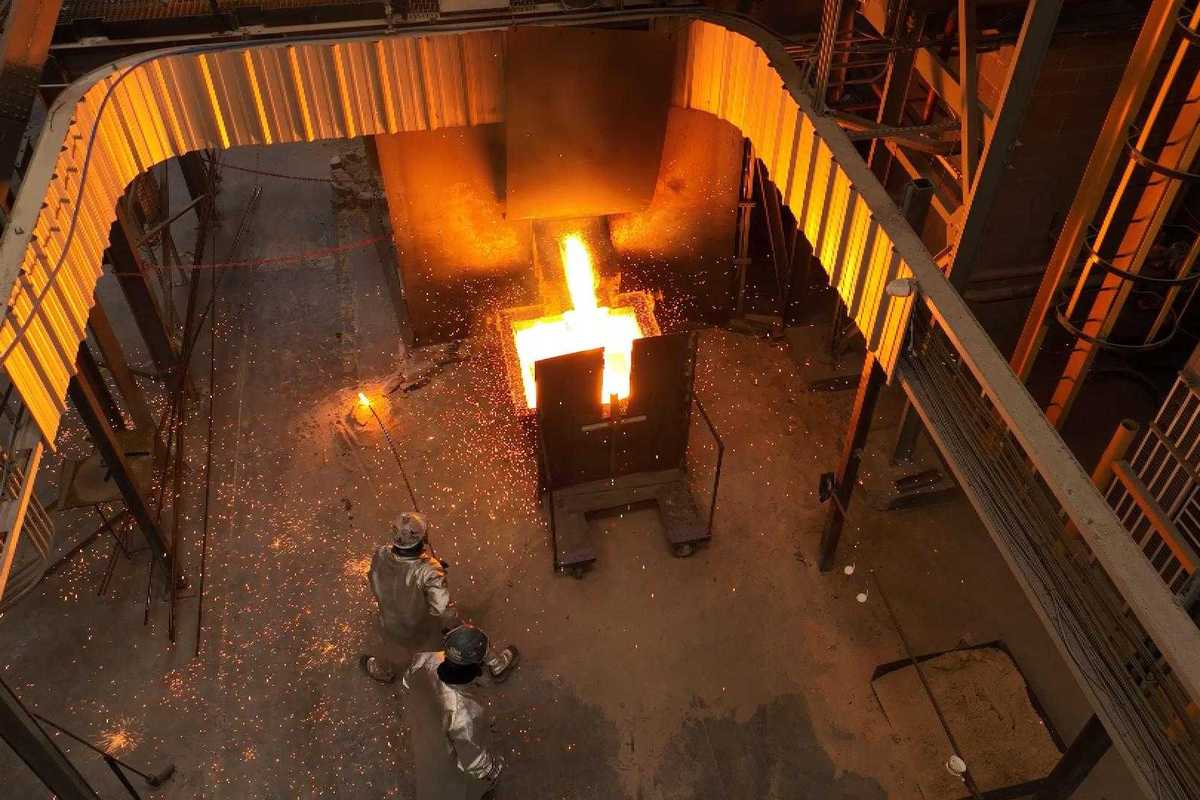
A Houston company is hoping to make an impact on Norwegian companies navigating the energy transition. Photo by Pavel Danilyuk/Pexels

A Houston-based human resource tech platform has announced a new partnership that hopes to help Norwegian energy companies that are navigating the energy transition.

Kahuna Workforce Solutions has teamed up with Norwegian operating services provider PXO AS to provide operations readiness and assurance infrastructure to Norway’s energy sector. Both companies reportedly have Norwegian customers already, and Kahuna brings its software platform while PXO has technical and field experience.

“PXO represents everything we look for in a partner as we strive to ensure successful and rapid adoption of competency-based training and development programs,” Jai Shah, CEO of Kahuna Workforce Solutions, says in a news release. “As a company that works with many of the same customers as PXO, we’ve seen their expertise firsthand. It is clear they are the right partner to help us not only address the current needs of the energy industry but also pioneer innovative solutions that will shape the future of competency readiness and assurance in Norway.”

Both companies reportedly have Norwegian customers already, and Kahuna brings its software platform while PXO has technical and field experience.

“Just as we serve as a bridge between project and operation phases, Kahuna equips enterprises with validated competency data,” Leif Olav Moe, CEO of PXO, says in the release. “By uniting our technical and operational expertise with their cutting-edge competency management solutions, we are delivering a unique solution unlike anything the market has yet to provide—signifying our commitment to building a more skilled and competitive workforce to ascertain safer and more efficient operations.”

Reuters reports that in 2024, Norway is expected to see $22 billion in investments from oil and gas companies. The partnership between Kahuna and PXO hopes to capitalize on this opportunity and support "streamlining skills validation and aligning operational standards with expanding ESG initiatives and emerging technologies," per the release.

“When you combine our capabilities with PXO’s extensive experience in supporting operations with strategic training and competency services, there is no other competency management solution that comes close to building a skilled, safe, compliant, and competitive workforce," Shah adds.

Last year, Kahuna closed a $21 million series B funding round led by Baltimore-based Resolve Growth Partners. At the time, the software-as-a-service company reported that it would use the fresh funding to continue product development and hire across sales and marketing, product development, customer success, and engineering. The company also will grow to support global customers.


Ad Placement 300x100
Ad Placement 300x600

CultureMap Emails are Awesome

Solar power and storage help save Texans millions on electric bills, CEO tells Senate

price stability

Solar power and battery storage are saving Texans hundreds of millions of dollars on their electric bills, the president and CEO of the Solar Energy Industries Association recently told a congressional committee.

Abigail Ross Hopper, the association’s president and CEO, said in testimony given to the U.S. Senate Environment and Public Works Committee that states like Texas that are adding significant capacity for solar power and battery storage are enjoying lower, more stable prices for electricity.

“Unsubsidized solar is now the cheapest source of electricity in history in much of the country,” Hopper said. “With no fuel costs, solar provides a hedge against natural gas price volatility that continues to cause electricity price spikes.”

“The only way to put downward pressure on prices is by bringing more power online, not less,” she added.

To illustrate the value of solar power and battery storage, Hopper compared two hot summer days in Texas—one in July 2022 and the other in July 2025.

Hopper explained that the Electric Reliability Council of Texas (ERCOT) had begun installing solar on its grid in 2022 but had very little battery storage. ERCOT manages 90 percent of the state’s electrical load.

When ERCOT grid conditions buckled under high demand on the highlighted day in 2022, the price of electricity spiked to nearly $1,500 per megawatt-hour, Hopper said.

“Three years later, the amount of solar had increased substantially and was complemented by energy storage,” she said.

On the specified day in 2025, under even greater demand than three years earlier, sizable amounts of solar power, battery storage and wind power kept ERCOT’s midday price of electricity low and stable—around $50 per megawatt-hour. That dollar amount represented a nearly 100 percent decrease compared with the highlighted day in 2022.

Solar and wind supplied nearly 40 percent of Texas’ power during the first nine months of 2025, according to the U.S. Energy Information Administration (EIA).

Despite the state’s expansion of solar power and battery storage capacity, residential electricity prices in ERCOT’s territory rose 30 percent from 2020 to 2025 and are expected to climb another 29 percent from 2025 to 2030, according to a forecast from the Texas Energy Poverty Research Institute.

The increase in electric bills is tied to factors such as:

  • Higher natural gas prices
  • Greater demand from AI data centers and cryptomining facilities
  • Extreme weather
  • Population growth
  • Development of new transmission and distribution lines

The strain on ERCOT’s grid is only getting worse. An EIA forecast predicts demand for ERCOT electricity will jump 9.6 percent in 2026, and ERCOT expects a 50 percent jump in demand by 2029.

Spring-based private equity firm acquires West Texas wind farm

power deal

Spring-based private equity firm Arroyo Investors has teamed up with ONCEnergy, a Portland, Oregon-based developer of clean energy projects, to buy a 60-megawatt wind farm southeast of Amarillo.

Skyline Renewables, which acquired the site, known as the Whirlwind Energy Center, in 2018, was the seller. The purchase price wasn’t disclosed.

Whirlwind Energy Center, located in Floyd County, West Texas, comprises 26 utility-scale wind turbines. The wind farm, built in 2007, supplies power to Austin Energy.

“The acquisition reflects our focus on value-driven investments with strong counterparties, a solid operating track record, and clear relevance to markets with growing capacity needs,” Brandon Wax, a partner at Arroyo, said in a press release. “Partnering with ONCEnergy allows us to leverage deep operational expertise while expanding our investment footprint in the market.”

Arroyo focuses on energy infrastructure investments in the Americas. Its portfolio includes Spring-based Seaside LNG, which produces liquefied natural gas and LNG transportation services.

Last year, Arroyo closed an investment fund with more than $1 billion in total equity commitments.

Since its launch in 2003, Arroyo has “remained committed to investing in high-quality assets, creating value and positioning assets for exit within our expected hold period,” founding partner Chuck Jordan said in 2022.

$524M Texas Hill Country solar project powered by Hyundai kicks off

powering up

Corporate partners—including Hyundai Engineering & Construction, which maintains a Houston office—kicked off a $524 million solar power project in the Texas Hill Country on Jan. 27.

The 350-megawatt, utility-scale Lucy Solar Project is scheduled to go online in mid-2027 and represents one of the largest South Korean-led investments in U.S. renewable energy.

The solar farm, located on nearly 2,900 acres of ranchland in Concho County, will generate 926 gigawatt-hours of solar power each year. That’s enough solar power to supply electricity to roughly 65,000 homes in Texas.

Power to be produced by the hundreds of thousands of the project’s solar panels has already been sold through long-term deals to buyers such as Starbucks, Workday and Plano-based Toyota Motor North America.

The project is Hyundai Engineering & Construction’s largest solar power initiative outside Asia.

“The project is significant because it’s the first time Hyundai E&C has moved beyond its traditional focus on overseas government contracts to solidify its position in the global project financing market,” the company, which is supplying solar modules for the project, says on its website.

Aside from Hyundai Engineering & Construction, a subsidiary of automaker Hyundai, Korean and U.S. partners in the solar project include Korea Midland Power, the Korea Overseas Infrastructure & Urban Development Corp., solar panel manufacturer Topsun, investment firm EIP Asset Management, Primoris Renewable Energy and High Road Energy Marketing.

Primoris Renewable Energy is an Aurora, Colorado-based subsidiary of Dallas-based Primoris Services Corp. Another subsidiary, Primoris Energy Services, is based in Houston.

High Road is based in the Austin suburb of West Lake Hills.

“The Lucy Solar Project shows how international collaboration can deliver local economic development and clean power for Texas communities and businesses,” says a press release from the project’s partners.