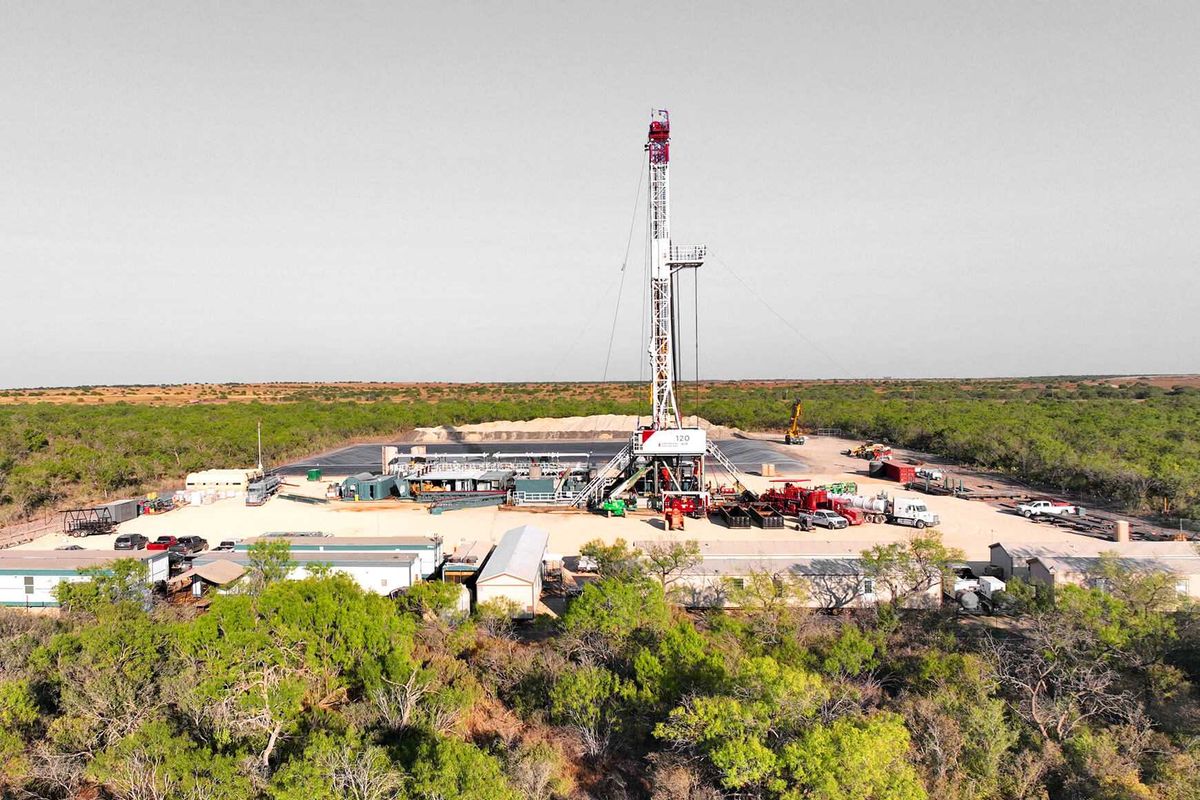
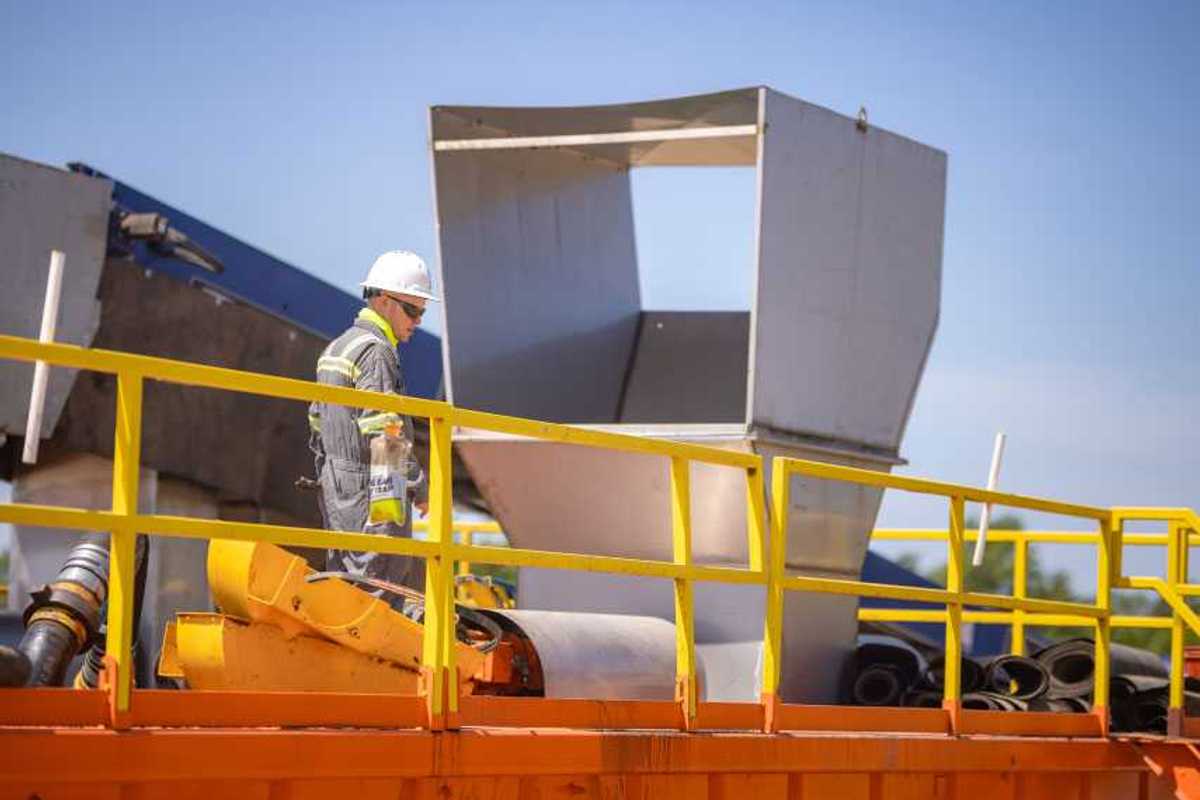
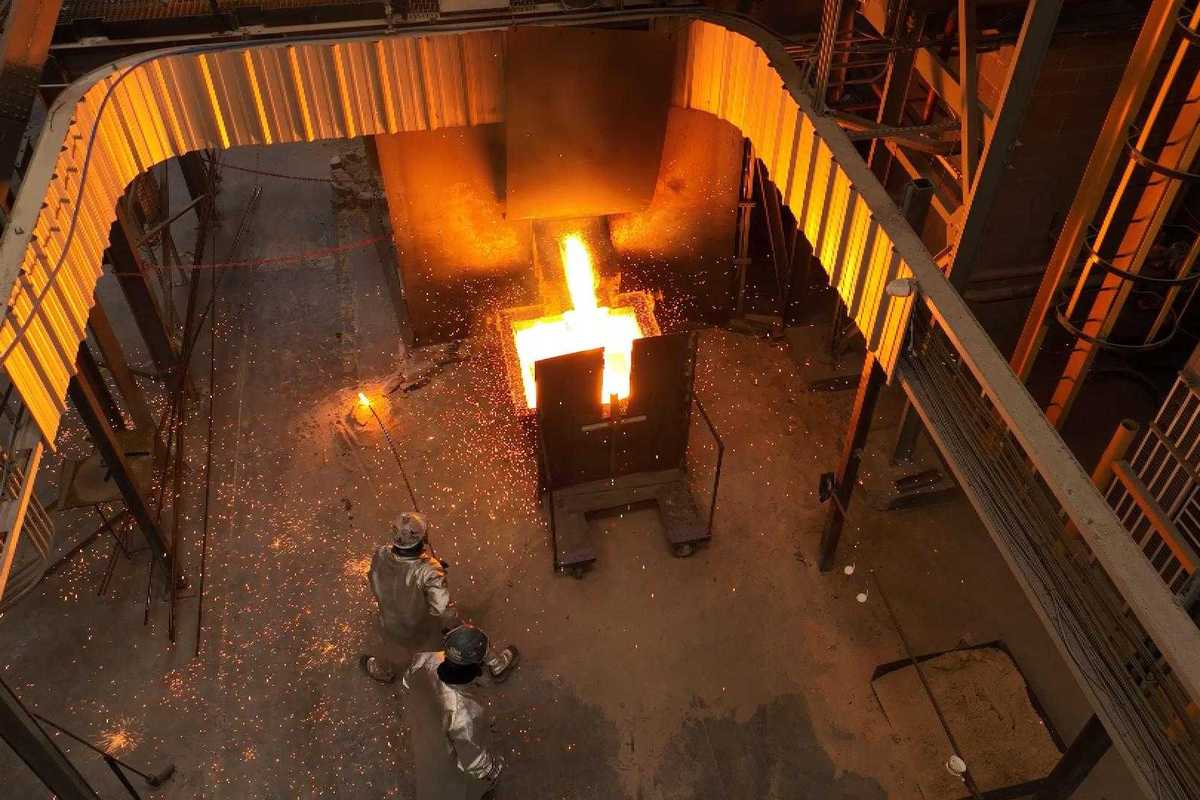
The report concludes that natural gas would need to remain a “foundational component of the region’s energy system” to meet the demands of AI data centers. Photo courtesy UH

A new study from the University of Houston estimates that the U.S. will need more than $1 trillion in new midstream energy infrastructure investment by 2052 to meet the rising energy demands from data centers in the age of artificial intelligence.

According to the report, this would average $40 billion to $48 billion per year across investments in natural gas, oil, natural gas liquids, hydrogen and CO2 infrastructure.

UH, in collaboration with the INGAA Foundation and Wood and ESMIA Consultants, released the 2025 North American Midstream Infrastructure Report, which details the needs, pipelines and associated infrastructure necessary to meet global market needs and increased energy demands. UH led the consortium that conducted the analysis. Paul Doucette, hydrogen program officer at UH, served as the principal investigator of the report.

According to the U.S. Department of Energy, data center energy consumption could reach 800 terawatt-hours annually by 2050, a roughly 167 percent increase from 300 terawatt-hours in 2025. Meanwhile, electricity generation from all energy sources is projected to reach 5,858 terawatt-hours in 2052, a 27 percent increase over current levels.

The report proposes two routes to meeting this level of demand.

The first scenario is a reference case based on current federal, state and provincial policies as of April 1, 2025. The second option presents a low-carbon scenario. The report concludes that natural gas would need to remain a “foundational component of the region’s energy system” in both scenarios.

“Meeting energy demand is a critical challenge right now, and this report quantifies the necessary midstream infrastructure and corresponding development dollars needed to meet that demand,” Hebe Shaw, executive director of the INGAA Foundation, said in a news release. “Meeting the energy needs of North America will require sustained investment and development, which must begin now to ensure a safe, reliable and affordable energy system.”

The report also identified several key midstream infrastructure requirements, including:

  • 103,000 miles of new natural gas gathering pipelines
  • 37,000 miles of additional natural gas transmission pipelines, which includes approximately 33,800 miles in the United States
  • 24 million jobs over 25 years

The report adds that hydrogen, carbon capture, utilization, and storage (CCUS), and other decarbonization strategies can help meet infrastructure needs.

UH released a condensed version of the report here.

Ad Placement 300x100
Ad Placement 300x600

CultureMap Emails are Awesome

Alabama-based renewable fuels company to move HQ to Houston

welcome to houston

An Alabama-based clean tech company is moving its headquarters to Houston.

Alléo Energy announced that it will move its headquarters from Bay Minette, Alabama, to Houston's Ion District. The company develops carbon-negative fuels and renewable commodities through its conversion technology that turns wood waste and cellulosic feedstocks into high-energy, high-yield syngas.

The news comes after Alléo announced the appointment of Benjamin Cowart as its new CEO. Cowart will succeed Alléo founder Simeon Chow, who will serve as president.

“Ben doesn’t need to be sold on carbon-negative fuels; he’s already building in this exact space, and he’s thrived through some of the hardest conditions the industry has faced,” Chow said in a news release. “He knows how to scale and he knows the capital markets that finance them; he turns the hurdles that stall other companies into momentum. Bringing a leader of his caliber in as CEO is a defining, energizing moment.”

Cowart previously founded Houston-based renewables Vertex Energy Inc. The company went public on the Nasdaq exchange in 2009 through a reverse merger. He served as chairman and CEO of the company, which was later taken private by a consortium led by BlackRock.

Cowart also founded EVH Corp., a venture platform focused on building in hydrogen, methanol, sustainable aviation fuel (SAF), and low-carbon marine fuels.

“I’ve spent my career turning advanced process technology into high-performing enterprises that deliver both economic and environmental returns in an industry defined by headwinds,” Cowart added in the release. “The winners in energy transition aren’t the ones with the best headline; they’re the ones that keep their economics intact when subsidies move, feedstock prices swing, and capital gets expensive. Alléo is well-built for that. I’ve rarely seen a technology company this well positioned for what the market is demanding. The science is proven; now it’s about disciplined execution, financing, and building more plants. This is the work I love most.”

Alléo plans to scale its proprietary conversion technology. The company commissioned the first phase of its Alabama facility in 2023, which produced renewable diesel made entirely from wood waste, which could be converted to SAF.

The company says that it has $50 million invested in initial research and development, and that additional facilities are in the planning stages.

J.J. Watt takes a run at energy sector with Base Power investment

power play

Since retiring from the NFL three years ago, Houston Texans legend J.J. Watt has been exploring a new field—investing.

In 2023, the former defensive end and current CBS Sports football analyst bought a stake in English soccer team Burnley FC. A year later, he invested in the PopUp Bagels chain.

This summer, Watt made what may be his highest-profile investment yet. He contributed to a $1 billion Series D round for Austin-based energy startup Base Power, which has an office in Houston. It’s Watts’ first investment in the energy sector.

“I like companies that solve real problems, and Base is lowering power bills, protecting families, and building the whole thing themselves right here in Texas,” Watt said in a company news release.

“What impressed me wasn’t just how fast they’ve grown,” he adds. “It’s that they’ve already saved Texans millions on their power bills and kept thousands of homes running when the lights went out. That’s why I invested.”

Base Power is building a distributed network of residential batteries that’s designed to strengthen the grid and lower electrical bills. The startup now powers more than 30,000 homes in Texas, including the Houston area, and recently expanded to Illinois.

Base Power’s $1 billion round lifted its valuation to $13 billion. Since being founded in 2023, the startup has raised more than $2.5 billion.

“JJ is a legend in this state, and he earned that as much for how he shows up off the field as for what he did on it,” says Zach Dell, co-founder and CEO of Base Power. "He spent a full day with us asking every hard question he could think of, and then he switched to Base himself. We’re glad to have him partnering with us.”

Zach Dell is the only son of Austin billionaire Michael Dell, chairman and CEO of Round Rock-based Dell Technologies. Michael Dell grew up in Bellaire.

Leading energy companies power Houston's presence on Fortune Global 500

world class

Nine Houston companies landed on the 2026 Fortune Global 500 list, which ranks the world's largest corporations by revenue for the 2025 fiscal year.

Houston's showing on the list was led by energy companies, with Spring’s ExxonMobil claiming the top local spot. Here’s what Houston-area companies made the list, and where they ranked:

  • No. 15 ExxonMobil
  • No. 36 Chevron
  • No. 61 Phillip 66
  • No. 159 Sysco
  • No. 243 ConocoPhillips
  • No. 292 Enterprise Products Partners
  • No. 343 Plains GP Holdings
  • No. 460 SLB
  • No. 481 Hewlett Packard Enterprise

After 12 years as No.1, Arkansas-based Walmart was replaced this year by Seattle-based Amazon in the top spot for 2026. Amazon achieved this by bringing in $700 billion in revenue in 2025, representing a 12 percent increase from the previous year.

"Across global business, we see again and again that the leaders who are winning are those who embrace change,” Alyson Shontell, Fortune's editor in chief and chief content officer, said in a news release. "Amazon has topped the Fortune Global 500, knocking Walmart off its pedestal. The company has continually reinvented itself across new businesses and bold bets—including a $200 billion capital commitment, largely to building its capacity for AI and cloud computing, in this year alone."

The U.S. has 141 companies on the 2026 Fortune Global 500 list, which is the most of any country. Companies in America generated $15.5 trillion in aggregate revenues, a 6 percent increase from the previous year.

The number of women CEOs at Fortune Global 500 companies reached a record of 34 top leaders, who represented 6.8 percent of CEOs of companies on the list.

Technology was the standout growth industry on this year’s list, with 38 companies earning revenues that grew 20 percent to about $4 trillion in 2025, with profits climbing 36 percent to $835 billion. The financial sector accounted for the largest share of companies on the list again, with 123 companies in that sector. The energy sector claimed the No. 2 industry spot with 77 companies making the list.

In June, the Fortune 500 list was released, and Texas led the United States with 57 Fortune 500 companies headquartered in the state, generating $2.8 trillion in combined revenue.