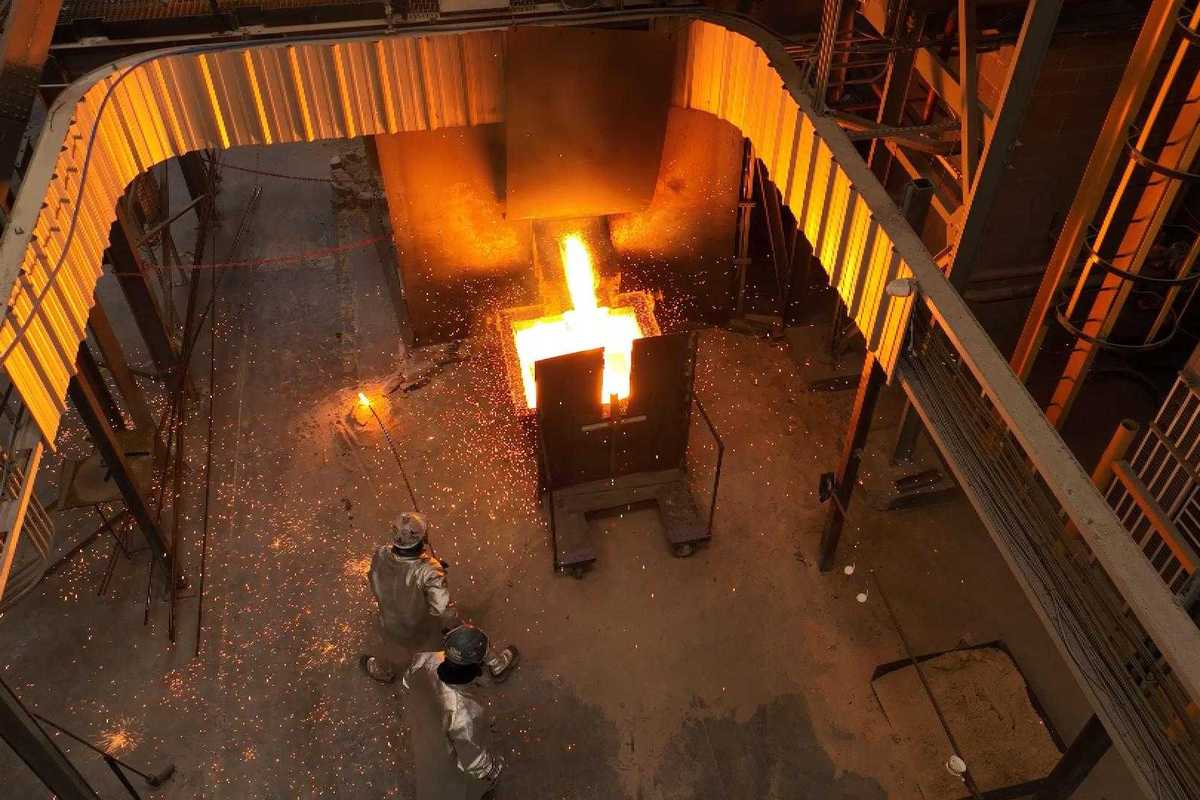
Startups from around the world will pitch during Houston Energy and Climate Week. Photo via the Ion

One of the highlights from Houston Energy and Climate Week is hearing directly from the up-and-coming founders working to reshape the energy landscape.

This year, dozens of startups from Brazil to Berkeley and from right here in the Bayou City will compete for cash prizes and bragging rights while showcasing their concepts at HECW pitch events. Here's who's pitching at some of the week's signature competitions. Check back after the week wraps to see who takes home the top prizes.

Cypher Pilotathon and Startup Showcase — Sept. 15 at POST Houston

At the Cypher Pilotathon, founders will give their best 7-minute pilot pitches to industry experts and a live audience, followed by Q&A. This year's event will center around the theme, "The NEW Energy Industrial Revolution." Here's who's pitching:

  • Houston-based Aeromine Technologies, a distributed wind turbine company
  • San Francisco-based Ammobia, which develops low-carbon, energy source-agnostic ammonia
  • Birmingham, Alabama-based Ashipa Electric, a renewable energy semiconductor and microgrid manufacturer
  • Houston-based BigMachine AI, an AI engineer for industrial projects
  • Houston-based Corrolytics, which has developed corrosion detection technology
  • São Paulo, Brazil-based GLR Tech, which has developed a compact, scalable, low-cost platform for industrial emissions control
  • Monreal-based Green Graphite Technologies, which produces battery-grade graphite in a cost-effective and sustainable manner
  • Boston-based KIRA, which converts industrial wastewater into ultrapure water and solids
  • Edinburgh-based Mocean Energy, which works to deliver renewable ocean energy to power offshore industry
  • Los Angeles-based Mote, which works to convert agricultural and forestry waste into clean energy
  • Berkeley-based Oleo, which is developing a biomanufacturing platform to transform biomass waste into carbon-negative, cost-competitive oil feedstocks for advanced fuels
  • Oslo, Norway-based OTee, an automation machinery manufacturer
  • Houston-based Resollant, which is working to produce battery-grade graphite and ultra-low-cost hydrogen
  • Tulsa-based RyuGen Energy Solutions Inc., which works to turn underused commercial power into distributed AI infrastructure
  • Berkeley-based Sunchem, which provides precision separation of critical metals from sources including e-waste, evaporator scrap, solar panels, and mining ores and concentrates

Twenty-two other startups will participate in the startup showcase. See the full list here.

Greentown Climatetech Summit — Sept. 16 at the Continental Club

Ten Greentown startups will compete for $25,000 in prizes at Greentown Climatetech Summit's signature pitch event. Judges include Dave Dreessen, of Chevron Technology Ventures’ Future Energy Fund, and Jon Greene, of New Climate Ventures. Here's who's pitching:

  • Houston-based AMPeers, which manufactures high-temperature superconducting wire for high-power electrification infrastructure
  • Detroit-based AmHyTech, which enables ambient-condition liquid ammonia handling for fertilizer and fuel applications
  • Houston- and Zurich-based Biosimo, which converts biomass-based ethanol into lower-carbon acetic acid and acetyls
  • Houston-based Capwell Services Inc., which captures methane from low-flow oil and gas vents and returns it to market
  • Cleveland- and Ghana-based Cocoa Potash, which extracts potassium carbonate and fertilizer from cocoa, coconut, and palm-nut waste
  • Houston-based Solidec, which electrolyzes air, water, and electricity into onsite hydrogen peroxide.
  • Houston-based Focis AI, which converts industrial laser scans into a queryable digital twin of refineries and plants
  • Calgary-based Kanin Energy, which develops and finances waste heat to power projects for industrial clients
  • San Francisco-based FelixFusion, which models grid connection points so developers can validate interconnection in minutes
  • Houston-based Pike Robotics, which deploys its Wall-Eye robot to inspect hazardous tanks without taking assets offline

TEX-E Student Innovators will also pitch earlier in the day-long event, and an additional five Greentown startups will compete for $1,000 during the Lightning Pitch Competition. Find more information here.

Rice Alliance Energy Tech Venture Forum — Sept. 17 at Rice University’s Jones Graduate School of Business

Houston-based companies Aquanta Vision, Capwell Services and Deep Anchor Solutions will be joined by startups from around the world to compete to be named one of the 10 Most Promising Companies at the 23rd Energy Tech Venture Forum. Additional companies will participate in office hours.

See the full list of nearly 50 companies pitching here.

Halliburton Labs Pitch Day — Sept. 18 at the Ion

Halliburton Labs Pitch Day brings together a curated group of early‑stage energy technology investors and 16 participating companies. The event is invitation‑only. Here's who's pitching:

  • Australia-based Aquafortus, which has developed a non-thermal liquid to liquid desalination technology for resource recovery from wastewater brine
  • Calgary-based Ayrton Energy, which has developed a proprietary technology that enables hydrogen to be stored within an organic liquid, which can be handled and transported like gasoline
  • Illinois-based Cache Energy, which is developing electrified heat and long-term energy storage
  • New York-based Cella, which is working to advance subsurface mineralization of CO2
  • Miami-based Chemergy, which has developed a patented process to convert wet organic and plastic wastes into green hydrogen
  • Tennessee-based Enexor BioEnergy, which is developing on-site waste-to-bioenergy conversion systems
  • Reno-based Espiku, which focuses on water and minerals recovery from industrially produced water
  • UK-based LiNa Energy, which is developing low-cost, solid-state sodium battery technology
  • Michigan-based Marel Power Solutions, which is developing advanced cooling technology to redefine power-stacks
  • California-based Mitico, which is developing technology to collect and purify carbon dioxide at the source, post-combustion, before it enters the atmosphere
  • Singapore-based Nandina REM, which turns end-of-life assets into new, reliable, high-performance carbon fiber materials for the aviation, aerospace and defense industries
  • California-based Noon Energy, which is developing a 100-plus-hour ultra-long-duration battery storage
  • Silicon Valley-based Proof Energy, which is commercializing next-generation metallic solid oxide fuel cell (M-SOFC) technology.
  • Berkeley-based Sunchem, which provides precision separation of critical metals from sources including e-waste, evaporator scrap, solar panels, and mining ores and concentrates
  • Singapore-based Sungreen, an advanced materials company pioneering nanotechnology-based coatings for high-efficiency, low-cost electrodes
  • Minneapolis-based Syncris, which is developing next-generation modular power systems designed for the most demanding environments
Read more about Houston Energy and Climate Week and its programming in Energy Capital's event preview.
Tim Latimer and Sean Maher are some of the headliners for this fall's major clean energy events. Photos courtesy

Houston clean energy events announce keynote speakers from Fervo, Phillips 66

where to be

Two Houston energy institutions will host their signature events this September and have named industry leaders as their keynote speakers.

The Rice Alliance Energy Tech Venture Forum and Greentown Lab's Climatetech Summit kick off Sept. 16. The events are part of Houston Energy and Climate Startup Week and Houston Energy and Climate Week.

The two-day Energy Tech Venture Forum will bring together climatech startups and professionals from around the world to hear pitches, participate in one-on-one office hours and connect with energy innovators.

Sean Maher, chief economist at Phillips 66, will open the forum with a keynote address on the macroeconomic forces shaping the energy industry. Maher also serves as vice president of investor relations at Phillips 66. He previously launched Third Gear Investments, a Houston-based energy investment firm.

Ira Ehrenpreis, founder and managing partner of DBL Partner, which manages more than $1 billion of capital and invests in companies driving social change, will present the keynote on the second day of the forum, Sept. 17. Ehrenpreis is a board member of Tesla and an investor of SpaceX. He will share insights on commercializing breakthrough technologies and what investors are looking for in today's energy innovations.

Applications for the Energy Tech Venture Forum close July 17. Register for the event here.

Fresh off a landmark IPO, Tim Latimer, co-founder and CEO of Houston-based Fervo Energy, will present the keynote at Greentown's Climatetech Summit. Latimer was recently named one of Fast Company's 2026 Visionaries of the Year.

He will be joined by Houston-based SCF Partners' David Baldwin, who will moderate the discussion. The conversation will focus on the timing of Fervo's IPO, what Latimer would have done differently at the early stages of the business, and why the company chose Houston as its headquarters.

The Climatetech Summit will bring together philanthropists, executives and innovators in the energy transition space. Greentown member startups will also present their pitches at the event. Learn more and secure tickets here.

Ad Placement 300x100
Ad Placement 300x600

CultureMap Emails are Awesome

Houston geothermal company picks Nevada site for commercial-scale project

coming soon

Sage Geosystems, a Houston-based developer of geothermal power systems, has chosen a site in Nevada for its commercial-scale Project Vector facility.

The company’s two-well enhanced geothermal system (EGS) will deliver around-the-clock geothermal heat to Ormat Technologies’ Blue Mountain geothermal power plant in Winnemucca, Nevada.

The startup expects to begin drilling the first well later this year, with the first electricity to be generated in 2027 and full-scale production to start in 2028.

In the Nevada system, fluid will circulate through an engineered subsurface reservoir, absorb heat from the surrounding rock and return heat to the surface. The heat will be delivered to the Blue Mountain plant for conversion into electricity.

Project Vector builds on the performance of Sage’s SMECI facility in South Texas. That facility’s results, combined with Sage’s digital twin platform, will be used to shape to the design and development of Project Vector.

Project Vector supports Sage’s growing commercial pipeline, including a 150-megawatt geothermal power agreement with Meta Platforms, the parent company of Facebook and Instagram.

“Blue Mountain is an ideal location for Sage to take the next step in continuing to commercialize our proprietary EGS approach,” Jason Peart, chief operating officer at Sage, said in a release. “By delivering geothermal heat into an existing power plant, Project Vector can demonstrate the model for bringing firm, 24/7 geothermal power to market at scale.”

Project Vector extends Sage’s relationship with Ormat.

In August 2025, Sage and Ormat agreed to accelerate commercialization of Sage’s geothermal technology at an Ormat power plant. This January, Ormat co-led Sage’s $97 million Series B funding round.

Sage, founded in 2020, has raised about $159 million across three funding rounds.

As the startup ramps up its ESG platform, Sage is targeting data centers as customers, among other large-scale users of electricity.

“The energy needs are huge, and they need it now,” CEO Cindy Taff said on Data Center Frontiers’ podcast. “They can’t depend on the grid anymore.”

Houston’s power advantage: Key takeaways from 2026 HETI Power Summit

The view from heti

Power has become a defining economic development issue as electricity demand rises across Texas.

Industrial expansion, advanced manufacturing, AI and data center growth are increasing the importance of reliable, affordable power delivered on the timelines major projects require.

The 2026 HETI Power Summit, titled Houston’s Power Advantage: Competing for Large-Load Growth, brought together leaders from utilities, power producers, large energy customers, technology and infrastructure providers, professional services firms and the public sector to examine how Houston can meet this moment.

Across keynotes, research report-outs, panel discussions and a fireside chat, a consistent theme emerged: Houston’s power advantage comes from the region’s ability to align utilities, customers, infrastructure, flexible demand, emerging solutions and regional partners around reliable, affordable and timely growth.

Reliability and Readiness

Public Utility Commission of Texas Commissioner Kathleen Jackson opened the summit by emphasizing reliability as the foundation for continued growth as Texas electricity demand rises.

Commissioner Jackson underscored the importance of sustained planning and investment to support new industrial, manufacturing and digital demand while maintaining a reliable power system. Remarks framed the morning’s broader discussion of how Houston can pair reliability with speed, affordability and long-term system readiness.

Scott Cockerham of FTI Consulting previewed HETI and FTI’s “Texas Power Market & Industry Assessment”. The research identifies accessibility, reliability, affordability, market flexibility and infrastructure readiness as key dimensions of regional competitiveness.

Leaders from FTI Consulting, Kroll, AWS and Constellation also discussed factors shaping major investment decisions, including reliability, infrastructure timelines, cost certainty, site readiness, community support and regional coordination.

For large customers, these factors must translate into credible project-level execution. Confidence in system performance, energization timelines and infrastructure plans can materially influence major capital commitments.

Building for the Houston We Want to Become

Jason Ryan of CenterPoint Energy challenged participants to plan now for the infrastructure needed to support Houston’s next phase of growth. Drawing on the idea that “what got you here won’t get you there,” Ryan urged the region to build infrastructure for “the Houston we want to become” and stay ahead of large-load demand.

A fireside discussion between CenterPoint Energy and Foxconn brought that challenge to the customer level. The conversation explored how early coordination between utilities and large customers can help advanced manufacturing projects move from site selection and planning to construction and operation.

Long-term growth will require continued investment in generation, transmission and distribution. In the near term, better use of existing infrastructure can create additional capacity.

HETI also shared findings from its Role of Efficiency & Demand Response to Meet Near-Term Regional Power Demand report. Energy efficiency can lower baseline electricity use, while demand response can shift or reduce demand during critical periods. Combined with supply-side investment, these tools can create grid headroom as longer-term infrastructure advances.

The summit’s closing panel, featuring leaders from Amperon, Enchanted Rock, EY and Quanta Services, expanded the discussion to emerging solutions. Panelists explored modular and flexible generation, advanced forecasting, grid intelligence and greater coordination among utilities, customers, infrastructure providers and communities.

Houston’s broader regional power landscape adds another dimension. Entergy Texas President and CEO Eli Viamontes described Southeast Texas as experiencing an “extraordinary trifecta of residential, industrial and data center growth.” His remarks highlighted how the MISO-facing portion of the region complements Houston’s ERCOT strengths through utility planning, generation and infrastructure investment, resource adequacy and coordination with major industrial customers.

Together, these approaches point to a broader strategy: invest for long-term demand while using flexibility, technology and regional coordination to create capacity for growth today.

From Power Advantage to Economic Advantage

Taken together, the Power Summit discussions point to a clear priority for Houston: translating power market and infrastructure strengths into coordinated execution.

Priority areas include earlier infrastructure planning, stronger site and project readiness, clearer pathways from projected demand to reliably served load, expanded efficiency and flexibility, and sustained coordination among utilities, customers, policymakers, communities, technology providers and economic development organizations.

HETI is advancing this work through research and convening efforts focused on Houston’s evolving power needs and economic competitiveness.

The 2026 Power Summit reinforced Houston’s strong foundation for power-intensive growth and the importance of aligning investment, reliability, flexibility and regional coordination around the next generation of economic opportunity.

———

This article originally appeared on the Greater Houston Partnership's Houston Energy Transition Initiative blog. HETI exists to support Houston's future as an energy leader. Gain more insights from HETI’s Energy Efficiency and Demand Response Report.

Houston geothermal companies secure more than $45M in DOE funding

geothermal boost

Three Houston-based companies—Fervo Energy, Quaise Energy and XGS Energy—have been selected by the U.S. Department of Energy to advance geothermal technologies and field tests.

Combined, the companies will receive more than $45 million in funding from the DOE's Next-Generation Geothermal Field Tests and Geothermal Resource Characterization and Confirmation initiative. The projects were among 21 selected from around the country to receive a total of $99 million.

Fervo was selected to conduct two projects under the initiative for approximately $20 million in funding. For the first project, the geothermal unicorn, which achieved first power at its flagship geothermal plant last week, will drill and complete enhanced geothermal systems (EGS) wells in Elmore County, Idaho, and will deploy high-temperature seismic monitoring technology at record-high temperatures at or above 200°C.

For the second project, the company will conduct an appraisal drilling campaign at a "high-priority" site in Humboldt County, Nevada, to confirm if the reservoir is suitable for EGS development.

“We are grateful to the Department of Energy for funding these grants. We believe this is a clear indication from the federal government that expanding geothermal energy to new states is a national priority,” Jack Norbeck, CTO and co-founder of Fervo Energy, said in a news release. “We expect this funding to accelerate Fervo’s pipeline and advance the cutting edge of geothermal technologies.”

Fresh off a $180 million Series B, Quaise Energy also received $25 million in DOE funding through the initiative to support its Project Obsidian super hot geothermal plant in Central Oregon. The funding will go toward the analysis of the drilling, stimulation and flow results of the first two wells at the Project Obsidian site, which will help the company optimize its third well on site.

“This DOE support is a recognition of what we are building at Quaise and the progress we are making in the field, including the confirmation well currently being drilled at Project Obsidian,” Carlos Araque, CEO and president of Quaise, said in a release. “Our ambition has always been to make superhot geothermal a commercial reality, and Project Obsidian is where we first deliver on that promise.”

XGS Energy, which recently relocated its headquarters from Palo Alto, California, to Houston, was also selected for an exploration drilling project. The company will drill a deep vertical appraisal well in Socorro County, New Mexico, to determine if the site is a viable source of geothermal energy. XGS had not disclosed a funding estimate at press time.

The full value of the proposed DOE funding is subject to completion of award negotiations, according to Quaise.

Data from these projects will be shared through DOE’s Geothermal Data Repository (GDR), providing valuable information to researchers and stakeholders in the geothermal sector.

“This is an excellent example of how public and private entities can partner together to scale critical energy technologies,” Tim Latimer, CEO and co-founder of Fervo, added in a release. “With this funding, the Department of Energy is making important investments to help Americans across the country gain access to clean, affordable geothermal energy.”

Other geothermal companies and institutions from around the country will complete the 17 remaining projects. They include:

  • Denver-based 400C Energy Inc.
  • Salt Lake City-based AlterG Resources
  • Denver-based DAVINCI EP LLC
  • Anchorage-based GeoAlaska LLC
  • Oklahoma City-based GreenFire Energy Inc.
  • Virginia-based Hexagon Energy LLC
  • Virginia-based INTEK Inc.
  • Chicago-based Invenergy Geothermal Development LLC
  • Massachusetts-based LiPower Geothermal LLC
  • Fort Worth-based Oriah Geothermal LLC
  • Reno-based Raser Power Systems LLC
  • Santa Fe-based San Ildefonso Services LLC
  • Salt Lake City-based The University of Utah
  • Reno-based TLS Geothermics Corp.
  • Salt Lake City-based Zanskar Geothermal and Minerals

Read more about the full list of projects here.