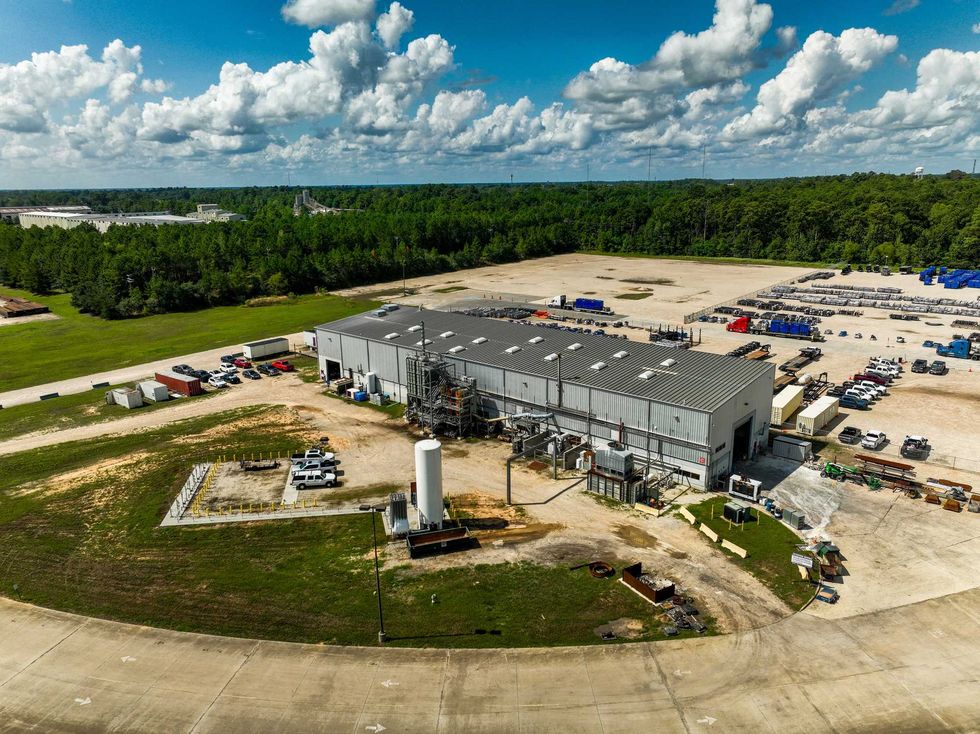
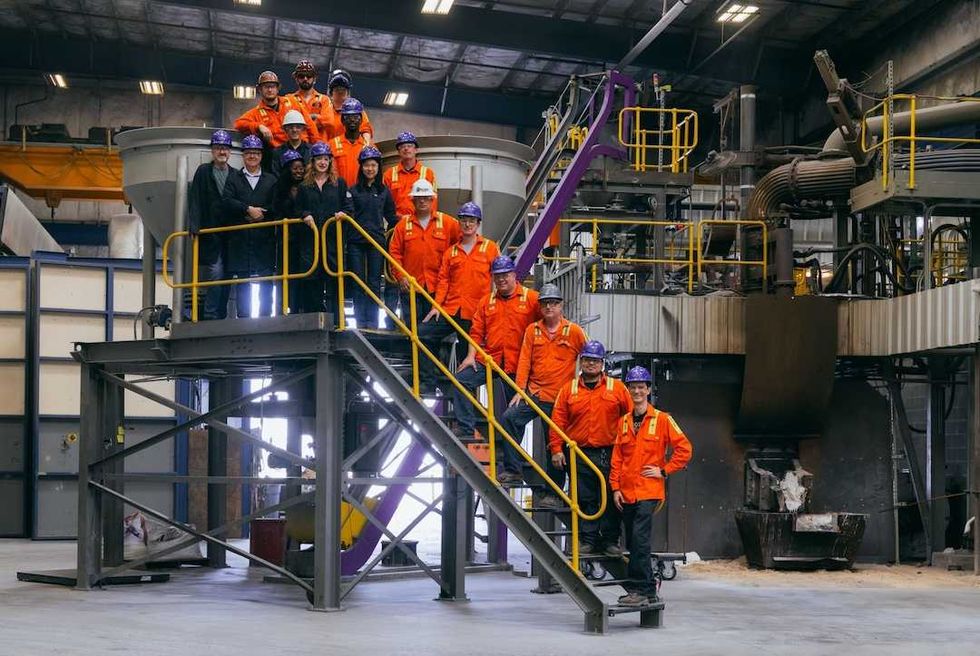
The grants will fund a total of 25 projects in 14 states, including Texas. Photo via Getty Images

The Biden administration is awarding over $3 billion to U.S. companies to boost domestic production of advanced batteries and other materials used for electric vehicles, part of a continuing push to reduce China’s global dominance in battery production for EVs and other electronics.

The grants will fund a total of 25 projects in 14 states, including Texas, as well as Ohio, South Carolina, Michigan, North Carolina, and Louisiana.

The grants announced Friday mark the second round of EV battery funding under the bipartisan infrastructure law approved in 2021. An earlier round allocated $1.8 billion for 14 projects that are ongoing. The totals are down from amounts officials announced in October 2022 and reflect a number of projects that were withdrawn or rejected by U.S. officials during sometimes lengthy negotiations.

The money is part of a larger effort by President Joe Biden and Vice President Kamala Harris to boost production and sales of electric vehicles as a key element of their strategy to slow climate change and build up U.S. manufacturing. Companies receiving awards process lithium, graphite or other battery materials, or manufacture components used in EV batteries.

“Today’s awards move us closer to achieving the administration’s goal of building an end-to-end supply chain for batteries and critical minerals here in America, from mining to processing to manufacturing and recycling, which is vital to reduce China’s dominance of this critical sector,'' White House economic adviser Lael Brainard said.

The Biden-Harris administration is "committed to making batteries in the United States that are going to be vital for powering our grid, our homes and businesses and America’s iconic auto industry,'' Brainard told reporters Thursday during a White House call.

The awards announced Friday bring to nearly $35 billion total U.S. investments to bolster domestic critical minerals and battery supply chains, Brainard said, citing projects from major lithium mines in Nevada and North Carolina to battery factories in Michigan and Ohio to production of rare earth elements and magnets in California and Texas.

“We’re using every tool at our disposal, from grants and loans to allocated tax credits,'' she said, adding that the administration's approach has leveraged more $100 billion in private sector investment since Biden took office.

In recent years, China has cornered the market for processing and refining key minerals such as lithium, rare earth elements and gallium, and also has dominated battery production, leaving the U.S. and its allies and partners "vulnerable,'' Brainard said.

The U.S. has responded by taking what she called “tough, targeted measures to enforce against unfair actions by China.” Just last week, officials finalized higher tariffs on Chinese imports of critical minerals such as graphite used in EV and grid-storage batteries. The administration also has acted under the 2022 climate law to incentivize domestic sourcing for EVs sold in the U.S. and placed restrictions on products from China and other adversaries labeled by the U.S. as foreign entities of concern.

"We're committed to making batteries in the United States of America,'' Energy Secretary Jennifer Granholm said.

If finalized, awards announced Friday will support 25 projects with 8,000 construction jobs and over 4,000 permanent jobs, officials said. Companies will be required to match grants on a 50-50 basis, with a minimum $50 million investment, the Energy Department said.

While federal funding may not be make-or-break for some projects, the infusion of cash from the infrastructure and climate laws has dramatically transformed the U.S. battery manufacturing sector in the past few years, said Matthew McDowell, associate professor of engineering at Georgia Institute of Technology.

McDowell said he is excited about the next generation of batteries for clean energy storage, including solid state batteries, which could potentially hold more energy than lithium ion.

Ad Placement 300x100
Ad Placement 300x600

CultureMap Emails are Awesome

Here are 5 must-attend Houston energy events for February 2026

Mark Your Calendar

Editor's note: The second half of February is buzzing with must-attend events for those in the Houston energy sector. We've rounded up a host of events to put on your calendar for the month, with topics ranging from AI in energy to emissions management for a sustainable future. Get the details below, and register now.

Feb. 18-20 — NAPE Summit Week 2026

NAPE is the energy industry’s marketplace for the buying, selling, and trading of prospects and producing properties. NAPE brings together all industry disciplines and companies of all sizes, and in 2026 it will introduce three new hubs — offshore, data centers, and critical minerals — for more insights, access, and networking opportunities. The event includes a summit, exhibition, and more.

This event begins Feb. 18 at George R. Brown Convention Center. Register here.

Feb. 23-25 — AI in Energy Summit

The third annual AI in Energy Summit will bring together 200 senior leaders from the utilities, oil and gas, power generation, and renewables sectors for three days of conversation in Houston, the heart of energy innovation. Attendees will hear directly from operators who’ve taken AI projects from proof of concept to full deployment; learn how make data AI-ready and align AI with business goals; and discover what’s working in GenAI, ML Ops, Agentic AI, and more.

This event begins Feb. 23 at Norris Conference Center. Register here.

Feb. 24-26 — 2026 Energy HPC & AI Conference

The 2026 Energy HPC & AI Conference marks the 19th year for the Ken Kennedy Institute to convene experts from the energy industry, academia, and national labs to share breakthroughs for HPC and AI technologies. The conference returns to Houston with engaging speaker sessions, a technical talk program, networking receptions, add-on workshops, and more.

This event begins Feb. 24 at Rice University's BRC. Register here.

Feb. 25-26 — Energy Emissions Management Conference

The fifth annual Energy Emissions Management Conference is the premier gathering for energy leaders who are committed to staying ahead of the rapidly evolving emissions landscape. The conference aims to foster collaboration, drive technological innovation, and strengthen transparency, supporting organizations in meeting their regulatory obligations and sustainability goals.

This event begins Feb. 25 at Hilton Houston Westchase. Register here.

Feb. 26 — February Transition on Tap

Mix and mingle at Greentown Labs' first Transition on Tap event of the year. Meet the accelerator's newest startup members, who are working on innovations ranging from methane capture to emissions-free manufacturing processes to carbon management.

This event begins at 5:30 pm on Feb. 26 at Greentown Labs Houston. Register here.

Syzygy inks long-term offtake agreement for first commercial SAF plant

fuel deal

Houston-based Syzygy Plasmonics has secured a six-year official offtake agreement for the entire production volume of its first commercial-scale biogas-to-sustainable aviation fuel project in Uruguay, known as NovaSAF-1.

SP Developments Uruguay S.A., a subsidiary of Syzygy, entered into the agreement with Singapore-based commodity company Trafigura, according to a news release. There is also an option for Trafigura to purchase additional volumes from future Syzygy projects.

The first deliveries from the landmark SAF facility are expected in 2028.

“This agreement marks a critical step in our journey toward commercial-scale impact and disrupting the SAF market,” Trevor Best, CEO of Syzygy Plasmonics, said in the news release. “With a signed offtake agreement from a global leader like Trafigura, and after having successfully completed FEED engineering in December, we're now ready to secure financing for the construction of NovaSAF-1 and move our technology from potential into production."

The NovaSAF-1 project will be located in Durazno, Uruguay. The facility will be the world's first electrified biogas-to-SAF facility producing renewable and advanced compliant SAF. Syzygy estimates that the project will produce over 350,000 gallons of SAF annually. The facility is expected to produce SAF with at least an 80 percent reduction in carbon intensity compared to Jet A fuel.

It’s backed by Uruguay’s largest dairy and agri-energy operations, Estancias del Lago. It will also work with Houston-based Velocys, which will provide Fischer-Tropsch technology for the project. Fischer-Tropsch technology converts synthesis gas into liquid hydrocarbons, which is key for producing synthetic fuels like SAF.

ERCOT to capture big share of U.S. solar power growth through 2027

solar growth

Much of the country’s growth in utility-scale solar power generation will happen in the grid operated by the Electric Reliability Council of Texas (ERCOT), according to a new forecast.

The U.S. Energy Information Administration (EIA) predicts that solar power supplied to the ERCOT grid will jump from 56 billion kilowatt-hours in 2025 to 106 billion kilowatt-hours by the end of 2027. That would be an increase of 89 percent.

In tandem with the rapid embrace of solar power, EIA anticipates battery storage capacity for ERCOT will expand from 15 gigawatts in 2025 to 37 gigawatts by the end of 2027, or 147 percent.

EIA expects utility-scale solar to be the country’s fastest-growing source of power generation from 2025 to 2027. It anticipates that this source will climb from 290 billion kilowatt-hours last year to 424 billion kilowatt-hours next year, or 46 percent.

Based on EIA’s projections, ERCOT’s territory would account for one-fourth of the country’s utility-scale solar power generation by the end of next year.

“Solar power and energy storage are the fastest-growing grid technologies in Texas, and can be deployed more quickly than any other generation resource,” according to the Texas Solar + Storage Association. “In the wholesale market, solar and storage are increasing grid reliability, delivering consumer affordability, and driving tax revenue and income streams into rural Texas.”