Molecule has made a strategic acquisition following the closing of its Series B last summer. Photo via Getty Images

Houston-based energy trading risk management (ETRM) software company Molecule has announced the acquisition of Dallas-based Trilogy Energy Solutions.

Molecule CEO Patrick Smith called the deal a "defining moment" for the company, as it allows Molecule's platform to expand to include physical gas operations.

“For years, this industry has drawn the ETRM box too small, creating inefficient silos by treating trading and physical operations as separate budgets and separate problems, when the real cost lives in the handoffs between them," Smith said in a news release. "Trilogy’s domain expertise in physical gas operations closes that gap. Together, we can give producers, midstream operators, and trading desks something the market has been asking for: a single, integrated view from wellhead to trading desk, without the manual reconciliation, spreadsheet workarounds, and legacy handoffs that slow the industry down.”

Trilogy, founded in 2014, is a provider of cloud-based software for the day-to-day logistics of physical natural gas operations. The platform allows users—including producers, marketers, midstream companies, pipeline operators and others—to manage activities such as pipeline nominations, gas gathering operations and more. Thus far, Molecule's platform has focused on energy trading and managing financial and commercial activities.

Through the acquisition, the combined company will now offer a full-stack enabled ETRM and energy operating system. Users of both platforms can expect continuity of service, according to the companies.

“Molecule has always been about meeting trading teams where they actually work, focused on being fast, accurate, and deeply integrated into their day-to-day workflow,” Sameer Soleja, founder and president of Molecule, added in the release. “Bringing Trilogy into the Molecule family extends that mission from the trading desk into the physical operations of the gas business. The two platforms complement each other exceedingly well, and the combined product will be able to offer all-in-one capabilities that lead the ETRM market, both in its tech-forward nature, and in its depth.”

Molecule expects the combined platform to help users reduce manual month-end close work, cut costs, and improve data accuracy and decision-making.

Trilogy's Chief Product Officer Jeremy Frye will join the Molecule team, along with others from Trilogy.

“Trilogy has spent decades building the trust of companies across the physical natural gas industry by delivering software that stands up to the demands of physical gas operations... It’s a rare combination that brings the best of both worlds, and I’m energized about what our teams will build together,” Frye added in the release.

California-based Sundance Growth, an existing investor in Molecule, supported the acquisition. The software growth equity firm raised a $125 million debut fund in 2025 and focuses on B2B SaaS companies.

Sundance led Molecule's Series B round, which closed last summer for an undisclosed amount. At the time, Soleja said the funding would allow Molecule to "double down on product innovation, grow our team, and reach even more markets."

Ad Placement 300x100
Ad Placement 300x600

CultureMap Emails are Awesome

San Antonio company breaks ground on 347MW solar project outside of Houston

coming soon

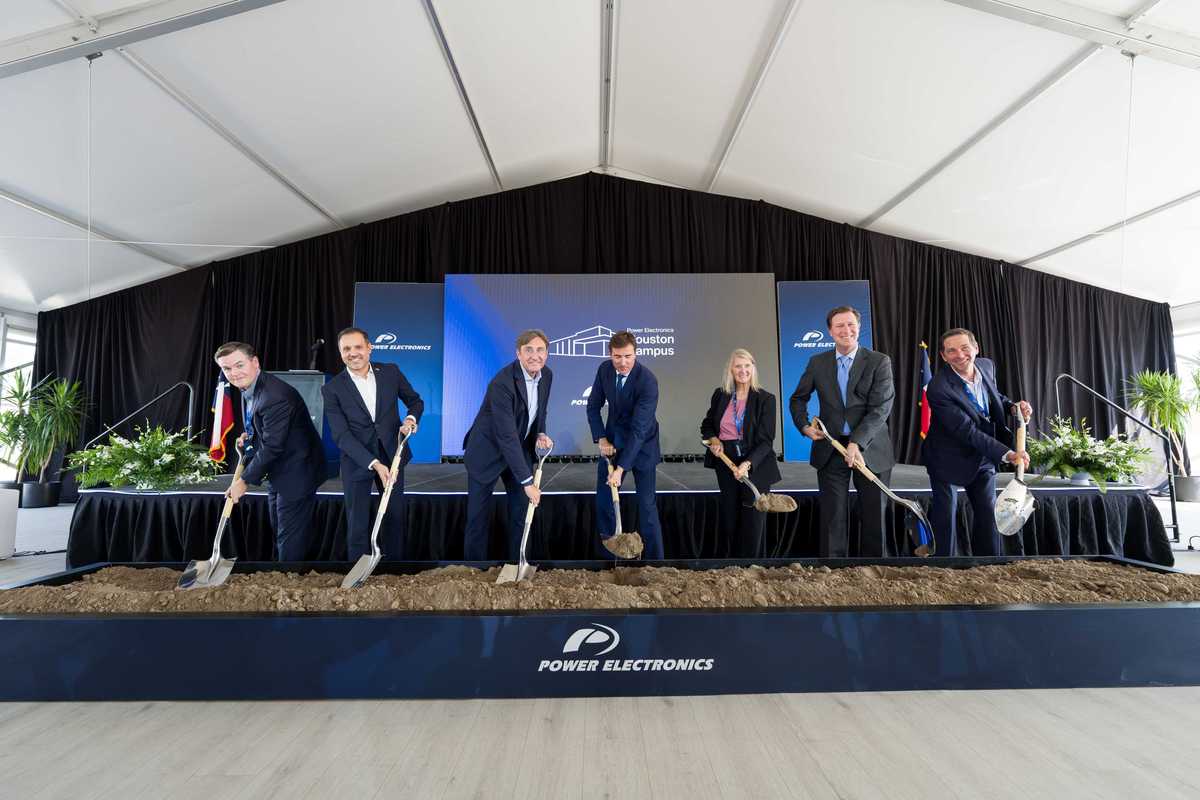
Crews have broken ground on the forthcoming 347-megawatt direct-current SunRoper Solar project in Wharton County, Texas, that will add capacity to the ERCOT grid.

The solar project, which is slated to begin operations in December 2027, will provide electricity to an undisclosed Fortune 100 company under a long-term power purchase agreement, according to a news release.

San Antonio’s OCI Energy and Israel's Arava Power are developing the project. It's being financed by ING Capital and constructed by Louisiana-based WHC Inc. The project received $394 million in construction financing in February.

"SunRoper demonstrates how strategic partnerships can help meet Texas' growing demand for electricity through investments in critical energy infrastructure," Sabah Bayatli, president of OCI Energy, said in the release.

Project partners, landowners and company executives attended a groundbreaking event for SunRoper on Sept. 1 at the site outside of the Houston metro area. The companies say they are advancing this energy project to strengthen grid reliability and to help deliver affordable power to one of the highest-demand areas in the state.

“WHC is proud to serve as EPC contractor on the SunRoper Solar project, bringing our construction expertise to bear on a facility that will deliver meaningful power to the Houston region,” Randel Badeaux, president of power North America for WHC, added in the news release. “This groundbreaking reflects months of careful planning and coordination with OCI Energy, Arava Power and our project partners, and we look forward to executing a safe, high-quality build through to completion in 2027.”

OCI Energy currently operates several utility-scale solar and battery energy storage system projects outside of the San Antonio area, and has five other projects under construction outside of San Antonio and Waco, with more than 30 under development in Arkansas, Mississippi, Georgia, Colorado and Alberta, Canada. The company also has existing projects in New Jersey and Georgia.

In $2 billion deal, NVIDIA takes 20% stake in Woodlands-based Lancium

power play

With an initial investment of $2 billion, AI chip manufacturer NVIDIA just acquired a 20 percent stake in The Woodlands-based Lancium, which develops large-scale campuses that combine AI data centers and onsite power supplies.

Lancium recently announced the investment but didn’t disclose the dollar amount. The Information news website reported NVIDIA’s investment totaled $2 billion, with the possibility of an additional $1 billion if Lancium achieves certain milestones.

Dealroom.co calls NVIDIA’s investment a “form of supply-chain insurance.”

NVIDIA “is gaining exposure to the scarce physical assets that determine whether its chips can be deployed,” Dealroom.co says. “The move makes Nvidia look less like a pure chip company and more like an allocator of infrastructure capacity.”

Investment precedes possible IPO in 2027

Thanks to NVIDIA’s cash infusion, Lancium and its portfolio of land and power connections carry an enterprise value of about $10 billion, according to The Information.

The investment should enable Lancium to expand as it explores a potential IPO next year, The Information reported.

Neither Lancium nor NVIDIA is responding to requests for comment about the deal.

Lancium’s marquee project is a 1,000-acre data center and power generation campus in West Texas for the $500 billion Stargate initiative. Stargate, a joint venture comprising MGX, OpenAI, Oracle and SoftBank, is building data centers equipped to handle AI-level workloads.

“Epicenter of energy and AI infrastructure”

Founded in 2017, Lancium has 4 gigawatts of leased capacity and a more than 15-gigawatt development pipeline. In 2024, Blackstone Energy Transition Partners invested about $500 million in Lancium, giving Blackstone a roughly 50 percent stake.

“This partnership with NVIDIA is a strong testament to Lancium’s position at the epicenter of energy and AI infrastructure … . We look forward to continuing to partner with these leading companies to help power the next generation of AI innovation,” Bilal Khan, senior managing director at Blackstone, said in a release.

Through the NVIDIA partnership, Lancium’s data center and power generation campuses will use the tech company’s “AI factory” platform, including software, computing, and networking capabilities. This will give NVIDIA customers and partners access to power capacity that supports heavy AI workloads.

“We have spent years assembling the power, the land, and the infrastructure expertise needed to deliver AI data center capacity at a scale the world has never seen,” Michael McNamara, co-founder and CEO of Lancium, said in the release.

“Partnering with NVIDIA — the definitive technology platform for AI computing — ensures that every campus in our portfolio will be deployed with the industry’s most advanced technology and that NVIDIA’s customers will have access to the capacity they need to compete and lead in the AI era.”

U.S. oil giant Chevron confirms it will expand operations in Venezuela

O&G News

Oil giant Chevron confirmed that it will expand operations in Venezuela after President Donald Trump announced an ambitious deal to develop the nation’s oil reserves and give the Pentagon a stake in the profits.

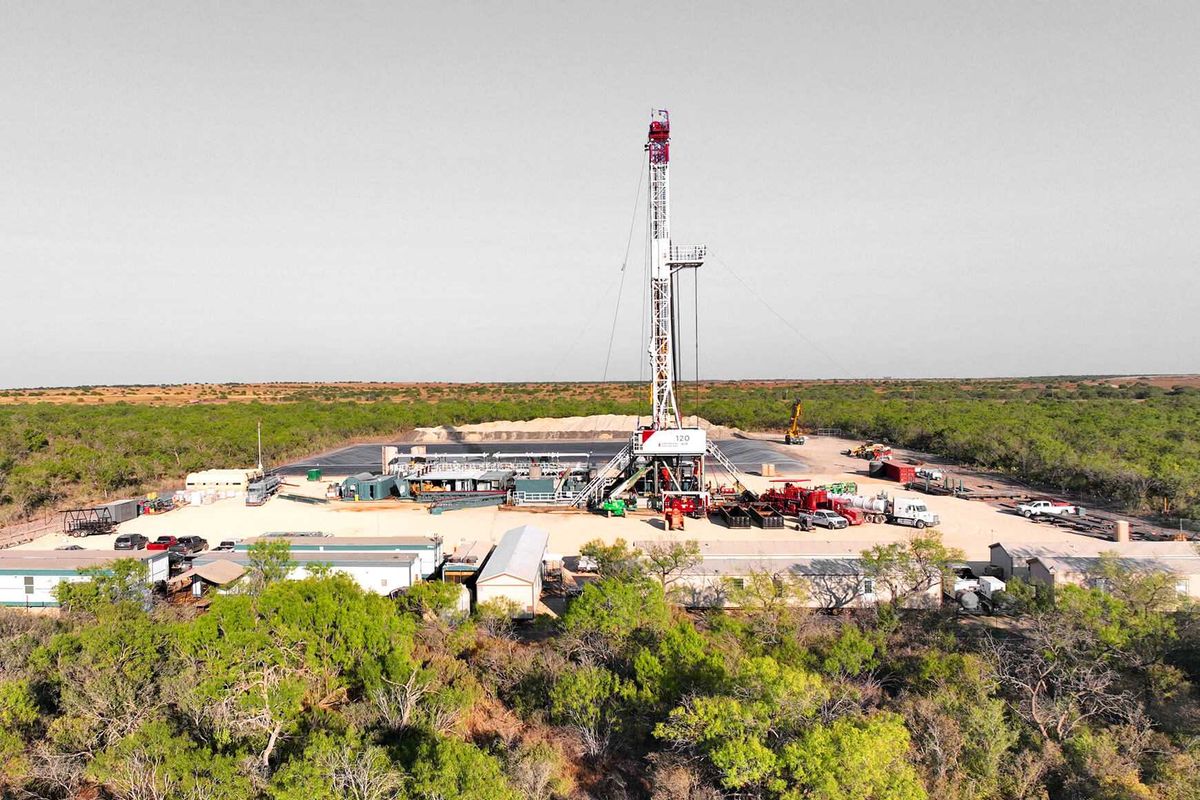
Chevron, the only U.S. oil company with a major presence in Venezuela, said Wednesday that it has been assigned additional acreage in the Orinoco Belt, where it has active operations. The company plans to invest more than $7 billion over the next five years, with the goal of more than doubling its current production to about 600,000 barrels a day.

“Chevron’s history in Venezuela spans more than a century, and our expanded position reflects our confidence in the country’s deep resource potential,” CEO Mike Wirth said in a prepared statement.

Venezuela holds the world's largest proven reserves, totaling more than 303 billion barrels of crude oil, according to OPEC's 2025 Annual Statistical Bulletin. Saudi Arabia is a distant second with 267 billion barrels.

Yet because Venezuela's energy infrastructure is severely degraded and the nation is operating under international sanctions, its daily production is just over 1 million barrels, compared with the 10 million to 11 million barrels that Saudi Arabia produces each day. The U.S. produces almost 14 million barrels per day.

Chevron, the second-largest U.S. oil company, has had a presence in Venezuela since 1923.

“President Trump’s mission in Venezuela is straightforward. The mission is to bring peace, freedom, opportunity and prosperity to the people of Venezuela,” Energy Secretary Chris Wright said Wednesday in Caracas, Venezuela. “I believe the deals that are signed today – tens of billions of dollars of investment, ultimately many thousands of jobs – are critical in starting this ball rolling of peace, opportunity and prosperity for everyone in Venezuela.”

The White House confirmed Monday that it is partnering with North American Blue Energy Partners, NABEP, as part of Trump ’s push to tap into Venezuela’s oil industry.

Yet the agreement has been met with skepticism from energy experts who say it will take years to revive Venezuela’s oil industry, which is in disarray after years of neglect.

There are also questions about whether Venezuela’s acting president, Delcy Rodríguez, has the authority to give NABEP 100-year rights over 17 oil fields with reserves of 65 billion barrels — and whether future Venezuelan or American administrations would overturn the agreement.

Venezuela's constitution states that arrangements like the one that the United States announced this week must be approved by the National Assembly, which has not happened, wrote Ian Vásquez, vice president for international studies at the Cato Institute.

“The deal lacks legitimacy since it was agreed to with a dictatorship that has clung to power for decades through violence and by committing what was probably the largest electoral fraud in Latin American history in 2024,” Vásquez wrote. “The agreement was also reached under overwhelming pressure, military and otherwise, from the United States. As such, any future Venezuelan democracy will question the deal, thus undermining confidence in the current arrangement.”

Wright on Wednesday told reporters during a joint press conference with Rodríguez pushed back on criticism.

“This is a deal that’s a massive win and benefit for the people of the United States of America and a massive win for the people of Venezuela," he said. "Because what it’s going to do is take resources that are underground, not helping anyone, and invest capital and money and technology and bring them to the surface to better the lives of Venezuelans, better supply energy to Americans.”

Trump has eyed Venezuela’s oil since the January capture of then-President Nicolás Maduro and has pressed to get U.S. businesses back into the country. “We have Exxon going in, we have Chevron going in. We have our big oil companies going in,” he said that same month.

He suggested again on Monday that other U.S. oil majors were preparing for a return, though other than Chevron, there is no evidence of that.

Exxon Mobil CEO Darren Woods said in January that Venezuela was “ uninvestable.” An Exxon spokesman said this week that “nothing has changed.”

The history of U.S. oil majors in Venezuela explains the hesitation.

Venezuela nationalized its oil industry in 1976 and created the state-owned company Petróleos de Venezuela S.A. A second nationalization occurred in 2007, when President Hugo Chávez pushed foreign oil companies into state-controlled joint ventures and seized the assets of companies that refused. Chevron agreed to a joint venture. Others, including Exxon and ConocoPhillips, refused, and Venezuela took their assets.

Trump has said that the agreement with Venezuela would “substantially lower” gasoline prices in the U.S. However, analyst have repeatedly warned that Venezuela’s dilapidated oil infrastructure will require years of restoration work and tens of billions of dollars to resuscitate.

“It could take 2 to 4 years to get new greenfield facilities online in the Orinoco region,” Amy Jaffe, director of the Global Energy, Climate, and Sustainability Lab at New York University, said in an email. "Other places where there is no pipeline and other kinds of support infrastructure could take longer.”

Meanwhile, the national average price for a gallon of regular gasoline jumped overnight to $4.12, according to the motor club AAA. That is 93 cents more than it cost at this point last year.