Yokogawa Corporation of America will work with eight research institutions to develop a new way to harvest energy from oceans. Photo via Getty Images.

Sugar Land-based advanced tech company Yokogawa Corporation of America, in collaboration with eight research institutions, has been awarded a $7.8 million grant from the Defense Advanced Research Projects Agency (DARPA) to develop and test a biologically fueled energy system.

The system known as Persistent Oceanographic Device Power, or PODPower, shows a pioneering advancement in microbial fuel cells (MFCs), a technology that aims to redefine how energy is harvested from oceans.

“Advancements in this area will play a role in our future as we harness this knowledge to address GHG emissions, produce clean energy, and enhance waste treatment,” Amro Hassanein, co-principal investigator and technology strategist, said in a news release.

The grant funds the system's Phase 1 development and deployment, and research is scheduled to continue through the summer of 2026. The company says the project has potential applications in climate monitoring, marine research, national security and clean energy generation.

The initiative will attempt to develop an MFC capable of generating up to 10 watts of continuous power for oceanic research and sensing devices through the use of microorganisms found in ocean water and specific bacteria samples.

“MFCs can process a variety of organic substrates including wastewater, agricultural residues, industrial byproducts, and marine biomass, demonstrating their versatility in applications such as on-site power generation bioremediation and biosensing,” Hassanein said in the news release.

As the only private company in the project, Yokogawa will lead the technical aspect to optimize the MFC technology through precision monitoring, data acquisition and machine learning algorithms.

The project team also includes collaborators from:

  • University of Maryland
  • Harvard University
  • Battelle
  • George Washington University
  • The Institute of Marine and Environmental Technology at the University of Maryland
  • Baltimore County
  • James Madison University
  • Johns Hopkins University
  • The University of Delaware.

Yokogawa believes that the system could power ocean sensing devices that provide key information for monitoring climate change, maintaining national security and understanding marine environments. The project plans to integrate bio-inspired organic matter collection systems, advanced fermentation processes and novel electrode designs.

Yokogawa Corporation of America is an affiliate of Tokyo-based manufacturing company Yokogawa. It moved its headquarters to Sugar Land in 2009.

Ad Placement 300x100
Ad Placement 300x600

CultureMap Emails are Awesome

State awards $73M for Houston-area grid resilience project

grid funding

Texas Gov. Gregg Abbott announced millions in funding for energy resilience projects around this state this week, with one major project set to impact the greater Houston area.

As part of the Texas Energy Fund's Outside of ERCOT Grant Program, the state announced a roughly $73 million agreement with the Sam Houston Electric Cooperative to replace and upgrade more than 9,000 electric poles and improve other equipment in Montgomery, Liberty and Hardin counties. The agreement is the first for the fund's Outside of ERCOT Grant Program, which supports state projects outside of the state's largest grid.

The multibillion-dollar Texas Energy Fund aims to "finance the construction, maintenance, and modernization of electric facilities across Texas." It was approved by voters in 2023. Other programs within the fund include the:

  • In-ERCOT Generation Loan Program
  • Completion Bonus Grant Program
  • Texas Backup Power Package Program

“The Texas Energy Fund delivers real results for Texans and strengthens the electric systems that families, businesses, and communities depend on,” Abbott said in a news release. “This grant to Sam Houston Electric Cooperative will replace thousands of vulnerable utility poles to better withstand severe weather and ensure a more reliable and resilient grid in East Texas.”

The Houston-area project, nicknamed Steel Anchor, is expected to be completed by June 2031. According to the release from the governor's office, the Sam Houston Electric Cooperative’s territory is one of the most hurricane-prone service areas in the state. The cooperative serves more than 38,000 Texas consumers

“Over the past decade, Sam Houston EC has strategically replaced poles to improve the strength of its electricity distribution system. This grant will boost the Cooperative’s ongoing grid-hardening and resiliency program,” Doug Turk, CEO of the Sam Houston Electric Cooperative, added in the release.

Following the announcement of the Sam Houston funding, Abbott's office also awarded another $200 million from the Outside of ERCOT Grant Program to upgrade approximately 700 miles of power equipment in Northeast Texas. The equipment is operated by Southwestern Electric Power Company, which serves more than 192,000 Texas consumers. The project will include improvements to 200 circuits, replacing aging copper wire with aluminum alloy conductors and replacing existing utility poles.

Additionally, the state announced its seventh Texas Energy Fund loan agreement for a 570 megawatt natural gas power plant in Sherman, Texas. The 20-year loan of up to $411 million is between the Public Utility Commission of Texas and Rayburn Electric Cooperative and is part of the fund's In-ERCOT Generation Loan Program. Rayburn will build the facility near its existing Rayburn Energy Station 1 in the Texoma region. It will connect to the ERCOT North Load Zone.

“When Texas voters overwhelmingly approved the Texas Energy Fund, they gave us a mandate to secure new, reliable power generation for Texas,” PUCT Chairman Thomas Gleeson added in a release. “The TxEF is delivering on that promise, and Rayburn Electric Cooperative’s new 570 MW power plant is proof. We are ensuring Texas families and businesses have power they can depend on for years to come.”

Solar manufacturer announces massive new facility in Houston area

coming soon

SEG Solar has announced plans to open a new 1.15 million-square-foot solar module facility in Tomball—its third in the Houston area.

The news comes just weeks after the Houston-based solar manufacturer announced its second facility, which will be located in Cypress. It’s expected to open in August.

The latest 4.6-gigawatt facility in Tomball will include an assembly factory and a warehouse. Construction is slated to wrap in March 2027, with commercial panel production planned to begin in May 2027. Once completed, the facility will bring SEG’s annual U.S. module manufacturing capacity to 10.6 gigawatts, according to a news release from the company, one of the largest totals in the country.

The facility will produce heterojunction technology (HJT) modules, which the company says will add to the number of n-type solar panels made in the U.S. HJT modules are known to be more durable and are well suited for hotter climates.

“Designed to support next-generation HJT technology and FEOC-compliant production, the facility ensures reliable, high-efficiency solar solutions,” Raymond Bailey, sales manager at SEG Solar, said in a LinkedIn post. “ Alongside upstream integration in Indonesia and potential U.S. cell manufacturing, we are strengthening supply chain resilience amid evolving trade policies.”

SEG opened its $60 million, 250,000-square-foot facility in Houston in 2024 to house its production workshops, raw material warehouses, administrative offices, finished goods warehouses, and supporting infrastructure. The continued expansion is part of SEG’s long-term goal of becoming one of the largest 100 percent U.S.-owned module manufacturers.

Houston chemical co. completes successful field trial of cleaner natural gas processing tech

successful trial

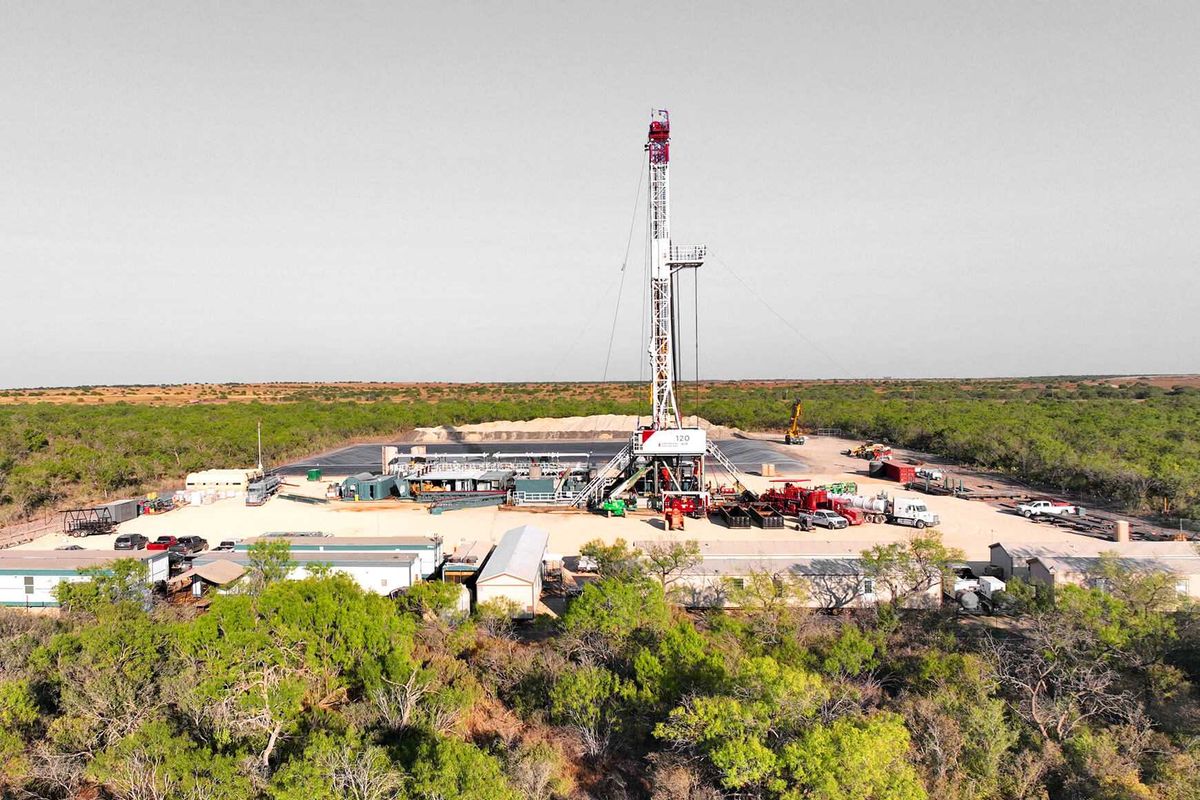
Houston-based Merichem Technologies has announced successful results from the field trial of its new hydrogen sulfide (H2S) removal technology in the Permian Basin.

The technology, known as ECOTREAT, removed more than 99 percent of hydrogen sulfide gas from natural gas streams, or “sour gas,” without producing solid waste during the month-long trial. It also showed sustained performance even when operating above the unit’s design capacity, according to a news release.

“The industry is continually seeking to reduce both the price and complexity of removing hydrogen sulfide from gas production, especially since oil production has shifted to increasingly sour sources, higher gas ratios, and higher water ratios,” Jeff Gomach, SVP, Merichem Technologies, said in a news release. “ECOTREAT met all its field trial objectives and provides a highly effective method for removing hydrogen sulfide to prevent equipment corrosion, ensure worker safety, meet environmental regulations, and maintain product quality for transport.

H2S found in natural gas can turn the gas toxic or hazardous and lead to corrosion in pipelines and processing equipment. However, standard H2S removal technologies create high levels of solid waste. ECOTREAT resolves many of those issues by using an aqueous-phase proprietary catalytic process that converts H2S into dissolved thiosulfate.

Next, Merichem says it plans to move the technology out of the pilot stage to full-scale commercialization.

Merichem, an 80-plus-year-old company, initially launched as a soap and industrial cleaning company. It eventually transitioned to focus on energy technology.

In 2024, Black Bay Energy acquired a portion of Merichem Process Technologies and Merichem Catalyst Products, which would become Merichem Technologies.