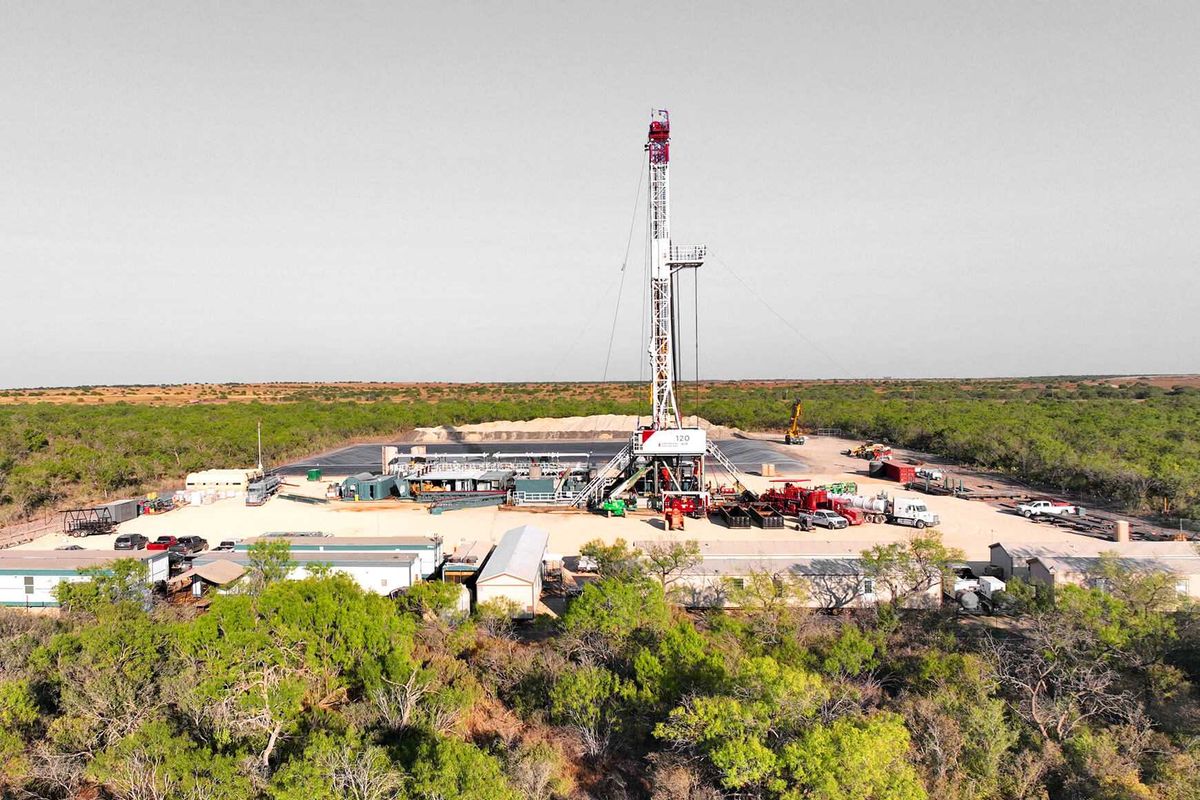
EPC Show takes place June 16-17. Courtesy photo

Editor's note: Summer is here, and June brings a slate of must-attend events for those in the energy transition sector. CLEANPOWER is already underway, and the month continues with EPC Show and InnovateEnergy Week. Mark your calendars and register now.

June 1-4, 2026 — CLEANPOWER 2026 Conference and Exhibition

CLEANPOWER unites policymakers, experts, and corporate leaders to solve the challenges that none can solve alone. This must-attend, four-day conference is packed with cutting-edge discussions about wind, solar, storage, and transmission; dealmaking; networking; and fun.

This event continues through June 4 at the George R. Brown Convention Center. Register here.

June 4, 2026 — Energy Capital Conference

Join 300+ investors, operators, and capital providers in Houston for high-impact conversations shaping the next phase of energy investment. Hart Energy’s Energy Capital Conference is designed for senior decision-makers to meet the capital partners behind today’s deals; see where capital is flowing; strengthen the relationships that move business forward; and get ahead of where investment is going next. A pre-conference half-day workshop, titled Institutional Investing in Energy Workshop, will take place June 3.

This event takes place June 4 at the Post Oak Hotel. Register here.

June 9 — Greentown Go Make Kickoff

Head to the Ion to celebrate the Greentown Go Make 2026 cohort. The open-innovation program with Shell Catalysts & Technologies and Technip Energies focuses on catalytic solutions for industrial decarbonization and the energy transition. Hear pitches from the founders and network with a select group of startups while enjoying food and drink.

This event takes place June 9 at the Ion. Register here.

June 11, 2026 — Goals & Gigawatts Kickoff Party

Head to downtown Houston for Goals & Gigawatts: The Power of & Kickoff Party. The exciting Houston Energy & Climate Week gathering will combine fútbol, culture, climate, energy, innovation, and community for one unforgettable afternoon. Celebrate the opening FIFA match in Mexico City while connecting with professionals, innovators, investors, community leaders, and organizations shaping the future of energy and climate initiatives in Houston and beyond.

This event takes place at 1:30 pm on June 11, and the location is provided after registering. Register here.

June 16-17, 2026 — Energy Projects Conference & Expo

The Energy Projects Conference & Expo (EPC Show) is the largest event in North America for professionals working at the heart of major energy projects. The essential event for engineering, construction, commissioning, operations and maintenance across multiple energy sectors brings together five leading conferences under one roof. Conference subjects span LNG exporting, hydrogen and ammonia, midstream, petrochem and refining, and sustainable aviation fuels.

This event begins June 16 at George R. Brown Convention Center. Register here.

June 22-24, 2026 — InnovateEnergy Week

InnovateEnergy Week 2026 brings together the Energy Drone & Robotics Summit, Industrial Digital Reality Summit, and Industrial AI Nexus Summit for three days of high-powered innovation in Houston. This highly anticipated event will unite 1,500+ industrial, energy, and engineering leaders to explore the future of autonomous operations, spatial computing, digital twins, XR, AI, geospatial intelligence, and remote systems from the stars to the seafloor.

This event begins June 22 at Woodlands Waterway Marriott. Register here.
OTC returns May 4-7, 2026. Photo via OTC/LinkedIn

Here are 10+ must-attend Houston energy events for Q2 2026

Mark Your Calendars

Editor's note: Q2 is underway, with a host of must-attend events for those in the energy transition sector. Houston will welcome some of the world's top energy conferences, expos, and forums over the next few months, so mark your calendars and begin registering now.

April 8-9, 2026 — AI in Oil & Gas Conference

In a world where data is the most valuable asset, how do you turn mountains of information into decisive, real-time action while also meeting ever-tightening emissions targets? The 2026 AI in Oil & Gas Conference will address these challenges and opportunities by bringing together 500+ senior executives, technical innovators, and operational leaders who are ready to push the energy industry forward.

The conference begins April 8 at Hyatt Regency Houston West. Register here.

April 20-21, 2026 — EMC25

Energy Marketing Conferences is thrilled to host EMC25 in Houston. This is one of the largest retail energy conferences in North America, and it plays host to some of the most influential energy providers, brokers, and suppliers in the energy industry.

This event begins April 20 at Hilton Post Oak Galleria. Register here.

April 20-21, 2026 7th American LNG Forum

Join LNG industry professionals, innovators and policymakers in Houston—one of the world’s leading energy hubs, to discover groundbreaking technologies that are driving the future of liquified natural gas. From market dynamics to decarbonization strategies, this is your chance to connect, learn and become part of the LNG revolution at American LNG Forum.

This event begins April 20 at the Houston Marriott West Loop by The Galleria. Register here.

April 22, 2026 — 6th American Hydrogen & CCUS Forum

Connect with hydrogen industry leaders, innovators, and policymakers at the American Hydrogen & CCUS Forum in Houston — one of the world’s foremost energy hubs. Discover groundbreaking technologies and strategies showcased at the Hydrogen Conference and Hydrogen Expo, focusing on hydrogen fuel cell technology, hydrogen energy, and low-carbon hydrogen solutions.

This event takes place April 22 at the Houston Marriott West Loop by The Galleria. Register here.

April 23-24, 2026 — American Data Centers Forum

American Data Centers Forum: From Building to Powering is a national forum dedicated to the energy, infrastructure, and innovation behind America’s next generation of data centers. The event will bring together developers, utilities, energy providers, policymakers, and technology leaders to address the critical challenge of scaling digital infrastructure sustainably and securely. From hydrogen and small modular reactors (SMRs) to microgrids, renewables, and carbon capture (CCUS), the discussions will explore real pathways to decarbonizing and strengthening the nation’s digital backbone.

This event begins April 23 at the Houston Marriott West Loop by The Galleria. Register here.

April 27-29, 2026 — PPMD Energy Data Convention

This flagship conference is dedicated to exploring the latest advancements and trends in energy data, offering opportunities for networking, knowledge exchange, and collaboration. Gain insights into cutting-edge data management practices and how they can enhance operational efficiency, support strategic decision-making, and contribute to achieving long-term objectives. This year's theme is "From Chaos to Clarity: Data-driven Value in the Energy Evolution. Highlights include keynote presentations from renowned experts, interactive panel discussions, hands-on workshops, and an exhibitor showcase.

This event begins April 27 at Norris Conference Center. Register here.

May 4-6, 2026 — Enverus Evolve Conference

Staying ahead of the curve in the energy sector is critical. This conference is designed to equip energy leaders with foresight in the energy market, providing cutting-edge technological know-how, sessions and networking opportunities industry leaders, and offering practical guidance on how to apply technology to solve big problems.

This event begins May 4 at Marriott Marquis, Downtown Houston. Register here.

May 4-7, 2026 — OTC 2026

The world’s largest offshore energy technology event returns to Houston beginning May 4. Dr. Mohamed Irfaan Ali, president of the Co-operative Republic of Guyana, will officially open the 2026 Offshore Technology Conference, delivering the Opening Address on May 4. This year's event will be cover the theme of "Steering Offshore Energy Innovation into the Future," emphasizes the pivotal role oil and gas, along with other emerging offshore energy sources, will play in shaping a sustainable and energy-secure future.

This event begins May 4 NRG Park. Register here.

May 18-19, 2026 — Geothermal Transition Summit North America

This two-day summit serves as the meeting point for the geothermal and oil and gas industries and will focus on geothermal energy, including scaling plants and navigating state regulations. The event promises 40 expert speakers, 15 exhibition spaces, and networking opportunities with 250 industry decision makers.

This event begins May 18 at Norris Conference Center. Register here.

June 1-4, 2026 — CLEANPOWER 2026 Conference and Exhibition

CLEANPOWER unites policymakers, experts, and corporate leaders to solve the challenges that none can solve alone. This must-attend, four-day conference is packed with cutting-edge discussions about wind, solar, storage, and transmission; dealmaking; networking; and fun.

This event begins June 1 at the George R. Brown Convention Center. Register here.

June 16-17, 2026 — Energy Projects Conference & Expo

The Energy Projects Conference & Expo (EPC Show) is the largest event in North America for professionals working at the heart of major energy projects. The essential event for engineering, construction, commissioning, operations and maintenance across multiple energy sectors brings together five leading conferences under one roof. Conference subjects span LNG exporting, hydrogen and ammonia, midstream, petrochem and refining, and sustainable aviation fuels.

This event begins June 16 at George R. Brown Convention Center. Register here.

Ad Placement 300x100
Ad Placement 300x600

CultureMap Emails are Awesome

CenterPoint reports grid resilience updates as hurricane season begins

hurricane readiness

As hurricane season descends upon the region, CenterPoint Energy has shared the latest update on its Greater Houston Resiliency Initiative (GHRI) that’s been working to make grid upgrades and introduce weather-related tech since 2024.

As of April 2026, CenterPoint had:

  • Replaced more than 65,000 poles with stronger storm-resistant infrastructure
  • Trimmed or cleared more than 10,000 miles of vegetation
  • Undergrounded more than 500 miles of power lines
  • Installed more than 600 automation devices
  • Installed more than 150 weather stations

In May, CenterPoint announced its new Community Progress Tracker, which helps residents track electronic infrastructure improvements. In terms of other technology, CenterPoint has announced its partnership with weather, wildfire and flood modeling software Technosylva. The software is expected to help CenterPoint track weather conditions in advance to better prepare crews.

CenterPoint has also added 150 weather stations to improve weather monitoring, conducted a full-scale hurricane response exercise involving more than 400 employees and completed more than 25,000 hours of FEMA training across more than 800 employees. The company opened a new year-round Emergency Operations Center to help coordinate with emergency response partners, local and state officials, and media during major weather events.

“We are proud of the progress made in 2025, which helped deliver more than 100 million fewer outage minutes when compared to 2024, and we are determined to make even more progress in 2026 as we work toward our defining goal: building the nation's most resilient coastal grid,” Nathan Brownell, CenterPoint's vice president of resilience and capital delivery, previously said in a news release.

According to the company, the GHRI aims to improve overall grid resiliency and reliability and to reduce outages for customers. CenterPoint projects its efforts can reduce customer outages by 150 million by the end of 2026.

Energy expert: Why Houston's 100-degree days matter more than 5 years ago

guest column

If you are a Houston native or have lived in the city since the 1980s, you likely remember when a 100-degree day was so rare it made the local news. There were heat advisory warnings, with special attention to the midday hours, because the heat exposure carried with it risks like dehydration, heat stroke and extreme exposure to UV rays.

In this new era for our city and state, 100-degree days are becoming more common. Our local weather forecasters still report on the occurrence, but we are no longer able to restrict our activities as heavily.

The climate has changed rapidly, and Texans are navigating our collective response to the increased heat that has serious implications for our health, energy supply, economy and regional life.

Houston Has Always Been Hot, But This Heat is Different

Houston has expanded exponentially in the last few decades, doubling its population from roughly 1.4 million in 1976 to 2.4 million today. When we account for the growth in the surrounding suburbs, the population boom nearly quintuples.

Houston and the surrounding suburbs now total nearly 7 million people, a huge population increase that brings greater demand for energy. This demand impacts our infrastructure, energy availability, consumer costs, workforce productivity and water supply significantly. With these additions comes more asphalt and fewer trees. With less tree cover and green space, heat gets trapped, increasing temperatures in the city.

We are not just inheriting rising temperatures; we are also building hotter cities.

100-Degree Days and The Texas Grid

I have written before about our grid capacity, changes facing Texas, and the strain that we have seen on the grid. While redundancies in the Texas grid are improving, the pace of this change continues to pose challenges for our area.

The extreme heat has now made air conditioning mandatory for a greater percentage of days during the calendar year. AC units (large and small) are no longer cycling on and off as they are designed to run; instead, most systems are running continuously to meet the needs of Texans.

Daily activities and devices, including remote work, the AI boom, physical exercise, children’s playtime, charging multiple devices, and streaming entertainment, require much more cooling than in previous generations, producing a much larger demand on the grid.

Additionally, the way Houstonians live at home has also changed. Homes across America are much larger on average than they were in the 1980’s. Also, with the rise of remote work, there is a greater need for all-day electricity in each individual household. These factors, combined with the exponential increase in the number of devices and appliances used in households, significantly affect energy demand in our region.

Of course, we’re also seeing massive usage of electricity from large business users (warehouses, data centers, and more), including empty office buildings as return-to-office is slower than expected post-pandemic.

Heat is Not the Only Culprit

As Houston is a coastal city, we not only have to contend with 100-degree temperatures, but humidity also adds an extra layer of complexity to our climate. Thanks to the humidity, temperatures stay elevated for longer periods, meaning everything is retaining heat at a higher rate and for longer than ever before.

The heat never really leaves us anymore, as we don’t have cooler nights to help balance these very hot days. The compounding effect of extreme temperatures and high humidity makes energy demand higher in our region than in places like the New Mexico desert.

Economic Impact on Our Region

Extreme heat hits Texans’ wallets long before a weather alert ever pops up. When temperatures stay above 100 degrees for days at a time, air conditioners are basically working overtime, which sends electricity bills climbing.

And the harder those systems run, the more wear and tear homeowners end up dealing with, usually at the worst possible time, like the middle of July when a boom of AC units decide to quit at once. Meanwhile, roads, transformers and other infrastructure are all under more stress than they were originally built for.

There’s also a much bigger ripple effect that people don’t always think about. When it’s dangerously hot outside, construction crews, energy workers, landscapers, and other outdoor industries simply can’t operate the same way, which slows productivity and raises safety concerns.

Cities are also spending more money on cooling centers and heat-related emergency response, and over time, all of those rising costs have a way of showing up somewhere, whether that’s insurance rates, utility costs or the price communities pay to keep up with extreme weather.

The Opportunity for Houston

Texas is becoming a real-time test case for what happens when extreme heat, rapid growth, and massive energy demand all hit at once. While problematic, it also creates a huge opportunity for Houston and the Texas energy sector to lead. If there’s any place equipped to determine what the future of energy resilience looks like, it’s the city that already powers so much of the world’s energy conversation.

And the solution isn’t just “create more electricity.” It’s about building a smarter, more flexible system overall with better grid technology, battery storage, stronger infrastructure, more efficient building, and energy systems that can handle these extreme weather swings without everything feeling stressed at once. The reality is that a lot of what Texas figures out over the next few years could become the blueprint for other cities and states across the country.

Houston is already testing some of these smarter resilience strategies, such as microgrids, stronger substations, and more flexible energy systems designed to keep critical facilities running during major storms or outages. The goal is simple: build a grid that can take a hit without everything feeling strained all at once.

Going Forward

Hotter days are here to stay. We can’t stop our lives amid the extreme heat, so we have to find ways to adapt and we have to do it quickly. If there’s one thing Texas has always done well, however, it’s innovate under pressure. The communities, companies and energy leaders that move fastest now won’t just be responding to the future, they’ll be helping define it.

———

Sam Luna is director at BKV Energy, where he oversees brand and go-to-market strategy, customer experience, marketing execution, and more.

Houston lands 27 Fortune 500 headquarters, led by energy heavyweights

HQ leader

Houston is a giant among U.S. hubs for corporate headquarters.

The 2026 Fortune 500 lists 27 companies based in the Houston area, with many energy companies claiming top spots. Houston ties with Chicago for the second-most Fortune 500 headquarters, preceded only by New York City (53). Dallas-Fort Worth is home to 23 Fortune 500 headquarters.

Texas leads the nation for Fortune 500 headquarters (57), with California in the No. 2 spot and New York at No. 3.

“Texas is the undisputed headquarters of headquarters,” Gov. Greg Abbott said in a news release. “The world’s leading businesses invest with confidence in Texas because of our welcoming business climate, predictable regulatory environment, and skilled and growing workforce. People and businesses are choosing Texas because Texas works.”

The 2026 Fortune 500 ranks the largest U.S. corporations based on revenue in fiscal year 2025.

Here’s a rundown of the 27 Fortune 500 companies based in the Houston area.

  • No. 9 ExxonMobil
  • No. 21 Chevron
  • No. 29 Phillips 66
  • No.55 Sysco
  • No. 75 ConocoPhillips
  • No. 89 Enterprise Products Partners
  • No. 103 Plains GP Holdings
  • No. 133 Hewlett Packard Enterprise
  • No. 149 NRG Energy
  • No. 157 Quanta Services
  • No. 164 Baker Hughes
  • No. 173 Occidental Petroleum
  • No. 179 Waste Management
  • No. 201 EOG Resources
  • No. 204 Group 1 Automotive
  • No. 207 Halliburton
  • No. 223 Cheniere Energy
  • No. 236 Corebridge Financial
  • No. 262 Targa Resources
  • No. 266 Kinder Morgan
  • No. 388 Westlake
  • No. 435 CenterPoint Energy
  • No. 438 APA
  • No. 440 Comfort Systems USA
  • No. 455 NOV
  • No. 488 KBR
  • No. 496 Coterra Energy. Oklahoma City, Oklahoma-based Devon Energy and Houston-based Coterra Energy merged in early May, with the combined company retaining the Devon Energy name and the Houston headquarters.

The Greater Houston Partnership notes the Houston area soon will welcome its 28th Fortune 500 company. Expand Energy (formerly Chesapeake Energy), appearing at No. 362 on the 2026 list, says it’s moving its headquarters from Oklahoma City to Spring this year.

As the natural gas producer prepares to relocate to Texas, it’s hunting for a new leader. Nick Dell’Osso stepped down as president and CEO earlier this year. Board Chairman Michael Wichterich is interim president and CEO.

Dell’Osso became president and CEO of Oklahoma City-based Gulfport Energy effective May 28.