Blackstone Infrastructure, an affiliate of Blackstone Inc., will acquire a major Texas electricity provider. Photo via Shutterstock

Blackstone Infrastructure, an investment giant with $600 million in assets under management, has agreed to buy publicly traded TXNM Energy in a debt-and-stock deal valued at $11.5 billion.

TXNM Energy is the parent company of Lewisville-based Texas New Mexico Power (TNMP), which supplies electricity to more than 270,000 homes and businesses throughout Texas. Its Houston-area service territory includes Alvin, Angleton, Brazoria, Dickinson, Friendswood, La Marque, League City, Sweeny, Texas City and West Columbia.

Once Blackstone Infrastructure wraps up the deal in the second half of 2026, Albuquerque, New Mexico-based TXNM will no longer be a public company. But TNMP’s headquarters will remain in Texas and its rates will continue to be set by the Public Utility Commission of Texas. TNMP was founded in 1934.

Blackstone Infrastructure is affiliated with investment powerhouse Blackstone Inc., which has $1.2 trillion in assets under management and is the world’s largest investment manager.

“TNMP has done an excellent job of meeting its customers’ growing demand for electricity and supporting the communities it serves,” Sean Klimczak, Blackstone’s global head of infrastructure, said in a news release. “We look forward to utilizing our long-term investment commitments to support TNMP as they continue on this path of high-demand growth across Texas.”

During TXNM’s fourth-quarter earnings call in February, Chairwoman and CEO Patricia Vincent-Collawn said the company’s five-year Texas capital investment plan had grown by more than $1 billion.

“Our future is so bright with these increased investment levels that we are now targeting earnings growth of 7 percent to 9 percent through 2029,” Vincent-Collawn said.

“Our financial expectations are driven by the continued expansion of grid infrastructure supporting growth and reliability in our Texas service territory,” she added.

In 2024, TXNM reported revenue of $1.96 billion, up 1.7 percent from the previous year.

Ad Placement 300x100
Ad Placement 300x600

CultureMap Emails are Awesome

Houston cleantech startup secures $134M to develop ‘superhot’ geothermal plant

deep round

Houston-based Quaise Energy, a producer of utility-scale geothermal power, raised $134 million in a Series B round to advance its “superhot” geothermal power plant.

Climate-focused San Francisco-based investment firm Prelude Ventures led the round, with participation from JERA Co., Japan’s largest power generation company, and Idemitsu Kosan, one of Japan’s largest energy companies. Nearly all existing investors, including cleantech-focused investment firm Safar Partners, participated in the round.

“We have backed Quaise since the beginning because we believed accessing superhot rock would unlock geothermal energy at a scale the world has never seen,” Mark Cupta, managing director at Prelude Ventures, said in a press release.

The startup expects more equity and debt deals to close “imminently.” Quaise has raised $230 million since its founding in 2018.

Quaise says some of the fresh funding will go toward building the world’s first commercial-scale “superhot” geothermal power plant —Project Obsidian in central Oregon. In addition, Quaise is earmarking money for continued development and commercialization of its millimeter-wave drilling system toward depths exceeding 5 kilometers (about 16,400 feet).

Quaise uses a millimeter-wave drilling system developed at the Massachusetts Institute of Technology to remove rock at depths and temperatures that aren’t economically feasible with conventional drilling. With this technology, Quaise can reach rock at temperatures of around 570 degrees to 930 degrees in most places worldwide, enabling construction of geothermal systems that rival fossil fuels and nuclear energy in power density and that rival renewables in cost.

“Our ambition is to power civilization with Earth's most compelling energy source. This round takes us from field-proven technology to first commercial revenues,” Carlos Araque, co-founder, president and CEO of Quaise, added in the release.

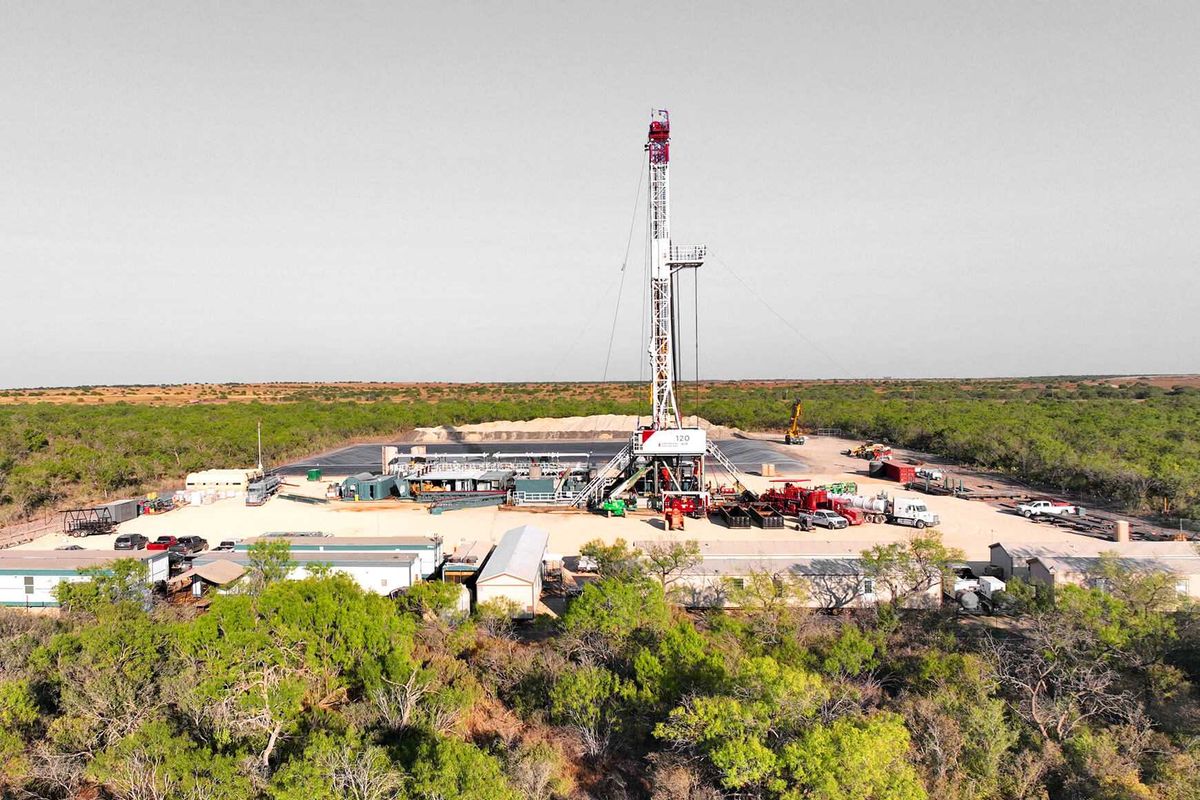
Quaise has demonstrated the capability of its millimeter-wave drilling system at its Central Texas test site, drilling more than about 330 feet through granite in 2025—the first time the technology penetrated basement rock at full scale in the field. The company is approaching a depth of about 3,300 feet at the same site.

Construction of Project Obsidian is underway at Oregon’s Deschutes National Forest. The project, which has the potential to generate gigawatt-scale power, is slated to deliver electricity to the Pacific Northwest grid by 2030.

Shell expands lower-carbon energy solutions while cutting emissions

The View from HETI

Shell’s approach to sustainable development reflects an integrated value chain perspective—reducing emissions from oil and gas production, transforming downstream businesses to offer more low-carbon solutions, and building new energy businesses at scale. The company’s 31% reduction in Scope 1 and 2 operational emissions since 2016 demonstrates that this integrated strategy delivers results.

Three Strategic Priorities Drive Progress

Leading Integrated Gas: Shell is growing its world-leading LNG business with lower carbon intensity, meeting rising demand for natural gas as a transition fuel and foundation for renewable energy integration.

Advantaged Upstream: The company is cutting emissions from oil and gas production while keeping output stable, proving that operational excellence can reduce environmental impact without sacrificing energy security.

Differentiated Downstream, Renewables, and Energy Solutions: Shell is transforming its businesses to offer more low-carbon solutions while reducing sales of traditional oil products, positioning the company for the evolving energy market.

Shell’s emissions reductions are happening across global operations:

  • United States: Significant emissions cuts from production assets through operational efficiency and technology deployment
  • Malaysia & Philippines: Emissions reduction programs at offshore operations demonstrating that low-carbon production works in diverse environments
  • Norway: Continued emissions intensity improvements from mature assets, showing that even older fields can decarbonize

Whale Partnership Demonstrates Innovation

Shell’s recent partnership with Chevron at the Whale deepwater asset showcases what’s possible with next-generation project design. By integrating emissions reduction strategies from the start, the partnership has lowered the greenhouse gas intensity approximately 30% over the project lifecycle relative to similar deepwater oil and gas production assets.

Shell’s strategy to deliver more value with less emissions includes climate change transition plans, mitigation actions and decarbonization levers supported by a suite of processes and greenhouse gas emission reduction targets such as:

2025 Results:

  • Eliminated routine flaring from upstream operations
  • Maintained methane emissions intensity below 0.2%

By 2030:

  • Halve Scope 1 and 2 emissions under operational control (vs. 2016)
  • Achieve near-zero methane emissions
  • Reduce Scope 3 net carbon intensity (NCI) by 15-20% (vs. 2016)
  • Cut customer emissions from oil products by 15-20% (vs. 2021)

By 2050:

  • Achieve net zero emissions across Scopes 1, 2, and 3

Across all strategic initiatives, Shell prioritizes trading and optimization capabilities that maximize value while minimizing emissions. This commercial approach ensures that the company’s energy transition strategy creates long-term shareholder value while advancing climate goals.

Shell is building an integrated energy business for the low-carbon future by delivering the energy products customers need today while investing in the solutions they’ll need tomorrow.

As a steering-level member of HETI, Shell exemplifies the leadership and commitment required to transform Houston’s energy sector while maintaining global energy security.

———

This article originally appeared on the Greater Houston Partnership's Houston Energy Transition Initiative blog. Explore Shell’s energy transition strategy at: https://www.shell.us/about-us/sustainability.html, and read the full analysis here: https://htxenergytransition.org/wp-content/uploads/2025/08/07.18.25-HETI-Leadership-Narrative-Report-V2_pages-1-2.pdf

UH report projects $1T in new midstream infrastructure needed to power AI era

midstream report

A new study from the University of Houston estimates that the U.S. will need more than $1 trillion in new midstream energy infrastructure investment by 2052 to meet the rising energy demands from data centers in the age of artificial intelligence.

According to the report, this would average $40 billion to $48 billion per year across investments in natural gas, oil, natural gas liquids, hydrogen and CO2 infrastructure.

UH, in collaboration with the INGAA Foundation and Wood and ESMIA Consultants, released the 2025 North American Midstream Infrastructure Report, which details the needs, pipelines and associated infrastructure necessary to meet global market needs and increased energy demands. UH led the consortium that conducted the analysis. Paul Doucette, hydrogen program officer at UH, served as the principal investigator of the report.

According to the U.S. Department of Energy, data center energy consumption could reach 800 terawatt-hours annually by 2050, a roughly 167 percent increase from 300 terawatt-hours in 2025. Meanwhile, electricity generation from all energy sources is projected to reach 5,858 terawatt-hours in 2052, a 27 percent increase over current levels.

The report proposes two routes to meeting this level of demand.

The first scenario is a reference case based on current federal, state and provincial policies as of April 1, 2025. The second option presents a low-carbon scenario. The report concludes that natural gas would need to remain a “foundational component of the region’s energy system” in both scenarios.

“Meeting energy demand is a critical challenge right now, and this report quantifies the necessary midstream infrastructure and corresponding development dollars needed to meet that demand,” Hebe Shaw, executive director of the INGAA Foundation, said in a news release. “Meeting the energy needs of North America will require sustained investment and development, which must begin now to ensure a safe, reliable and affordable energy system.”

The report also identified several key midstream infrastructure requirements, including:

  • 103,000 miles of new natural gas gathering pipelines
  • 37,000 miles of additional natural gas transmission pipelines, which includes approximately 33,800 miles in the United States
  • 24 million jobs over 25 years

The report adds that hydrogen, carbon capture, utilization, and storage (CCUS), and other decarbonization strategies can help meet infrastructure needs.

UH released a condensed version of the report here.