The View from HETI
Houston’s power future: The role of energy efficiency and demand response
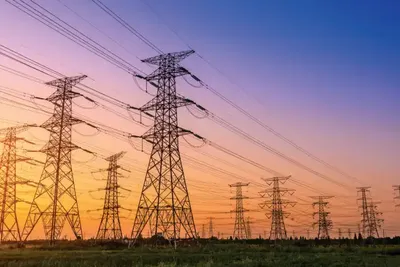
In Houston, industrial expansion, advanced manufacturing, data centers, AI, electrification, and population growth are all increasing demand for power across the region. At the same time, the infrastructure needed to support that growth, from generation and transmission to distribution and storage, takes significant time and investment to plan and build.
This growing power demand creates a near-term challenge: how can the region support new investment while major grid projects are planned and built?
A new report from the Houston Energy Transition Initiative, “Role of Efficiency & Demand Response to Meet Near-Term Regional Power Demand”, examines how Houston can get more from the grid it has today. Its central finding: energy efficiency (EE) and demand response (DE) can create measurable grid “headroom” while new major infrastructure projects are being planned, financed, permitted and built.
Explore the key takeaways from the report:
Houston’s power challenge affects economic growth
Houston’s ability to attract industrial investment increasingly depends on reliable, affordable power. ERCOT and MISO Texas project major load growth through 2030 and 2035 from industrial development, data centers, AI, advanced manufacturing and electrification.
Efficiency and demand response can lower peak demand and help manage local grid constraints that could slow growth.
EE and DE are different tools, and Houston needs both
Energy efficiency creates lasting reductions in electricity use through equipment upgrades, building improvements and changes in operations. Demand response lets customers temporarily reduce or shift power use based on grid conditions, incentives or market signals.
Texas programs show measurable results
In 2024, Texas investor-owned utility programs delivered about 609 MW of evaluated demand reduction and 603 GWh of annual energy savings. The report puts the lifetime cost of saved energy at about $0.02 per kWh.
CenterPoint Energy accounted for more than 40% of ERCOT investor-owned utilities’ total demand reduction and energy savings. It achieved about 236 MW of peak demand reduction and 229 GWh of energy savings, above goals of 66 MW and 116 GWh.
Entergy Texas also achieved significantly more demand reduction and energy savings than its 2024 program year goals, with a reported 24 MW of peak demand reduction against a goal of 17 MW and 43 GWh of energy savings against a goal of 30 GWh.
Large power users can add flexibility
Data centers, industrial facilities and advanced manufacturers may be able to shift noncritical work, adjust cooling, use on-site resources or briefly cut consumption.
The report states that verified demand savings, flexible loads and behind-the-meter resilience could help reduce interconnection risk and support more cost-effective growth.
Technology can expand options
Storage, smart controls and energy management systems can work with efficiency and demand response. Smaller loads can also be combined across commercial buildings, multifamily developments and homes.
For Houston, these tools do not replace new generation, transmission, distribution or storage. They can help the region use existing infrastructure more effectively while new capacity is built, supporting reliable, affordable power and continued economic growth.
———
This article originally appeared on the Greater Houston Partnership's Houston Energy Transition Initiative blog. HETI exists to support Houston's future as an energy leader. For more information about the Houston Energy Transition Initiative, visit htxenergytransition.org. Download your copy of Role of Efficiency & Demand Response to Meet Near-Term Regional Power Demand to learn more.