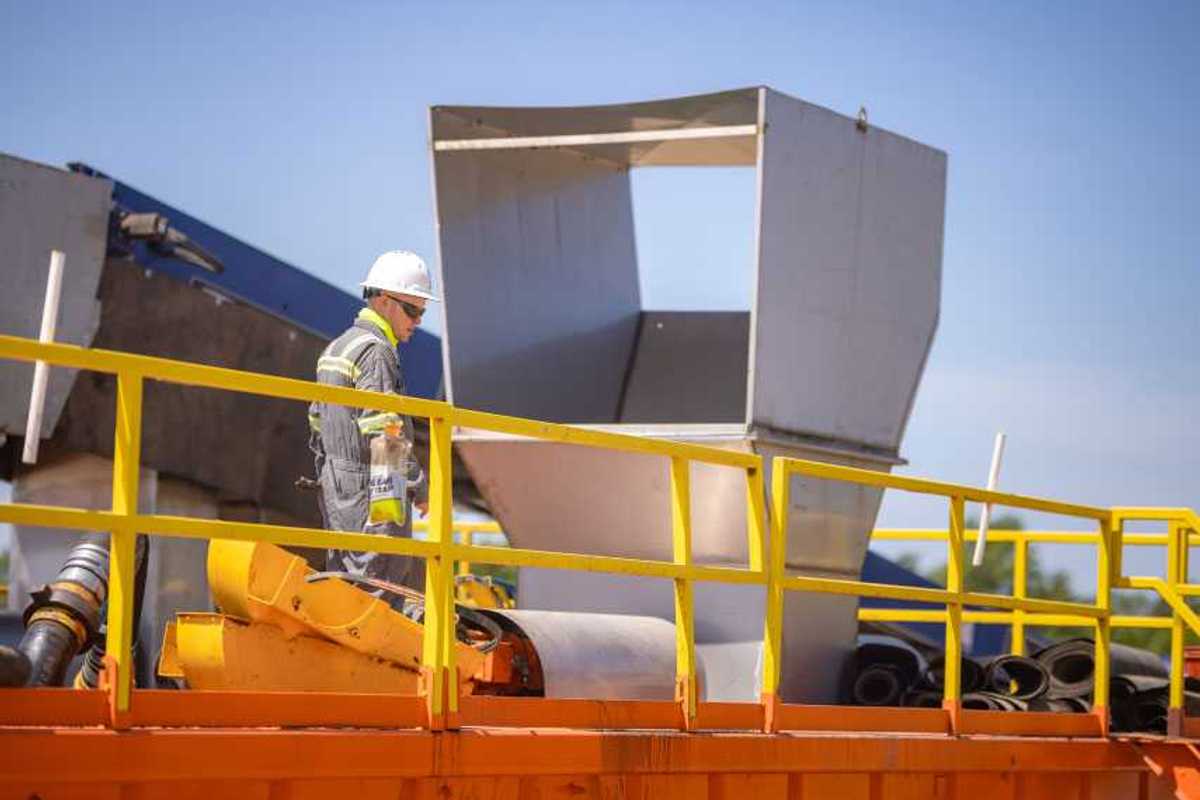
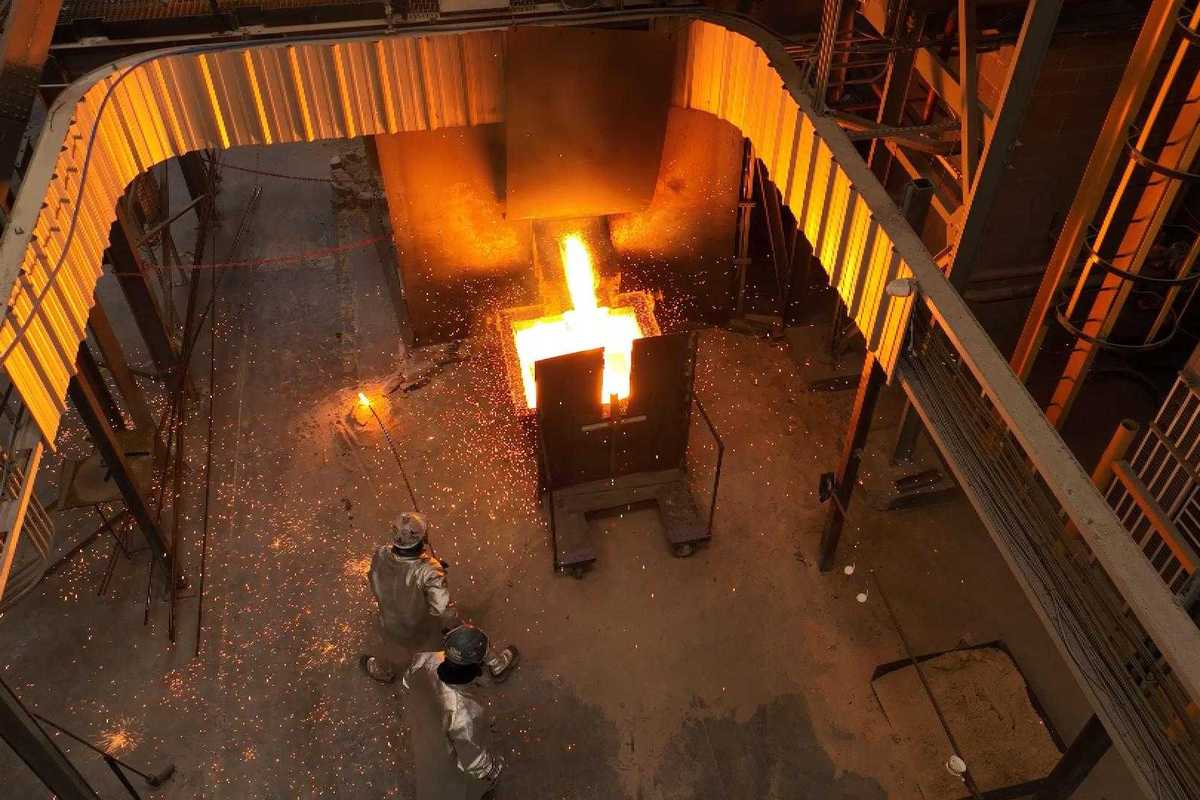
Twelve local startups have joined Greentown Houston, along with others from around the world. Photo courtesy Greentown Labs.

More than 40 climatetech startups joined the Greentown Labs Houston community in the second half of 2025. Twelve hail from the Bayou City.

The companies are among a group of nearly 70 that joined the climatetech incubator, which is co-located in Houston and Boston, in Q3 and Q4.

The new companies that have joined the Houston incubator specialize in a variety of clean energy applications, from green hydrogen-producing water-splitting cycles to drones that service wind turbines.

The local startups that joined Greentown Houston include:

  • Houston-based Wise Energie, which delivers turnkey microgrids that blend vertical-axis wind, solar PV, and battery storage into a single, silent system.
  • The Woodlands-based Resollant, which is developing compact, zero-emissions hydrogen and carbon reactors to provide low-cost, scalable clean hydrogen and high-purity carbon for the energy and manufacturing sectors.
  • Houston-based ClarityCastle, which designs and manufactures modular, soundproof work pods that replace traditional drywall construction with reusable, low-waste alternatives made from recycled materials.
  • Houston-based WattSto Energy, which manufactures vanadium redox flow batteries to deliver long-duration storage for both grid-scale projects and off-grid microgrids.
  • Houston-based AMPeers, which delivers advanced, high-temperature superconductors in the U.S. at a fraction of traditional costs.
  • Houston-based Biosimo, which is developing bio-based platform chemicals, pioneering sustainable chemistry for a healthier planet and economy.
  • Houston-based Ententia, which offers purpose-built, generative AI for industry.
  • Houston-based GeoKiln Energy Innovation, which is developing a new way to produce clean hydrogen by accelerating natural geologic reactions in iron-rich rock formations using precision electrical heating.
  • Houston-based Timbergrove, which builds AI and IoT solutions that connect and optimize assets—boosting visibility, safety, and efficiency.
  • Houston-based dataVediK, which combines energy-domain expertise with advanced machine learning and intelligent automation to empower organizations to achieve operational excellence and accelerate their sustainability goals.
  • Houston-based Resonant Thermal Systems, which uses a resonant energy-transfer (RET) system to extract critical minerals from industrial and natural brines without using membranes or grid electricity.
  • Houston-based Torres Orbital Mining (TOM),which develops autonomous excavation systems for extreme environments on Earth and the moon, enabling safe, data-driven resource recovery and laying the groundwork for sustainable off-world industry.

Other startups from around the world joined the Houston incubator in the same time period, including:

More than 100 startups joined Greentown this year, according to an end-of-year reflection shared by Greentown CEO Georgina Campbell Flatter.

Flatter joined Greentown in the top leadership role in February 2025. She succeeded former CEO and president Kevin Knobloch, who stepped down in July 2024.

"I moved back to the United States in March 2025 after six years overseas—2,000 miles, three children, and one very patient husband later. Over these months, I’ve had the chance to hear from the entrepreneurs, industry leaders, investors, and partners who make this community thrive. What I’ve experienced has left me brimming with urgent optimism for the future we’re building together," she said in the release.

According to Flatter, Greentown alumni raised more than $2 billion this year and created more than 3,000 jobs.

"Greentown startups and ecosystem leaders—from Boston, Houston, and beyond—are showing that we can move further and faster together. That we don’t have to choose between more energy or lower emissions, or between increasing sustainability and boosting profit. I call this the power of 'and,'" Flatter added. "We’re working for energy and climate, innovation and scale, legacy industry and startups, prosperity for people and planet. The 'and' is where possibility expands."

Ad Placement 300x100
Ad Placement 300x600

CultureMap Emails are Awesome

Buoyed by $1.3B sales backlog, microgrid company ERock files for IPO

eyeing ipo

Another energy company in Houston is going public amid a flurry of energy IPOs.

Houston-based ERock Inc., which specializes in utility-grade onsite microgrid systems for data centers and other customers, has filed paperwork with the U.S. Securities and Exchange Commission (SEC) to sell its shares on the New York Stock Exchange.

The ERock filing follows the recent $1.9 billion IPO of Houston-based Fervo Energy, a provider of geothermal power that’s now valued at $7.7 billion.

Another Houston energy company, EagleRock Land, just went public in a $320 million IPO that values the company at $3 billion. EagleRock owns or controls about 236,000 acres in the Permian Basin, earning money from royalties, fees, easements, water services and other revenue streams tied to drilling on its land.

According to Barron’s, more than a dozen energy and energy-related companies in the U.S. have gone public since the beginning of 2025, with the bulk of the IPOs happening this year.

ERock’s SEC filing doesn’t identify the per-share pricing range for the IPO or the number of Class A shares to be offered. ERock is a portfolio company of Energy Impact Partners, a New York City-based venture capital and private equity firm that invests in energy companies.

The company previously did business as Enchanted Rock. ERock Inc., formed in January, will function as a holding company that controls predecessor company ER Holdings Ltd.

In 2025, ERock generated revenue of $183.1 million, up 42.5 percent from the previous year, according to the IPO filing. It recorded a net loss of $59 million last year.

As of March 31, ERock boasted a sales backlog of nearly $1.3 billion, up 779 percent on a year-over-year basis. The company attributes most of that increase to greater demand from data centers.

The company primarily serves the power needs of data centers, utilities, industrial facilities, and commercial buildings. Its biggest markets are Texas and California.

“Several U.S. markets, such as Texas and California, face especially acute reliability risks,” ERock says in the SEC filing. “Texas already shows rapid load-growth pressures tied to data centers and industrial expansion, while California faces grid congestion, long interconnection queues, and above-average vulnerability to extreme heat- and weather-driven outages.”

Since its founding in 2018, ERock has installed microgrid systems at more than 400 sites with a capacity of about 1,000 megawatts. Customers include ComEd, Foxconn, H-E-B, Microsoft and Walmart.

By the end of this year, the company plans to expand its production of microgrid systems to a capacity of about 1.2 gigawatts with the opening of its Hyperion facility in Houston.

John Carrington leads ERock as CEO. He joined ER Holdings last year as chairman and CEO. Carrington previously was CEO of Houston-based Stem, a public company that offers AI-enabled clean energy software and services. Earlier, he spent 16 years at General Electric.

Houston investment firm closes $105M energy venture fund

seeing green

Houston-based investment firm Veriten has announced the initial close of its second flagship energy venture fund with more than $105 million in capital commitments.

Fund II will build on Veriten’s initial fund and aim to support “scalable technology solutions for energy, power and industrial applications,” according to a company news release.

"Our differentiated network, research-driven process, and first principles approach to investing are having an impact across multiple verticals including traditional energy, electrification, and industrial technology. Fund II builds on that platform,” John Sommers, partner, investments at Veriten, added in the release. “In this environment, the differentiator isn't capital – it's all about connectivity, deep sector expertise, and an economically-driven approach. As new technologies and approaches develop at breakneck speed, the need for more reliable, affordable energy and power continues to grow dramatically. The current backdrop accentuates the need for Veriten's solution."

Veriten is supported by over 50 strategic partnerships in the energy, power, industrial and technology sectors, including major players like Halliburton and Phillips 66.

"Veriten continues to build a differentiated platform at the intersection of energy, technology and industry expertise," Jeff Miller, chairman and CEO of Halliburton, said in the release. "We were early believers in the team and their ability to identify practical solutions to real challenges across the energy value chain. As all industries increasingly adopt digital tools, automation and AI-enabled technologies to improve performance and execution, we are proud to partner with Veriten again to help accelerate high-impact solutions across the broader energy landscape."

Veriten closed its debut fund, NexTen LP, of $85 million in committed capital in October 2023. It was launched in January 2022 by Maynard Holt, co-founder and former CEO of the energy investment bank Tudor, Pickering, Holt & Co.

It has invested in Houston-based AI-powered electricity analytics provider Amperon and led a $12 million Seed 2 funding round for Houston-based Helix Technologies to scale manufacturing of its energy-efficient commercial HVAC add-on earlier this year. In the past year it has contributed to funding rounds for San Francisco-based Armada and Calgary-based Veerum.

Veriten also named Nick Morriss as its new managing director earlier this month. Morriss most recently served as vice president of business development at next-generation nuclear technology company Natura Resources and spent nearly 20 years at NOV Inc.

Houston energy expert asks: Who pays when AI outruns the power grid?

Guets Column

For most of the past 20 years, U.S. electricity policy relied on predictable trends in demand. Electricity use, in most regions, increased gradually, forecasts were stable, and utilities adjusted the system in small steps. Power plants, transmission lines, and substations were generally added to reflect shifts in load, rather than growth, and costs were recovered through modest adjustments to customer bills.

Growth in AI data centers has disrupted this model. A single facility can add as much electricity demand as a small town. That demand comes all at once, runs continuously, and has little tolerance for outages. If electricity service drops even briefly, computation stops, and services shut down. Ironically, data centers need reliable service, a point that their emergence is driving concern around for the rest of the grid.

What the numbers say

The International Energy Agency projects global electricity consumption from data centers to double by 2030, reaching roughly 945 TWh, nearly 3 percent of global electricity demand, with consumption growing about 15 percent per year this decade. McKinsey projects that U.S. data center demand alone could grow 20–25 percent per year, with global capacity demand more than tripling by 2030.

After years of roughly 0.5 percent annual demand growth, many forecasts now place total U.S. electricity demand growth closer to 2–3 percent per year through the mid-2030s, with much higher growth in specific regions. In Texas, some forecasters are saying electricity demand could double over the next five years, a staggering 10 percent per year growth rate. What sounds incremental on paper translates into a major challenge on the ground. Meeting this pace of growth is estimated to require $250–$300 billion per year in grid investment, about double what the system has been absorbing.

Where the system starts to strain

The strain appears first in the interconnection queue. It shows up as long waits, backlogs, and delays for connecting new loads and new generation.

Before new generators or large load customers can be connected, a study is required to assess their impact on the grid, whether it can physically handle the added load, and whether upgrades are required. With AI-driven data centers, utilities face far more connection requests than they can realistically support. In ERCOT, large-load interconnection requests exceed 200 gigawatts, most tied to data centers. That amount exceeds historical norms, and it is several times larger than what can be practically studied or built in the near term.

To be clear, public utility commissions are required to study these requests because they must manage system capabilities to ensure minimal disruption. This means engineers spend time evaluating projects that may never be built, while other more commercially viable projects may wait longer for approvals. This extends timelines and makes infrastructure planning less reliable.

Why policymakers are rethinking the rules

Utilities and their regulators must decide how much generation, transmission, and substation capacity to build years before it comes online. Those decisions are based on expected demand at the time projects are approved. When it comes to data centers, by the time infrastructure is completed, they may end up deploying newer, more efficient chips that use less power than originally assumed. This can result in grid infrastructure built for a higher load than what actually materializes, leaving excess capacity that still must be paid for through system-wide rates.

That’s the central dilemma. If utilities build too little capacity, the system operates with less reserve margin. During periods of grid stress, operators have fewer options, increasing the likelihood of curtailments or outages. However, if utilities build too much, customers may be asked to pay for infrastructure that is not fully used.

In response, policymakers are adjusting the rules. In some regions, regulators are moving toward bring-your-own-power approaches that require large data centers to supply or fund part of the capacity needed to serve them or reduce demand during system stress. At the federal level, permitting reforms tied to datacenter infrastructure increasingly treat electricity as a strategic economic input.

As Ken Medlock, senior director at the Baker Institute Center for Energy Studies (CES), explains:

“Many of the planned data centers are now also adding behind-the-meter options to their development plans because they do not anticipate being able to manage their needs solely from the grid, and they certainly cannot do so with only intermittent power sources.”

Behind-the-meter (BTM) refers to power that a consumer controls on its side of the utility meter, such as on-site gas generation or a dedicated power plant. These resources allow data centers to keep operating during grid-related service. Most facilities remain connected to the grid, but the backup BTM generation serves as insurance for operating their core business.

This shifts responsibility. Utilities traditionally manage reliability across all customers by maintaining an operating reserve margin, or spare capacity. Increasingly, large-load customers manage part of their own electricity reliability needs, which changes how infrastructure is planned and how risk is distributed.

Bottom line

AI-driven load growth is arriving faster and in more concentrated places than the power system was built to accommodate. Utilities and regulators are being forced to make decisions sooner than planned about where to build, how fast to build, and which customers get priority when capacity is limited. The effects extend beyond data centers, showing up in system costs, reliability margins, competition for grid access, and pressure on communities and industries that depend on affordable and dependable power. The issue is not whether electricity can be generated, but how the costs and risks of rapid demand growth are distributed as the system tries to keep up. How regulators balance these decisions will determine who pays as AI demand outruns the power grid.

-----------

Scott Nyquist is a senior advisor at McKinsey & Company and vice chairman, Houston Energy Transition Initiative of the Greater Houston Partnership. The views expressed herein are Nyquist's own and not those of McKinsey & Company or of the Greater Houston Partnership. This article originally appeared on LinkedIn.