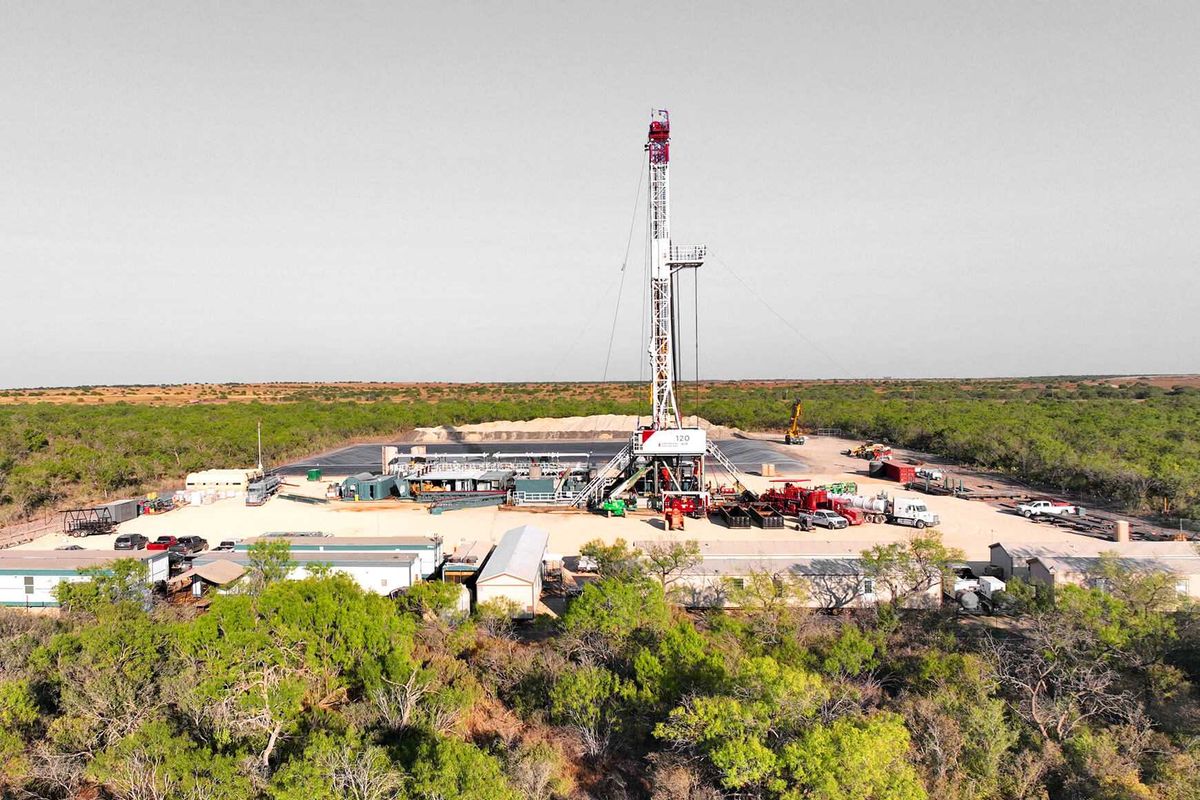
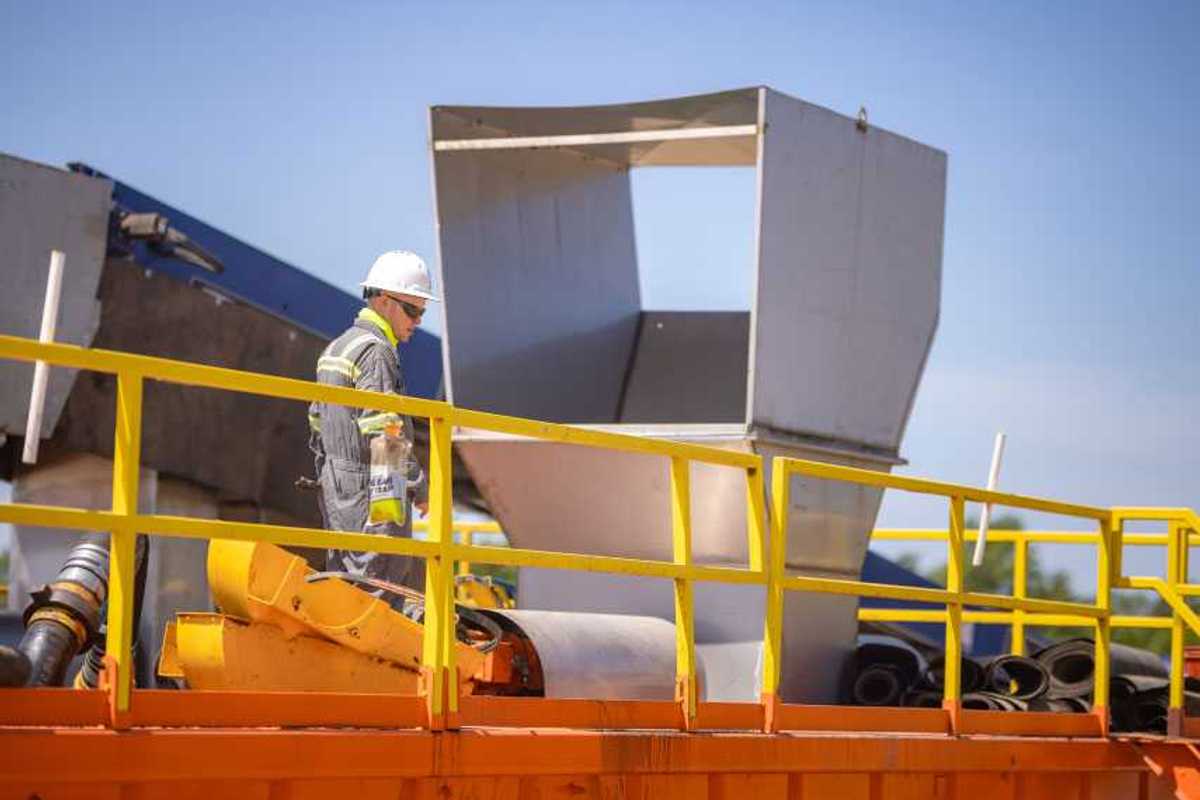
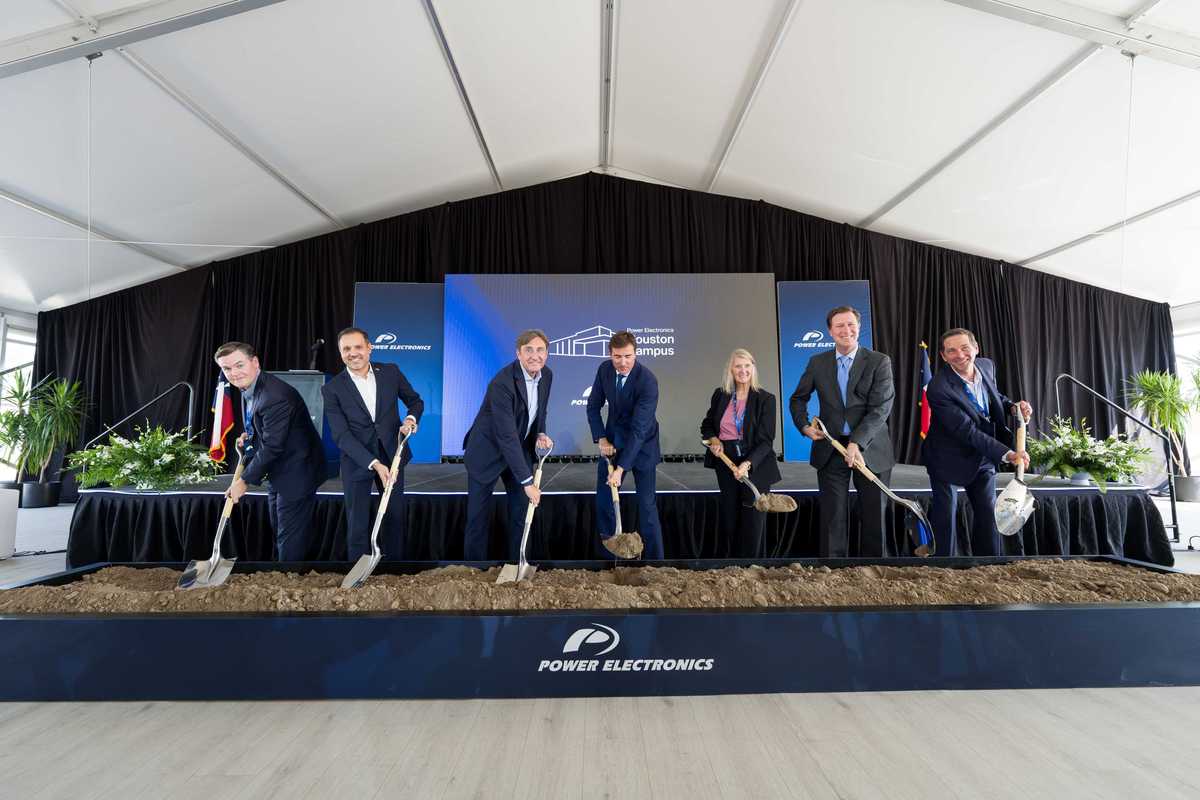
Gaurab Chakrabarti and Sean Hunt were originally named regional winners in this year's competition this summer along with nine other Houston entrepreneurs. Photos via solugen.com

Houston’s Gaurab Chakrabarti and Sean Hunt, the founders of the transformative chemical manufacturing company Solugen, have been named EY’s US National Award winners for Entrepreneur of the Year.

Solugen, also recently named a finalist in the 2023 Houston Innovation Awards, is an environmentally friendly approach that relies on smaller chemical refineries that helps in reducing costs and transportation-related emissions.

Some of their noted accomplishments includes innovations like the proprietary reactor, dubbed the Bioforge, which is a carbon-negative molecule factory and manufacturing process produces zero wastewater or emissions compared with traditional petrochemical refineries.The Bioforge uses a chemienzymatic process in converting plant-sourced substances into essential materials that can be used instead of fossil fuels.

Chakrabarti and Hunt were originally named regional winners in this year's competition this summer along with nine other Houston entrepreneurs.

Founded in 2016 by Hunt and Gaurab Chakrabarti, Solugen has raised over $600 million from investors like Sasol that believe in the technology's potential. The company is valued at reportedly over $2 billion. Solugen is headquartered in Houston, not because it is the hometown of Chakrabarti, but for what Houston brings to the company.

“There’s no way our business could succeed in the Bay Area," Chakrabarti said in a 2023 interview at SXSW where he detailed the offers Hunt and he received to move the business out of state. “For our business, if you look at the density of chemical engineers, the density of our potential customers, and the density of people who know how to do enzyme engineering, Houston happened to be that perfect trifecta for us.”

Even though they are headquartered in Houston, Solugen recently secured plans to expand to the Midwest, as in November they announced its newest strategic partnership with sustainable solutions company ADM (NYSE:ADM) in Marshall, Minnesota. The partnership includes plans for Solugen to build a 500,000-square-foot biomanufacturing facility next to an existing ADM facility , with the two companies working together on producing biomaterials to replace fossil fuel products.

“The strategic partnership with ADM will allow Solugen to bring our chemienzymatic process to a commercial scale and meet existing customer demand for our high-performance, cost-competitive, sustainable products,” Chakrabarti said in a news release. “As one of the few scaled-up and de-risked biomanufacturing assets in the country, Solugen’s Bioforge platform is helping bolster domestic capabilities and supply chains that are critical in ensuring the U.S. reaches its ambitious climate targets.”

For Chakrabarti and Hunt, Solugen was born out of a 12-year friendship, and the journey began after a friendly card game. After an entrepreneurship contest at MIT, which earned them second place and a $10,000 prize, they invested the winnings to work on what would become Solugen, a proof-of-concept reactor with materials bought from a local home improvement store.

"We had a conviction that we were building something that could be impactful to the rest of the world,” Chakrabarti said at SXSW in 2023.

———

This article originally ran on InnovationMap.

Ad Placement 300x100
Ad Placement 300x600

CultureMap Emails are Awesome

Houston battery recycling company secures $32M in financing

fresh funding

Houston-based Ace Green Recycling has raised $32 million in private investment in public equity (PIPE) financing to support its future plans for growth.

The battery recycling technology company secured the financing with Athena Technology Acquisition Corp. II, a publicly traded special purpose acquisition company that Ace previously announced it plans to merge with. Once the merger is completed, Ace will become a publicly traded company on the Nasdaq Stock Exchange under the ticker symbol "AGXI."

Ace says the financing will be used to complete the merger and scale the company.

“This investment accelerates our mission to redefine battery recycling at a global scale,” Ace CEO Nischay Chadha said in a news release. “At Ace, we are deploying Greenlead® and LithiumFirst™ as a new standard–fully electrified, Scope 1 emissions-free solutions designed to replace legacy processes and unlock a cleaner supply chain for critical materials. We believe that the future of electrification depends on how efficiently and sustainably we recover these resources, and this milestone brings us meaningfully closer to that future.”

Ace says the funding will also be primarily used to fund capital expenditures related to the development of its planned flagship recycling facility, located outside of Beaumont, Texas. According to a February investor presentation, the facility is expected to launch in 2027. It will recycle lead-acid and lithium-ion batteries.

Ace agreed to a 15-year battery material supply agreement with Miami-based OM Commodities last year, in which OM Commodities would supply Ace with at least 30,000 metric tons of lead scrap to be recycled annually. Switzerland-based Glencore plc agreed to a 15-year offtake agreement to purchase up to 100 percent of ACE’s products from four of its planned lead-acid and lithium-ion battery recycling parks back in 2022.

Ace also reported that the funding will be put toward "supporting the expansion of operations and to fund the purchase of other companies," in the release.

Houston AI startup rolls out platform to reshape oil and gas workflows

AI for energy

Houston-based Collide is looking to solve AI issues in the energy industry from within.

Co-founded by former oil roughneck Collin McLelland, the company has developed AI software for operators and field teams, shaped by firsthand oilfield experience. Its AI-native platform “retrieves and synthesizes data from authoritative sources to deliver accurate, cited, and energy-focused insights to oil and gas professionals,” according to the company.

“Oil and gas has a graveyard full of technology that was technically impressive and operationally useless,” McLelland tells Energy Capital. “The reason is almost always the same: the people who built it didn't understand what they were actually solving for. When you're an outsider, you see workflows and try to automate them. When you're an insider, you understand why those workflows exist—the regulatory constraints, the physical realities, the liability concerns, the trust dynamics between operators and service companies.”

Collide’s large language model, known as RIGGS, performed well in recent benchmarking results when taking a standardized petroleum engineering (SPE) exam, the company reports. The exam assesses understanding from conceptual terminology to complex mathematical problem-solving.

According to Collide, RIGGS achieved a score of 67.5 percent on a 40-question subset of the SPE petroleum engineering exam, outperforming other large language models like Grok 4 (62.5 percent), Claude Sonnet 4.5 (52.5 percent) and GPT 5.1 (4 percent).

RIGGS completed the test in 15 minutes, while Grok took two hours. Collide hopes over the next few months, RIGGS will receive a score between 75 percent to 80 percent accuracy.

The software could potentially help oil and gas companies produce accurate outputs and automate trivial workflows, which can open up valuable time for engineers and teams to work on other pressing matters, according to McLelland.

“Collide exists because we sat in those seats — we were the engineers, the operators, the field guys,” he says. ”RIGGS scoring higher on the PE exam versus the frontier labs isn't a party trick. It's evidence that the model understands petroleum engineering the way a petroleum engineer does, because it was built by people who do.”

RIGGS was trained on Collide’s Spindletop hardware and is supported by a vast library of information, as well as a reasoning engine and validation layer that uses logic to solve problems.

“Longer term, we see RIGGS as the intelligence layer that sits underneath every operator's workflow — not a chatbot you open in a browser, but something embedded in the tools engineers already use,” McLelland says. “The goal is to give every engineer the knowledge and pattern recognition of a 30-year veteran, on demand."

According to McLelland, Collide is already building toward reservoir analysis and production optimization, automated regulatory compliance (Railroad Commission filings, W-10s, G-10s), workover report generation, and engineering decision support in the field for near-term use cases. In March, Collide and Texas-based oil and gas operator Winn Resources announced a collaboration to automate the time-intensive process of filing monthly W-10 and G-10 forms with the Texas Railroad Commission, completing what’s normally a multi-hour task in under 30 minutes. Collide reports that Winn’s infrastructure now automates regulatory filings and provides real-time visibility into data gaps, which has reduced processing time by over 95 percent.

“Before Collide, I'd spend hours manually keying in filings,” Buck Crum, director of operations, said in a news release. “(In March), we had 50 wells to file and I was done in 20 minutes. It does the majority of the heavy lifting while keeping me in control. That human-in-the-loop approach saves meaningful time and gives us greater confidence in our compliance and reporting.”

Collide was originally launched by Houston media organization Digital Wildcatters as “a professional network and digital community for technical discussions and knowledge sharing.” After raising $5 million in seed funding led by Houston’s Mercury Fund last year, the company said it would shift its focus to rolling out its enterprise-level, AI-enabled solution.

Oxy officially announces CEO transition, names successor

new leader

Houston-based Occidental (Oxy) has officially announced its longtime CEO's retirement and her successor.

Oxy shared last week that Vicki Hollub will retire June 1. Reuters first reported Hollub's plan to retire in March, but a firm date had not been set. Hollub will remain on Oxy's board of directors.

Richard Jackson, who currently serves as Oxy's COO, will replace Hollub in the CEO role.

“It has been a privilege to lead Occidental and work alongside such a talented team for more than 40 years," Hollub shared in a news release. "Following the recently completed decade-long transformation of the company, we now have the best portfolio and the best technical expertise in Occidental’s history. With this strong foundation in place, a clear path forward and a leader like Richard, who has the experience and vision to elevate Occidental, now is the right time for this transition. “I look forward to supporting Richard and the Board through my continued role as a director.”

Hollub has held the top leadership position at Oxy since 2016 and has been with the energy giant for more than 40 years. Before being named CEO, she served as COO and senior executive vice president at the company. She led strategic acquisitions of Anadarko Petroleum in 2019 and CrownRock in 2024, and was the first woman selected to lead a major U.S. oil and gas company.

Hollub also played a key role in leading Oxy's future as a "carbon management company."

Jackson has been with Oxy since 2003. He has held numerous leadership positions, including president of U.S. onshore oil and gas, president of low carbon integrated technologies, general manager of the Permian Delaware Basin and enhanced oil recovery oil and gas, vice president of investor relations, and vice president of drilling Americas.

He was instrumental in launching Oxy Low Carbon Ventures, which focuses DAC, carbon sequestration and low-carbon fuels through businesses like 1PointFive, TerraLithium and others, according to the company. He also serves on the Oil and Gas Climate Initiative’s Climate Investment Board and the American Petroleum Institute’s Upstream Committee. He holds a bachelor's degree in petroleum engineering from Texas A&M University.

Jackson was named COO of Oxy in October 2025. In his new role as CEO, he will also join the board of directors, effective June 1.

“I am grateful to be appointed President and CEO of Occidental and excited about the opportunity to execute from the strong position and capabilities that we built under Vicki’s leadership,” Jackson added in the release. “It means a lot to me personally to be a part of our Occidental team. I am committed to delivering value from our significant and high-quality resource base. We have a tremendous opportunity to focus on organic improvement and execution to deliver meaningful value for our employees, shareholders and partners.”