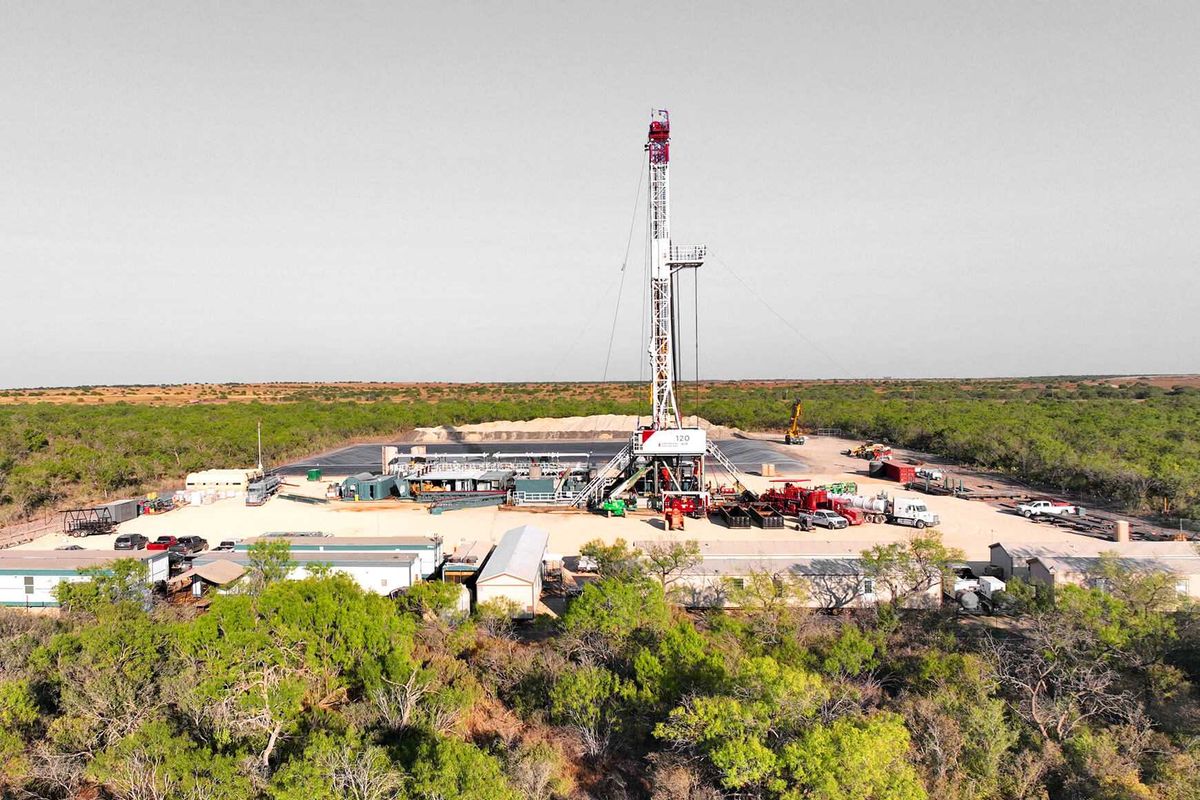
Twelve local startups have joined Greentown Houston, along with others from around the world. Photo courtesy Greentown Labs.

More than 40 climatetech startups joined the Greentown Labs Houston community in the second half of 2025. Twelve hail from the Bayou City.

The companies are among a group of nearly 70 that joined the climatetech incubator, which is co-located in Houston and Boston, in Q3 and Q4.

The new companies that have joined the Houston incubator specialize in a variety of clean energy applications, from green hydrogen-producing water-splitting cycles to drones that service wind turbines.

The local startups that joined Greentown Houston include:

  • Houston-based Wise Energie, which delivers turnkey microgrids that blend vertical-axis wind, solar PV, and battery storage into a single, silent system.
  • The Woodlands-based Resollant, which is developing compact, zero-emissions hydrogen and carbon reactors to provide low-cost, scalable clean hydrogen and high-purity carbon for the energy and manufacturing sectors.
  • Houston-based ClarityCastle, which designs and manufactures modular, soundproof work pods that replace traditional drywall construction with reusable, low-waste alternatives made from recycled materials.
  • Houston-based WattSto Energy, which manufactures vanadium redox flow batteries to deliver long-duration storage for both grid-scale projects and off-grid microgrids.
  • Houston-based AMPeers, which delivers advanced, high-temperature superconductors in the U.S. at a fraction of traditional costs.
  • Houston-based Biosimo, which is developing bio-based platform chemicals, pioneering sustainable chemistry for a healthier planet and economy.
  • Houston-based Ententia, which offers purpose-built, generative AI for industry.
  • Houston-based GeoKiln Energy Innovation, which is developing a new way to produce clean hydrogen by accelerating natural geologic reactions in iron-rich rock formations using precision electrical heating.
  • Houston-based Timbergrove, which builds AI and IoT solutions that connect and optimize assets—boosting visibility, safety, and efficiency.
  • Houston-based dataVediK, which combines energy-domain expertise with advanced machine learning and intelligent automation to empower organizations to achieve operational excellence and accelerate their sustainability goals.
  • Houston-based Resonant Thermal Systems, which uses a resonant energy-transfer (RET) system to extract critical minerals from industrial and natural brines without using membranes or grid electricity.
  • Houston-based Torres Orbital Mining (TOM),which develops autonomous excavation systems for extreme environments on Earth and the moon, enabling safe, data-driven resource recovery and laying the groundwork for sustainable off-world industry.

Other startups from around the world joined the Houston incubator in the same time period, including:

More than 100 startups joined Greentown this year, according to an end-of-year reflection shared by Greentown CEO Georgina Campbell Flatter.

Flatter joined Greentown in the top leadership role in February 2025. She succeeded former CEO and president Kevin Knobloch, who stepped down in July 2024.

"I moved back to the United States in March 2025 after six years overseas—2,000 miles, three children, and one very patient husband later. Over these months, I’ve had the chance to hear from the entrepreneurs, industry leaders, investors, and partners who make this community thrive. What I’ve experienced has left me brimming with urgent optimism for the future we’re building together," she said in the release.

According to Flatter, Greentown alumni raised more than $2 billion this year and created more than 3,000 jobs.

"Greentown startups and ecosystem leaders—from Boston, Houston, and beyond—are showing that we can move further and faster together. That we don’t have to choose between more energy or lower emissions, or between increasing sustainability and boosting profit. I call this the power of 'and,'" Flatter added. "We’re working for energy and climate, innovation and scale, legacy industry and startups, prosperity for people and planet. The 'and' is where possibility expands."

Ad Placement 300x100
Ad Placement 300x600

CultureMap Emails are Awesome

Houston researchers propose model to scale e-waste recycling

critical research

The “missing link” in critical minerals may have been in our junk drawers all along, according to new research from the University of Houston.

Jian Shi, an associate professor in the UH Cullen College of Engineering, and his team have unveiled a new supply chain model that aims to make e-waste economically viable and could help make large-scale recycling possible.

Shi, along with professor Kailai Wang and graduate researcher Chuyue Wang, published the work in a recent issue of Nature. Their study outlines how gold, lithium and cobalt from discarded electronics can be kept circulating in the U.S. through the process of “urban mining.” It was supported by the U.S. Department of Energy’s Office of Energy Efficiency and Renewable Energy (EERE) through the Vehicle Technologies Office.

The team’s research found that e-waste is the fastest-growing solid waste stream in the world. When waste from smartphones or tablets is left unmanaged, the devices can leak hazardous waste and pose significant fire risks due to aging batteries. Additionally, when they are shipped off to foreign landfills, the U.S. loses the potential to recycle or reuse the critical minerals left inside.

“A lot of people have iPads or old iPhones sitting in their drawers right now, and that’s a waste of a critical resource,” Shi said in a news release. “Urban mining allows us to extract the same high-value materials found in traditional mines without the environmental destruction. More importantly, it helps secure our domestic supply chain for the technologies of tomorrow.”

According to UH, recycling e-waste has not succeeded in the U.S. due to a fragmented recycling system, in which manufacturers, collectors and recyclers operate separately, driving up costs.

The UH team's research looks to change that.

In the study, the researchers modeled streamlined recycling efforts by mapping the interactions between manufacturers and independent recycling markets. Their dual-channel closed-loop supply chain (CLSC) model identified how these players can transition from competitors to partners, which can distribute profits more equitably and make recycling efforts more financially attractive.

According to UH, the research has particular significance due to the growing demand for electronic vehicles and their batteries.

“We can improve the performance of the entire recycling ecosystem and make the profit distribution more balanced,” Wang said in the release. “This ensures that the materials we need for EVs and advanced electronics stay right here in the U.S.”

“By making recycling work at scale, we aren’t just cleaning up waste,” Shi added. “We’re building a foundation that benefits both our national security and our economy.”

1PointFive signs latest deal, shares update on $1.3B carbon removal project

DAC deal

Houston-based 1PointFive, a subsidiary of Occidental Petroleum Corp., has secured another buyer of carbon dioxide removal credits for its $1.3 billion STRATOS project as it moves toward operation.

Bain & Company, a Boston-based consulting firm, has agreed to purchase 9,000 metric tons of carbon dioxide removal (CDR) credits from the direct air capture (DAC) facility over three years, according to a news release. DAC technology pulls CO2 from the air at any location, not just where carbon dioxide is emitted.

The deal is Bain's first purchase of DAC removal credits. The company has developed a program that helps clients purchase carbon credits from a range of carbon-removal technologies.

"We are proud to partner with 1PointFive and add them to our portfolio of engineered carbon removal technologies," Sam Israelit, Bain’s chief sustainability officer, said in the news release. "Their track record for developing DAC technology, coupled with their deep understanding of what it takes to deliver large-scale infrastructure projects, uniquely positions them to be a leader in this emerging segment.”

“We believe this agreement demonstrates continued momentum for the solution while supporting the development of vital domestic infrastructure,” Anthony Cottone, president and general manager of 1PointFive, added in the release.

Bain joins others like Microsoft, Amazon, AT&T, Airbus, the Houston Astros and the Houston Texans that have agreed to buy CDR credits from STRATOS.

The Texas-based STRATOS project is being developed through a joint venture with investment manager BlackRock and is designed to capture up to 500,000 metric tons of CO2 per year. The U.S Environmental Protection Agency approved Class VI permits for the project last year.

1PointFive says STRATOS is "progressing through start-up activities." The company shared in a LinkedIn post that Phase 1 of the project is expected to go online in Q2, with Phase 2 ramping up through the remainder of 2026.

Houston researcher develops efficient method to cool AI data centers

cool findings

A University of Houston professor has developed a new cooling method that can remove heat at least three times more effectively from AI data centers than current technologies.

Hadi Ghasemi, a distinguished professor of Mechanical & Aerospace Engineering at UH, published his findings in two articles in the International Journal of Heat and Mass Transfer. The findings solve a critical issue in the growing AI sector, according to UH.

High-powered AI data centers generate huge amounts of heat due to the GPU and operating systems they use with extreme power densities, which introduce complex thermal challenges. Traditionally, cooling methods, like microchannels, which use flow and spray cooling, have had limitations when exposed to extreme heat flux, according to UH.

Ghasemi’s research, however, found a more effective way to design thin-film evaporation structures to release heat from data centers and electronics at record performance.

Ghasem’s solution coupled topology optimization and AI modeling to determine the best shapes for thin film efficiency, ultimately landing on a branch-like structure—resembling a tree.

The model found that the “branches” needed to be about 50 percent solid and 50 percent empty space for optimum efficiency, and that they could sustain high heat fluxes with minimal thermal resistance.

“These structures could achieve high critical heat flux at much lower superheat compared to traditionally studied structures,” Ghasemi said in a news release. “The new structures can remove heat without having to get as hot as previous removal systems.

Ghasemi’s doctoral candidates, Amirmohammad Jahanbakhsh and Saber Badkoobeh Hezave, also worked on the project. The team believes their results show the impact of a physics-aware, AI design and can help ensure reliability, longevity and stability of AI data centers.

“Beyond achieving record performance, these new findings provide fundamental insight into the governing heat-transfer physics and establishes a rational pathway toward even higher thermal dissipation capacities,” Ghasemi added in the release