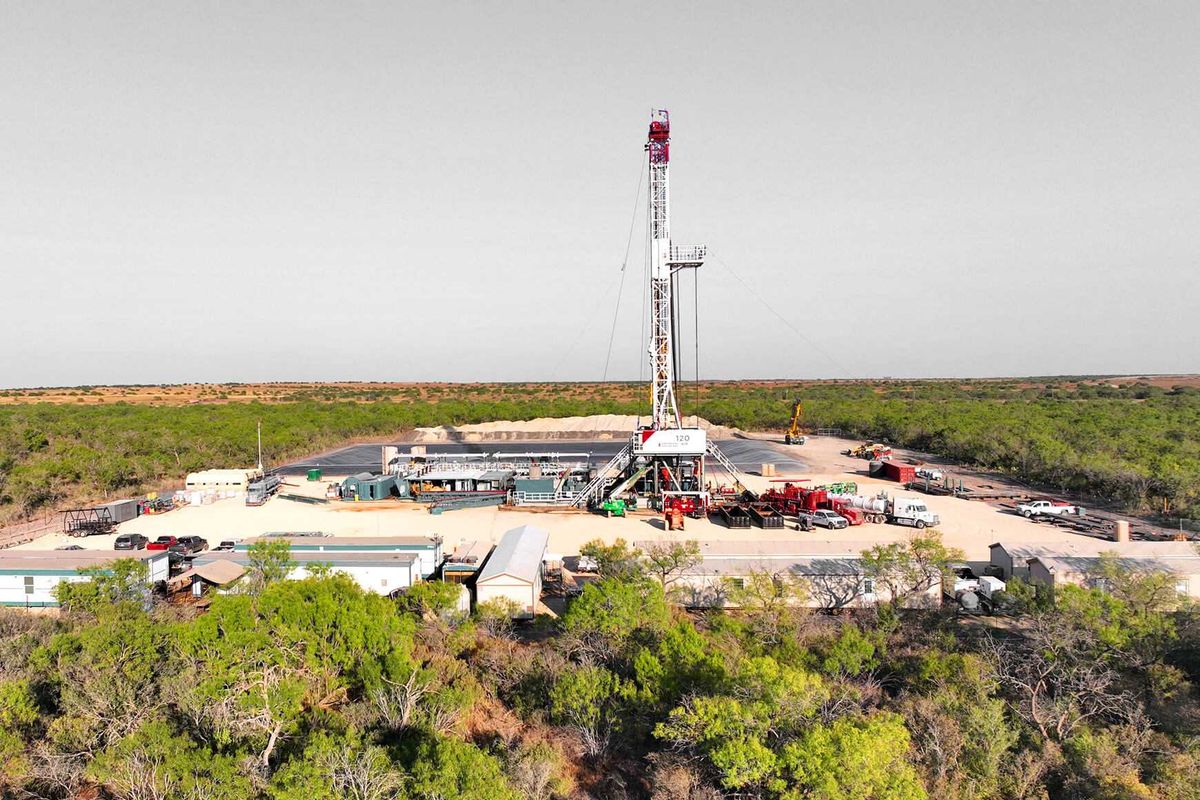




Two Houston companies plan to develop 500 megawatts of floating solar installations in Texas by the end of the decade. Photo via Getty Images.

Diamond Infrastructure Solutions has given Third Pillar Solar exclusive rights to access Diamond’s Texas reservoirs for the possible launch of utility-scale floating solar installations. Both companies are based in the Houston area.

The potential investment in the floating solar project exceeds $700 million, and the project is expected to generate up to 500 megawatts of solar energy.

“Our agreement with Third Pillar marks a bold step forward in how we think about infrastructure and sustainability. By transforming underutilized water surfaces into clean energy assets, Diamond is advancing its commitment to innovation while delivering long-term value,” Ed Noack, CEO of Diamond Infrastructure Solutions, said in the release.

Dow Chemical Co. and a fund directed by Macquarie Asset Management announced the formation of Diamond in 2024. Dow holds a majority stake in Diamond, which owns Gulf Coast infrastructure used by Dow and other industrial customers at five locations in Texas and Louisiana.

The solar installations are scheduled to be built and in operation by the end of the decade.

The agreement between Diamond and Three Pillar “demonstrates the growing appetite for utility-scale energy solutions and highlights how floating solar can enhance and transform the value of existing infrastructure, all while providing cost-competitive energy, preserving agricultural land, reducing evaporation losses, and existing out of public view,” Jaimeet Gulati, CEO of Third Pillar, added in the realease.

Founded in 2022 and majority-owned by renewable energy investor Glentra Capital, Third Pillar develops, owns and operates floating photovoltaic solar installations. The installations are designed to float in places such as wastewater lagoons, reclaimed sand and gravel pits and industrial reservoirs. Third Pillar’s development pipeline contains more than 60 projects.

Ad Placement 300x100
Ad Placement 300x600

CultureMap Emails are Awesome

Rice University spinouts named among 50 top cleantech companies to watch

green team

Two Rice University spinouts, Coflux Purification and DexMat, appear on a new list of the world’s 50 cleantech companies to watch.

Cleantech Group’s 2026 Cleantech 50 to Watch list recognizes early-stage companies “creating groundbreaking solutions to address some of the world’s most pressing environmental and sustainability challenges.”

Cleantech Group, a market research, consulting, and events company, selects the 50 honorees based on insights from analysts and early-stage innovators, along with public nominations.

Destroying “forever chemicals”

Coflux, founded in 2024, offers an onsite treatment system that captures and destroys manufactured “forever chemicals”—per- and polyfluoroalkyl substances—in water and wastewater. It’s a member of Greentown Houston.

Alec Ajnsztajn, CEO; Jeremy Daum, chief technology officer; and Dana Vazquez, chief commercial officer, co-founded Coflux. Ajnsztajn and Daum earned doctoral degrees from Rice, and Vazquez earned an MBA from the university.

Coflux spun out of Rice labs directed by professors Rafael Verduzco and Pulickel Ajayan.

Last year, Coflux received a $175,000 grant from the U.S. Food and Drug Administration’s National Institute of Food and Agriculture. The startup has also raised more than $500,000 in non-dilutive funding, including $80,000 awarded in 2024 by Rice’s One Small Step Grant program.

Promoting an alternative to copper

DexMat, founded in 2015, produces carbon nanotube products such as fibers, yarns, cables, and fabric. The company’s products address demand for materials that can reduce carbon emissions, according to CB Insights.

Its main product, Galvorn, is a copper alternative made of carbon nanotube fibers. CB Insights says Galvorn is engineered to be lighter and stronger than traditional conductive materials like carbon and steel. It’s used in industries such as energy, aerospace, defense, automotive, consumer electronics, and health care.

DexMat emerged from Matteo Pasquali’s Carbon Lab at Rice. Pasquali, co-founder of DexMat, co-invented the company’s technology with the late Nobel Prize-winning chemist Rick Smalley. Smalley was a professor of chemistry, physics, and astronomy at Rice.

Pasquali is a professor of chemical and biomolecular engineering, chemistry, materials science, and nanoengineering at Rice. He co-founded DexMat with Rice graduate Dmitri Tsentalovich, the company’s director of product innovation.

Earlier this year, DexMat raised $5 million in seed funding from Non Sibi Ventures, Governance Partners, Tailwind Futures, BetterWay, Capital Factory, and other investors. The company also secured $3 million in non-dilutive funding.

In 2023, DexMat raised $3 million in a pre-seed round led by Shell Ventures.

TotalEnergies expands solar joint venture with $1.2B portfolio in Texas, Ohio

solar expansion

TotalEnergies, a French company whose U.S. headquarters is in Houston, announced this month that it is expanding its renewable energy joint venture with New York-based investment firm KKR by adding 700 megawatts of utility-scale solar projects.

The deal will add three utility-scale solar assets in Texas and Ohio, which are expected to reach commercial operation by Q1 2027, according to a news release from the company. The portfolio is valued at $1.2 billion.

The 50/50 joint venture between TotalEnergies and KKR currently holds 1.4 gigawatts of renewable energy and will grow to 2.1 gigawatts.

The new deal is expected to close this year. Once completed, TotalEnergies will operate the assets. The electricity generated from the solar projects will be sold to third parties, the company reports.

The companies originally formed the joint venture about a year ago when TotalEnergies sold KKR a 50 percent stake in a North American solar portfolio valued at $1.25 billion. The deal originally included six utility-scale solar assets, primarily located in the U.S.

“TotalEnergies is a renewable energy industry leader globally, and we are thrilled to establish this joint venture with the TotalEnergies team to support their renewables business," Cecilio Velasco, managing director KKR, said in a release last year. “We have long been investors in renewables through our infrastructure platform, having committed more than $23 billion to date in energy transition investments. TotalEnergies’ North American solar portfolio is a great fit for us, representing high-quality renewable energy assets with long term contracts.”

TotalEnergies reports that by June 2026 it held more than 37 gigawatts of gross renewable power generation capacity. It aims to achieve over 100 terawatt-hours of net electricity production by 2030.

The company signed a major power purchase agreement with Google earlier this year. Through the deal, TotalEnergies will supply the tech giant with 1 gigawatt of solar power for its data centers in Texas over a 15-year span.

However, the company also recently redirected nearly $1 billion in capital away from wind energy projects and "decided to renounce offshore wind development in the United States." Read more here.