Texas continues to embrace the controversial digital currency. Photo by Pierre Borthiry - Peiobty on Unsplash

Texas has launched its new cryptocurrency reserve with a $5 million purchase of Bitcoin as the state continues to embrace the volatile and controversial digital currency.

The Texas Comptroller’s Office confirmed the purchase was made last month as a “placeholder investment” while the office works to contract with a cryptocurrency bank to manage its portfolio.

The purchase is one of the first of its kind by a state government, made during a year where the price of Bitcoin has exploded amid the embrace of the digital currency by President Donald Trump’s administration and the rapid expansion of crypto mines in Texas.

“The Texas Legislature passed a bold mandate to create the nation’s first Strategic Bitcoin Reserve,” acting Comptroller Kelly Hancock wrote in a statement. “Our goal for implementation is simple: build a secure reserve that strengthens the state’s balance sheet. Texas is leading the way once again, and we’re proud to do it.”

The purchase represents half of the $10 million the Legislature appropriated for the strategic reserve during this year’s legislative session, but just a sliver of the state’s $338 billion budget.

However, the purchase is still significant, making Texas the first state to fund a strategic cryptocurrency reserve. Arizona and New Hampshire have also passed laws to create similar strategic funds but have not yet purchased cryptocurrency.

Wisconsin and Michigan made pension fund investments in cryptocurrency last year.

The Comptroller’s office purchased the Bitcoin the morning of Nov. 20 when the price of a single bitcoin was $91,336, according to the Comptroller’s office. As of Friday afternoon, Bitcoin was worth slightly less than the price Texas paid, trading for $89,406.

University of Houston energy economist Ed Hirs questioned the state’s investment, pointing to Bitcoin’s volatility. That makes it a bad investment of taxpayer dollars when compared to more common investments in the stock and bond markets, he said.

“The ordinary mix [in investing] is one that goes away from volatility,” Hirs said. “The goal is to not lose to the market. Once the public decides this really has no intrinsic value, then it will be over, and taxpayers will be left holding the bag.”

The price of Bitcoin is down significantly from an all-time high of $126,080 in early October.

Lee Bratcher, president of the Texas Blockchain Council, argued the state is making a good investment because the price of Bitcoin has trended upward ever since it first launched in early 2009.

“It’s only a 16-year-old asset, so the volatility, both in the up and down direction, will smooth out over time,” Bratcher said. “We still want it to retain some of those volatility characteristics because that’s how we could see those upward moves that will benefit the state’s finances in the future.”

Bratcher said the timing of the state’s investment was shrewd because he believes it is unlikely to be valued this low again.

The investment comes at a time that the crypto industry has found a home in Texas.

Rural counties have become magnets for crypto mines ever since China banned crypto mining in 2021 and Gov. Greg Abbott declared “Texas is open for crypto business” in a post on social media.

The state is home to at least 27 Bitcoin facilities, according to the Texas Blockchain Council, making it the world’s top crypto mining spot. The two largest crypto mining facilities in the world call Texas home.

The industry has also come under criticism as it expands.

Critics point to the industry’s significant energy usage, with crypto mines in the state consuming 2,717 megawatts of power in 2023, according to the comptroller’s office. That is enough electricity to power roughly 680,000 homes.

Crypto mines use large amounts of electricity to run computers that run constantly to produce cryptocurrencies, which are decentralized digital currencies used as alternatives to government-backed traditional currencies.

A 2023 study by energy research and consulting firm Wood Mackenzie commissioned by The New York Times found that Texans’ electric bills had risen nearly 5%, or $1.8 billion per year, due to the increase in demand on the state power grid created by crypto mines.

Residents living near crypto mines have also complained that the amount of job creation promised by the facilities has not materialized and the noise of their operation is a nuisance.

“Texas should be reinvesting Texan’s tax money in things that truly bolster the economy long term, living wage, access to quality healthcare, world class public schools,” said state Sen. Molly Cook, D-Houston, who voted against the creation of the strategic fund. “Instead it feels like they’re almost gambling our money on something that is known to be really volatile and has not shown to be a tide that raises all boats.”

State Sen. Charles Schwertner, R-Georgetown, who authored the bill that created the fund, said at the time it passed that it will allow Texas to “lead and compete in the digital economy.”

___

This story was originally published by The Texas Tribune and distributed through a partnership with The Associated Press.
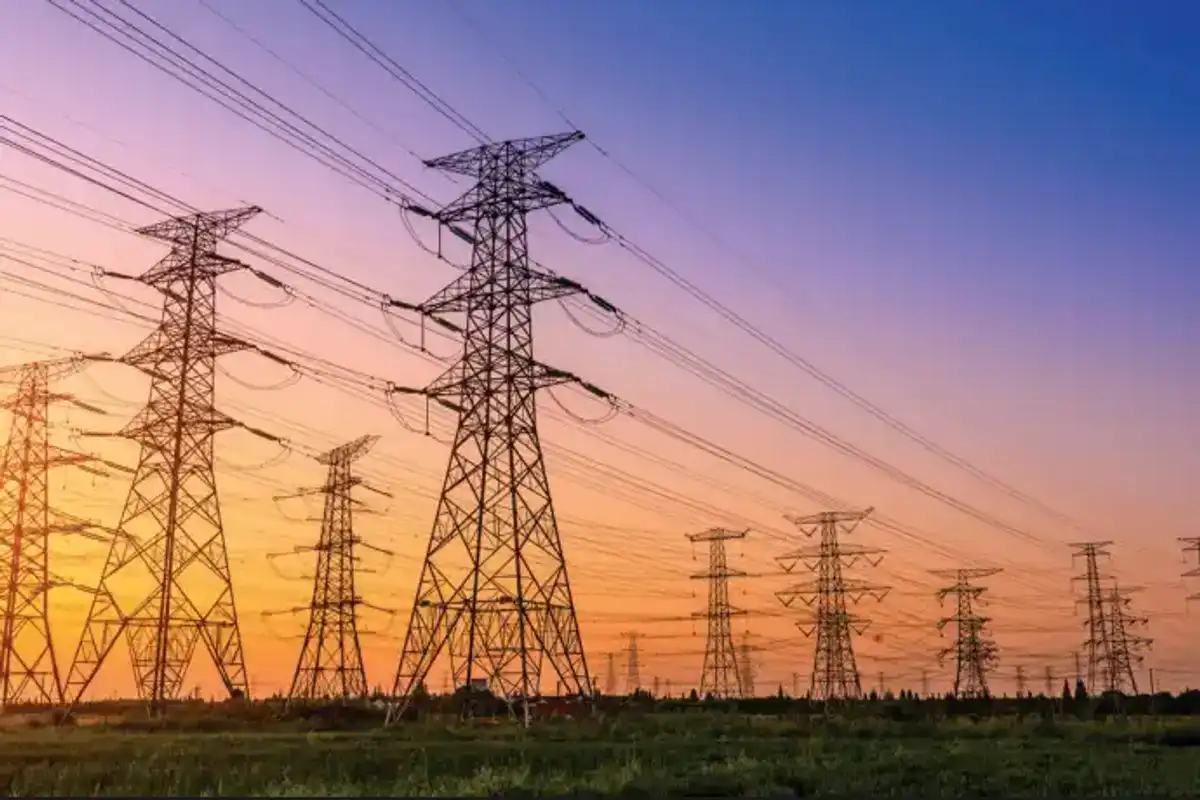

Texas legislators carved out $715 million for nuclear, semiconductor and other economic development projects in the 2025 session. Photo via Getty Images

Here's how Houston's energy and innovation sectors fared in the 2025 Texas legislative session

bills, bills, bills

The Greater Houston Partnership is touting a number of victories during the recently concluded Texas legislative session that will or could benefit the Houston area. They range from millions of dollars for energy projects to billions of dollars for dementia research.

“These wins were only possible through deep collaboration, among our coalition partners, elected officials, business and community leaders, and the engaged members of the Partnership,” according to a partnership blog post. “Together, we’ve demonstrated how a united voice for Houston helps drive results that benefit all Texans.”

In terms of business innovation, legislators carved out $715 million for nuclear, semiconductor, and other economic development projects, and a potential $1 billion pool of tax incentives through 2029 to support research-and-development projects. The partnership said these investments “position Houston and Texas for long-term growth.”

"Nuclear power renaissance"

House Bill 14 (HB 14), for instance, aims to lead a “nuclear power renaissance in the United States,” according to Texas Gov. Greg Abbott’s office. HB 14 establishes the Texas Advanced Nuclear Energy Office, and allocates $350 million for nuclear development and deployment. Two nuclear power plants currently operate in Texas, generating 10 percent of the energy that feeds the Electric Reliability Council Texas (ERCOT) power grid.

“This initiative will also strengthen Texas’ nuclear manufacturing capacity, rebuild a domestic fuel cycle supply chain, and train the future nuclear workforce,” Abbott said in a news release earlier this year.

One of the beneficiaries of Texas’ nuclear push could be Washington, D.C.-based Last Energy, which plans to build 30 micro-nuclear reactors near Abilene to serve power-gobbling data centers across the state. Houston-based Pelican Energy Partners also might be able to take advantage of the legislation after raising a $450 million fund to invest in companies that supply nuclear energy services and equipment.

Reed Clay, president of the Texas Nuclear Alliance, called this legislation “the most important nuclear development program of any state.”

“It is a giant leap forward for Texas and the United States, whose nuclear program was all but dead for decades,” said Clay. “With the passage of HB 14 and associated legislation, Texas is now positioned to lead a nuclear renaissance that is rightly seen as imperative for the energy security and national security of the United States.”

Infrastructure

In the infrastructure arena, state lawmakers:

  • Approved $265 million for Houston-area water and flood mitigation projects, including $100 million for the Lynchburg Pump Station.
  • Created the Lake Houston Dredging and Maintenance District.
  • Established a fund for the Gulf Coast Protection District to supply $550 million for projects to make the coastline and ship channel more resilient.

Dementia institute

One of the biggest legislative wins cited by the Greater Houston Partnership was passage of legislation sponsored by Sen. Joan Huffman, a Houston Republican, to provide $3 billion in funding over 10 years for the Dementia Prevention and Research Institute of Texas. Voters will be asked in November to vote on a ballot initiative that would set aside $3 billion for the new institute.

The dementia institute would be structured much like the Cancer Prevention and Research Institute of Texas (CPRIT), a state agency that provides funding for cancer research in the Lone Star State. Since its founding in 2008, CPRIT has awarded nearly $3.9 billion in research grants.

“By establishing the Dementia Prevention and Research Institute of Texas, we are positioning our state to lead the charge against one of the most devastating health challenges of our time,” Huffman said. “With $3 billion in funding over the next decade, we will drive critical research, develop new strategies for prevention and treatment, and support our healthcare community. Now, it’s up to voters to ensure this initiative moves forward.”

More than 500,000 Texans suffer from some form of dementia, including Alzheimer’s disease, according to Lt. Gov. Dan Patrick.

“With a steadfast commitment, Texas has the potential to become a world leader in combating [dementia] through the search for effective treatments and, ultimately, a cure,” Patrick said.

Funding for education

In the K-12 sector, lawmakers earmarked an extra $195 million for Houston ISD, $126.7 million for Cypress-Fairbanks ISD, $103.1 million for Katy ISD, $80.6 million for Fort Bend ISD, and $61 million for Aldine ISD, the partnership said.

In higher education, legislators allocated:

  • $1.17 billion for the University of Houston College of Medicine, University of Texas Health Science Center at Houston, UT MD Anderson Cancer Center, and Baylor College of Medicine.
  • $922 million for the University of Houston System.
  • $167 million for Texas Southern University.
  • $10 million for the Center for Biotechnology at San Jacinto College.
Ad Placement 300x100
Ad Placement 300x600

CultureMap Emails are Awesome

10+ must-attend Houston energy events happening in Q1 2026

Mark Your Calendar

Editor's note: With the new year comes a new slate of must-attend events for those in the Houston energy sector. We've rounded up a host of events to put on your calendar for Q1, including some that you can attend this month. Plus, other premier annual events will return in February and March 2026 and are currently offering early-bird, discounted registration. Book now.

Jan. 7-8 — AAPG Subsurface Energy to Power Workshop

This two-day AAPG workshop explores the expanding role of natural gas, geothermal, hydrogen, lithium, and uranium in accelerating electricity capacity. Participants will examine innovative solutions designed to reduce reliance on long-distance transmission lines, pipelines, and other costly infrastructure. Throughout the workshop, attendees will gain insight into both the technical deployment of subsurface resources and the land, legal, and permitting factors that influence project development.

This event begins Jan. 7 at Norris Conference Center at CityCentre. Register here.

Jan. 19-22 — PPIM 2026

The 38th international Pipeline Pigging & Integrity Management Conference and Exhibition takes place over four days at the George R. Brown Convention Center and the Hilton Americas. This industry forum is devoted exclusively to pigging for pipeline maintenance and inspection, engineering assessment, repair, risk management, and NDE. Two days of courses will take place Jan. 19-20, followed by the conference on Jan. 21-22, and the exhibition running Jan. 20-22. Register here.

Jan. 22 — MicroSeismic - Romancing Energy Forum

This forum will feature raw, unfiltered stories from the pioneers who changed the trajectory of American Shale. Attendees will gain insights into the playbooks, decisions, data, and lessons learned behind the biggest discoveries and engineering triumphs in modern energy. Keynote speakers include Tom and Diane Gates of Gates Ranch.

This event begins at 8 am on Jan. 22 at Norris Conference Center at CityCentre. Register here.

Jan. 22 — Houston Downton Luncheon: Beyond the Barrel: Pricing, Transition, and Geopolitics in 2026

Women's Energy Network Houston Chapter hosts this January lunch and learn featuring guest speaker Ha Nguyen with S&P Global Energy. Nguyen will discuss the global energy outlook for 2026, with a focus on strategic drivers, such as decarbonization and EV adoption, and a look at Houston's crucial role in the future of the U.S. market.

This event begins at 11:30 am on Jan. 22 at The Houston Club. Register here.

Feb. 18-20 — NAPE Summit Week 2026

NAPE is the energy industry’s marketplace for the buying, selling, and trading of prospects and producing properties. NAPE brings together all industry disciplines and companies of all sizes, and in 2026 it will introduce three new hubs — offshore, data centers, and critical minerals — for more insights, access, and networking opportunities. The event includes a summit, exhibition, and more.

This event begins Feb. 18 at George R. Brown Convention Center. Register here.

Feb. 24-26 — 2026 Energy HPC & AI Conference

The 2026 Energy HPC & AI Conference marks the 19th year for the Ken Kennedy Institute to convene experts from the energy industry, academia, and national labs to share breakthroughs for HPC and AI technologies. The conference returns to Houston with engaging speaker sessions, a technical talk program, networking receptions, add-on workshops, and more.

This event begins Feb. 24 at Rice University's BRC. Register here.

Feb. 26 — February Transition on Tap

Mix and mingle at Greentown Labs' first Transition on Tap event of the year. Meet the accelerator's newest startup members, who are working on innovations ranging from methane capture to emissions-free manufacturing processes to carbon management.

This event begins at 5:30 pm on Feb. 26 at Greentown Labs Houston. Register here.

March 2-4 — The Future Energy Summit

The Future Energy Summit is a premier global event bringing together visionaries, industry leaders, and energy experts to shape the future of energy. The second edition of the conference will provide a platform for groundbreaking discussions, cutting-edge technologies, and transformative strategies that will accelerate the energy transition.

This event begins March 2. Register here.

March 10-12 — World Hydrogen & Carbon Americas

S&P Global Energy brings together two leading events — Carbon Management Americas and World Hydrogen North America — to form a new must-attend event for those in the hydrogen and carbon industries. More than 800 senior leaders from across the energy value chain will attend this event featuring immersive roundtable discussions, hands-on training, real-world case studies, and unparalleled networking opportunities.

This event begins March 10 at Marriott Marquis Houston. Register here.

March 23-27 — CERAWeek 2026

CERAWeek 2026 will focus on "Convergence and Competition: Energy, Technology and Geopolitics." The industry's foremost thought leaders will convene in Houston to cultivate relationships and exchange transformative ideas during the annual event. Through the lens of 16 dynamic themes, CERAWeek 2026 will explore breakthroughs, cross-industry connections, and powerful partnerships that are accelerating the transformation of the global energy system.

This event begins March 23. Register here.

Japanese company launches solar module manufacturing at Houston-area plant

solar plant

A local subsidiary of a Japanese solar equipment manufacturer recently began producing solar modules at a new plant in Humble.

TOYO Co. Ltd.’s TOYO Solar LLC subsidiary can produce 1 gigawatt worth of solar modules per year at a 567,140-square-foot plant it leases in Lovett Industrial’s Nexus North Logistics Park on Greens Road. TOYO Solar’s next phase will accommodate 2.5 gigawatts’ worth of solar module manufacturing. The subsidiary eventually plans to expand manufacturing capacity to 6.5 gigawatts.

For now, TOYO Solar operates only one assembly line at the Humble plant. Once TOYO Solar has five assembly lines up and running, it could employ as many as 750 manufacturing workers there, according to Connect CRE.

TOYO says the plant enlarges its U.S. footprint “to be closer to the majority of its clients, meet the demand for American-made solar panels, and contribute to the growing demand for secure, sustainable energy solutions as demands on the grid continue to rise.”

Last month, TOYO purchased the remaining 24.99 percent stake in TOYO Solar to make it a wholly owned subsidiary. TOYO entered the Houston-area market through its 2024 acquisition of a majority stake in Solar Plus Technology Texas LLC.

Record $9.6M fine for Houston-based co. after Gulf of Mexico oil spill

In the news

Pipeline safety regulators on Monday, January 5, assessed their largest fine ever against the company responsible for leaking 1.1 million gallons of oil into the Gulf off the coast of Louisiana in 2023. But the $9.6 million fine isn’t likely to be a major burden for Third Coast to pay.

This single fine is close to the normal total of $8 million to $10 million in all fines that the Pipeline and Hazardous Materials Safety Administration hands out each year. But Third Coast has a stake in some 1,900 miles of pipelines, and in September, the Houston-based company announced that it had secured a nearly $1 billion loan.

Pipeline Safety Trust Executive Director Bill Caram said this spill “resulted from a company-wide systemic failure, indicating the operator’s fundamental inability to implement pipeline safety regulations,” so the record fine is appropriate and welcome.

“However, even record fines often fail to be financially meaningful to pipeline operators. The proposed fine represents less than 3% of Third Coast Midstream’s estimated annual earnings,” Caram said. “True deterrence requires penalties that make noncompliance more expensive than compliance.”

The agency said Third Coast didn't establish proper emergency procedures, which is part of why the National Transportation Safety Board found that operators failed to shut down the pipeline for nearly 13 hours after their gauges first hinted at a problem. PHMSA also said the company didn't adequately assess the risks or properly maintain the 18-inch Main Pass Oil Gathering pipeline.

The agency said the company “failed to perform new integrity analyses or evaluations following changes in circumstances that identified new and elevated risk factors” for the pipeline.

That echoed what the NTSB said in its final report in June, that “Third Coast missed several opportunities to evaluate how geohazards may threaten the integrity of their pipeline. Information widely available within the industry suggested that land movement related to hurricane activity was a threat to pipelines.”

The NTSB said the leak off the coast of Louisiana was the result of underwater landslides, caused by hazards such as hurricanes, that Third Coast, the pipeline owner, failed to address despite the threats being well known in the industry.

A Third Coast spokesperson said the company has been working to address regulators' concerns about the leak, so it was taken aback by some of the details the agency included in its allegations and the size of the fine.

“After constructive engagement with PHMSA over the last two years, we were surprised to see aspects of the recent allegations that we believe are inaccurate and exceed established precedent. We will address these concerns with the agency moving forward," the company spokesperson said.

The amount of oil spilled in this incident was far less than the 2010 BP oil disaster, when 134 million gallons were released in the weeks following an oil rig explosion, but it could have been much smaller if workers in the Third Coast control room had acted more quickly, the NTSB said.