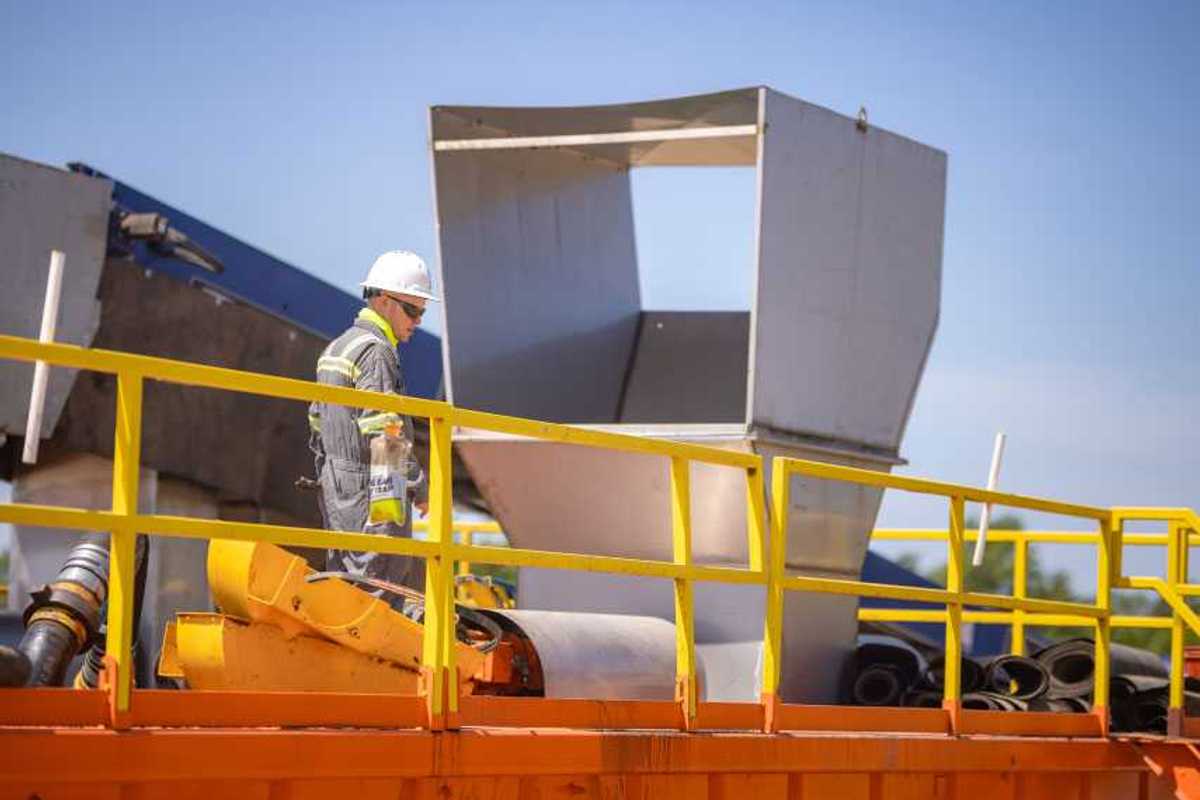
Helix Earth's technology has the potential to cut AC energy use by up to 50 percent. Photo by Sergei A/Pexels

Renewable equipment manufacturer Helix Earth Technologies is one of three Houston-based companies to secure federal funding through the Small Business Innovation Research (SBIR) Phase II grant program in recent months.

The company—which was founded based on NASA technology, spun out of Rice University and has been incubated at Greentown Labs—has received approximately $1.2 million from the National Science Foundation to develop its high-efficiency retrofit dehumidification systems that aim to reduce the energy consumption of commercial AC units. The company reports that its technology has the potential to cut AC energy use by up to 50 percent.

"This award validates our vision and propels our impact forward with valuable research funding and the prestige of the NSF stamp of approval," Rawand Rasheed, Helix CEO and founder, shared in a LinkedIn post. "This award is a reflection our exceptional team's grit, expertise, and collaborative spirit ... This is just the beginning as we continue pushing for a sustainable future."

Two other Houston-area companies also landed $1.2 million in NSF SBIR Phase II funding during the same period:

  • Resilitix Intelligence, a disaster AI startup that was founded shortly after Hurricane Harvey, that works to "reduce the human and economic toll of disasters" by providing local and state organizations and emergency response teams with near-real-time, AI-driven insights to improve response speed, save lives and accelerate recovery
  • Conroe-based Fluxworks Inc., founded in 2021 at Texas A&M, which provides magnetic gear technology for the space industry that has the potential to significantly enhance in-space manufacturing and unlock new capabilities for industries by allowing advanced research and manufacturing in microgravity

The three grants officially rolled out in early September 2025 and are expected to run through August 2027, according to the NSF. The SBIR Phase II grants support in-depth research and development of ideas that showed potential for commercialization after receiving Phase I grants from government agencies.

However, congressional authority for the program, often called "America's seed fund," expired on September 30, 2025, and has stalled since the recent government shutdown. Government agencies cannot issue new grants until Congress agrees on a path forward. According to SBIR.gov, "if no further action is taken by Congress, federal agencies may not be able to award funding under SBIR/STTR programs and SBIR/STTR solicitations may be delayed, cancelled, or rescinded."
Ad Placement 300x100
Ad Placement 300x600

CultureMap Emails are Awesome

Syzygy inks long-term offtake agreement for first commercial SAF plant

fuel deal

Houston-based Syzygy Plasmonics has secured a six-year official offtake agreement for the entire production volume of its first commercial-scale biogas-to-sustainable aviation fuel project in Uruguay, known as NovaSAF-1.

SP Developments Uruguay S.A., a subsidiary of Syzygy, entered into the agreement with Singapore-based commodity company Trafigura, according to a news release. There is also an option for Trafigura to purchase additional volumes from future Syzygy projects.

The first deliveries from the landmark SAF facility are expected in 2028.

“This agreement marks a critical step in our journey toward commercial-scale impact and disrupting the SAF market,” Trevor Best, CEO of Syzygy Plasmonics, said in the news release. “With a signed offtake agreement from a global leader like Trafigura, and after having successfully completed FEED engineering in December, we're now ready to secure financing for the construction of NovaSAF-1 and move our technology from potential into production."

The NovaSAF-1 project will be located in Durazno, Uruguay. The facility will be the world's first electrified biogas-to-SAF facility producing renewable and advanced compliant SAF. Syzygy estimates that the project will produce over 350,000 gallons of SAF annually. The facility is expected to produce SAF with at least an 80 percent reduction in carbon intensity compared to Jet A fuel.

It’s backed by Uruguay’s largest dairy and agri-energy operations, Estancias del Lago. It will also work with Houston-based Velocys, which will provide Fischer-Tropsch technology for the project. Fischer-Tropsch technology converts synthesis gas into liquid hydrocarbons, which is key for producing synthetic fuels like SAF.

ERCOT to capture big share of U.S. solar power growth through 2027

solar growth

Much of the country’s growth in utility-scale solar power generation will happen in the grid operated by the Electric Reliability Council of Texas (ERCOT), according to a new forecast.

The U.S. Energy Information Administration (EIA) predicts that solar power supplied to the ERCOT grid will jump from 56 billion kilowatt-hours in 2025 to 106 billion kilowatt-hours by the end of 2027. That would be an increase of 89 percent.

In tandem with the rapid embrace of solar power, EIA anticipates battery storage capacity for ERCOT will expand from 15 gigawatts in 2025 to 37 gigawatts by the end of 2027, or 147 percent.

EIA expects utility-scale solar to be the country’s fastest-growing source of power generation from 2025 to 2027. It anticipates that this source will climb from 290 billion kilowatt-hours last year to 424 billion kilowatt-hours next year, or 46 percent.

Based on EIA’s projections, ERCOT’s territory would account for one-fourth of the country’s utility-scale solar power generation by the end of next year.

“Solar power and energy storage are the fastest-growing grid technologies in Texas, and can be deployed more quickly than any other generation resource,” according to the Texas Solar + Storage Association. “In the wholesale market, solar and storage are increasing grid reliability, delivering consumer affordability, and driving tax revenue and income streams into rural Texas.”