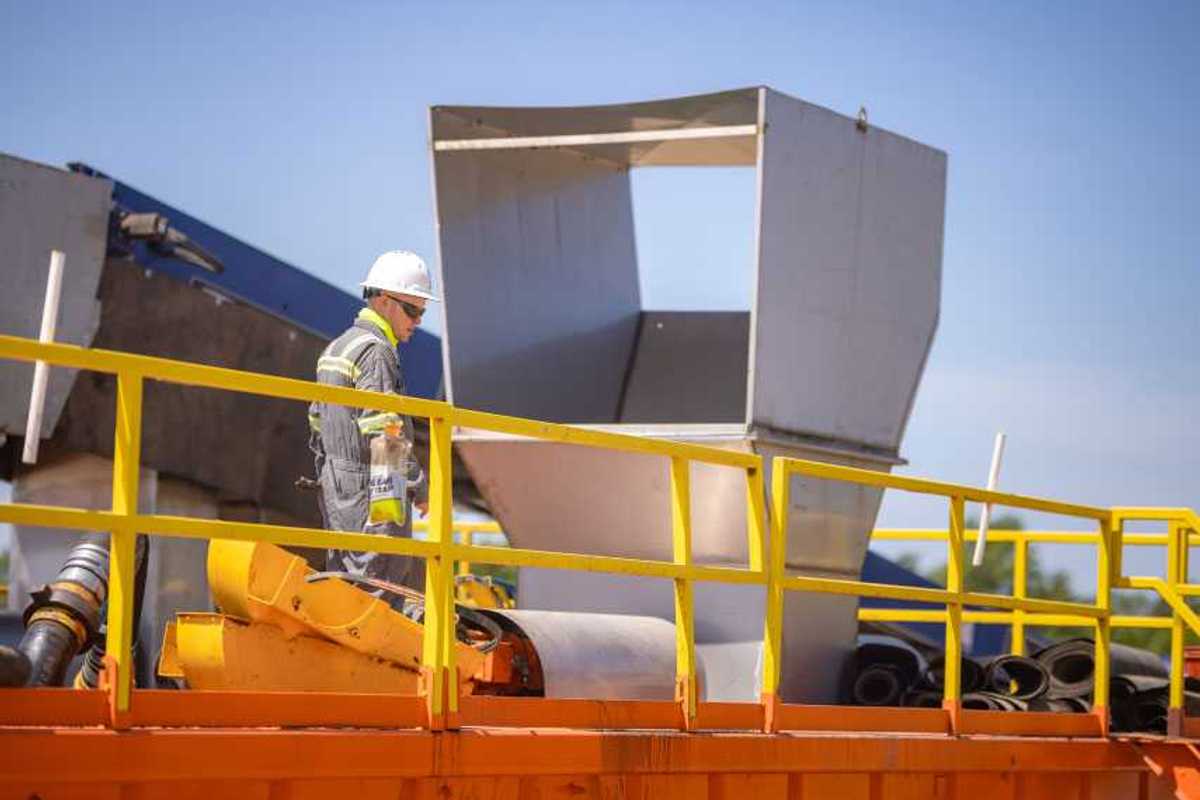
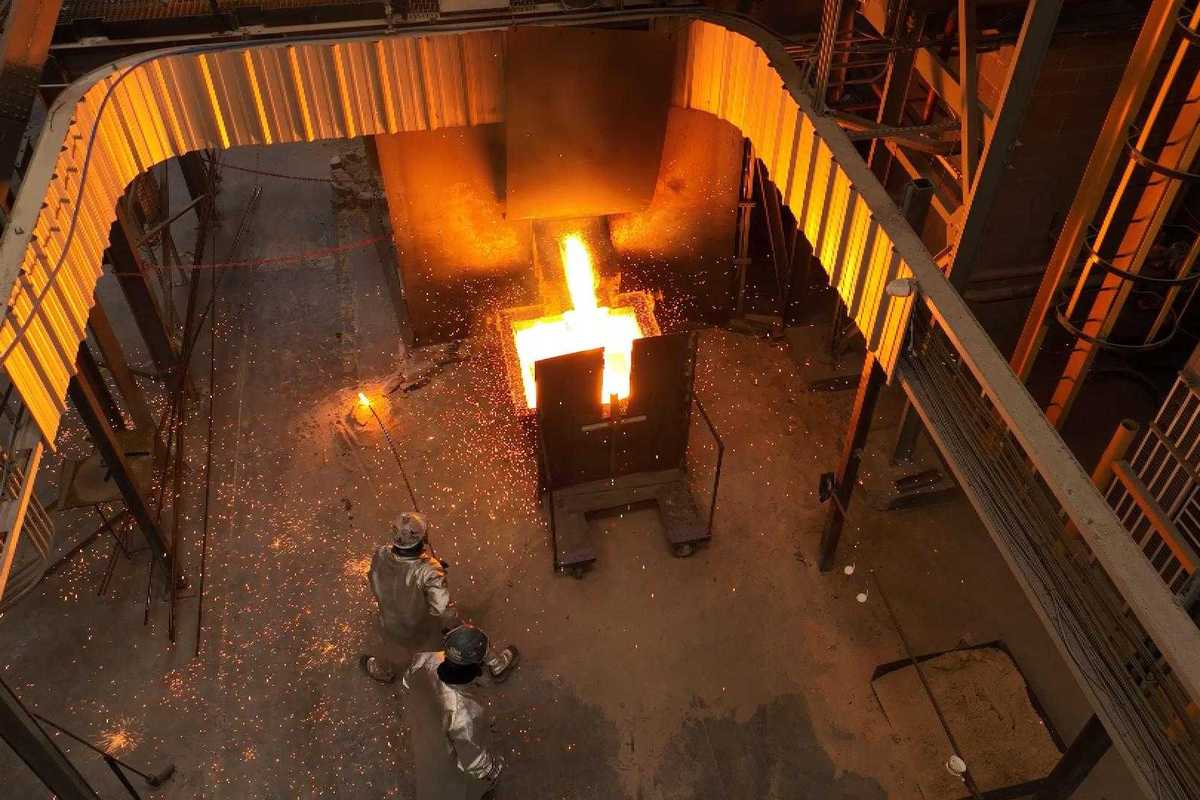
Chevron operates nine biodiesel plants around the world. Photo via Unsplash.

As Chevron Chairman and CEO Mike Wirth surveys the renewable energy landscape, he sees the most potential in biofuels.

At a recent WSJ CEO Council event, Wirth put a particular emphasis on biofuels—the most established form of renewable energy—among the mix of low-carbon energy sources. According to Biofuels International, Chevron operates nine biorefineries around the world.

Biofuels are made from fats and oils, such as canola oil, soybean oil and used cooking oil.

At Chevron’s renewable diesel plant in Geismar, Louisiana, a recent expansion boosted annual production by 278 percent — from 90 million gallons to 340 million gallons. To drive innovation in the low-carbon-fuels sector, Chevron opened a technology center this summer at its renewable energy campus in Ames, Iowa.

Across the board, Chevron has earmarked $8 billion to advance its low-carbon business by 2028.

In addition to biofuels, Chevron’s low-carbon strategy includes hydrogen, although Wirth said hydrogen “is proving to be very difficult” because “you’re fighting the laws of thermodynamics.”

Nonetheless, Chevron is heavily invested in the hydrogen market:

As for geothermal energy, Wirth said it shows “some real promise.” Chevron’s plans for this segment of the renewable energy industry include a 20-megawatt geothermal pilot project in Northern California, according to the California Community Choice Association. The project is part of an initiative that aims to eventually produce 600 megawatts of geothermal energy.

What about solar and wind power?

“We start with things where we have some reason to believe we can create shareholder value, where we’ve got skills and competency, so we didn’t go into wind or solar because we’re not a turbine manufacturer installing wind and solar,” he said in remarks reported by The Wall Street Journal.

In a September interview with The New York Times, Wirth touched on Chevron’s green energy capabilities.

“We are investing in new technologies, like hydrogen, carbon capture and storage, lithium and renewable fuels,” Wirth said. “They are growing fast but off a very small base. We need to do things that meet demand as it exists and then evolve as demand evolves.”

Ad Placement 300x100
Ad Placement 300x600

CultureMap Emails are Awesome

Houston positioned to lead in Carbon Capture Utilization (CCU), study shows

The View From HETI

With global demand for energy production while lowering emissions continues to grow, Houston and the Gulf Coast region are uniquely positioned to lead with carbon capture, utilization and sequestration (CCUS). A new study developed by the Houston Energy Transition Initiative (HETI) in collaboration with Deloitte Consulting explores how the region can transform captured CO₂ into valuable products while supporting continued economic growth and industrial competitiveness.

Key takeaways from the report include:

Houston and the Gulf Coast are uniquely advantaged to utilize and store carbon.As a global hub for chemicals and refining industries, Houston has access to world-class infrastructure, a skilled workforce, and access to global markets. The region also has one of the nation’s highest concentrations of industrial CO2 and creates the opportunity to capture waste material streams to deliver lower carbon intensity products that continue to deliver economic benefits to the region.

While carbon capture and sequestration (CCS) projects continue to advance, CCU requires coordinated action across policy, infrastructure, technology and market demand to scale successfully. Utilization and sequestration are complementary strategies that support and protect investment deployments. CCS acts as an early foundation while markets and infrastructure evolve toward broader CO₂ utilization, and CCU is essential to developing low-carbon-intensity value chains and products.

“Our collaboration with Deloitte highlights how Houston and the Gulf Coast continue to build on the strengths that have long made our region an energy leader. Houston’s infrastructure, workforce, and industrial ecosystem uniquely position the region to scale CCU,” said Jane Stricker, Senior Vice President, Energy Transition, and Executive Director of HETI. “With supportive policy, continued innovation, and strong industry partnerships, we can accelerate CCU deployment, create new low-carbon value chains, and ensure Houston remains at the forefront of the global energy transition.”

Download the full report here.

———

This article originally appeared on the Greater Houston Partnership's Houston Energy Transition Initiative blog. HETI exists to support Houston's future as an energy leader. For more information about the Houston Energy Transition Initiative, EnergyCapitalHTX's presenting sponsor, visit htxenergytransition.org.

Houston startup raises $6M to grow AI platform for solar, battery contractors

fresh funding

Houston tech startup Artemis has raised $6 million from 10 investors. The company offers an AI-supported platform that enables solar, battery storage and home improvement contractors to design, sell and finance energy projects.

Long Journey and Copec WIND Ventures co-led the round, with participation from angel investor Scott Banister, Coalition Operators, FJ Labs, Ludlow Ventures, Palm Tree Crew, Plug and Play Ventures, Shrug Capital and Tribeca Ventures.

To help propel growth, the company secured $10 million in financing last year (under its previous name, Monalee) from venture debt and growth credit provider Applied Real Intelligence. As Monalee, the company raised $16 million in venture capital.

The company was founded in 2022 as an installer of solar and battery storage projects. Five years later, the startup used in-house technology to establish its standalone software platform as it began pivoting away from installation. The company recently adopted the Artemis brand name.

Artemis says its platform saves time and money for installers of residential solar, battery storage, and energy projects. The platform combines an AI-powered design tool with embedded financing capabilities and compliance automation to create a single operating system.

The company says its customers report as much as a 72 percent reduction in software costs and up to 98 percent faster turnaround times. Thus far, more than 100 installers are using Artemis’ technology.

“Installers shouldn’t need six tools and a week of back-and-forth to sell a project," Walid Halty, co-founder and CEO of Artemis, said in a press release. “This funding gives us the fuel to scale our mission to compress design, financing, and compliance into a single flow so every installer can operate like a modern energy company. We’re not just speeding up deals, we're modernizing how distributed energy gets built.”

The Artemis platform, now available in the U.S. and soon to be launched in Latin America, caters to home improvement contractors, solar companies, lenders, and utilities.

“Artemis is transforming the complexity of distributed energy into elegant simplicity," added Arielle Zuckerberg, general partner at Long Journey.

Houston researchers propose model to scale e-waste recycling

critical research

The “missing link” in critical minerals may have been in our junk drawers all along, according to new research from the University of Houston.

Jian Shi, an associate professor in the UH Cullen College of Engineering, and his team have unveiled a new supply chain model that aims to make e-waste economically viable and could help make large-scale recycling possible.

Shi, along with professor Kailai Wang and graduate researcher Chuyue Wang, published the work in a recent issue of Nature. Their study outlines how gold, lithium and cobalt from discarded electronics can be kept circulating in the U.S. through the process of “urban mining.” It was supported by the U.S. Department of Energy’s Office of Energy Efficiency and Renewable Energy (EERE) through the Vehicle Technologies Office.

The team’s research found that e-waste is the fastest-growing solid waste stream in the world. When waste from smartphones or tablets is left unmanaged, the devices can leak hazardous waste and pose significant fire risks due to aging batteries. Additionally, when they are shipped off to foreign landfills, the U.S. loses the potential to recycle or reuse the critical minerals left inside.

“A lot of people have iPads or old iPhones sitting in their drawers right now, and that’s a waste of a critical resource,” Shi said in a news release. “Urban mining allows us to extract the same high-value materials found in traditional mines without the environmental destruction. More importantly, it helps secure our domestic supply chain for the technologies of tomorrow.”

According to UH, recycling e-waste has not succeeded in the U.S. due to a fragmented recycling system, in which manufacturers, collectors and recyclers operate separately, driving up costs.

The UH team's research looks to change that.

In the study, the researchers modeled streamlined recycling efforts by mapping the interactions between manufacturers and independent recycling markets. Their dual-channel closed-loop supply chain (CLSC) model identified how these players can transition from competitors to partners, which can distribute profits more equitably and make recycling efforts more financially attractive.

According to UH, the research has particular significance due to the growing demand for electronic vehicles and their batteries.

“We can improve the performance of the entire recycling ecosystem and make the profit distribution more balanced,” Wang said in the release. “This ensures that the materials we need for EVs and advanced electronics stay right here in the U.S.”

“By making recycling work at scale, we aren’t just cleaning up waste,” Shi added. “We’re building a foundation that benefits both our national security and our economy.”