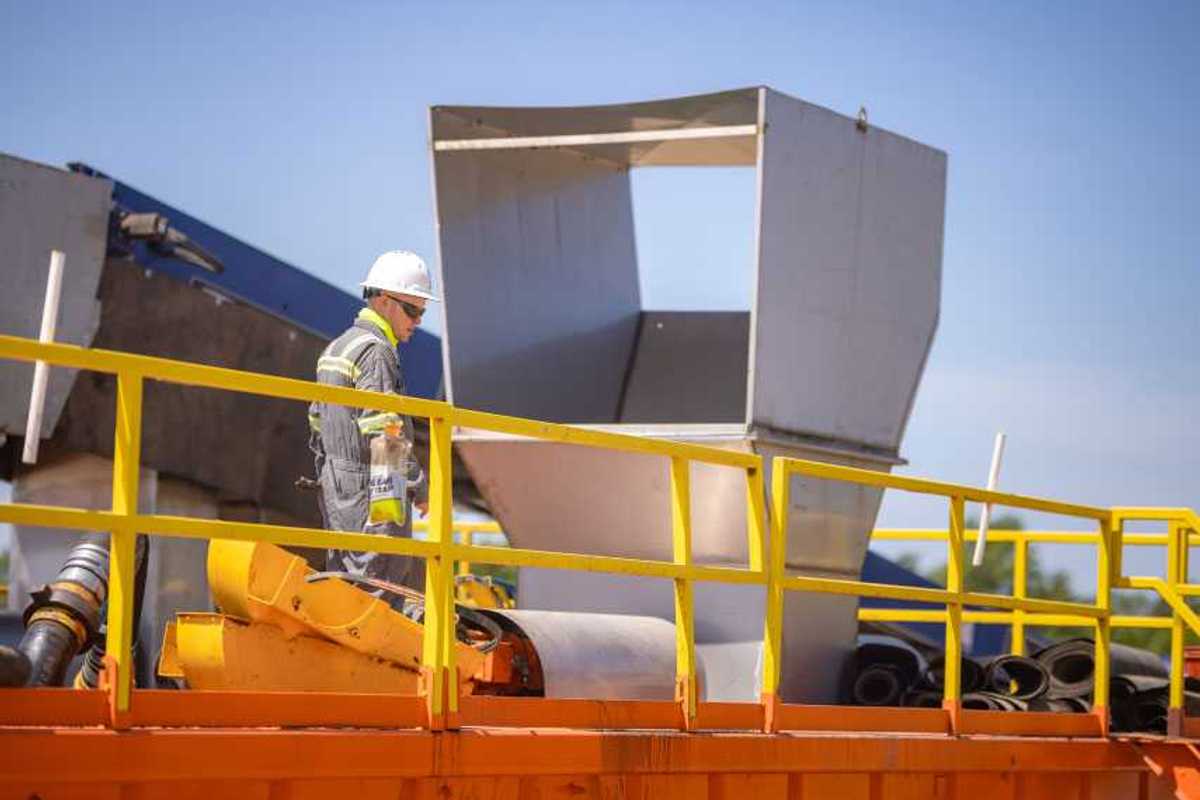
The company says the deal is part of the “next chapter” in energy management. Photo via Unsplash

Houston-based energy management and consulting firm Infinity Power Partners has been acquired by New York City-based Environ Energy, which also offers energy management and consulting services.

The deal creates a new “anchor segment” for Environ in the multifamily market. With the addition of Infinity Power’s roughly 2,000 clients in the multifamily sector, representing more than 1 million multifamily units under contract, Environ now has more than 8,000 U.S. clients in the commercial real estate, healthcare, manufacturing, education and government sectors.

“This acquisition continues to solidify our presence in key energy markets while aligning with founders who share our deep commitment to client success,” Environ CEO Chris Sternberg said in a news release.

Infinity Power co-founders and managing partners Nick Altman and Peter Selber have joined Environ, a portfolio company of investment firm 424 Capital. Altman and Selber founded Infinity Power in 2011.

“We built our business one relationship at a time,” Selber said, “with a strong commitment to the communities we serve. That same dedication is reflected in Environ’s approach — now delivered at scale.”

Altman says the acquisition is part of the “next chapter” in energy management. Energy management services help commercial customers reduce utility bills, improve equipment life, achieve green energy goals, and decrease risk tied to fluctuating energy prices.

Energy management is a culture for continual improvement of energy performance and efficiency that’s integrated within an organization’s normal business practice,” according to the U.S. Office of Energy Efficiency & Renewable Energy.

In all, Environ has made six acquisitions in the past 17 months.

Last year, Environ acquired another Houston-based energy management and consulting firm, CSD Energy Advisors. In that deal, Environ gained nearly 1,000 clients, including several Fortune 500 companies and three large industrial energy users in Texas. As part of the deal, CSD co-founders Andrew Barth and JB Sowyrda joined Environ.

Also last year, Environ purchased Carrollton-based energy advisory firm Rapid Power Management (RPM).

Ad Placement 300x100
Ad Placement 300x600

CultureMap Emails are Awesome

Halliburton Labs adds 3 energy, materials startups to Houston incubator

green team

Three new companies have joined Halliburton Labs, the incubator for early-stage energy and hardtech startups run by Houston energy giant Halliburton.

Halliburton Labs provides the emerging companies with mentorship, industry connections, laboratory access and other resources as they work toward commercialization. The latest companies to join the incubator focus on battery materials, resource recovery and gas separation solutions to address some of the "key bottlenecks in the energy and industrial landscape," according to a news release.

The new members include:

  • Electroflow, a California-based company that produces lithium iron phosphate (LFP) cathode material from lithium brines through its proprietary process. LFPs are critical components in batteries used in electric vehicles, grid storage systems and industrial electrification, according to Halliburton Labs.
  • Osmoses, a Cambridge, Massachusetts-based company that has developed a membrane platform to reduce the energy use, cost and emissions associated with gas separations used in natural gas, hydrogen, helium and other industrial applications
  • SiTration Inc., another Cambridge, Massachusetts-based company that has developed electro-extraction and filtration technologies to recover critical metals like copper directly from mining waste streams more quickly and affordably. Its process has completed successful pilot projects with Tier 1 mining companies in three continents.

"Affordable and reliable molecules are essential building blocks of the energy future. Each company brings a bold, technical solution to a complex industrial challenge. We look forward to helping them scale and deploy their technologies," Andres Cabada, Halliburton Labs managing director, added in the news release.

Halliburton Labs previously added four new members from around the world —Nandina REM, Noon Energy, Proof Energy and Tidal Metals—this spring. Alumni from the incubator include Houston-based companies like NanoTech Materials, which is developing insulation and fireproofing to reduce heat transfer in buildings and outdoor infrastructure; and SolvCor, which develops water additives to improve cooling for data centers and thermal storage.

With the addition of the three new members, the incubator currently supports nine early-stage companies.

Houston companies advance 200MW green ammonia plant in South Texas

coming soon

Two global companies with a major presence in Houston are teaming up on a green ammonia plant in Port of Victoria, Texas.

Topsoe, a Danish company with operations in Houston and Bayport, Texas, has been tapped to provide ammonia synthesis technology for the project being developed by First Ammonia, a New York-based company with offices in Houston and Denmark.

The flagship 200-megawatt plant will use renewable electricity to produce green hydrogen through electrolysis, which will then be combined with nitrogen from a nearby Air Liquide pipeline to make green ammonia, according to First Ammonia. It is expected to serve both U.S. and global markets.

According to First Ammonia, every 100,000 tons of electric ammonia produced avoids approximately 240,000 tons of CO2 emissions compared to fossil ammonia

The Topsoe technology used on site is designed to be able to increase production from 10 percent to 100 percent within 30 minutes, and decrease production at a similar rate, allowing the plant to respond to fluctuations from solar- or wind-based energy sources.

“Topsoe is the world leader in ammonia synthesis, and First Ammonia is delighted to continue our partnership with them in establishing a green ammonia industry in the US and around the world,” Joel Moser, CEO of First Ammonia, said in a news release.

Topsoe has previously signed on to supply its 100-megawatt solid oxide electrolyser (SOEC) to the First Ammonia project. However, the company announced in March that it did not extend the contract after multiple delays.

The First Ammonia project was originally expected to come online by 2027 and to produce 1.1 million tonnes of green ammonia. The project is now expected to reach financial before the end of 2026, with construction slated to begin in 2027 and commercial operations launching by 2029.

“As green ammonia projects move from ambition to execution, operational flexibility becomes increasingly important,” Yassir Ghiyati, chief commercial officer at Topsoe, added in a news release. “We’re proud to support First Ammonia with technology designed to enable efficient and reliable green ammonia production. We look forward to continuing to work with the First Ammonia team to help bring this important U.S project to life.”

NASA and Houston researcher tackle climate-driven water quality risks

water watch

Climate change means far more to public health than living with hotter days. Transformations in our weather are contributing to challenges in accessing safe drinking water in some communities.

One of the most dire situations is along the US–Mexico border. The National Aeronautics and Space Administration (NASA) is seeking to address that issue with its Water Quality Applications program. An 11-researcher project led by a UTHealth Houston School of Public Health faculty member has been selected to participate.

“Drinking water is one of the most fundamental public health protections, but producing safe drinking water involves a delicate balance,” Yun Hang, assistant professor of environmental and occupational health sciences, said in a news release. Her team’s proposal was one of 93 that were submitted for funding through NASA’s Research Opportunities in Space and Earth Sciences (ROSES)-2025 program.

This is the first time that NASA has worked with a team devoted to water quality applications. The group, which includes researchers from across the nation, will use satellite observations of Earth, as well as hydrologic modeling, to potentially anticipate and act on water quality conditions as they change. Challenges addressed over the course of the three-year program, which kicked off in June, might include problems with water quality due to climate variability and increased pressure on water resources.

Hang’s team will focus on a pair of borderlands: Paso del Norte and the Rio Grande Valley.

“Working closely with El Paso Water ensures that our research addresses real operational needs while helping utilities better prepare for climate-related water quality changes and continue providing safe drinking water to communities across the Texas border region,” Hang added in the release.

She and the team will use data gathered by NASA on both past and future Earth-observing missions, which will allow them to track environmental changes that may affect source water quality. Combined with past water treatment records and hydrologic models, the team will also utilize artificial intelligence to develop predictive tools that aim to stop issues before they become larger hurdles to water safety.

Another one of the project’s goals is to create visualization tools and source water summaries that can be utilized by those without scientific expertise. The tools will be produced in English and Spanish to further broaden their accessibility.

The hope is that the materials made by the team will also go far beyond the border, with protocols that can be adapted or adopted by other areas dealing with water quality issues.

---

This article originally appeared on our sister site, InnovationMap.com.