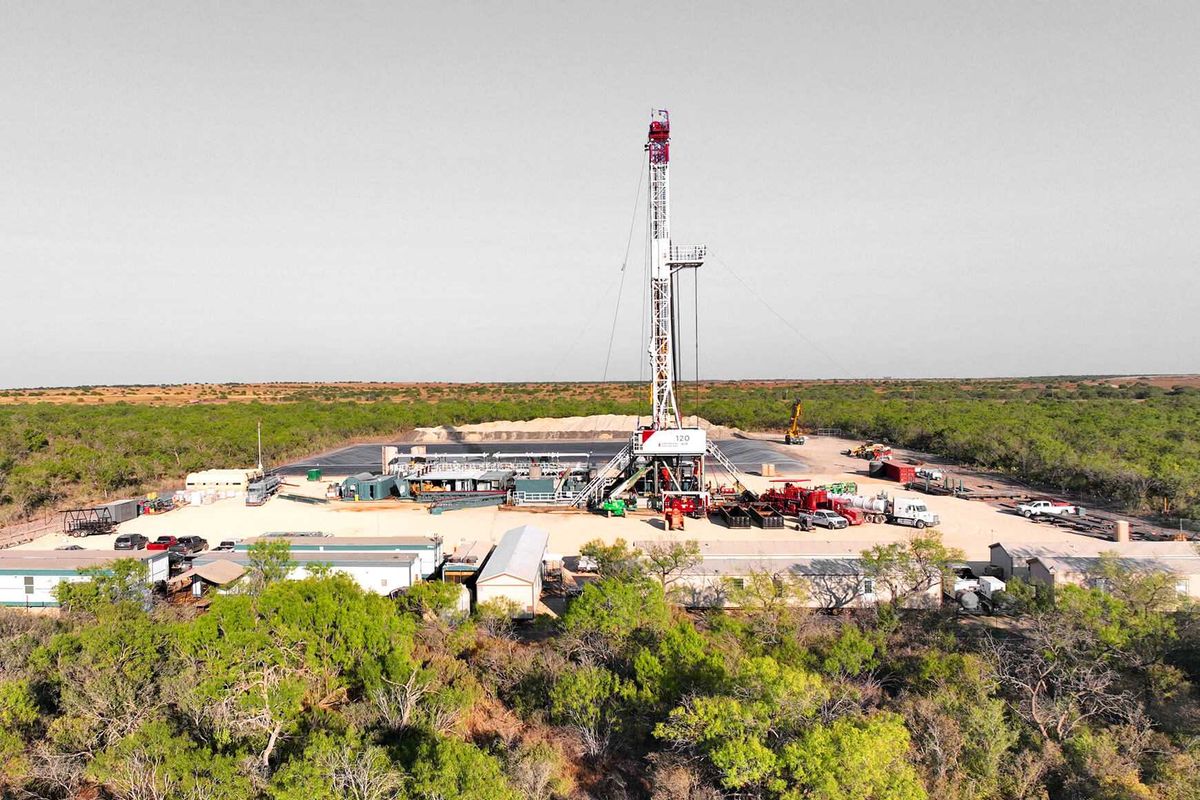
Ontario-based Universal Matter has fresh funding from Houston. Photo via universalmatter.com

A Canadian company based on tech originating out of Rice University closed an equity financing round of up to $20 million thanks to two Houston-based companies.

NewTech Investment Holdings and Westlake Innovations Inc. led Universal Matter's investment round, which the company expand its graphene-based dispersion capacity technology that can be used for servicing customers and prospective customers in its target markets.

“Our continuing interest at NewTech is to seek out and invest in advanced materials companies having high potential to deliver disruptive technologies and environmental benefits within the cleantech sector,” NewTech Investment Holdings Managing Director Guy Hoffman says in a news release. “Universal Matter stands out with its game-changing graphene manufacturing process for producing high quality products that help reduce the carbon footprint in hard- to-abate sectors, such as cement concrete and bitumen asphalt-based applications.

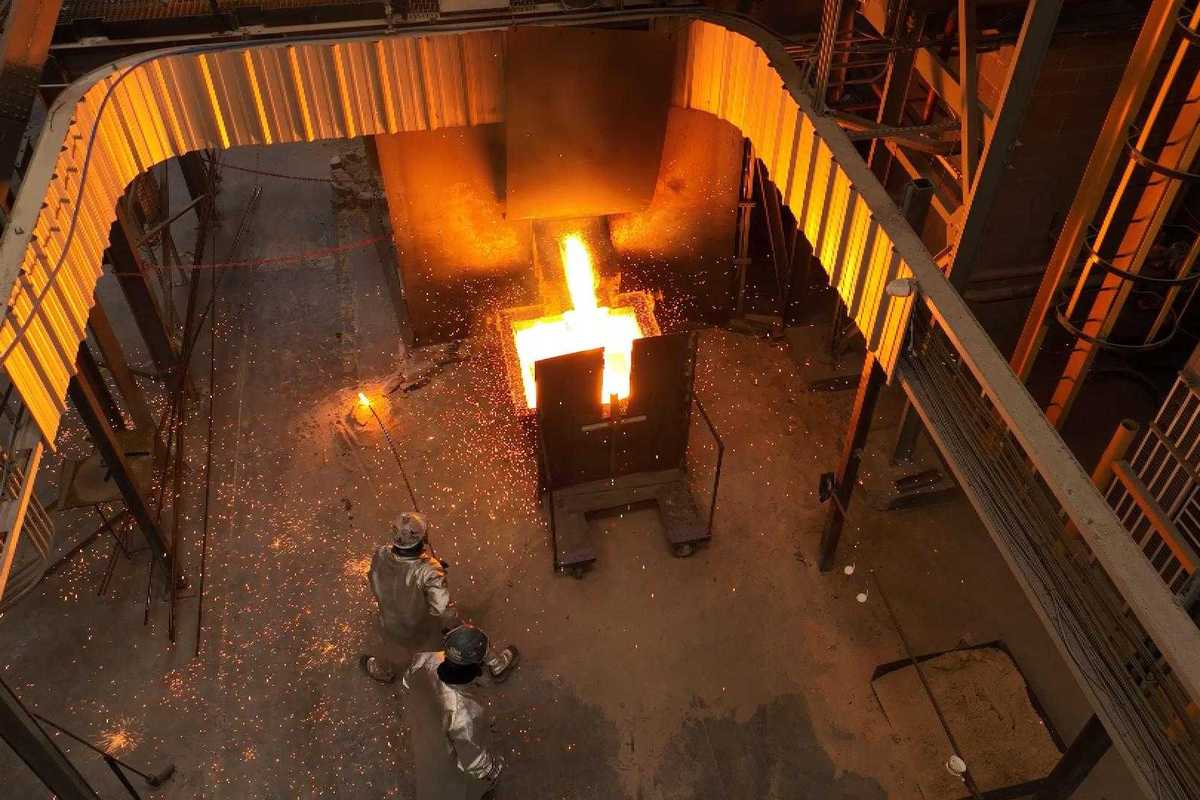
Universal Matter's Flash Joule Heating process technology — originating out of Rice University's James Tour lab by scientist Duy Luong — can upcycle carbon into fully formulated graphene-based products to enhance the performance and sustainability of major industrial materials, per the company's release. Universal Matter developed the complementary product technologies with its Genable graphene-based dispersions that equate to ease-of-use by fabricators in major global markets that include cement/concrete, bitumen asphalt, industrial coatings, automotive tires, and others.

“Graphene is a material with a number of potential performance and sustainability benefits that could apply across a number of Westlake’s ‘Performance & Essential Materials and Housing & Infrastructure Products’ business lines,” Westlake's Senior Vice President and Managing Director John Chao says in the release. “We look forward to working with Universal Matter and its management team as it moves forward on development and commercialization of its flexible technology.”

This year, Universal Matter participated in the Greentown Go Make program put on by Greentown Labs and Shell. During the program, Universal Matter worked with Shell to identify eight potential collaboration areas across upstream carbon feedstocks, downstream end-use applications for the startup’s graphene, and more.

Ad Placement 300x100
Ad Placement 300x600

CultureMap Emails are Awesome

Solar manufacturer expands Houston footprint with new 4 GW factory

coming soon

Houston-based SEG Solar plans to open a new 4-gigawatt solar module manufacturing facility in Cypress.

The facility represents more than a $200 million investment and will raise SEG's total annual U.S. module production capacity to approximately 6 gigawatts, according to a new release. The expansion is part of SEG’s long-term goal of becoming one of the largest 100 percent U.S.-owned module manufacturers.

The new 500,000-square-foot facility will be located on Telge Road and is expected to create 800 new jobs, according to reports.

“This new facility marks an important milestone for SEG,” Timothy Johnson, VP of operations, said in the release. “It will further strengthen our U.S. manufacturing capabilities while supporting ongoing technology innovation. The plant is designed with the flexibility to integrate next-generation technologies, including (heterojunction solar technology) as the industry evolves.”

Commercial operations at the new facility are expected to commence in Q3 2026.

SEG is also developing a 5-gigawatt ingot and wafer manufacturing facility in Indonesia. Construction on the facility is expected to begin in Q2 2026.

In 2024, SEG Solar opened a new $60 million, 250,000-square-foot facility in Houston to house its production workshops, raw material warehouses, administrative offices, finished goods warehouses and supporting infrastructure. Read more here.

Fervo Energy bumps up IPO target to $1.82B

IPO update

Houston-based geothermal power company Fervo Energy is now eyeing an IPO that would raise $1.75 billion to $1.82 billion, up from the previous target of $1.33 billion.

In paperwork filed Monday, May 11 with the U.S. Securities and Exchange Commission, Fervo says it plans to sell 70 million shares of Class A common stock at $25 to $26 per share.

In addition, Fervo expects to grant underwriters 30-day options to buy up to 8.33 million additional shares of Class A common stock. This could raise nearly $200 million.

When it announced the IPO on May 4, Fervo aimed to sell 55.56 million shares at $21 to $24 per share, which would have raised $1.17 billion to $1.33 billion. The initial valuation target was $6.5 billion.

A date for the IPO hasn’t been scheduled. Fervo’s stock will be listed on Nasdaq under the ticker symbol FRVO.

Fervo, founded in 2017, has attracted about $1.5 billion in funding from investors such as Bill Gates-founded Breakthrough Energy Ventures, Google, Mitsubishi Heavy Industries, Devon Energy (which is moving its headquarters to Houston), Tesla co-founder JB Straubel, CalSTRS, Liberty Mutual Investments, AllianceBernstein, JPMorgan, Bank of America and Sumitomo Mitsui Trust Bank.

Fervo’s marquee project is Cape Station in Beaver County, Utah, the world’s largest EGS (enhanced geothermal system) project. The first phase will deliver 100 megawatts of baseload clean power, with the second phase adding another 400 megawatts. The site can accommodate 2 gigawatts of geothermal energy. Fervo holds more than 595,000 leased acres for potential expansion.

Cape Station has secured power purchase agreements for the entire 500-megawatt capacity. Customers include Houston-based Shell Energy North America and Southern California Edison.

Modular nuclear reactor company opens office in Houston

new to hou

The nuclear energy renaissance continues in Texas with an announcement by NuScale Power. The Oregon-based provider of proprietary and innovative advanced small modular reactor (SMR) nuclear technology announced in April it would be opening office space in Houston’s CityCentre.

“Opening this space in Houston underscores our commitment to meeting rising energy demand with safe, scalable nuclear technology,” John Hopkins, NuScale president and CEO, said in a news release. “This move expands our presence in a key market for partners, prospective customers, and stakeholders in addition to positioning us for the future as we focus on the near-term deployment of our industry-leading technology. Texas is leading the way in embracing advanced nuclear for grid resilience and industrial decarbonization, and we’re proud to expand our footprint and capabilities in this important region.”

Interest in nuclear power has been growing in recent years thanks to tensions with oil-rich nations, concerns about man-made climate change from fossil fuels, and the rapidly increasing power needs of data centers. Both Dow and Texas A&M University have announced expanded nuclear power projects in the last year, with an eye of changing the face of Texas’s energy industry through smaller, safer fission reactors.

Enter NuScale, founded in 2007 from technology developed at the University of Oregon. Their modular SMR technology generates 77 megawatts and is one of the only small modular reactors (SMR) to receive design approval from the U.S. Nuclear Regulatory Commission (NRC). These advances have led to runaway success for NuScale, whose stock has risen by more than 1,670 percent since the start of 2024.

The new operations campus in CityCentre is expected to facilitate the movement, installation and coordination of NuScale technology into the various energy systems. Typically, SMRs are used for off-grid installations, desalination operations, mining facilities and similar areas that lack infrastructure. However, the modularity means that they can be easily deployed to a variety of areas.

It comes none too soon. ERCOT projects that Texas data centers alone will require 77,965 megawatts by 2030.