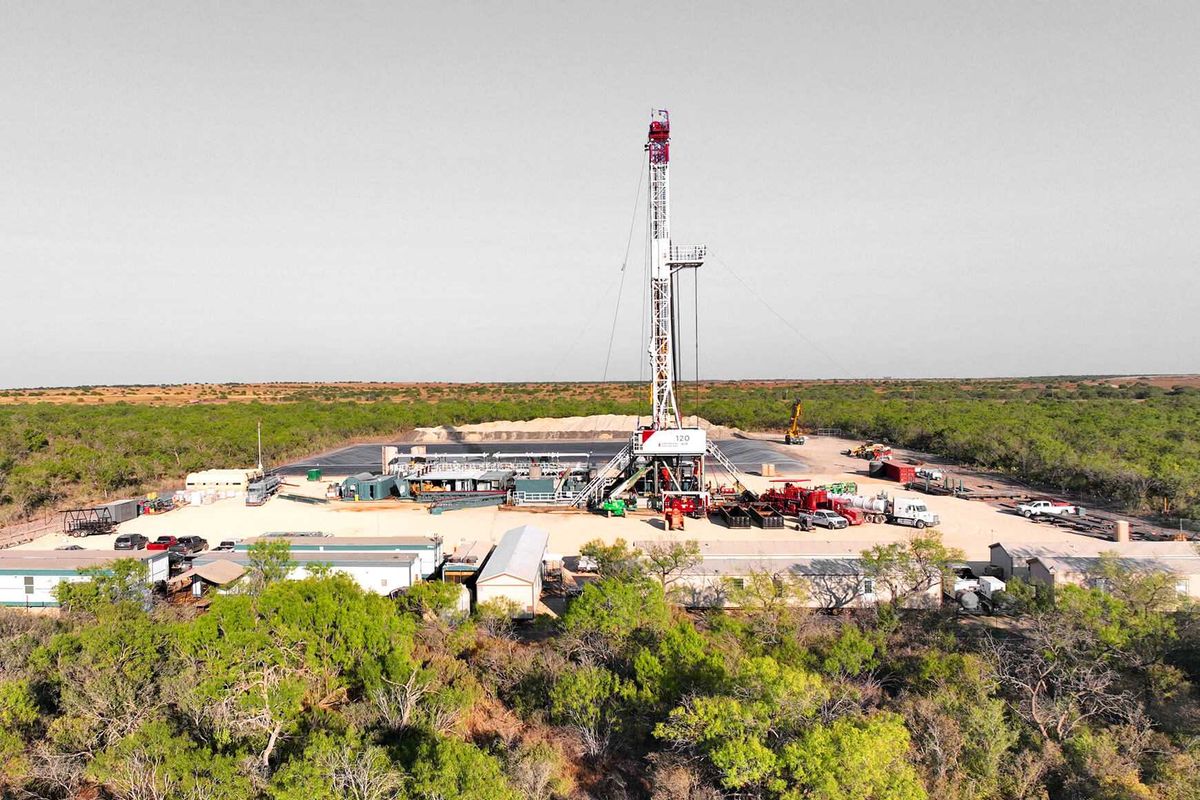
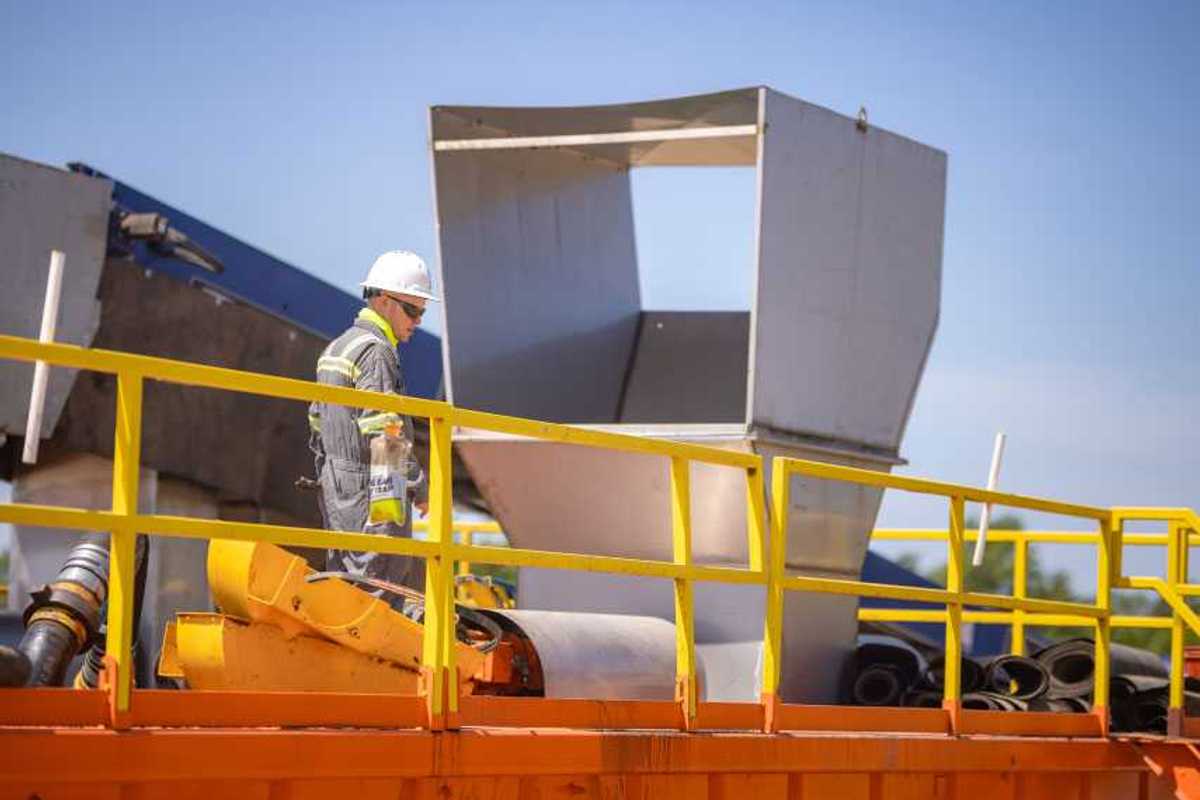
Fervo Energy has landed a coveted spot on MIT Technology Review's list of global climatetech companies to watch. Photo via fervoenergy.com

Houston-based Fervo Energy has received yet another accolade—MIT Technology Review named the geothermal energy startup to its 2025 list of the 10 global climatetech companies to watch.

Fervo, making its second appearance on the third annual list, harnesses heat from deep below the ground to generate clean geothermal energy, MIT Technology Review noted. Fervo is one of four U.S. companies to land on the list.

Fervo “uses fracking techniques to create geothermal reservoirs capable of delivering enough electricity to power massive data centers and hundreds of thousands of homes,” MIT Technology Review said.

MIT Technology Review said it produces the annual list to draw attention to promising climatetech companies that are working to decarbonize major sectors of the economy.

“Though the political and funding landscape has shifted dramatically in the US since the last time we put out this list,” MIT Technology Review added, “nothing has altered the urgency of the climate dangers the world now faces — we need to rapidly curb greenhouse gas emissions to avoid the most catastrophic impacts of climate change.”

In addition to MIT Technology Review’s companies-to-watch list, Fervo has appeared on similar lists published by Inc.com, Time magazine and Climate Insider.

In an essay accompanying MIT Technology Review’s list, Microsoft billionaire Bill Gates said his Breakthrough Energy Ventures investment group has invested in more than 150 companies, including Fervo and another company on the MIT Technology Review list, Redwood Materials.

In his essay, Gates wrote that ingenuity is the best weapon against climate change.

Yet climate technology innovations “offer more than just a public good,” he said. “They will remake virtually every aspect of the world’s economy in the coming years, transforming energy markets, manufacturing, transportation, and many types of industry and food production. Some of these efforts will require long-term commitments, but it’s important that we act now. And what’s more, it’s already clear where the opportunities lie.”

In a recent blog post highlighting Fervo, Gates predicted geothermal will eventually supply up to 20 percent of the world’s electricity, up from his previous estimate of as much as 5 percent.

Fervo is one of the pioneers in geothermal energy. Gates and other investors have pumped $982 million into Fervo since its founding in 2017. With an estimated valuation of $1.4 billion, Fervo has achieved unicorn status, meaning its valuation as a private company exceeds $1 billion.

Aside from Breakthrough Energy Ventures, oilfield services provider Liberty Energy is a Fervo investor. U.S. Energy Secretary Chris Wright was chairman and CEO of Denver-based Liberty Energy before assuming his federal post.

Axios reported on Oct. 1 that Fervo is raising a $300 million series E round, which would drive up the startup’s valuation. News of the $300 million round comes as the company gears up for a possible IPO, according to Axios.

Fervo co-founder and CEO Tim Latimer told Axios this spring that a potential IPO is likely in 2026 or 2027. Ahead of an IPO, the startup is aiming for a $2 billion to $4 billion valuation, Axios reported.

The first phase of Fervo’s marquee Cape Station geothermal energy plant in Utah is scheduled to go online next year, with the second phase set to open in 2028. Once it’s completed, the plant will be capable of generating 500 megawatts of power. This summer, the startup said it secured $205.6 million in capital to finance construction of the plant.

Ad Placement 300x100
Ad Placement 300x600

CultureMap Emails are Awesome

Houston startup raises $6M to grow AI platform for solar, battery contractors

fresh funding

Houston tech startup Artemis has raised $6 million from 10 investors. The company offers an AI-supported platform that enables solar, battery storage and home improvement contractors to design, sell and finance energy projects.

Long Journey and Copec WIND Ventures co-led the round, with participation from angel investor Scott Banister, Coalition Operators, FJ Labs, Ludlow Ventures, Palm Tree Crew, Plug and Play Ventures, Shrug Capital and Tribeca Ventures.

To help propel growth, the company secured $10 million in financing last year (under its previous name, Monalee) from venture debt and growth credit provider Applied Real Intelligence. As Monalee, the company raised $16 million in venture capital.

The company was founded in 2022 as an installer of solar and battery storage projects. Five years later, the startup used in-house technology to establish its standalone software platform as it began pivoting away from installation. The company recently adopted the Artemis brand name.

Artemis says its platform saves time and money for installers of residential solar, battery storage, and energy projects. The platform combines an AI-powered design tool with embedded financing capabilities and compliance automation to create a single operating system.

The company says its customers report as much as a 72 percent reduction in software costs and up to 98 percent faster turnaround times. Thus far, more than 100 installers are using Artemis’ technology.

“Installers shouldn’t need six tools and a week of back-and-forth to sell a project," Walid Halty, co-founder and CEO of Artemis, said in a press release. “This funding gives us the fuel to scale our mission to compress design, financing, and compliance into a single flow so every installer can operate like a modern energy company. We’re not just speeding up deals, we're modernizing how distributed energy gets built.”

The Artemis platform, now available in the U.S. and soon to be launched in Latin America, caters to home improvement contractors, solar companies, lenders, and utilities.

“Artemis is transforming the complexity of distributed energy into elegant simplicity," added Arielle Zuckerberg, general partner at Long Journey.

Houston researchers propose model to scale e-waste recycling

critical research

The “missing link” in critical minerals may have been in our junk drawers all along, according to new research from the University of Houston.

Jian Shi, an associate professor in the UH Cullen College of Engineering, and his team have unveiled a new supply chain model that aims to make e-waste economically viable and could help make large-scale recycling possible.

Shi, along with professor Kailai Wang and graduate researcher Chuyue Wang, published the work in a recent issue of Nature. Their study outlines how gold, lithium and cobalt from discarded electronics can be kept circulating in the U.S. through the process of “urban mining.” It was supported by the U.S. Department of Energy’s Office of Energy Efficiency and Renewable Energy (EERE) through the Vehicle Technologies Office.

The team’s research found that e-waste is the fastest-growing solid waste stream in the world. When waste from smartphones or tablets is left unmanaged, the devices can leak hazardous waste and pose significant fire risks due to aging batteries. Additionally, when they are shipped off to foreign landfills, the U.S. loses the potential to recycle or reuse the critical minerals left inside.

“A lot of people have iPads or old iPhones sitting in their drawers right now, and that’s a waste of a critical resource,” Shi said in a news release. “Urban mining allows us to extract the same high-value materials found in traditional mines without the environmental destruction. More importantly, it helps secure our domestic supply chain for the technologies of tomorrow.”

According to UH, recycling e-waste has not succeeded in the U.S. due to a fragmented recycling system, in which manufacturers, collectors and recyclers operate separately, driving up costs.

The UH team's research looks to change that.

In the study, the researchers modeled streamlined recycling efforts by mapping the interactions between manufacturers and independent recycling markets. Their dual-channel closed-loop supply chain (CLSC) model identified how these players can transition from competitors to partners, which can distribute profits more equitably and make recycling efforts more financially attractive.

According to UH, the research has particular significance due to the growing demand for electronic vehicles and their batteries.

“We can improve the performance of the entire recycling ecosystem and make the profit distribution more balanced,” Wang said in the release. “This ensures that the materials we need for EVs and advanced electronics stay right here in the U.S.”

“By making recycling work at scale, we aren’t just cleaning up waste,” Shi added. “We’re building a foundation that benefits both our national security and our economy.”

1PointFive signs latest deal, shares update on $1.3B carbon removal project

DAC deal

Houston-based 1PointFive, a subsidiary of Occidental Petroleum Corp., has secured another buyer of carbon dioxide removal credits for its $1.3 billion STRATOS project as it moves toward operation.

Bain & Company, a Boston-based consulting firm, has agreed to purchase 9,000 metric tons of carbon dioxide removal (CDR) credits from the direct air capture (DAC) facility over three years, according to a news release. DAC technology pulls CO2 from the air at any location, not just where carbon dioxide is emitted.

The deal is Bain's first purchase of DAC removal credits. The company has developed a program that helps clients purchase carbon credits from a range of carbon-removal technologies.

"We are proud to partner with 1PointFive and add them to our portfolio of engineered carbon removal technologies," Sam Israelit, Bain’s chief sustainability officer, said in the news release. "Their track record for developing DAC technology, coupled with their deep understanding of what it takes to deliver large-scale infrastructure projects, uniquely positions them to be a leader in this emerging segment.”

“We believe this agreement demonstrates continued momentum for the solution while supporting the development of vital domestic infrastructure,” Anthony Cottone, president and general manager of 1PointFive, added in the release.

Bain joins others like Microsoft, Amazon, AT&T, Airbus, the Houston Astros and the Houston Texans that have agreed to buy CDR credits from STRATOS.

The Texas-based STRATOS project is being developed through a joint venture with investment manager BlackRock and is designed to capture up to 500,000 metric tons of CO2 per year. The U.S Environmental Protection Agency approved Class VI permits for the project last year.

1PointFive says STRATOS is "progressing through start-up activities." The company shared in a LinkedIn post that Phase 1 of the project is expected to go online in Q2, with Phase 2 ramping up through the remainder of 2026.