Babur Ozden is the founder and CEO of Aquanta Vision. Photo via LinkedIn

Houston-based climatech startup Aquanta Vision achieved key milestones in 2025 for its enhanced methane-detection app and has its focus set on future funding.

Among the achievements was the completion of the National Science Foundation’s Advanced Sensing and Computation for Environmental Decision-making (ASCEND) Engine. The program, based in Colorado and Wyoming, awarded a total of $3 million in grants to support the commercialization of projects that tackle critical resilience challenges, such as water security, wildfire prediction and response, and methane emissions.

Aquanta Vision’s funding went toward commercializing its NETxTEN app, which automates leak detection to improve accuracy, speed and safety. The company estimates that methane leaks cost the U.S. energy industry billions of dollars each year, with 60 percent of leaks going undetected. Additionally, methane leaks account for around 10 percent of natural gas's contribution to climate change, according to MIT’s climate portal.

Throughout the months-long ASCEND program, Aquanta Vision moved from the final stages of testing into full commercial deployment of NETxTEN. The app can instantly identify leaks via its physics-based algorithms and raw video output of optical gas imaging cameras. It does not require companies to purchase new hardware, requires no human intervention and is universally compatible with all optical gas imaging (OGI) cameras. During over 12,000 test runs, 100 percent of leaks were detected by NETxTEN’s system, according to the company.

The app is geared toward end-users in the oil and gas industry who use OGI cameras to perform regular leak detection inspections and emissions monitoring. Aquanta Vision is in the process of acquiring new clients for the app and plans to scale commercialization between now and 2028, Babur Ozden, the company’s founder and CEO, tells Energy Capital.

“In the next 16 months, (our goal is to) gain a number of key customers as major accounts and OEM partners as distribution channels, establish benefits and stickiness of our product and generate growing, recurring revenues for ourselves and our partners,” he says.

The company also received an investment for an undisclosed amount from Marathon Petroleum Corp. late last year. The funding complemented follow-on investments from Ecosphere Ventures and Odyssey Energy Advisors.

Ozden says the funds will go toward the extension of its runway through the end of 2026. It will also help Aquanta Vision grow its team.

Ozden and Marcus Martinez, a product systems engineer, founded Aquanta Vision in 2023 and have been running it as a two-person operation. The company brought on four interns last year, but is looking to add more staff.

Ozden says the company also plans to raise a seed round in 2027 “to catapult us to a rapid growth phase in 2028-29.”
Ad Placement 300x100
Ad Placement 300x600

CultureMap Emails are Awesome

14 climatech startups join Greentown Houston in first half of 2026

green team

Climatech incubator Greentown Labs reports that 14 startups have joined its Houston community so far this year.

The companies are among 30 new startups to have joined Greentown Houston and Greentown Boston in 2026. Four of the companies are headquartered in Houston.

The startups are working on a range of "hydrogen-powered heavy-duty transport to AI-driven grid interconnection," according to Greentown.

The local startups that joined Greentown Houston include:

  • Houston-based Focis AI, which transforms industrial laser scans into structured asset intelligence to automatically identify, classify and map components in refineries and plants
  • Houston-based Iron Lattice, which develops next-generation memory technology for AI and high-performance computing that improves energy efficiency, endurance and scalability while remaining compatible with existing semiconductor manufacturing
  • Houston-based Orbital Arc, which is developing a new ion engine designed to improve the efficiency and scalability of spacecraft propulsion from low Earth orbit to deep space
  • Houston-based Sustain Energy LLC, which delivers cleaner, lower-cost fuel to industrial customers in pipeline-absent, underserved markets, cutting their energy costs and emissions with no infrastructure investment on their end

Other startups from around the world joined the Houston incubator in the same time period, including:

  • Ankara-based AIS Field, which develops robotic, AI-assisted non-destructive inspection systems, including submersible tank and boiler crawlers
  • San Francisco-based Armada AI, which builds rapidly deployable modular and edge data centers that run on local, stranded, or renewable power
  • San Francisco-based Armeta, which turns complex engineering drawings and legacy documentation into structured, usable data
  • Pittsburgh-based Atlas Robotics, which develops a Physical AI platform that powers autonomous material-handling robots and AI-guided forklifts
  • Ghana-based Cocoa Potash, which transforms high-emissions agricultural waste from cocoa, coconut, and palm-nut into organic potash, fertilizer and renewable energy
  • Israel-based Criaterra, which produces low-carbon, cement-free building materials
  • Italy-based ETAK, which manufactures modular reactors that convert solid waste into clean syngas
  • Kenya-based FelixFusion, which uses its Felix platform to model every grid connection point, including capacity, upgrade costs, and constraints
  • San Diego-based Gemini Energy, which builds next-generation fuel cells for data-center power
  • Tokyo-based Hibot, which develops robotic systems for inspecting and maintaining infrastructure in hazardous, hard-to-access environments
  • Austin-based Sheetak, which designs and manufactures thermoelectric coolers, generators, and assemblies for solid-state cooling and energy harvesting
  • The Netherlands-based ToPerform, which makes AI-powered, non-intrusive fouling sensors that monitor pipelines around the clock and predict the optimal cleaning time

Another 16 startups joined Greentown's Boston incubator. See the full list of new members here.

More than 100 startups joined Greentown last year, according to an end-of-year reflection shared by Greentown CEO Georgina Campbell Flatter. Read more about them here.

Houston cleantech startup secures $134M to develop ‘superhot’ geothermal plant

deep round

Houston-based Quaise Energy, a producer of utility-scale geothermal power, raised $134 million in a Series B round to advance its “superhot” geothermal power plant.

Climate-focused San Francisco-based investment firm Prelude Ventures led the round, with participation from JERA Co., Japan’s largest power generation company, and Idemitsu Kosan, one of Japan’s largest energy companies. Nearly all existing investors, including cleantech-focused investment firm Safar Partners, participated in the round.

“We have backed Quaise since the beginning because we believed accessing superhot rock would unlock geothermal energy at a scale the world has never seen,” Mark Cupta, managing director at Prelude Ventures, said in a press release.

The startup expects more equity and debt deals to close “imminently.” Quaise has raised $230 million since its founding in 2018.

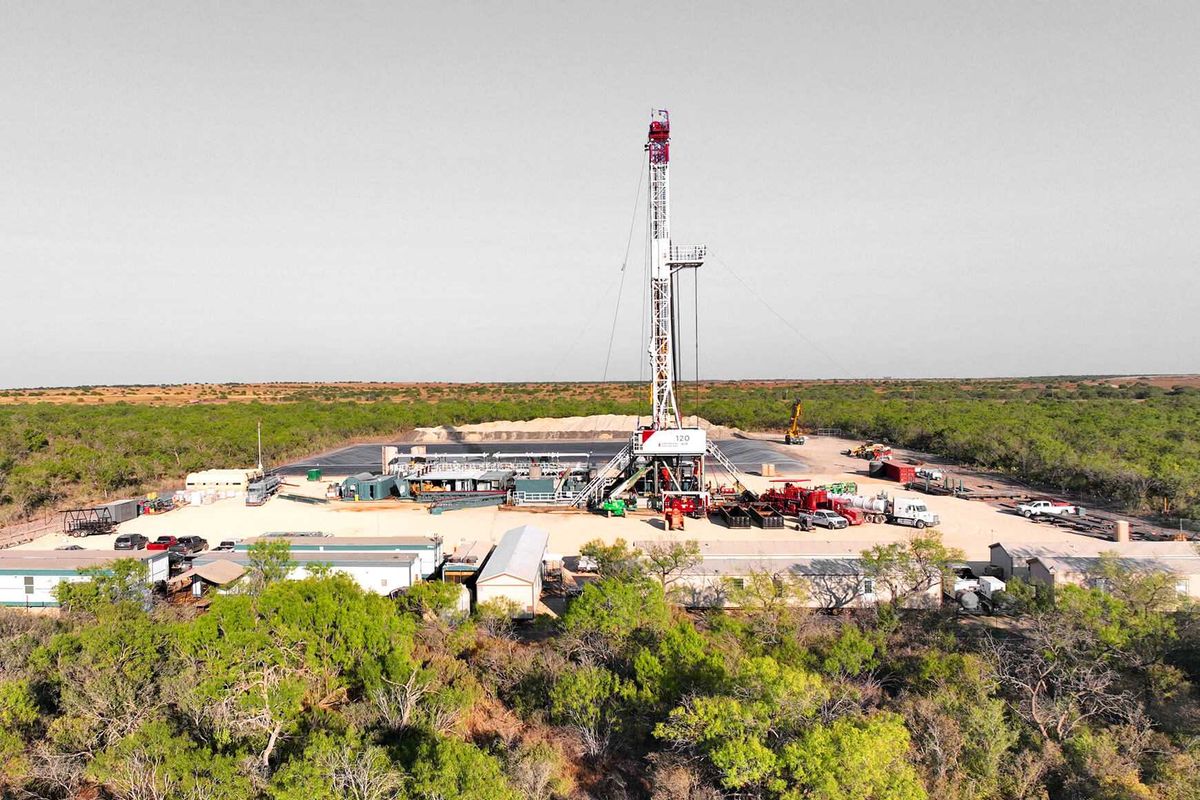
Quaise says some of the fresh funding will go toward building the world’s first commercial-scale “superhot” geothermal power plant —Project Obsidian in central Oregon. In addition, Quaise is earmarking money for continued development and commercialization of its millimeter-wave drilling system toward depths exceeding 5 kilometers (about 16,400 feet).

Quaise uses a millimeter-wave drilling system developed at the Massachusetts Institute of Technology to remove rock at depths and temperatures that aren’t economically feasible with conventional drilling. With this technology, Quaise can reach rock at temperatures of around 570 degrees to 930 degrees in most places worldwide, enabling construction of geothermal systems that rival fossil fuels and nuclear energy in power density and that rival renewables in cost.

“Our ambition is to power civilization with Earth's most compelling energy source. This round takes us from field-proven technology to first commercial revenues,” Carlos Araque, co-founder, president and CEO of Quaise, added in the release.

Quaise has demonstrated the capability of its millimeter-wave drilling system at its Central Texas test site, drilling more than about 330 feet through granite in 2025—the first time the technology penetrated basement rock at full scale in the field. The company is approaching a depth of about 3,300 feet at the same site.

Construction of Project Obsidian is underway at Oregon’s Deschutes National Forest. The project, which has the potential to generate gigawatt-scale power, is slated to deliver electricity to the Pacific Northwest grid by 2030.

Shell expands lower-carbon energy solutions while cutting emissions

The View from HETI

Shell’s approach to sustainable development reflects an integrated value chain perspective—reducing emissions from oil and gas production, transforming downstream businesses to offer more low-carbon solutions, and building new energy businesses at scale. The company’s 31% reduction in Scope 1 and 2 operational emissions since 2016 demonstrates that this integrated strategy delivers results.

Three Strategic Priorities Drive Progress

Leading Integrated Gas: Shell is growing its world-leading LNG business with lower carbon intensity, meeting rising demand for natural gas as a transition fuel and foundation for renewable energy integration.

Advantaged Upstream: The company is cutting emissions from oil and gas production while keeping output stable, proving that operational excellence can reduce environmental impact without sacrificing energy security.

Differentiated Downstream, Renewables, and Energy Solutions: Shell is transforming its businesses to offer more low-carbon solutions while reducing sales of traditional oil products, positioning the company for the evolving energy market.

Shell’s emissions reductions are happening across global operations:

  • United States: Significant emissions cuts from production assets through operational efficiency and technology deployment
  • Malaysia & Philippines: Emissions reduction programs at offshore operations demonstrating that low-carbon production works in diverse environments
  • Norway: Continued emissions intensity improvements from mature assets, showing that even older fields can decarbonize

Whale Partnership Demonstrates Innovation

Shell’s recent partnership with Chevron at the Whale deepwater asset showcases what’s possible with next-generation project design. By integrating emissions reduction strategies from the start, the partnership has lowered the greenhouse gas intensity approximately 30% over the project lifecycle relative to similar deepwater oil and gas production assets.

Shell’s strategy to deliver more value with less emissions includes climate change transition plans, mitigation actions and decarbonization levers supported by a suite of processes and greenhouse gas emission reduction targets such as:

2025 Results:

  • Eliminated routine flaring from upstream operations
  • Maintained methane emissions intensity below 0.2%

By 2030:

  • Halve Scope 1 and 2 emissions under operational control (vs. 2016)
  • Achieve near-zero methane emissions
  • Reduce Scope 3 net carbon intensity (NCI) by 15-20% (vs. 2016)
  • Cut customer emissions from oil products by 15-20% (vs. 2021)

By 2050:

  • Achieve net zero emissions across Scopes 1, 2, and 3

Across all strategic initiatives, Shell prioritizes trading and optimization capabilities that maximize value while minimizing emissions. This commercial approach ensures that the company’s energy transition strategy creates long-term shareholder value while advancing climate goals.

Shell is building an integrated energy business for the low-carbon future by delivering the energy products customers need today while investing in the solutions they’ll need tomorrow.

As a steering-level member of HETI, Shell exemplifies the leadership and commitment required to transform Houston’s energy sector while maintaining global energy security.

———

This article originally appeared on the Greater Houston Partnership's Houston Energy Transition Initiative blog. Explore Shell’s energy transition strategy at: https://www.shell.us/about-us/sustainability.html, and read the full analysis here: https://htxenergytransition.org/wp-content/uploads/2025/08/07.18.25-HETI-Leadership-Narrative-Report-V2_pages-1-2.pdf