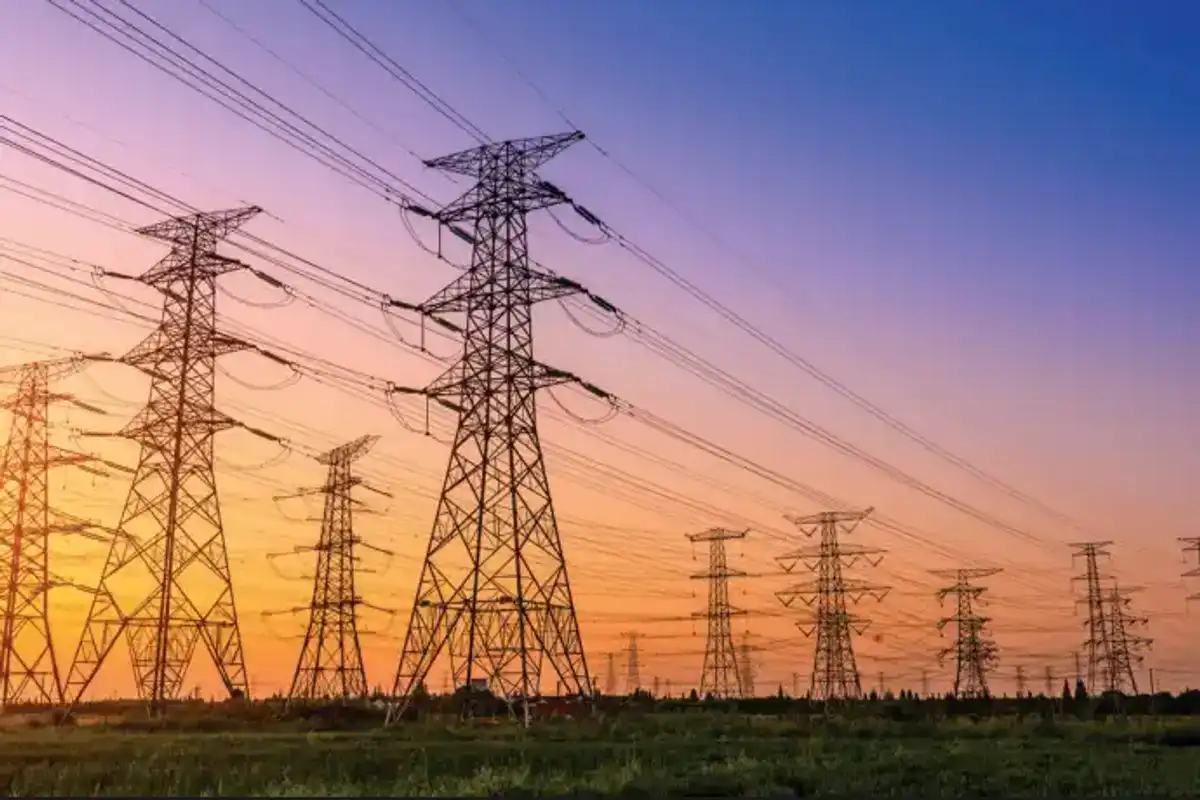
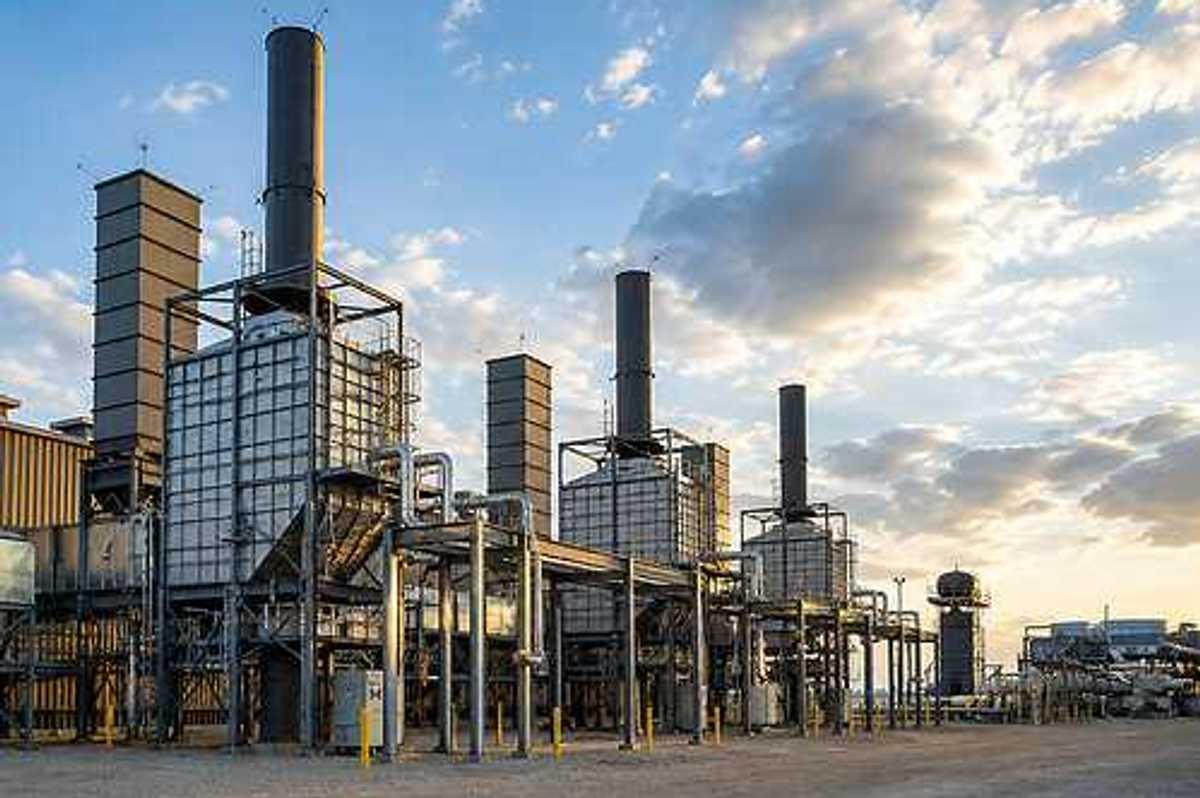
Next month, 96 startups will pitch at an annual event focused on the future of energy. Here's who will be there. Photo via rice.edu

Dozens of companies will be a part of an upcoming energy-focused conference at Rice University — from climate tech startups to must-see keynote speakers.

The 20th Annual Rice Alliance Energy Tech Venture Forum will take place on September 21 at Rice University’s Jones Graduate School of Business. Anyone who's interested in learning more about the major players in the low-carbon future in Houston and beyond should join the industry leaders, investors, and promising energy and cleantech startups in attendance.

This year's keynote speakers include Christina Karapataki, partner at Breakthrough Energy Ventures, the venture capital fund backed by Bill Gates; Scott Nyquist, vice chairman at Houston Energy Transition Initiative, founded by the Greater Houston Partnership; and Jeff Tillery, COO at Veriten.

Nearly 100 startups will also be pitching throughout the day, and at the end of the program, the most-promising companies — according to investors — will be revealed. See below for the 2023 selection of companies.

Presenting companies:

  • Element Resources
  • Eugenie AI
  • Flash H2 Synthesis from Waste Plastic at Zero Net Cost
  • Fluid Efficiency
  • Galatea Technologies
  • Heimdal
  • Impact Technology SystemsAS
  • INGU
  • Lithos
  • Luminescent
  • Mantel
  • Mars Materials
  • Microgrid Labs
  • Mirico
  • Mobilus Labs
  • Muon Vision
  • Nano Nuclear
  • NobleAI
  • Numat
  • Ourobio
  • Planckton Data Technologies
  • Polystyvert
  • Princeton NuEnergy
  • Protein Evolution
  • Qult Technologies
  • Sage Geosystems
  • Salient Predictions
  • Sawback Technologies
  • SHORELINE AI
  • Solidec
  • Spectral Sensor Solutions
  • Teren
  • Terradote
  • TexPower
  • Thiozen
  • Technology from the Lab of Dr. James Tour
  • Volexion
  • Xecta

CEA Demo Day:

  • Ayrton Energy
  • Carbix
  • CryoDesalination
  • Digital Carbon Bank
  • EarthEn
  • H Quest Vanguard
  • Highwood Emissions Management
  • Icarus RT
  • Khepra
  • Natrion
  • Oceanways
  • Relyion Energy
  • Triton Anchor
  • TROES

Office hours only:

  • 1s1 Energy
  • AKOS Energy
  • Aperta Systems
  • Atargis Energy
  • Ayas
  • C-Power
  • C-Quester
  • Carbon Loop
  • Deep Anchor Solutions
  • DG Matrix
  • Drishya AI Labs
  • Earthbound.ai
  • EarthBridge Energy
  • Enoverra
  • equipcast
  • ezNG Solutions
  • Feelit Technologies
  • FluxWorks
  • Forge
  • Horne Technologies
  • Imperium Technologies
  • LiCAP Technologies
  • Make My Day
  • Moblyze
  • MyPass Global
  • NovaSpark Energy
  • Octet Scientific
  • Perceptive Sensor Technologies
  • PetroBricks
  • Piersica
  • Poseidon Minerals
  • Predyct
  • RIvotto
  • Roboze
  • Talisea
  • ThermoLift Solutions
  • Trout Software
  • Tuebor Energy
  • Undesert Corporation
  • Viridos
  • Vroom Solar
  • Well Information Technologies
  • WellWorth
  • Zsense Systems
Ad Placement 300x100
Ad Placement 300x600

CultureMap Emails are Awesome

KBR's Mission Technology Solutions spinoff awarded $1.1B NOAA contract

A Big Deal

Amid a major spinoff, Houston-based KBR's Mission Technology Solutions business has been awarded a five-year contract for up to $1.1 billion from NOAA’s National Weather Service to help predict and combat extreme weather conditions.

Under the follow-on Commercial Data Program National Mesonet Program (CDP NMP) contract, KBR will provide weather and observational data from commercial stations, university and research campuses, and other non-federal providers nationwide. The information collected will assist in predicting severe temperatures and high-impact weather conditions like extreme storms.

"This award underscores KBR's proven track record of delivering vital data that strengthens national forecasting capabilities," Todd May, KBR’s senior vice president of Mission Technology Solutions, said in a news release.

According to a separate release from NOAA, the contract expands upon KBR's existing relationship with the agency. KBR will work with about 70 private industry partners on services such as data recording, collection, aggregation and processing, and will lead the CDP NMP's "network of networks."

“NOAA gathers environmental information from a wide variety of sources, and a growing list of private industry partners have joined our agency to collect this vital data,” Ken Graham, director of NOAA’s National Weather Service, said in the release. “This agreement streamlines the process that turns raw data into the gold-standard forecasts that Americans depend on.”

KBR will utilize its Speed to Mission ImpactSM technology for the project to supply data from across regions, measurement types, and system configurations. Both KBR and NOAA say the expanded data collection contract will help the agency create more accurate and timely forecasts, particularly for severe weather and extreme events, while also creating a path for new weather-observation technologies.

KBR has supported the CDP NMP for more than nine years. The program will be managed in Greenbelt, Maryland.

"We're driving expanded integration of commercial sensor and data sources into this platform and are honored to know our work helps forecasters give their communities earlier warnings and more time to prepare for dangerous weather,” May added in a release.

KBR’s Mission Technology Solutions business will be rebranded as Trinzic after its planned spin-off, the company announced last month. The spin-off is expected to close in January 2027.

Trinzic will work as an independent, publicly traded company focused on technology and engineering services for the space and national security sector. KBR will remain a separate publicly traded company that will focus on sustainable technology and services to support the energy transition.

---

This article originally appeared on InnovationMap.com.

Houston researchers map data center growth, trends in new interactive platform

data center development

Have you ever wondered why data centers are located where they are?

Energy experts at Rice University’s Center for Energy Studies (CES) have developed a tool to help answer that question.

Rice researchers at the CES, part of Rice’s Baker Institute for Public Policy, have created an interactive map to track data center growth and energy infrastructure in the United States.

Kenneth B. Medlock III, Miaomiao Rimmer, Anmol Mital and Beck Edwards developed the tool, known as the U.S. Data Centers and Infrastructure map. It aims to provide a comprehensive view of the factors shaping where data centers are located, from power and water costs to infrastructure, public policy and local sentiment.

“The map lets you see why data centers are being built where they are by connecting the dots between infrastructure, power costs, water availability, public policy and public sentiment across different regions,” Medlock, senior director at CES, said in a news release. “You can zoom out and look at the whole U.S. to easily realize why data centers locations are being chosen—the price of power and water matters.”

The tool maps information on data center locations against other factors like energy, water, economics and politics. It also shows existing infrastructure in the area, including electric transmission lines, power plants, and fiber-optic networks, and provides information on water stress, electricity prices and natural gas prices.

According to Rice, the map will be updated in real time and currently includes information on existing data centers and proposed data centers.

Additionally, the map provides county-level analyses of news coverage and media to explore local attitudes towards the development of data centers in communities. Users can also explore political and demographic information.

According to the Pew Research Center, most data centers that are being built will appear in rural areas, with Virginia, Texas and Georgia leading the way in the number of planned facilities. Pew’s 2026 findings also noted that 38 percent of Americans live within 5 miles of at least one operational data center.

Meanwhile, Houston and Texas are poised for continued data center growth. Other reports predict that Houston’s data center capacity could more than double by 2028. Texas is home to an estimated 400-plus data centers, according to commercial real estate services provider CBRE.

UH team lands $2.9M DOE grant to develop next-gen magnets with AI

critical minerals

University of Houston researchers are leading an effort to find alternatives to a key element of the U.S. economy.

A UH-led coalition is exploring the use of AI to design and manufacture next-generation permanent magnets for the energy and industrial sectors. The project seeks to develop new, more sustainable magnets that reduce U.S. reliance on vulnerable foreign sources of critical minerals, primarily China.

A nearly $2.9 million grant from the U.S. Department of Energy supports the work.

“Rare earth elements, critical minerals, and magnets are indispensable to American energy, industry, and national security,” Conner Prochaska, director of the Advanced Research Projects Agency–Energy, said in a news release. “These projects will accelerate domestic mineral discovery and develop ultra-powerful magnets to mobilize U.S. critical mineral reserves, safeguard supply chains, and protect American energy and economic interests.”

Over the three-year grant period, principal investigator Jakoah Brgoch, a chemistry professor at UH, will head the Guided AI for Magnetic Boride/Carbide Intermetallic Technologies (GAMBIT) project. Brgosh was one of seven new senior members from UH named to the National Academy of Inventors earlier this year.

Other members of the team include Joshua Bocarsly, an assistant professor in the UH chemistry department; scientists at Rice University; and Houston-based startup Newfound Materials, which occupies space at Greentown Labs.

The UH-led team aims to surpass the properties of neodymium iron boron, the current industry-standard material for high-performance permanent magnets. These magnets are vital components in electric vehicles, industrial motors, generators, electronics and other advanced technologies.

“Strong magnets are used all over our economy. For example, many modern air-conditioning systems rely on permanent-magnet motors to drive compressors and blower fans,” Brgoch said.

“This has been a longstanding challenge to think about how we replace these magnets with high-performing and more reliable materials, and optimization by just replacing elements is not working,” Brgoch added. “Our goal is to use AI to find entirely new materials while simultaneously balancing these supply constraint concerns.”

The research team will work on discovering and testing potential magnet replacements. According to UH, the project’s ultimate goal is to commercialize the magnets through a new startup or by expanding Newfound Materials’ business units. The local startup has developed a predictive engine for materials research and development.