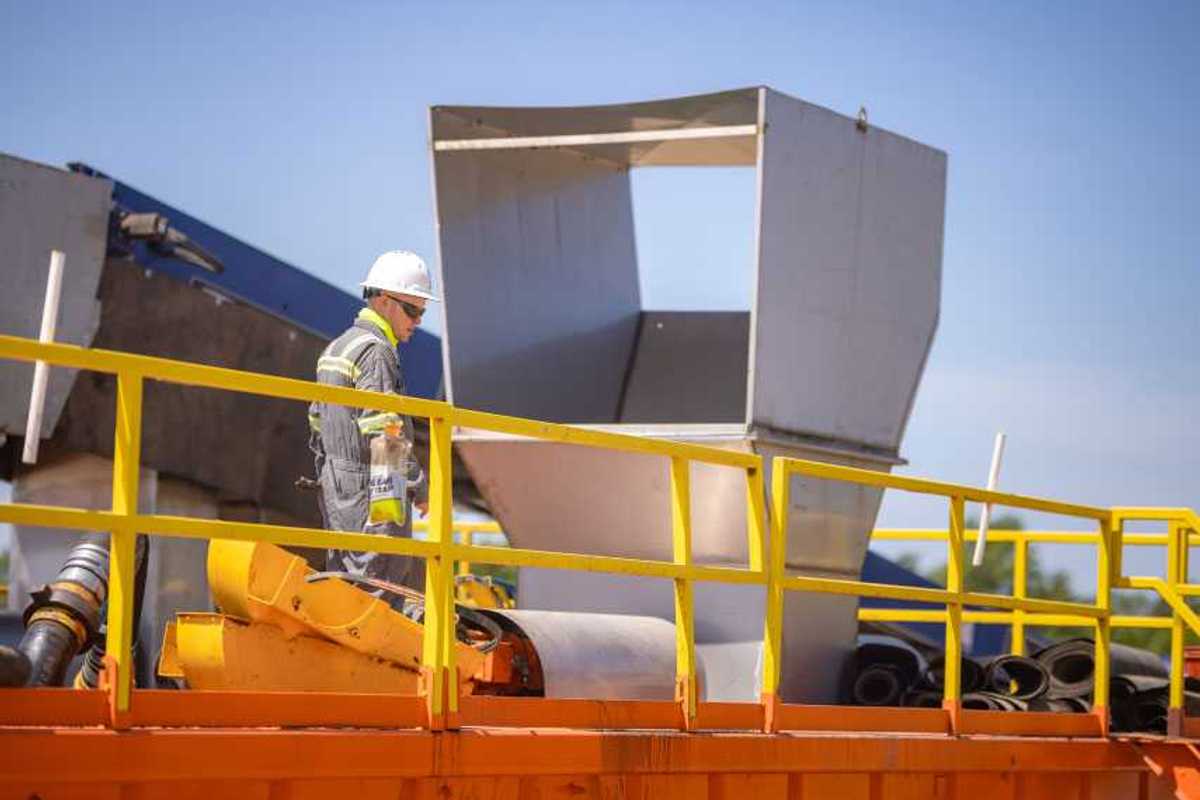
The grant will support power substation upgrades in the Houston area. Photo via Getty Images

A $50 million federal grant will help Houston-based CenterPoint Energy strengthen Houston’s power grid.

The U.S. Department of Energy (DOE) grant will support power substation upgrades in the Houston area.

“Our mission is to build the most resilient coastal grid in the nation for the 2.9 million customers we proudly serve in the greater Houston area … [The grant] will directly fund industry-leading technology improvements that are expected to strengthen resiliency, reliability, and meet the growing energy needs of our region,” Jason Ryan, CenterPoint Energy’s executive vice president for regulatory services and government affairs, said in a release.

CenterPoint says the project will make it one of the first U.S. utilities to install Siemens Energy’s grid-stabilizing technology.

The project will create more than 500 construction and installation jobs, CenterPoint says.

“Generations of CenterPoint customers and families in the region will benefit from the advanced technology this grant is funding,” said Kathleen Jackson, a member of the Public Utility Commission of Texas. “And any time companies make improvements like this to their systems, the long-term impact is making the entire grid stronger for Texans.”

The $176.7 million substation project is part of CenterPoint’s Greater Houston Resiliency Initiative, which launched in 2024.

So far, the initiative has:

  • Installed nearly 82,400 storm-resilient poles and equipment
  • Trimmed and cleared more than 13,700 miles of trees and vegetation near power lines
  • Added nearly 820 grid automation and intelligence devices
  • Put more than 880 miles of power lines underground

The initiative kicked off three years after Winter Storm Uri. CenterPoint received harsh criticism for what customers complained was the utility’s slow response to the 2021 storm. Uri caused a massive power outage and at least 246 deaths across Texas.

CenterPoint blamed the Electric Reliability Council of Texas (ERCOT), which operates the power grid for most Texans, for not supplying the utility with enough electricity during and after the storm.

Ad Placement 300x100
Ad Placement 300x600

CultureMap Emails are Awesome

EnergyTech Cypher names 7 startup winners from Pilotathon pitch event

startup spotlight

Houston Energy and Climate Week was full of fast-paced pitches and inspiring technology, showcased during some of the week's signature events.

EnergyTech Cypher's annual Piloathon and Startup Showcase was one of the places to be, bringing together 16 pilot-ready startups to present their best seven-minute pitches before investors, plus 52 companies that demonstrated their technologies on the showcase floor.

"This year's cohort raised the bar," Nada Ahmed, co-founder of EnergyTech Cypher, shared in a news release. "Working with these founders through the pitch preparation process, we saw firsthand the depth of technology and commercial readiness they brought to the stage. Three ties in four categories says it all."

Seven startups took home top honors in various categories, all under this year's theme of "The NEW Energy Industrial Revolution," with three categories ending in a tie. Judges included leaders from Baker Tilly, NRG Energy, Shell, Aramco Ventures, Baker Hughes, Avatar Innovations, Kanin Energy, NoviDigiTech, aiCTO Services, and the FIFA World Cup Houston Committee.

Here's who won in their respective categories:

Future of Industrial Work: Houston-based BigMachine AI, an AI engineer for industrial projects, and Oslo, Norway-based OTee, an automation machinery manufacturer. Otee was also named one of the 10 most-promising startups at the Rice Alliance Energy Tech Venture Forum during HECW.

Industrial Decarbonization: Berkeley-based Oleo, which is developing a biomanufacturing platform to transform biomass waste into carbon-negative, cost-competitive oil feedstocks for advanced fuels

Grid Infrastructure and Distributed Energy: Edinburgh-based Mocean Energy, which works to deliver renewable ocean energy to power offshore industry, and Tulsa-based RyuGen Energy Solutions Inc., which works to turn underused commercial power into distributed AI infrastructure

Critical Minerals and Resource Security: Houston-based Resollant, which is working to produce battery-grade graphite and ultra-low-cost hydrogen, and Berkeley-based Sunchem, which provides precision separation of critical metals from sources including e-waste, evaporator scrap, solar panels, and mining ores and concentrates.

Last year, the Pilotathon named eight winners from the competition, which focused on the theme of "Energy Access and Resilience." See the winners here.

EnergyTech Cypher rebranded from EnergyTech Nexus earlier this year. The energy transition hub also launched Cephyron, EnergyTech Cypher's new investor relationship management platform, built specifically for energy and climatech founders.

ENGIE inks deal to supply wind energy for Oracle’s Texas operations

wind deal

Houston-based renewable energy company ENGIE North America has made a deal to supply up to 568 megawatts of renewable electricity for tech giant Oracle's projects in Texas.

The power will come from ENGIE’s wind resources serving the Electric Reliability Council of Texas (ERCOT) grid. Oracle is developing data centers in Abilene and Shackelford, Texas, according to its website.

The Oracle deal is part of ENGIE’s efforts to bring substantial new electricity supply to the grid. In the past six years, ENGIE has developed 12 gigawatts of new renewable generation and battery storage capacity in North Americas, equaling $11 billion in capital, according to the company.

"Our customers are looking for reliable, scalable energy solutions that can support long-term growth," Anne-Laure Chassanite, interim CEO of ENGIE North America, said in a news release. "ENGIE has invested heavily in developing new generation resources across North America, and we're pleased to support Oracle as it continues to expand its operations in Texas. These agreements reflect the strength of our portfolio and our ability to deliver customized energy solutions that help customers meet their business objectives.”

Computer technology and cloud computing company Oracle is working towards its goal to match 100 percent of AI data center electricity use with carbon-free electricity by 2035.

"Oracle is taking a responsible approach to meeting the energy needs of our growing AI and cloud operations in Texas — investing in carbon-free electricity without shifting costs to consumers," Julia Robin, head of infrastructure planning and sourcing for Oracle Cloud Infrastructure, added in the release. "Our agreements with ENGIE advance Oracle's goal to match 100 percent of our AI data center electricity use with carbon-free electricity by 2035, while supporting long-term economic growth with no cost impact to the state of Texas.”

ENGIE also recently won the 2026 Green Power Leadership Award in the Market Innovation category for its work advancing 24/7 renewable energy solutions. The awards honor individuals and companies advancing sustainability and renewables in the energy industry through innovation and leadership.

The company has inked major deals to supply renewable energy to other major companies like Meta, Daikin and others.

Houston energy and innovation leaders come together at Argonne National Laboratory

The view from heti

Nearly 20 companies from Houston, ranging from global multinationals to innovative startups, joined the team at Argonne National Laboratory in Lemont, Illinois, for a full day of meetings, discussions, and networking focused on advancing innovation, commercialization, and industry collaboration.

The fly-in organized by the Houston Energy Transition Initiative, provided a unique opportunity for companies to engage directly with Argonne researchers, technical experts, and leadership while gaining a deeper understanding of the laboratory’s world-class capabilities. Participants explored how national laboratories can help bridge the gap between breakthrough research and commercial deployment, particularly in areas critical to U.S. competitiveness and economic growth.

The significance of this engagement extends beyond a single visit. While the U.S. Department of Energy operates 17 national laboratories, none is located along the Gulf Coast, a region uniquely home to industry, infrastructure, and energy systems at commercial scale. HETI’s continued work with the national laboratories helps bridge that geographic and operational gap by connecting world-class scientific research with companies that understand how to scale and deploy technologies. The Argonne fly-in also created space to address practical barriers to collaboration, including complex agreements and lengthy contracting timelines, and to explore ways to establish partnership frameworks more efficiently.

Explore HETI’s key takeaways from the fly-in:

1. Scaling Technologies for Commercial Use

A central theme was the importance of scale-up infrastructure and the role Argonne plays in helping companies reduce technical and manufacturing risks. Participants learned how facilities such as the Materials Engineering Research Facility (MERF) support the transition from laboratory discoveries to pilot-scale production and ultimately commercial manufacturing. These capabilities are especially valuable for companies working to move promising technologies from concept to market.

The discussions also highlighted Argonne’s extensive work in critical materials, battery recycling, advanced manufacturing, and supply chain resilience. Attendees learned about initiatives including the ReCell Center, AI-enabled materials discovery, and advanced modeling tools that can help businesses understand supply chain vulnerabilities and evaluate mitigation strategies. These capabilities have applications across energy, chemicals, manufacturing, semiconductors, defense, and emerging technologies.

2. Creating Pathways for Collaboration

Another key takeaway was the importance of engaging early. Companies do not need to arrive with a fully developed project or solution. Argonne offers multiple pathways for collaboration, including sponsored research, user facility access, technology licensing, pilot-scale testing, and Cooperative Research and Development Agreements (CRADAs). These partnerships help companies access specialized expertise, facilities, and analytical tools that can accelerate innovation and commercialization

3. Building Connections Across Industry and Research

The fly-in reinforced the value of relationship building. Bringing together nearly 20 organizations in one place created meaningful opportunities for collaboration, knowledge sharing, and identifying future projects.

The conversations throughout the day demonstrated a shared commitment to strengthening domestic innovation, developing resilient supply chains, and creating pathways to bring new technologies to market.

———

This article originally appeared on the Greater Houston Partnership's Houston Energy Transition Initiative blog. HETI exists to support Houston's future as an energy leader. Learn more about HETI’s role in advancing solutions and building partnerships to leverage Houston’s industry leadership for an energy-abundant, low-carbon future.