







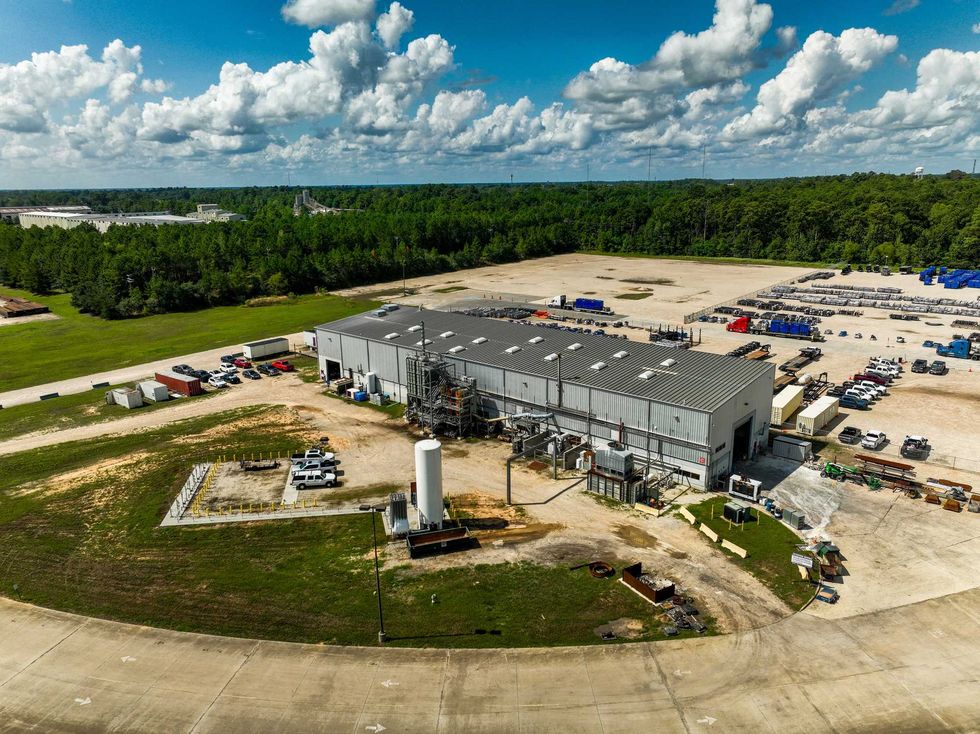
In total, HIF has raised $200 million this year. Photo via hifglobal.com

Houston-based electrofuel company HIF Global has secured a $36 million investment from the Japan Organization for Metals and Energy Security, a government agency.

The investment, made through an e-fuel subsidiary of Japanese energy company Idemitsu Kosan, is earmarked for HIF’s e-fuel projects in the U.S., Australia, Chile, and Uruguay.

Earlier this year, Idemitsu led a $164 million investment round in HIF. Of that amount, Idemitsu chipped in $114 million. Other investors included Houston-based Baker Hughes along with AME, EIG, Gemstone Investments, and Porsche.

In total, HIF has raised $200 million this year.

“Japan set a priority for the commercial introduction of e-fuels into its fuel supply to support their mandate for 46 percent [greenhouse gas] emissions reduction by 2030. We have already proven e-fuels are a real solution with over 18 months of e-fuels production from our Haru Oni facility in southern Chile,” says Cesar Norton, president and CEO of HIF.

In 2023, Idemitsu agreed to buy e-methanol from HIF’s $6 billion plant in Matagorda County. HIF says the plant will be the world’s first large-scale e-fuel facility. The plant is expected to produce about 1.4 million metric tons per year of e-methanol and about 300,000 metric tons of green hydrogen per year by 2027.

HIF, founded in 2016, aims to produce 150,000 barrels per day of e-fuel and recycle 25 million metric tons per year of carbon dioxide by 2035. E-fuels, which are synthetic alternatives to fossil fuels, include e-gasoline, e-diesel, and e-sustainable aviation fuel converted from e-methanol.

Using electrolyzers powered by renewable energy, HIF begins the e-fuel process by separating hydrogen from oxygen in water. The company then couples the resulting green hydrogen with recycled carbon dioxide to create carbon-neutral e-fuels.
Ad Placement 300x100
Ad Placement 300x600

CultureMap Emails are Awesome

Syzygy inks long-term offtake agreement for first commercial SAF plant

fuel deal

Houston-based Syzygy Plasmonics has secured a six-year official offtake agreement for the entire production volume of its first commercial-scale biogas-to-sustainable aviation fuel project in Uruguay, known as NovaSAF-1.

SP Developments Uruguay S.A., a subsidiary of Syzygy, entered into the agreement with Singapore-based commodity company Trafigura, according to a news release. There is also an option for Trafigura to purchase additional volumes from future Syzygy projects.

The first deliveries from the landmark SAF facility are expected in 2028.

“This agreement marks a critical step in our journey toward commercial-scale impact and disrupting the SAF market,” Trevor Best, CEO of Syzygy Plasmonics, said in the news release. “With a signed offtake agreement from a global leader like Trafigura, and after having successfully completed FEED engineering in December, we're now ready to secure financing for the construction of NovaSAF-1 and move our technology from potential into production."

The NovaSAF-1 project will be located in Durazno, Uruguay. The facility will be the world's first electrified biogas-to-SAF facility producing renewable and advanced compliant SAF. Syzygy estimates that the project will produce over 350,000 gallons of SAF annually. The facility is expected to produce SAF with at least an 80 percent reduction in carbon intensity compared to Jet A fuel.

It’s backed by Uruguay’s largest dairy and agri-energy operations, Estancias del Lago. It will also work with Houston-based Velocys, which will provide Fischer-Tropsch technology for the project. Fischer-Tropsch technology converts synthesis gas into liquid hydrocarbons, which is key for producing synthetic fuels like SAF.

ERCOT to capture big share of U.S. solar power growth through 2027

solar growth

Much of the country’s growth in utility-scale solar power generation will happen in the grid operated by the Electric Reliability Council of Texas (ERCOT), according to a new forecast.

The U.S. Energy Information Administration (EIA) predicts that solar power supplied to the ERCOT grid will jump from 56 billion kilowatt-hours in 2025 to 106 billion kilowatt-hours by the end of 2027. That would be an increase of 89 percent.

In tandem with the rapid embrace of solar power, EIA anticipates battery storage capacity for ERCOT will expand from 15 gigawatts in 2025 to 37 gigawatts by the end of 2027, or 147 percent.

EIA expects utility-scale solar to be the country’s fastest-growing source of power generation from 2025 to 2027. It anticipates that this source will climb from 290 billion kilowatt-hours last year to 424 billion kilowatt-hours next year, or 46 percent.

Based on EIA’s projections, ERCOT’s territory would account for one-fourth of the country’s utility-scale solar power generation by the end of next year.

“Solar power and energy storage are the fastest-growing grid technologies in Texas, and can be deployed more quickly than any other generation resource,” according to the Texas Solar + Storage Association. “In the wholesale market, solar and storage are increasing grid reliability, delivering consumer affordability, and driving tax revenue and income streams into rural Texas.”