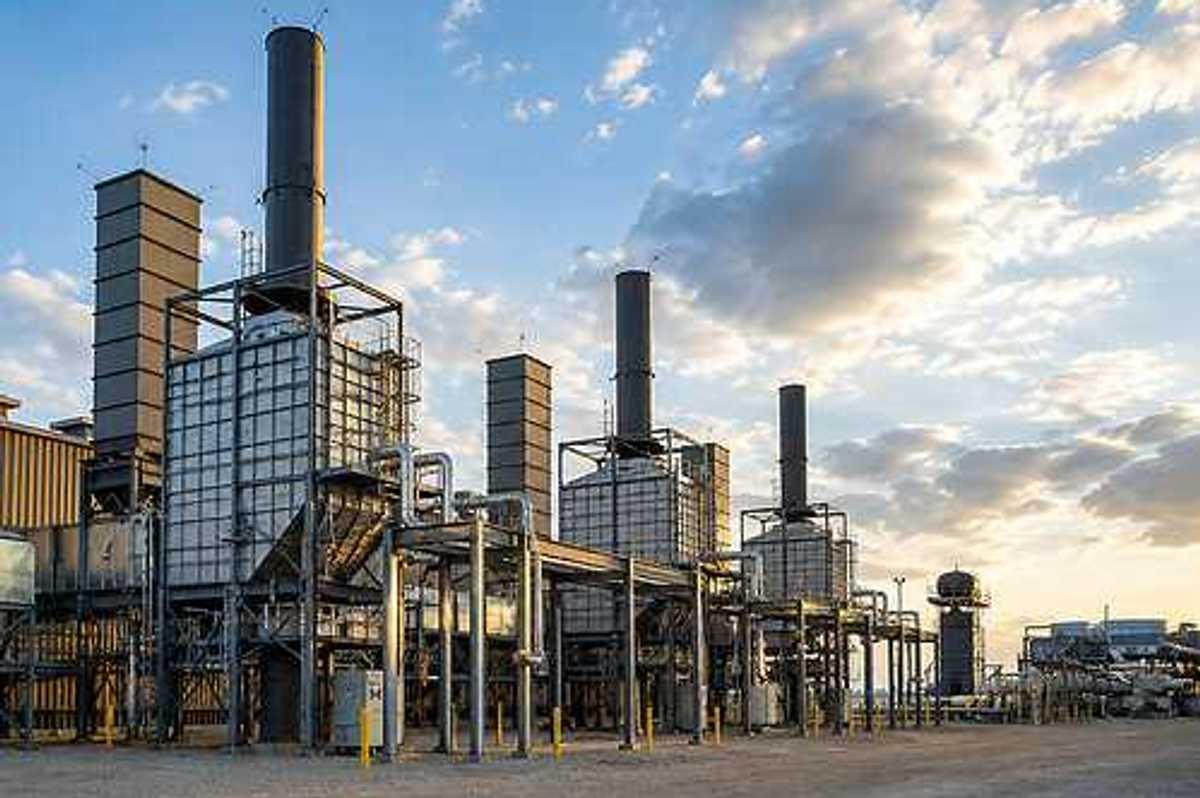
A new generation of technology is making it faster, safer, and more cost-effective to identify CUI. Courtesy photo

Corrosion under insulation (CUI) accounts for roughly 60% of pipeline leaks in the U.S. oil and gas sector. Yet many operators still rely on outdated inspection methods that are slow, risky, and economically unsustainable.

This year, widespread budget cuts and layoffs across the sector are forcing refineries to do more with less. Efficiency is no longer a goal; it’s a mandate. The challenge: how to maintain safety and reliability without overextending resources?

Fortunately, a new generation of technologies is gaining traction in the oil and gas industry, offering operators faster, safer, and more cost-effective ways to identify and mitigate CUI.

Hidden cost of corrosion

Corrosion is a pervasive threat, with CUI posing the greatest risk to refinery operations. Insulation conceals damage until it becomes severe, making detection difficult and ultimately leading to failure. NACE International estimates the annual cost of corrosion in the U.S. at $276 billion.

Compounding the issue is aging infrastructure: roughly half of the nation’s 2.6 million miles of pipeline are over 50 years old. Aging infrastructure increases the urgency and the cost of inspections.

So, the question is: Are we at a breaking point or an inflection point? The answer depends largely on how quickly the industry can move beyond inspection methods that no longer match today's operational or economic realities.

Legacy methods such as insulation stripping, scaffolding, and manual NDT are slow, hazardous, and offer incomplete coverage. With maintenance budgets tightening, these methods are no longer viable.

Why traditional inspection falls short

Without question, what worked 50 years ago no longer works today. Traditional inspection methods are slow, siloed, and dangerously incomplete.

Insulation removal:

  • Disruptive and expensive.
  • Labor-intensive and time-consuming, with a high risk of process upsets and insulation damage.
  • Limited coverage. Often targets a small percentage of piping, leaving large areas unchecked.
  • Health risks: Exposes workers to hazardous materials such as asbestos or fiberglass.

Rope access and scaffolding:

  • Safety hazards. Falls from height remain a leading cause of injury.
  • Restricted time and access. Weather, fatigue, and complex layouts limit coverage and effectiveness.
  • High coordination costs. Multiple contractors, complex scheduling, and oversight, which require continuous monitoring, documentation, and compliance assurance across vendors and protocols drive up costs.

Spot checks:

  • Low detection probability. Random sampling often fails to detect localized corrosion.
  • Data gaps. Paper records and inconsistent methods hinder lifecycle asset planning.
  • Reactive, not proactive: Problems are often discovered late after damage has already occurred.

A smarter way forward

While traditional NDT methods for CUI like Pulsed Eddy Current (PEC) and Real-Time Radiography (RTR) remain valuable, the addition of robotic systems, sensors, and AI are transforming CUI inspection.

Robotic systems, sensors, and AI are reshaping how CUI inspections are conducted, reducing reliance on manual labor and enabling broader, data-rich asset visibility for better planning and decision-making.

ARIX Technologies, for example, introduced pipe-climbing robotic systems capable of full-coverage inspections of insulated pipes without the need for insulation removal. Venus, ARIX’s pipe-climbing robot, delivers full 360° CUI data across both vertical and horizontal pipe circuits — without magnets, scaffolding, or insulation removal. It captures high-resolution visuals and Pulsed Eddy Current (PEC) data simultaneously, allowing operators to review inspection video and analyze corrosion insights in one integrated workflow. This streamlines data collection, speeds up analysis, and keeps personnel out of hazardous zones — making inspections faster, safer, and far more actionable.

These integrated technology platforms are driving measurable gains:

  • Autonomous grid scanning: Delivers structured, repeatable coverage across pipe surfaces for greater inspection consistency.
  • Integrated inspection portal: Combines PEC, RTR, and video into a unified 3D visualization, streamlining analysis across inspection teams.
  • Actionable insights: Enables more confident planning and risk forecasting through digital, shareable data—not siloed or static.

Real-world results

Petromax Refining adopted ARIX’s robotic inspection systems to modernize its CUI inspections, and its results were substantial and measurable:

  • Inspection time dropped from nine months to 39 days.
  • Costs were cut by 63% compared to traditional methods.
  • Scaffolding was minimized 99%, reducing hazardous risks and labor demands.
  • Data accuracy improved, supporting more innovative maintenance planning.

Why the time is now

Energy operators face mounting pressure from all sides: aging infrastructure, constrained budgets, rising safety risks, and growing ESG expectations.

In the U.S., downstream operators are increasingly piloting drone and crawler solutions to automate inspection rounds in refineries, tank farms, and pipelines. Over 92% of oil and gas companies report that they are investing in AI or robotic technologies or have plans to invest soon to modernize operations.

The tools are here. The data is here. Smarter inspection is no longer aspirational — it’s operational. The case has been made. Petromax and others are showing what’s possible. Smarter inspection is no longer a leap but a step forward.

---

Tyler Flanagan is director of service & operations at Houston-based ARIX Technologies.

Ad Placement 300x100
Ad Placement 300x600

CultureMap Emails are Awesome

Houston researchers propose model to scale e-waste recycling

critical research

The “missing link” in critical minerals may have been in our junk drawers all along, according to new research from the University of Houston.

Jian Shi, an associate professor in the UH Cullen College of Engineering, and his team have unveiled a new supply chain model that aims to make e-waste economically viable and could help make large-scale recycling possible.

Shi, along with professor Kailai Wang and graduate researcher Chuyue Wang, published the work in a recent issue of Nature. Their study outlines how gold, lithium and cobalt from discarded electronics can be kept circulating in the U.S. through the process of “urban mining.” It was supported by the U.S. Department of Energy’s Office of Energy Efficiency and Renewable Energy (EERE) through the Vehicle Technologies Office.

The team’s research found that e-waste is the fastest-growing solid waste stream in the world. When waste from smartphones or tablets is left unmanaged, the devices can leak hazardous waste and pose significant fire risks due to aging batteries. Additionally, when they are shipped off to foreign landfills, the U.S. loses the potential to recycle or reuse the critical minerals left inside.

“A lot of people have iPads or old iPhones sitting in their drawers right now, and that’s a waste of a critical resource,” Shi said in a news release. “Urban mining allows us to extract the same high-value materials found in traditional mines without the environmental destruction. More importantly, it helps secure our domestic supply chain for the technologies of tomorrow.”

According to UH, recycling e-waste has not succeeded in the U.S. due to a fragmented recycling system, in which manufacturers, collectors and recyclers operate separately, driving up costs.

The UH team's research looks to change that.

In the study, the researchers modeled streamlined recycling efforts by mapping the interactions between manufacturers and independent recycling markets. Their dual-channel closed-loop supply chain (CLSC) model identified how these players can transition from competitors to partners, which can distribute profits more equitably and make recycling efforts more financially attractive.

According to UH, the research has particular significance due to the growing demand for electronic vehicles and their batteries.

“We can improve the performance of the entire recycling ecosystem and make the profit distribution more balanced,” Wang said in the release. “This ensures that the materials we need for EVs and advanced electronics stay right here in the U.S.”

“By making recycling work at scale, we aren’t just cleaning up waste,” Shi added. “We’re building a foundation that benefits both our national security and our economy.”

1PointFive signs latest deal, shares update on $1.3B carbon removal project

DAC deal

Houston-based 1PointFive, a subsidiary of Occidental Petroleum Corp., has secured another buyer of carbon dioxide removal credits for its $1.3 billion STRATOS project as it moves toward operation.

Bain & Company, a Boston-based consulting firm, has agreed to purchase 9,000 metric tons of carbon dioxide removal (CDR) credits from the direct air capture (DAC) facility over three years, according to a news release. DAC technology pulls CO2 from the air at any location, not just where carbon dioxide is emitted.

The deal is Bain's first purchase of DAC removal credits. The company has developed a program that helps clients purchase carbon credits from a range of carbon-removal technologies.

"We are proud to partner with 1PointFive and add them to our portfolio of engineered carbon removal technologies," Sam Israelit, Bain’s chief sustainability officer, said in the news release. "Their track record for developing DAC technology, coupled with their deep understanding of what it takes to deliver large-scale infrastructure projects, uniquely positions them to be a leader in this emerging segment.”

“We believe this agreement demonstrates continued momentum for the solution while supporting the development of vital domestic infrastructure,” Anthony Cottone, president and general manager of 1PointFive, added in the release.

Bain joins others like Microsoft, Amazon, AT&T, Airbus, the Houston Astros and the Houston Texans that have agreed to buy CDR credits from STRATOS.

The Texas-based STRATOS project is being developed through a joint venture with investment manager BlackRock and is designed to capture up to 500,000 metric tons of CO2 per year. The U.S Environmental Protection Agency approved Class VI permits for the project last year.

1PointFive says STRATOS is "progressing through start-up activities." The company shared in a LinkedIn post that Phase 1 of the project is expected to go online in Q2, with Phase 2 ramping up through the remainder of 2026.

Houston researcher develops efficient method to cool AI data centers

cool findings

A University of Houston professor has developed a new cooling method that can remove heat at least three times more effectively from AI data centers than current technologies.

Hadi Ghasemi, a distinguished professor of Mechanical & Aerospace Engineering at UH, published his findings in two articles in the International Journal of Heat and Mass Transfer. The findings solve a critical issue in the growing AI sector, according to UH.

High-powered AI data centers generate huge amounts of heat due to the GPU and operating systems they use with extreme power densities, which introduce complex thermal challenges. Traditionally, cooling methods, like microchannels, which use flow and spray cooling, have had limitations when exposed to extreme heat flux, according to UH.

Ghasemi’s research, however, found a more effective way to design thin-film evaporation structures to release heat from data centers and electronics at record performance.

Ghasem’s solution coupled topology optimization and AI modeling to determine the best shapes for thin film efficiency, ultimately landing on a branch-like structure—resembling a tree.

The model found that the “branches” needed to be about 50 percent solid and 50 percent empty space for optimum efficiency, and that they could sustain high heat fluxes with minimal thermal resistance.

“These structures could achieve high critical heat flux at much lower superheat compared to traditionally studied structures,” Ghasemi said in a news release. “The new structures can remove heat without having to get as hot as previous removal systems.

Ghasemi’s doctoral candidates, Amirmohammad Jahanbakhsh and Saber Badkoobeh Hezave, also worked on the project. The team believes their results show the impact of a physics-aware, AI design and can help ensure reliability, longevity and stability of AI data centers.

“Beyond achieving record performance, these new findings provide fundamental insight into the governing heat-transfer physics and establishes a rational pathway toward even higher thermal dissipation capacities,” Ghasemi added in the release