Texas ranked in the bottom half on WalletHub's list of the most energy-efficient states. Photo via unsplash.

Texas has room to improve when it comes to energy efficiency, recent data from WalletHub shows.

The personal finance website ranked Texas at No. 35 on the latest Most & Least Energy-Efficient States list. Texas improved by one spot on the 2025 report, after coming in at No. 36 last year.

The report measured and ranked the efficiency of auto energy and home energy consumption in the 48 U.S. mainland states based on data from the U.S. Census Bureau, National Climatic Data Center, U.S. Energy Information Administration and the U.S. Department of Transportation – Federal Highway Administration.

Texas earned an overall score of 50.60. It was ranked No. 27 for home energy efficiency and No. 41 for auto efficiency. By comparison, No. 1-ranked Vermont earned a score of 85.30, ranking No. 2 for home energy and No. 6 for out energy.

The top five overall states included:

  • No. 1 Vermont
  • No. 2 California
  • No. 3 Washington
  • No. 4 New York
  • No. 5 Massachusetts

South Dakota earned the top rank for home energy efficiency, and Massachusetts earned the top rank for energy efficiency.

“Energy efficiency doesn’t just help save the planet – it also helps save you money by lowering the amount of electricity, gas, oil or other types of energy you need to consume. While there are some steps you can take to become more energy-efficient on your own, living in the right area can give you a big boost," WalletHub analyst Chip Lupo said in the report. "For example, certain states have much better public transportation systems that minimize your need to drive, at least in big cities. Some places also have better-constructed buildings that retain heat better during the winter or stay cooler during the summer.”

According to the report, some progress is being made in increasing energy efficiency across the country. The U.S. Energy Information Administration expects 26 percent of electricity generation in 2026 will come from renewables. A number of them are being developed in the Houston area, including recent announcements like the Pleasure Island Power Collective in Port Arthur.

Still, Houston earned an abysmal ranking on WalletHub's greenest cities in the U.S. report earlier this year, coming in at No. 99 out of 100. Read more here.

Ad Placement 300x100
Ad Placement 300x600

CultureMap Emails are Awesome

Houston-based ENGIE to add new wind and solar projects to Texas grid

coming soon

Houston-based ENGIE North America Inc. has expanded its partnership with Los Angeles-based Ares Infrastructure Opportunities to add 730 megawatts of renewable energy projects to the ERCOT grid.

The new projects will include one wind and two solar projects in Texas.

“The continued growth of our relationship with Ares reflects the strength of ENGIE’s portfolio of assets and our track record of delivering, operating and financing growth in the U.S. despite challenging circumstances,” Dave Carroll, CEO and Chief Renewables Officer of ENGIE North America, said in a news release. “The addition of another 730 MW of generation to our existing relationship reflects the commitment both ENGIE and Ares have to meeting growing demand for power in the U.S. and our willingness to invest in meeting those needs.”

ENGIE has more than 11 gigawatts of renewable energy projects in operation or under construction in the U.S. and Canada, and 52.7 gigawatts worldwide. The company is targeting 95 gigawatts by 2030.

ENGIE launched three new community solar farms in Illinois since December, including the 2.5-megawatt Harmony community solar farm in Lena and the Knox 2A and Knox 2B projects in Galesburg.

The company's 600-megawatt Swenson Ranch Solar project near Abilene, Texas, is expected to go online in 2027 and will provide power for Meta, the parent company of social media platform Facebook. Late last year, ENGIE also signed a nine-year renewable energy supply agreement with AstraZeneca to support the pharmaceutical company’s manufacturing operations from its 114-megawatt Tyson Nick Solar Project in Lamar County, Texas.

Houston geothermal company raises $97M Series B

fresh funding

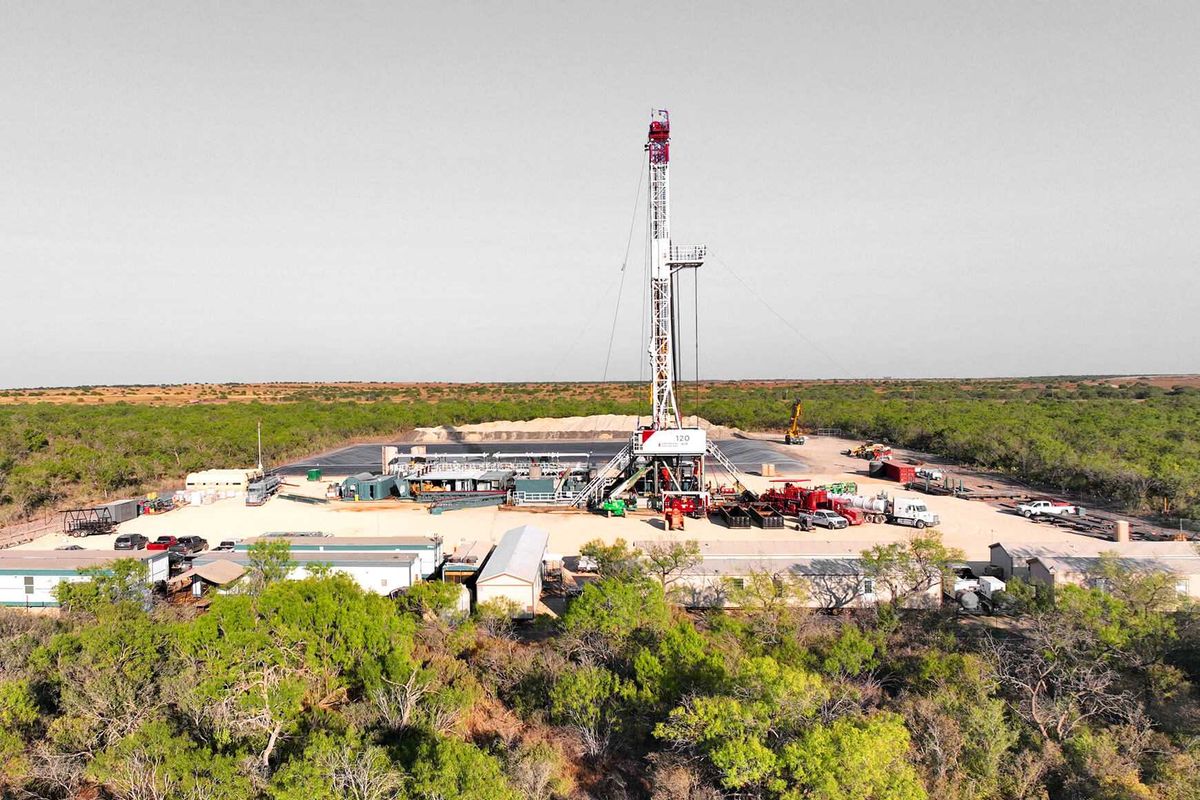
Houston-based geothermal energy startup Sage Geosystems has closed its Series B fundraising round and plans to use the money to launch its first commercial next-generation geothermal power generation facility.

Ormat Technologies and Carbon Direct Capital co-led the $97 million round, according to a press release from Sage. Existing investors Exa, Nabors, alfa8, Arch Meredith, Abilene Partners, Cubit Capital and Ignis H2 Energy also participated, as well as new investors SiteGround Capital and The UC Berkeley Foundation’s Climate Solutions Fund.

The new geothermal power generation facility will be located at one of Ormat Technologies' existing power plants. The Nevada-based company has geothermal power projects in the U.S. and numerous other countries around the world. The facility will use Sage’s proprietary pressure geothermal technology, which extracts geothermal heat energy from hot dry rock, an abundant geothermal resource.

“Pressure geothermal is designed to be commercial, scalable and deployable almost anywhere,” Cindy Taff, CEO of Sage Geosystems, said in the news release. “This Series B allows us to prove that at commercial scale, reflecting strong conviction from partners who understand both the urgency of energy demand and the criticality of firm power.”

Sage reports that partnering with the Ormat facility will allow it to market and scale up its pressure geothermal technology at a faster rate.

“This investment builds on the strong foundation we’ve established through our commercial agreement and reinforces Ormat’s commitment to accelerating geothermal development,” Doron Blachar, CEO of Ormat Technologies, added in the release. “Sage’s technical expertise and innovative approach are well aligned with Ormat’s strategy to move faster from concept to commercialization. We’re pleased to take this natural next step in a partnership we believe strongly in.”

In 2024, Sage agreed to deliver up to 150 megawatts of new geothermal baseload power to Meta, the parent company of Facebook. At the time, the companies reported that the project's first phase would aim to be operating in 2027.

The company also raised a $17 million Series A, led by Chesapeake Energy Corp., in 2024.

Houston expert discusses the clean energy founder's paradox

Guest Column

Everyone tells you to move fast and break things. In clean energy, moving fast without structural integrity means breaking the only planet we’ve got. This is the founder's paradox: you are building a company in an industry where the stakes are existential, the timelines are glacial, and the capital requires patience.

The myth of the lone genius in a garage doesn’t really apply here. Clean energy startups aren’t just fighting competitors. They are fighting physics, policy, and decades of existing infrastructure. This isn’t an app. You’re building something physical that has to work in the real world. It has to be cheaper, more reliable, and clearly better than fossil fuels. Being “green” alone isn’t enough. Scale is what matters.

Your biggest risks aren’t competitors. They’re interconnection delays, permitting timelines, supply chain fragility, and whether your first customer is willing to underwrite something that hasn’t been done before.

That reality creates a brutal filter. Successful founders in this space need deep technical knowledge and the ability to execute. You need to understand engineering, navigate regulation, and think in terms of markets and risk. You’re not just selling a product. You’re selling a future where your solution becomes the obvious choice. That means connecting short-term financial returns with long-term system change.

The capital is there, but it’s smarter and more demanding. Investors today have PhDs in electrochemistry and grid dynamics. They’ve been burned by promises of miracle materials that never left the lab. They don't fund visions; they fund pathways to impact that can scale and make financial sense. Your roadmap must show not just a brilliant invention, but a clear, believable plan to drive costs down over time.

Capital in this sector isn’t impressed by ambition alone. It wants evidence that risk is being retired in the right order — even if that means slower growth early.

Here’s the upside. The difficulty of clean energy is also its strength. If you succeed, your advantage isn’t just in software or branding. It’s in hardware, supply chains, approvals, and years of hard work that others can’t easily copy. Your real competitors aren’t other startups. They’re inertia and the existing system. Winning here isn’t zero-sum. When one solution scales, it helps the entire market grow.

So, to the founder in the lab, or running field tests at a remote site: your pace will feel slow. The validation cycles are long. But you are building in the physical world. When you succeed, you don’t have an exit. You have a foundation. You don't just have customers; you have converts. And the product you ship doesn't just generate revenue; it creates a legacy.

If your timelines feel uncomfortable compared to software, that’s because you’re operating inside a system designed to resist change. And let’s not forget you are building actual physical products that interact with a complex world. Times are tough. Don’t give up. We need you.

---

Nada Ahmed is the founding partner at Houston-based Energy Tech Nexus.