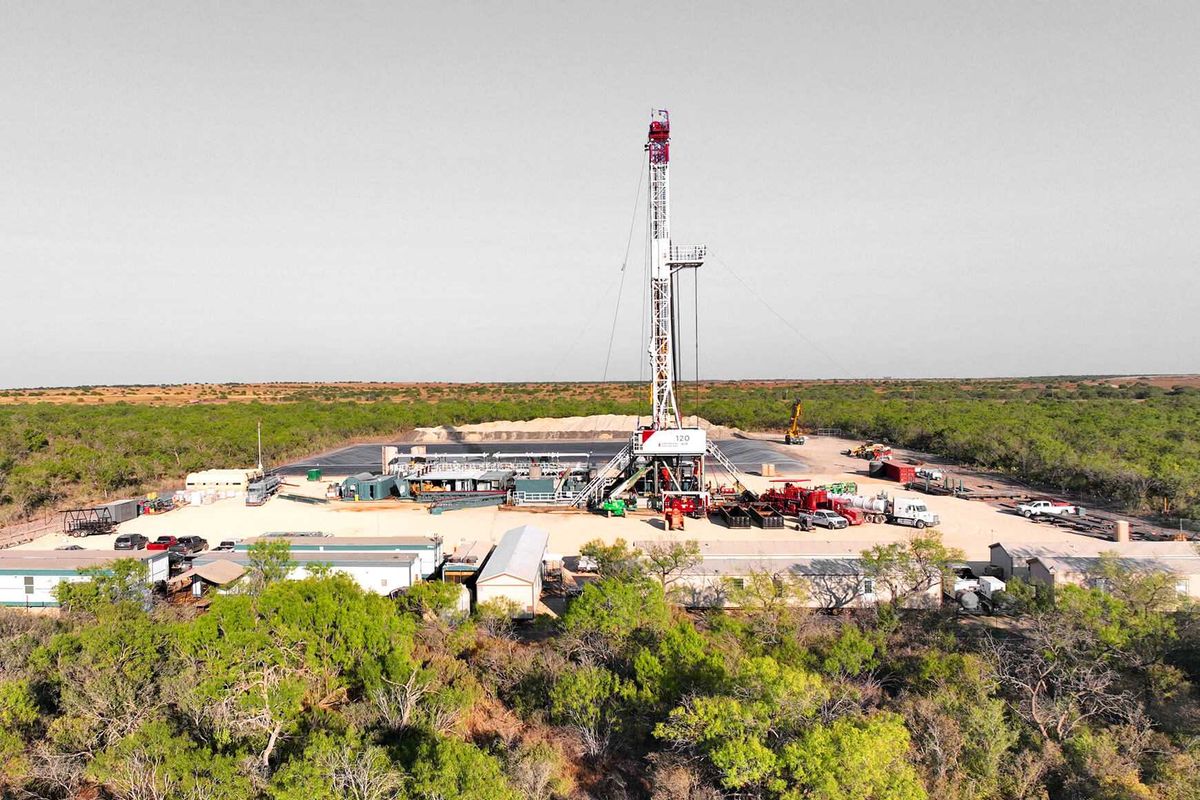
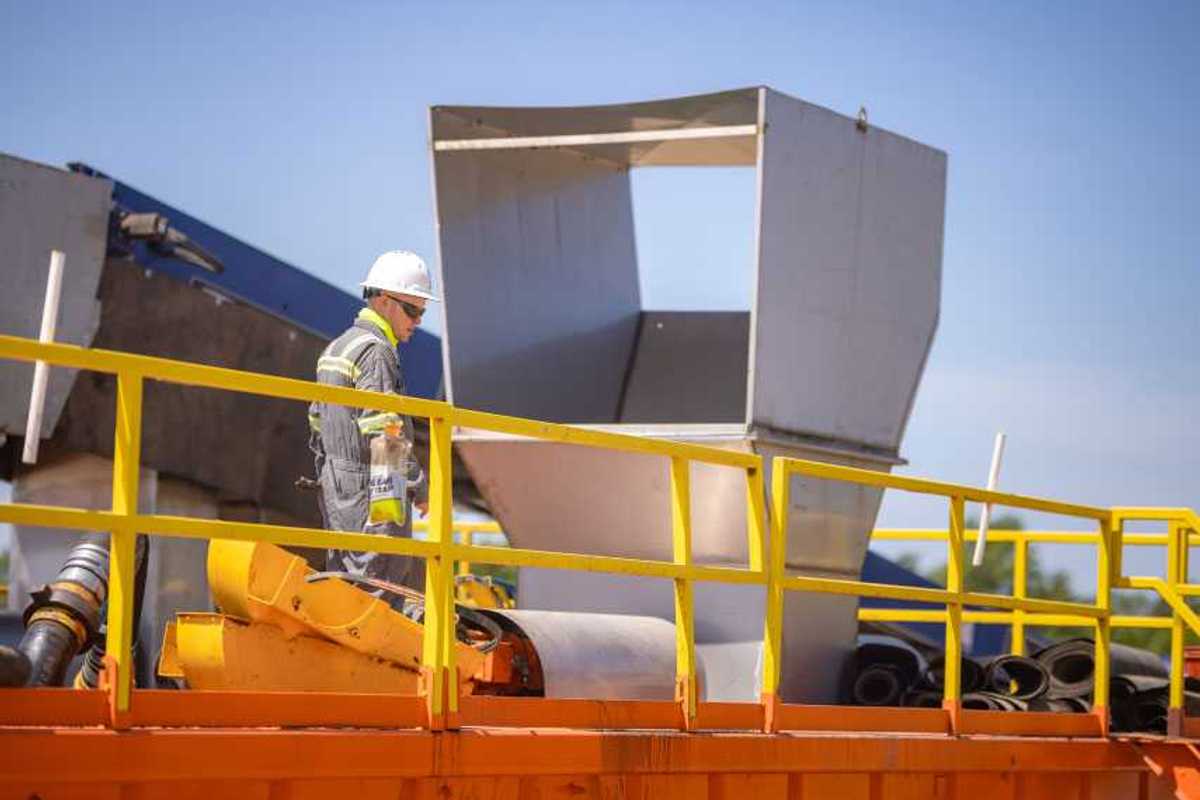
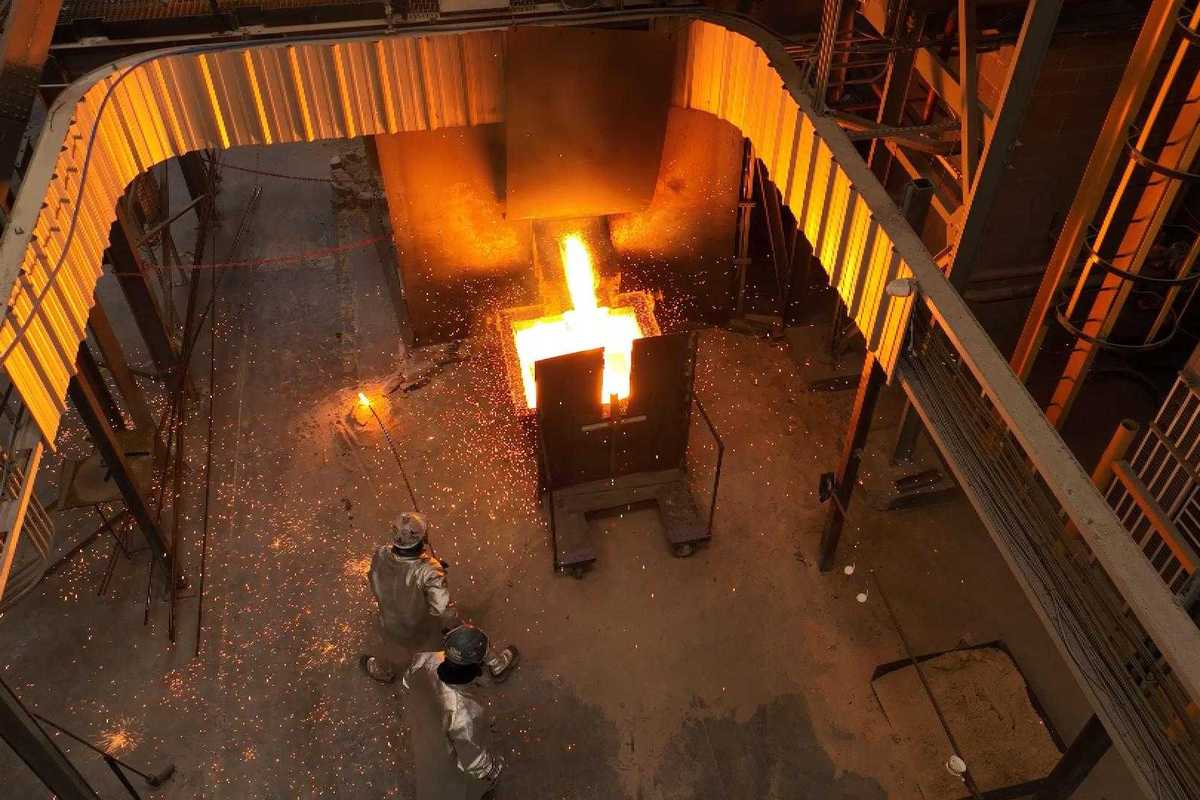
Promethean Energy has named Martyn Fear as its new COO. Photo courtesy Promethean Energy.

Houston-based Promethean Energy has named a new COO as it looks to scale.

Martyn Fear, former CEO of Altamesa Energy Canada Inc., will assume the role, the company announced last week. He brings decades of experience at energy companies such as BP and Maersk Oil and has held board positions at several private equity and venture-backed firms.

“Promethean has built a differentiated platform for managing and retiring late-life assets safely, efficiently, and responsibly,” Fear said in a news release. “The industry is facing a structural shift as decommissioning moves to the forefront, and the opportunity to combine operational excellence, disciplined project delivery, and innovative commercial models is incredibly compelling."

Promethean has developed an environmentally sustainable, integrated model for late-life asset management and offshore well decommissioning. Fear will oversee day-to-day operations at Promethean and the execution of this integrated operator-service model as the company looks to scale and expand to new markets.

“Martyn is a proven leader with a deep operational track record and a passion for building high-performance, safety-first organizations,” Aditya Singh, Promethean's CEO, added in the release. “As Promethean enters its next phase—scaling our integrated operator-service model and delivering first-time-right decommissioning at pace—his experience in transforming complex asset portfolios and leading global teams makes him the ideal COO to drive operational execution while we continue to advance our strategic vision.”

Last May, the company successfully decommissioned offshore orphaned wells in the Matagorda Island lease area. In November, it also announced that it had completed a multi-client project to safely plug and abandon an orphaned well on a storm-damaged platform in the South Timbalier lease area.

Both projects were based in the Gulf of Mexico, where Promethean is looking to grow.

Promethean Energy had completed a significant decommissioning project in the Matagorda Island area. Photo via Getty Images.

Houston company completes orphan well decommission project in the Gulf

temporary abandonment

Houston-based Promethean Energy announced this month that it has successfully decommissioned offshore orphaned wells in the Matagorda Island lease area.

Around this time last year, the company shared that it would work on the temporary abandonment of nine orphan wells on behalf of the Department of Interior's Bureau of Safety and Environmental Enforcement, or BSEE, in the area. Promethean is known for decommissioning mature assets in a cost-effective and environmentally sustainable manner.

“Our team is incredibly proud to have completed this critical work efficiently, safely, and ahead of budget,” Steve Louis, SVP of decommissioning at Promethean Energy, said in a news release. “By integrating our expertise, technologies and strategic partnerships, we have demonstrated that decommissioning can be both cost-effective and environmentally responsible.”

The company plans to use the Matagora Island project as a replicable model to guide similar projects worldwide. The project used comprehensive drone inspections, visual intelligence tools for safety preparations and detailed well diagnostics to plug the wells.

Next up, Promethean is looking to decommission more of the estimated 14,000 unplugged wells in the Gulf.

"Building on our strong execution performance, our strategy is to continue identifying synergies with other asset owners, fostering collaboration, and developing sustainable decommissioning campaigns that drive efficiency across the industry," Ernest Hui, chief strategy officer of Promethean Energy, added in the release.

Ad Placement 300x100
Ad Placement 300x600

CultureMap Emails are Awesome

Texas solar set to overtake coal for first time in 2026, EIA forecasts

solar on the rise

Solar power promises to shine even brighter in Texas this year.

A new forecast from the U.S. Energy Information Administration (EIA) indicates that for the first time, annual power generation from utility-scale solar will surpass annual power generation from coal across the territory covered by the Electric Reliability Council of Texas (ERCOT).

Solar generation is expected to reach 78 billion kilowatt-hours in 2026 in the ERCOT grid, compared with 60 billion kilowatt-hours for coal, the EIA forecast says. The ERCOT grid supplies power to about 90 percent of Texas, including the Houston area.

“Utility-scale solar generation has been increasing steadily in ERCOT as solar capacity additions help meet rapid electricity demand growth,” the forecast says.

Although natural gas remains the dominant source of electricity generation in ERCOT, accounting for an average 44 percent of electricity generation from 2021 to 2025, solar’s share of the generation mix rose from four percent to 12 percent. During the same period, coal’s share dropped from 19 percent to 13 percent.

EIA predicts about 40 percent of U.S. solar capacity, or 14 billion kilowatt-hours, added in 2026 will come from Texas.

Although EIA expects annual solar generation to exceed annual coal generation in 2026, solar surpassed coal in ERCOT on a monthly basis for the first time in March 2025, when solar generation totaled 4.33 billion kilowatt-hours and coal’s totaled 4.16 billion kilowatt-hours. Solar generation continued to exceed that of coal until August of that year.

“In 2026, we estimate that solar exceeded coal for the first time in March, and we forecast generation from solar installations in ERCOT will continue to exceed that from coal until December, when coal generation exceeds solar,” says EIA. “We expect solar generation to exceed that of coal for every month in 2027 except January and December.”

For 2027, EIA forecasts annual solar generation of 99 billion kilowatt-hours in the ERCOT grid, compared with 66 billion kilowatt-hours of annual coal generation.

In April, ERCOT projected almost 368 billion kilowatt-hours of demand in ERCOT’s territory by 2032. ERCOT’s all-time peak demand hit 85.5 billion kilowatt-hours in August 2023.

“Texas is experiencing exceptional growth and development, which is reshaping how large load demand is identified, verified, and incorporated into long-term planning,” ERCOT President and CEO Pablo Vegas said. “As a result of a changing landscape, we believe this forecast to be higher than expected … load growth.”

Houston startup raises $12M to commercialize quantum energy chip technology

seed funding

Houston-based Casimir has emerged from stealth with a $12 million seed round to commercialize its quantum energy chip.

The round was led by Austin-based Scout Ventures. Lavrock Ventures, Cottonwood Technology, Capital Factory, American Deep Tech, and Tim Draper of Draper Associates also participated in the round. The oversubscribed round exceeded the company’s original $8 million target, according to a news release.

Casimir’s semiconductor chips can generate power from quantum vacuum fields without the need for batteries or charging. The company plans to commercialize its first-generation MicroSparc chip by 2028.

The MicroSparc chip measures 5 millimeters by 5 millimeters and is designed to produce 1.5 volts at 25 microamps, comparable to a small rechargeable battery, without degradation and no replacement cycle.

“Casimir represents exactly the kind of breakthrough dual-use technology Scout Ventures was built to back,” Brad Harrison, founder and managing partner at Scout Ventures, said in the release. “This is based on 100 years of science and we’re finally approaching a commercial product … We’re proud to lead this round and support Casimir’s journey from applied science to deployed technology.”

Casimir says it aims to scale its technology across the ”full power spectrum,” including large-scale energy systems that can power homes, commercial infrastructures and electric vehicles.

Casimir's scientific work has been supported by DARPA-funded nanofabrication research and its technology was incubated at the Limitless Space Institute (LSI). LSI is a nonprofit that works to innovate interstellar travel and was founded by Kam Ghaffarian. Technology investor and serial entrepreneur Ghaffarian has been behind companies like X-energy, Intuitive Machines, Axiom Space and Quantum Space.

Harold “Sonny” White, founder and CEO of Casimir, believes the technology can power devices for years without replacements.

“Millions of devices will operate for years without a battery ever needing to be replaced or recharged because we have engineered a customized Casimir cavity into hardware capable of producing persistent electrical power,” White added in the release. “I spent nearly two decades at NASA studying how we power humanity’s future. That work led me to the Casimir effect and the quantum vacuum, where new tools have allowed us to build on a century of scientific knowledge and bring abundant power to the world.”

---

This article originally appeared on our sister site, InnovationMap.com.

Electric truck charging network expands to Houston-Dallas freight corridor

electric trucking

Greenlane Infrastructure, an electric public charging station developer and operator, is expanding outside of its home state of California and into Texas.

The Santa Monica-based company plans to launch its high-power charging sites along the Dallas–Houston I-45 corridor, which is one of the highest-volume commercial trucking routes in the country, according to a news release from Greenlane.

The sites will feature 6-8 pull-through lanes with chargers supporting combined charging system (CCS) and megawatt charging system (MCS) connectors that allow electric truck drivers to recharge their vehicles during standard rest periods. They will also offer tractor parking and charging, as well as operations that will allow for overnight stops.

Drivers can reserve chargers in advance, monitor charging activity in real time, and manage billing from the Greenlane Edge platform.

“Our customers are making commitments to electrify their fleets, and they need a charging network that can grow alongside them,” Patrick Macdonald-King, CEO of Greenlane, said in the release. “This is the first leg of the Texas triangle, one of the more important freight arteries in the country, so bringing high-power charging there is the next logical step in building a network that serves how freight moves across America.”

Greenlane is also expanding across the West Coast, with five locations under development in California and Nevada. It opened its flagship Greenlane Center in Colton, California, in April 2025. The company plans to open locations in Blythe, California, and Port of Long Beach this year.

Greelane was founded in 2023 as a joint venture between Daimler Truck North America, NextEra Energy Resources and BlackRock. It has secured partnerships with electric long-haul truck developer Windrose Technology, Velocity Truck Centers and Volvo Trucks North America.