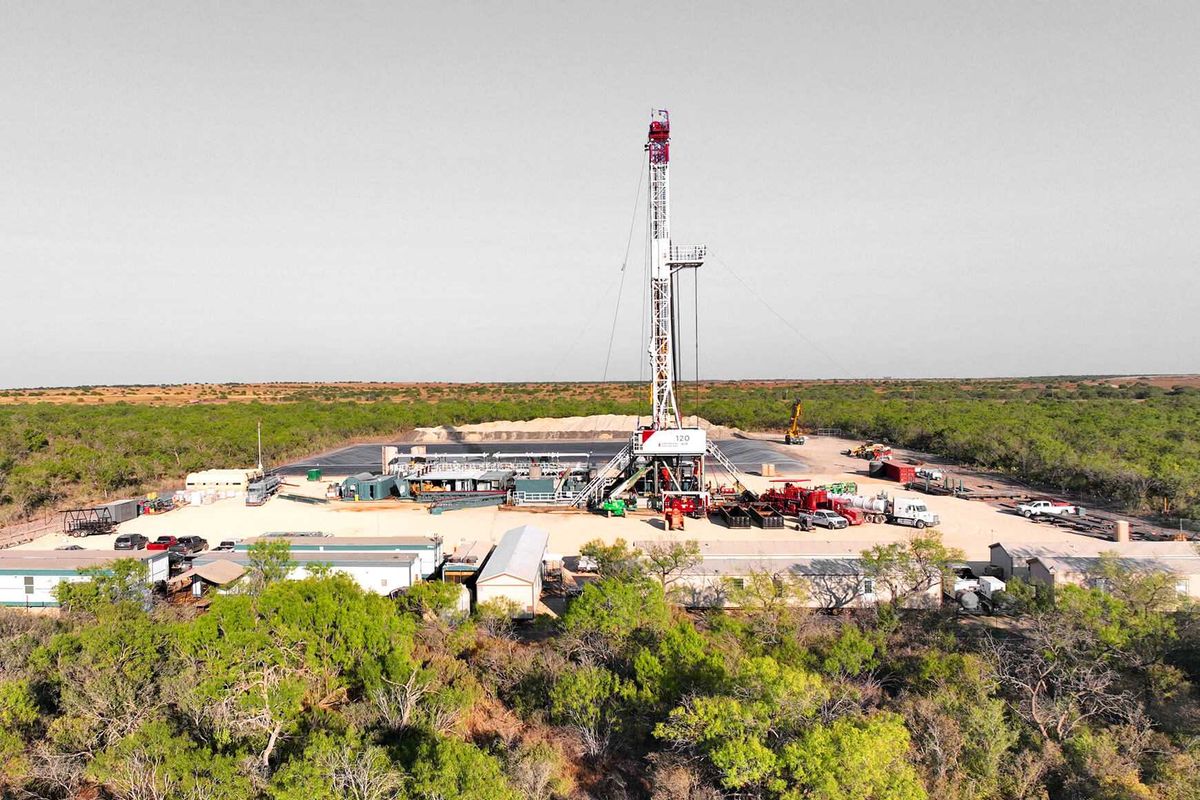
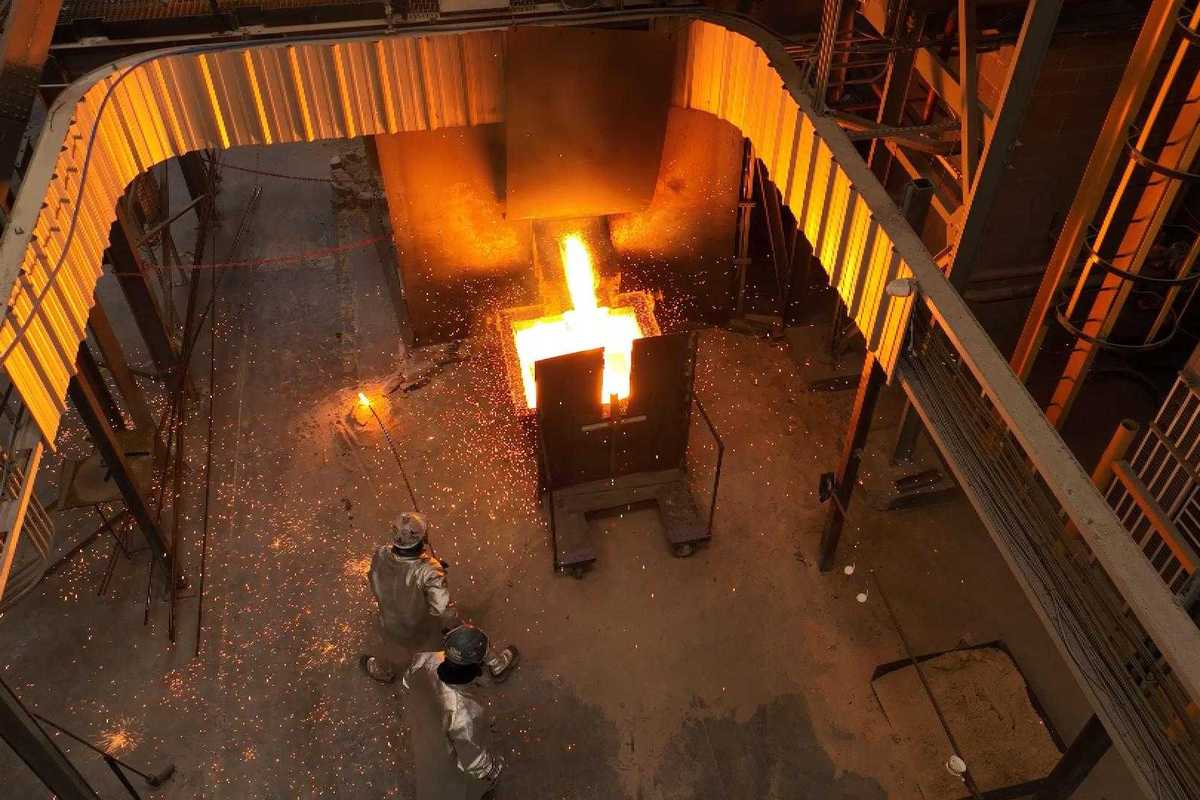
Here's what energy transition companies stood out to Rice Alliance's experts. Photo via Rice Alliance

At the 20th annual Energy Tech Venture Forum presented by Rice Alliance for technology and Entrepreneurship, 11 startups scored recognition from the event's investors who evaluated over 90 early-stage energy transition companies.

"The selection process was both exhilarating and challenging given the incredible ideas we've seen today," says Jason Sidhu, director of information services business engagement at TC Energy, who announced the top companies. "I want to extend my gratitude to every company that participate din this year's Energy Tech Venture Forum. Your commitment to solving energy problems and pursuing ambitions ideas is truly commendable."

In addition to the top 10 most-promising companies, the event's attendees decided the people's choice pick out of the 50 or so pitching companies. The winner of that recognition was Calgary, Alberta-based Galatea Technologies, which has created a tech platform to enhance workflows for operational, financial, and environmental performance.

The top companies, according to the Rice Alliance experts and investors, were:

  • Circular economy startup, Polystyvert. Based in Montreal, the company has created a unique dissolution recycling process that creates a material that can contribute to cutting carbon emissions by up to 90 percent.
  • United Kingdom-based Mirico provides a tracking technology to its customers to measure climate gases (like methane, carbon dioxide, nitrous oxide, and ammonia), across areas up to half a square mile and in all conditions.
  • Protein Evolution, from New Haven, Connecticut, taps into a combination of green chemistry and enzyme technology to break down synthetic polymers.
  • Another Canadian company, Ayrton Energy, based in Calgary, created a liquid organic H2 carrier (LOHC) storage technology presents an opportunity for large, scalable and efficient transport of H2 over long distances.
  • Also representing New Haven, Connecticut, Carbon Loop is on a mission to make carbon capture and conversion scalable through carbon dioxide electrolysis using a proprietary catalyst to convert captured carbon dioxide into methanol.d
  • Based in London, Mobilus Labs has designed a new way for frontline communication with an in-helmet hardware and software solution. software solution designed for the frontline workforce.
  • 1s1 Energy, based in California, is working on producing low-cost green hydrogen by creating new materials to unlock unprecedented electrolyzer efficiency, durability, and more.
  • From Skokie, Illinois, Numat is specializing in solutions within Metal-organic framework (MOF) research to enhance the process of separating the hazardous chemicals negatively impacting human health and the environment.
  • Mantel, headquartered in Cambridge, Massachusetts, created a molten borate technology to capture CO2 in a new and efficient way.
  • The lone Houston-based company, Mars Materials is working to produce acrylonitrile using CO2 and biomass to enable decarbonization applications in carbon fiber and wastewater treatment.
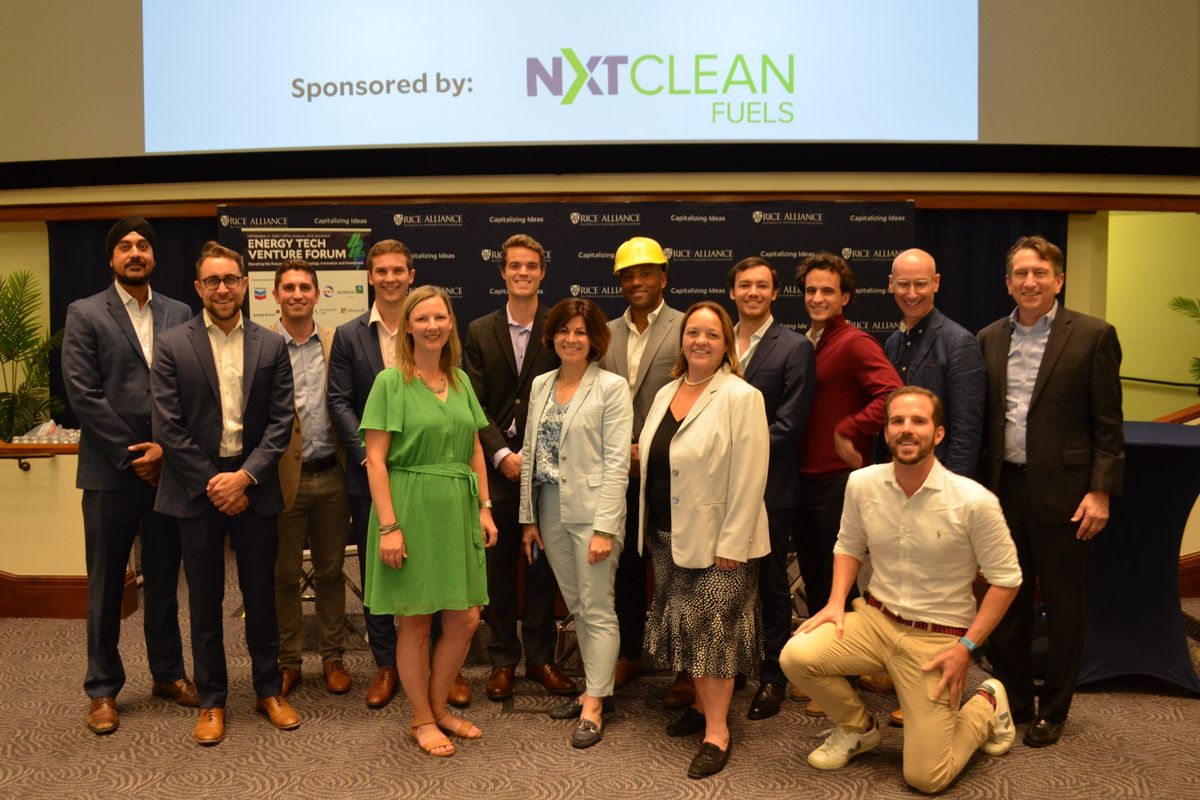
Ten companies from around the world were named as most promising. Photo courtesy of Rice

Next month, 96 startups will pitch at an annual event focused on the future of energy. Here's who will be there. Photo via rice.edu

Exclusive: Rice Alliance announces participants ahead of 20th annual energy symposium

where to be

Dozens of companies will be a part of an upcoming energy-focused conference at Rice University — from climate tech startups to must-see keynote speakers.

The 20th Annual Rice Alliance Energy Tech Venture Forum will take place on September 21 at Rice University’s Jones Graduate School of Business. Anyone who's interested in learning more about the major players in the low-carbon future in Houston and beyond should join the industry leaders, investors, and promising energy and cleantech startups in attendance.

This year's keynote speakers include Christina Karapataki, partner at Breakthrough Energy Ventures, the venture capital fund backed by Bill Gates; Scott Nyquist, vice chairman at Houston Energy Transition Initiative, founded by the Greater Houston Partnership; and Jeff Tillery, COO at Veriten.

Nearly 100 startups will also be pitching throughout the day, and at the end of the program, the most-promising companies — according to investors — will be revealed. See below for the 2023 selection of companies.

Presenting companies:

  • Element Resources
  • Eugenie AI
  • Flash H2 Synthesis from Waste Plastic at Zero Net Cost
  • Fluid Efficiency
  • Galatea Technologies
  • Heimdal
  • Impact Technology SystemsAS
  • INGU
  • Lithos
  • Luminescent
  • Mantel
  • Mars Materials
  • Microgrid Labs
  • Mirico
  • Mobilus Labs
  • Muon Vision
  • Nano Nuclear
  • NobleAI
  • Numat
  • Ourobio
  • Planckton Data Technologies
  • Polystyvert
  • Princeton NuEnergy
  • Protein Evolution
  • Qult Technologies
  • Sage Geosystems
  • Salient Predictions
  • Sawback Technologies
  • SHORELINE AI
  • Solidec
  • Spectral Sensor Solutions
  • Teren
  • Terradote
  • TexPower
  • Thiozen
  • Technology from the Lab of Dr. James Tour
  • Volexion
  • Xecta

CEA Demo Day:

  • Ayrton Energy
  • Carbix
  • CryoDesalination
  • Digital Carbon Bank
  • EarthEn
  • H Quest Vanguard
  • Highwood Emissions Management
  • Icarus RT
  • Khepra
  • Natrion
  • Oceanways
  • Relyion Energy
  • Triton Anchor
  • TROES

Office hours only:

  • 1s1 Energy
  • AKOS Energy
  • Aperta Systems
  • Atargis Energy
  • Ayas
  • C-Power
  • C-Quester
  • Carbon Loop
  • Deep Anchor Solutions
  • DG Matrix
  • Drishya AI Labs
  • Earthbound.ai
  • EarthBridge Energy
  • Enoverra
  • equipcast
  • ezNG Solutions
  • Feelit Technologies
  • FluxWorks
  • Forge
  • Horne Technologies
  • Imperium Technologies
  • LiCAP Technologies
  • Make My Day
  • Moblyze
  • MyPass Global
  • NovaSpark Energy
  • Octet Scientific
  • Perceptive Sensor Technologies
  • PetroBricks
  • Piersica
  • Poseidon Minerals
  • Predyct
  • RIvotto
  • Roboze
  • Talisea
  • ThermoLift Solutions
  • Trout Software
  • Tuebor Energy
  • Undesert Corporation
  • Viridos
  • Vroom Solar
  • Well Information Technologies
  • WellWorth
  • Zsense Systems
Ad Placement 300x100
Ad Placement 300x600

CultureMap Emails are Awesome

Why 2026 must be the year Texas makes transmission as its top energy priority

guest column

Texas takes pride in running one of the most dynamic and deregulated energy markets in the world, but conversations about electricity rarely focus on what keeps it moving: transmission infrastructure.

As ERCOT projects unprecedented electricity demand growth and grid operators update their forecasts for 2026, it’s becoming increasingly clear that generation, whether renewable or fossil, is only part of the solution. Transmission buildout and sound governing policy now stand as the linchpin for reliability, cost containment, and long-term resilience in a grid under unprecedented stress.

At the heart of this urgency is one simple thing: demand. Over 2024 and 2025, ERCOT has been breaking records at a pace we haven’t seen before. From January through September of 2025 alone, electricity use jumped more than 5% over the year before, the fastest growth of any major U.S. grid. And it’s not slowing down.

The Energy Information Administration expects demand to climb another 14% in 2026, pushing total consumption to roughly 425 terawatt-hours in just the first nine months. That surge isn’t just about more people moving to Texas or running their homes differently; it’s being driven by massive industrial and technology loads that simply weren’t part of the equation ten years ago.

The most dramatic contributor to that rising demand is large-scale infrastructure such as data centers, cloud computing campuses, crypto mining facilities, and electrified industrial sectors. In the latest ERCOT planning update, more than 233 gigawatts of total “large load” interconnection requests were being tracked, an almost 300% jump over just a year earlier, with more than 70% of those requests tied to data centers.

Imagine hundreds of new power plants requesting to connect to the grid, all demanding uninterrupted power 24/7. That’s the scale of the transition Texas is facing, and it’s one of the major reasons transmission planning is no longer back-of-house policy talk but a central grid imperative.

Yet transmission is complicated, costly, and inherently long-lead. It takes three to six years to build new transmission infrastructure, compared with six to twelve months to add a new load or generation project.

This is where Texas will feel the most tension. Current infrastructure can add customers and power plants quickly, but the lines to connect them reliably take time, money, permitting, and political will.

To address these impending needs, ERCOT wrapped up its 2024 Regional Transmission Plan (RTP) at the end of last year, and the message was pretty clear: we’ve got work to do. The plan calls for 274 transmission projects and about 6,000 miles of new, rebuilt, or upgraded lines just to handle the growth coming our way and keep the lights on.

The plan also suggests upgrading to 765-kilovolt transmission lines, a big step beyond the standard 345-kV system. When you start talking about 765-kilovolt transmission lines, that’s a big leap from what Texas normally uses. Those lines are built to move a massive amount of power over long distances, but they’re expensive and complicated, so they’re only considered when planners expect demand to grow far beyond normal levels. Recommending them is a clear signal that incremental upgrades won’t be enough to keep up with where electricity demand is headed.

There’s a reason transmission is suddenly getting so much attention. ERCOT and just about every industry analyst watching Texas are projecting that electricity demand could climb as high as 218 gigawatts by 2031 if even a portion of the massive queue of large-load projects actually comes online. When you focus only on what’s likely to get built, the takeaway is the same: demand is going to stay well above anything we’ve seen before, driven largely by the steady expansion of data centers, cloud computing, and digital infrastructure across the state.

Ultimately, the decisions Texas makes on transmission investment and the policies that determine how those costs are allocated will shape whether 2026 and the years ahead bring greater stability or continued volatility to the grid. Thoughtful planning can support growth while protecting reliability and affordability, but falling short risks making volatility a lasting feature of Texas’s energy landscape.

Transmission Policy: The Other Half of the Equation

Infrastructure investment delivers results only when paired with policies that allow it to operate efficiently and at scale. Recognizing that markets alone won’t solve these challenges, Texas lawmakers and regulators have started creating guardrails.

For example, Senate Bill 6, now part of state law, aims to improve how large energy consumers are managed on the grid, including new rules for data center operations during emergencies and requirements around interconnection. Data centers may even be required to disconnect under extreme conditions to protect overall system reliability, a novel and necessary rule given their scale.

Similarly, House Bill 5066 changed how load forecasting occurs by requiring ERCOT to include utility-reported projections in its planning processes, ensuring transmission planning incorporates real-world expectations. These policy updates matter because grid planning isn’t just a technical checklist. It’s about making sure investment incentives, permitting decisions, and cost-sharing rules are aligned so Texas can grow its economy without putting unnecessary pressure on consumers.

Without thoughtful policy, we risk repeating past grid management mistakes. For example, if transmission projects are delayed or underfunded while new high-demand loads come online, we could see congestion worsen. If that happens, affordable electricity would be located farther from where it’s needed, limiting access to low-cost power for consumers and slowing overall economic growth. That’s especially critical in regions like Houston, where energy costs are already a hot topic for households and businesses alike.

A 2026 View: Strategy Over Shortage

As we look toward 2026, here are the transmission and policy trends that matter most:

  • Pipeline of Projects Must Stay on Track: ERCOT’s RTP is ambitious, and keeping those 274 projects, thousands of circuit miles, and next-generation 765-kV lines moving is crucial for reliability and cost containment.
  • Large Load Forecasting Must Be Nuanced: The explosion in large-load interconnection requests, whether or not every project materializes, signals demand pressure that transmission planners cannot ignore. Building lines ahead of realized demand is not wasteful planning; it’s insurance against cost and reliability breakdowns.
  • Policy Frameworks Must Evolve: Laws like SB 6 and HB 5066 are just the beginning. Texas needs transparent rules for cost allocation, interconnection standards, and emergency protocols that keep consumers protected while supporting innovation and economic growth.
  • Coordination Among Stakeholders Is Critical: Transmission doesn’t stop at one utility’s borders. Regional cooperation among utilities, ERCOT, and local stakeholders is essential to manage congestion and develop systemwide reliability solutions.

Here’s the bottom line: Generation gets the headlines, but transmission makes the grid work. Without a robust transmission buildout and thoughtful governance, even the most advanced generation mix that includes wind, solar, gas, and storage will struggle to deliver the reliability Texans expect at a price they can afford.

In 2026, Texas is not merely testing its grid’s capacity to produce power; it’s testing its ability to move that power where it’s needed most. How we rise to meet that challenge will define the next decade of energy in the Lone Star State.

———

Sam Luna is director at BKV Energy, where he oversees brand and go-to-market strategy, customer experience, marketing execution, and more.

New Gulf Coast recycling plant partners with first-of-kind circularity hub

now open

TALKE USA Inc., the Houston-area arm of German logistics company TALKE, officially opened its Recycling Support Center earlier this month.

Located next to the company's Houston-area headquarters, the plant will process post-consumer plastic materials, which will eventually be converted into recycling feedstock. Chambers County partially funded the plant.

“Our new recycling support center expands our overall commitment to sustainable growth, and now, the community’s plastics will be received here before they head out for recycling. This is a win for the residents of Chambers County," Richard Heath, CEO and president of TALKE USA, said in a news release.

“The opening of our recycling support facility offers a real alternative to past obstacles regarding the large amount of plastic products our local community disposes of. For our entire team, our customers, and the Mont Belvieu community, today marks a new beginning for effective, safe, and sustainable plastics recycling.”

The new plant will receive the post-consumer plastic and form it into bales. The materials will then be processed at Cyclyx's new Houston Circularity Center, a first-of-its-kind plastic waste sorting and processing facility being developed through a joint venture between Cyclix, ExxonMobil and LyondellBasell.

“Materials collected at this facility aren’t just easy-to-recycle items like water bottles and milk jugs. All plastics are accepted, including multi-layered films—like chip bags and juice pouches. This means more of the everyday plastics used in the Chambers County community can be captured and kept out of landfills,” Leslie Hushka, chief impact officer at Cyclyx, added in a LinkedIn post.

Cyclyx's circularity center is currently under construction and is expected to produce 300 million pounds of custom-formulated feedstock annually.

Houston quantum simulator research reveals clues for solar energy conversion

energy flow

Rice University scientists have used a programmable quantum simulator to mimic how energy moves through a vibrating molecule.

The research, which was published in Nature Communications last month, lets the researchers watch and control the flow of energy in real time and sheds light on processes like photosynthesis and solar energy conversion, according to a news release from the university.

The team, led by Rice assistant professor of physics and astronomy Guido Pagano, modeled a two-site molecule with one part supplying energy (the donor) and the other receiving it (the acceptor).

Unlike in previous experiments, the Rice researchers were able to smoothly tune the system to model multiple types of vibrations and manipulate the energy states in a controlled setting. This allowed the team to explore different types of energy transfer within the same platform.

“By adjusting the interactions between the donor and acceptor, coupling to two types of vibrations and the character of those vibrations, we could see how each factor influenced the flow of energy,” Pagano said in the release.

The research showed that more vibrations sped up energy transfer and opened new paths for energy to move, sometimes making transfer more efficient even with energy loss. Additionally, when vibrations differed, efficient transfer happened over a wider range of donor–acceptor energy differences.

“The results show that vibrations and their environment are not simply background noise but can actively steer energy flow in unexpected ways,” Pagano added.

The team believes the findings could help with the design of organic solar cells, molecular wires and other devices that depend on efficient energy or charge transfer. They could also have an environmental impact by improving energy harvesting to reduce energy losses in electronics.

“These are the kinds of phenomena that physical chemists have theorized exist but could not easily isolate experimentally, especially in a programmable manner, until now,” Visal So, a Rice doctoral student and first author of the study, added in the release.

The study was supported by The Welch Foundation,the Office of Naval Research, the National Science Foundation CAREER Award, the Army Research Office and the Department of Energy.